Press contact
Sedus Pressestelle
Christof-Stoll-Straße 1
79804 Dogern
Tel.: +49 (0) 7751 84 - 320
E-Mail: presse@sedus.com
Sedus Pressestelle
Christof-Stoll-Straße 1
79804 Dogern
Tel.: +49 (0) 7751 84 - 320
E-Mail: presse@sedus.com
24.09.2026
Well-being in the workplace has long since become more than just a supplementary measure. The office is not a neutral space simply filled with furniture, but an ecosystem of different habitats that shapes how people think, connect, develop and recover. For a long time, many approaches to promoting wellbeing focused primarily on individual measures such as meditation sessions, resilience training or quiet zones. Today, a more fundamental question is increasingly taking centre stage: how should the working environment itself be designed to support people as effectively as possible across different situations and needs?
In the run-up to ORGATEC 2026, Sedus is unveiling its theme for the fair: ‘Spaces that Care – Wellbuilding for Human Nature’. But what lies behind this idea? A conversation with Ernst Holzapfel, Marketing Director at Sedus, provides some initial answers.
‘Spaces that Care’ stands for a simple yet fundamental belief: spaces influence how people feel, how they behave and how they work. A good working environment should therefore do more than simply provide individual workstations, furniture and meeting rooms. It should support both focused work and interaction, offer orientation as well as flexibility, and respond to people’s different needs throughout the working day. For Sedus, a space that cares for people is also a space that helps organisations work effectively and adapt to change.
It creates the right conditions for different activities and human needs. In some situations, people need calm, concentration and protection from distractions. At other times, they seek interaction, movement, inspiration or the feeling of being part of a community. A well-designed working environment makes it easier to move between these different requirements and supports that transition intuitively. It does not dictate a single way of working. Instead, it offers choices and helps people find the space that suits the task at hand, the situation and their individual needs.
‘Wellbuilding’ describes a consistently people-centred approach to the design of working environments. The term links human wellbeing with the conscious design of space, furnishings and the organisation of work. It is not merely about individual measures to enhance comfort, but about the interplay between people, space, furniture, atmosphere and organisation. ‘Building’ can be understood in two ways here: first, as the built environment in which work takes place; and second, as the active process of creating better conditions for people and organisations.
Because human needs do not end at the office door. By nature, people seek both connection and retreat, stimulation and relaxation, movement and rest, familiarity and diversity. Contemporary working environments must take these apparent contradictions into account, rather than being designed solely for a standardised way of working. ‘For Human Nature’ expresses Sedus’s ambition to align working environments more closely with the way people actually think, feel, interact and work.
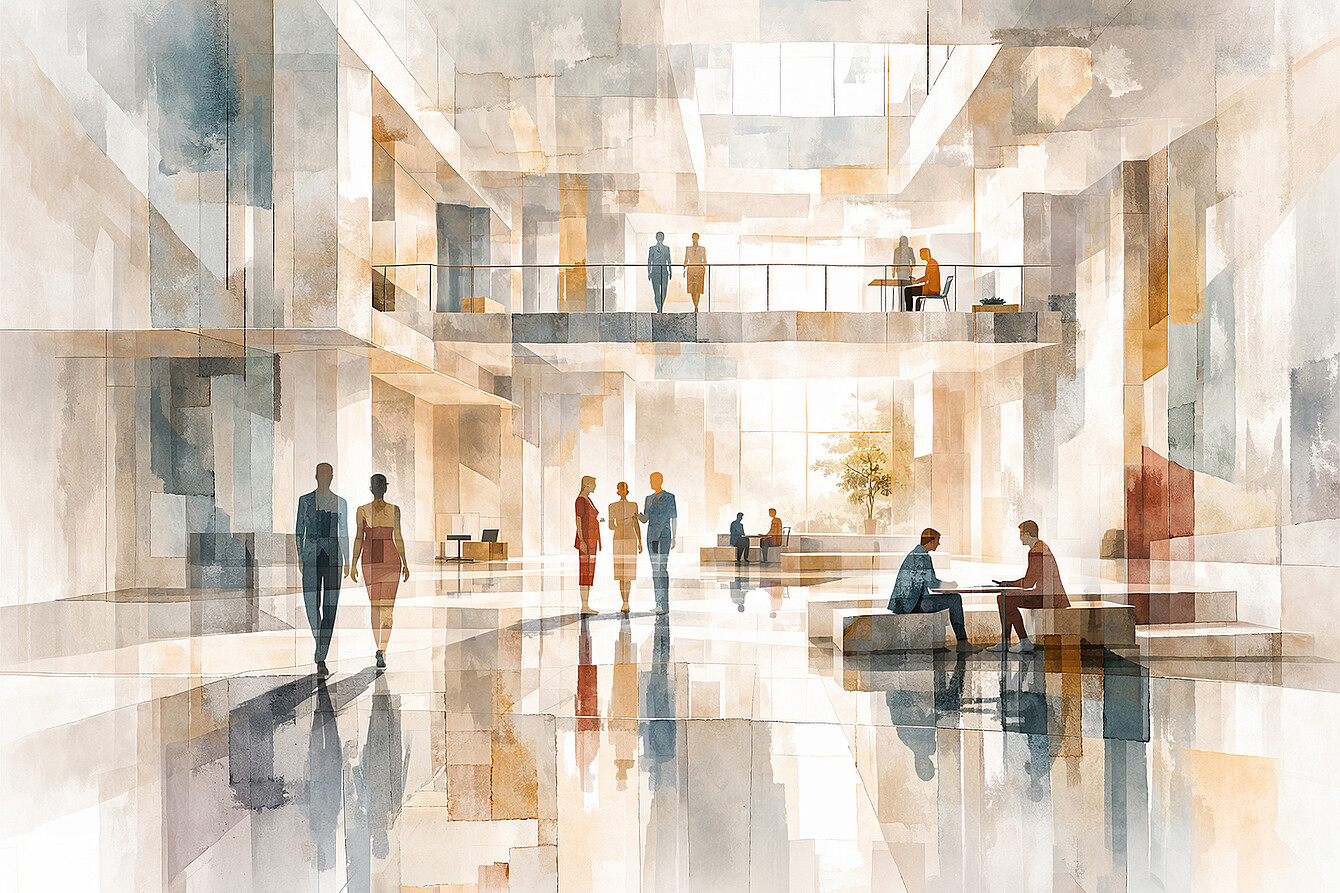
The role of the office is changing. Today, workplaces must offer more than just functional workstations. They must make collaboration both attractive and meaningful, support focused work and create an environment in which people feel welcome, connected and comfortable. At the same time, organisations need spaces that remain flexible and can adapt to changing teams, activities and requirements. With ‘Spaces that Care’, Sedus addresses these requirements and sees the office as an ecosystem of different habitats that brings together the perspectives of people, space and work.
They can look forward to new products, product extensions and spatial solutions that translate this approach into working environments that can be experienced first-hand. Rather than presenting products in isolation, Sedus demonstrates how furniture, space, atmosphere and different usage scenarios work together to create holistic working environments. The aim is to offer decision-makers, architects, planners and professionals involved in shaping contemporary workplaces both inspiration and practical guidance. The full concept will be brought to life at the Sedus stand in Hall 6.1.
ORGATEC will take place in Cologne from 27 to 30 October 2026. You’ll find Sedus in Hall 6.1 | C019. We look forward to welcoming you there.
You can also download all the images and documents from the Sedus Media Center.