
Home office vs. office – a comparison
The discussion about home office vs. office is often polarised. However, it is clear that both work locations offer specific strengths.
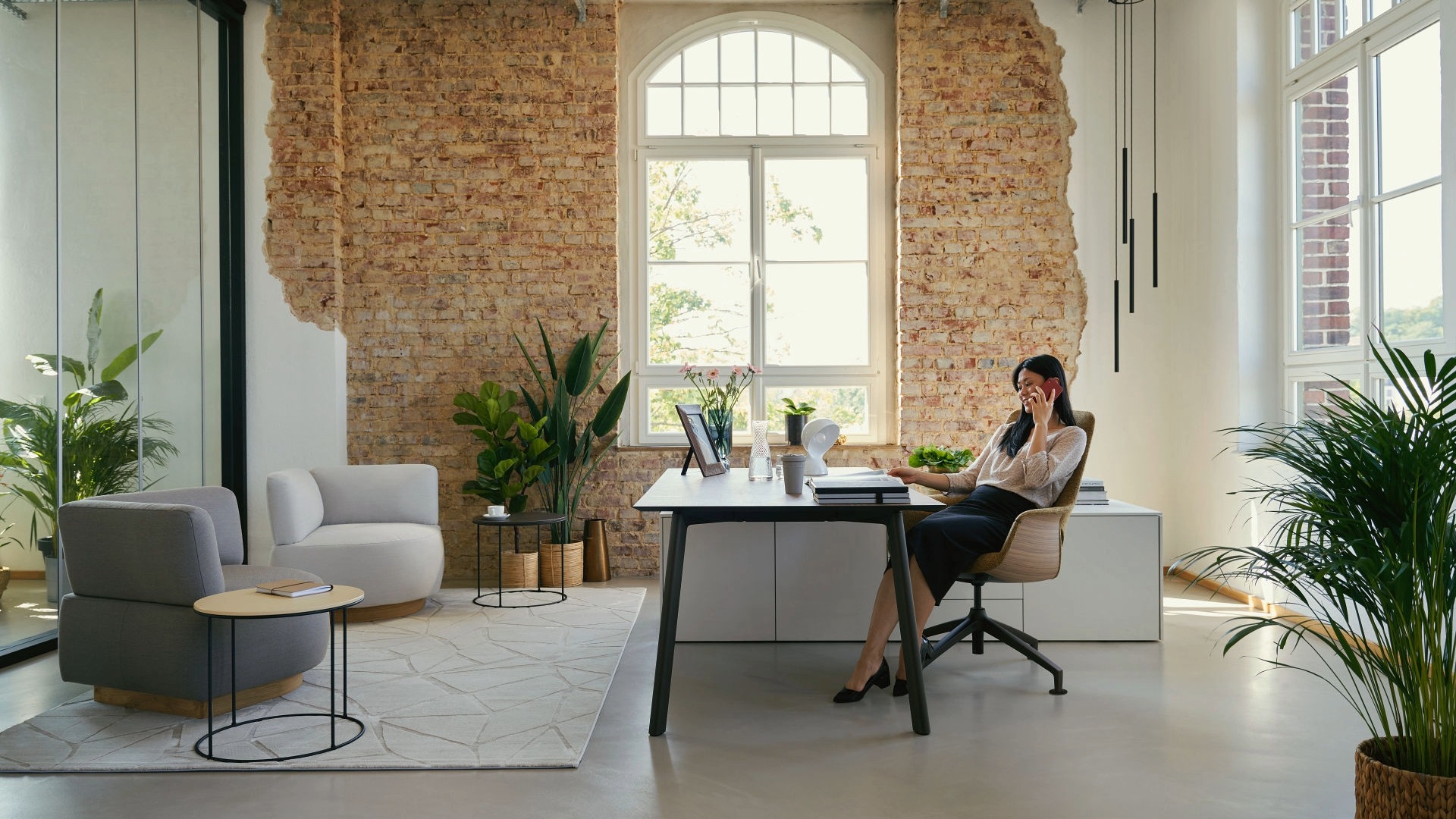
The advantages of working from home:
- Time and cost savings due to no commute
- Greater concentration on individual tasks
- Flexible daily schedule
- Better work-life balance
Working from home offers ideal conditions, especially for focused activities or creative thinking phases.
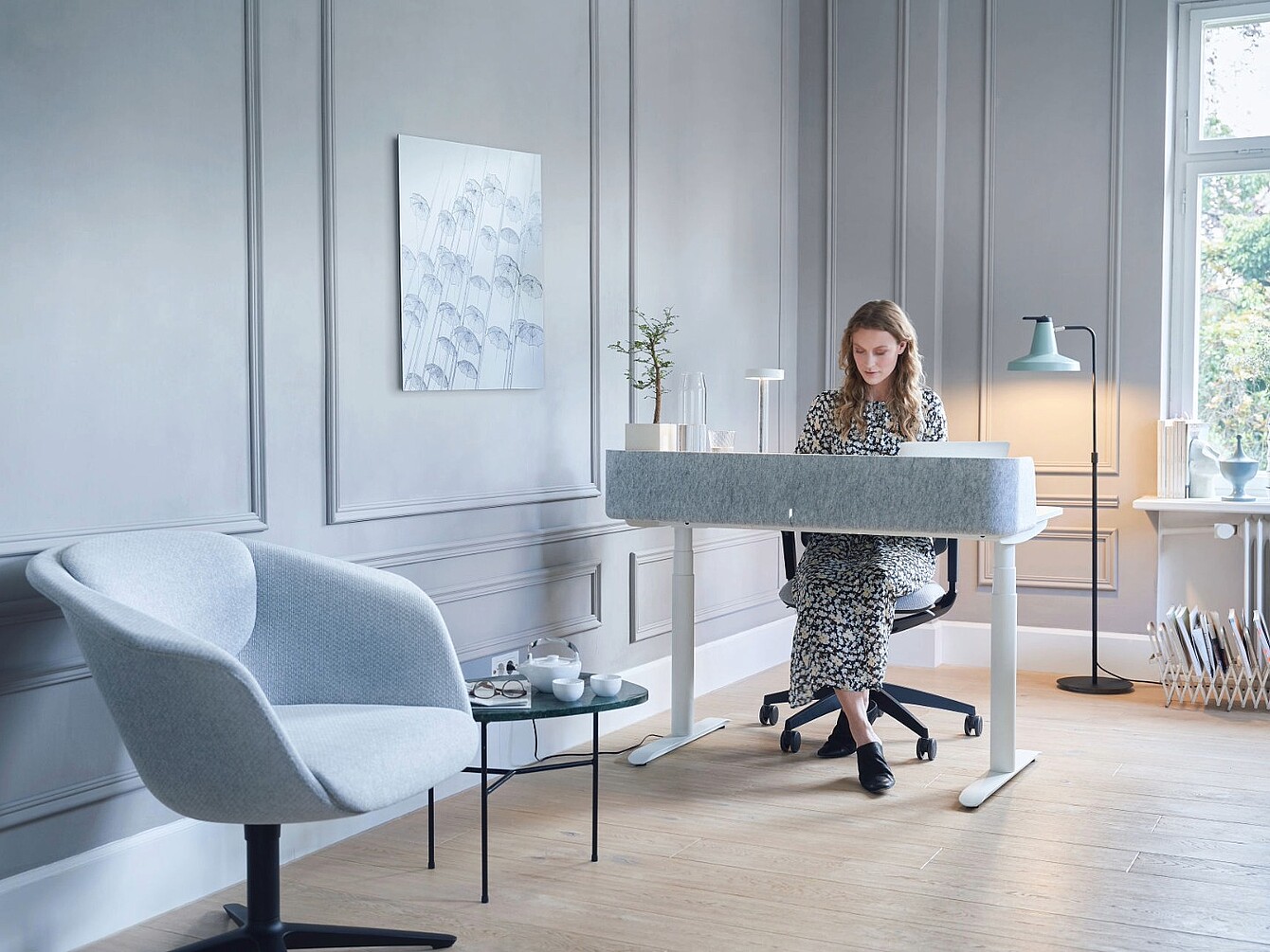
The advantages of the office:
- Direct personal interaction
- Spontaneous communication and faster coordination
- Strengthening of team culture and sense of belonging
- Professional workplace ergonomics
The office remains central to innovation, collaboration and identification with the company.

Hybrid working: the best of both worlds
Hybrid working combines the advantages of both forms of working. Employees can decide where they work most productively depending on the task, project phase or personal situation.
The most important advantages of hybrid working at a glance:
- Increased productivity: Concentrated work in the home office, collaborative processes in the office – this division of tasks increases efficiency and quality.
- Higher employee satisfaction: Flexible working models increase motivation, reduce stress and strengthen work-life balance.
- Attractiveness as an employer: Hybrid working is a decisive factor in the competition for skilled workers. Companies that offer flexible working models position themselves as modern and future-oriented.
- Optimised use of space: Hybrid concepts enable needs-based planning of office space – fewer fixed workstations, more flexible zones.
- Sustainability: Less commuting reduces CO₂ emissions and supports sustainable corporate strategies.

Modern workplace concepts for hybrid working
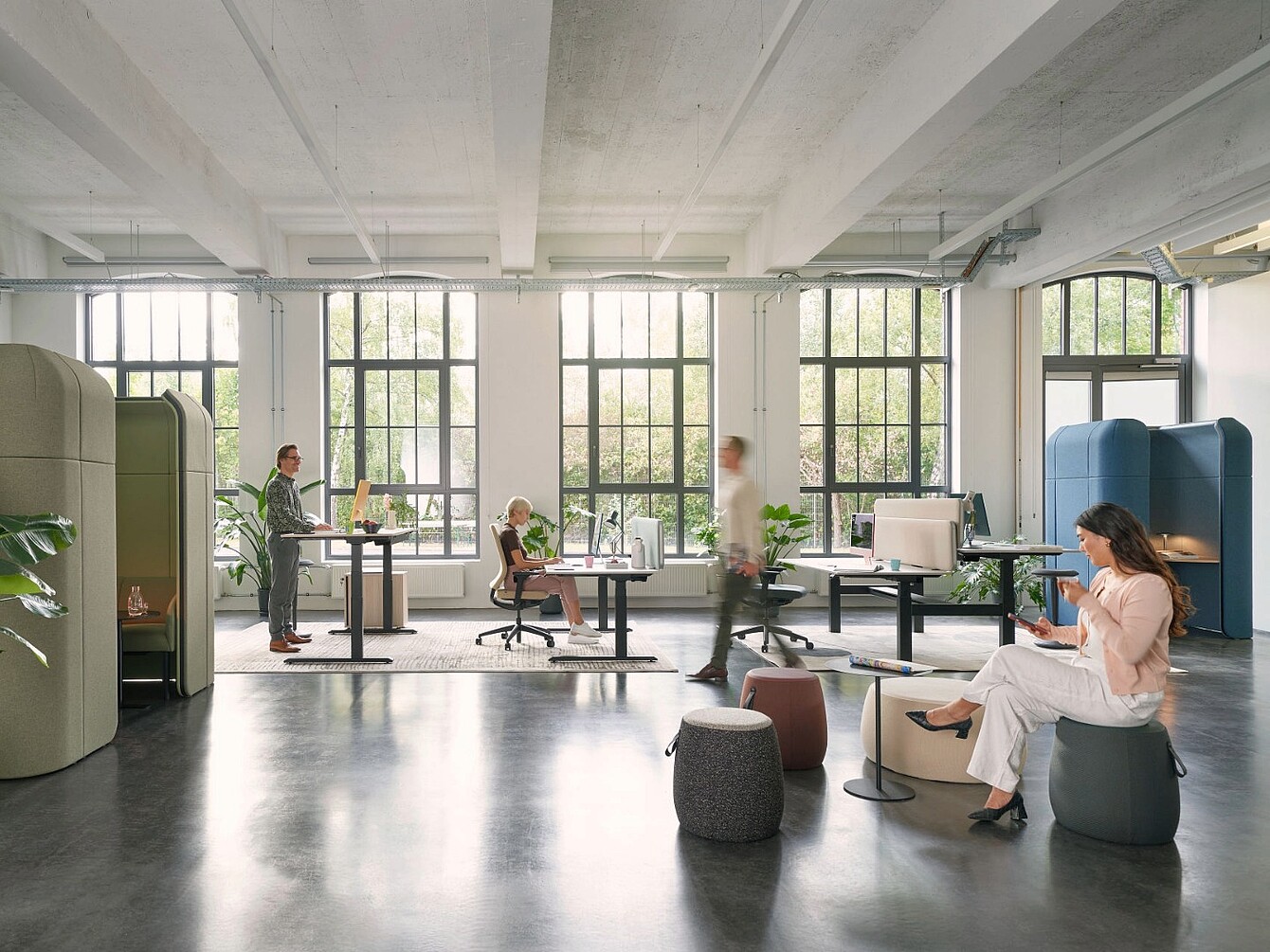
For hybrid working to function successfully, well-thought-out space solutions are required. Traditional individual offices are increasingly being replaced by multifunctional working environments:
- Activity-based working: workspaces tailored to the respective activity
- Shared desk models: Flexible workplace use
- Work cafés & communication zones: informal meeting places for exchange
- Retreat areas: Focus areas for concentrated work
- Digital collaboration solutions: Seamless connection between home office and office
Modern office concepts create spaces that promote interaction while taking individual needs into account.
Trends for flexible working environments
The development of hybrid working models goes hand in hand with new requirements in terms of design, technology and corporate culture:
- Ergonomic solutions for both work locations
- Modular furniture for convertible room concepts
- Digital booking systems for workstations
- New work-oriented management concepts
- Health-promoting workplace design
The future belongs to flexible, adaptable working environments that put people at the centre.
Conclusion: hybrid working as a model for the future
The comparison between home office and office clearly shows that the key is not either/or, but both/and. Hybrid working combines the advantages of both models and creates the basis for productive, healthy and sustainable working environments.
Companies that strategically leverage the advantages of hybrid working and design their office spaces accordingly are not only investing in efficiency, but above all in the satisfaction of their employees.

social media channels: