
Why movement at work is so important
Our bodies are designed for movement – not for sitting still for hours at a time. When we don't move enough, we risk muscle tension, back pain and, in the long term, even more serious health issues. A sedentary routine can also take a toll on mental sharpness and overall productivity.
In contrast, incorporating more movement into the workday can lead to:
- improved blood circulation
- increased energy and concentration
- fewer physical complaints
- greater motivation in day-to-day work
The good news is that even small changes can have a meaningful impact.
Dynamic sitting: staying active despite desk work
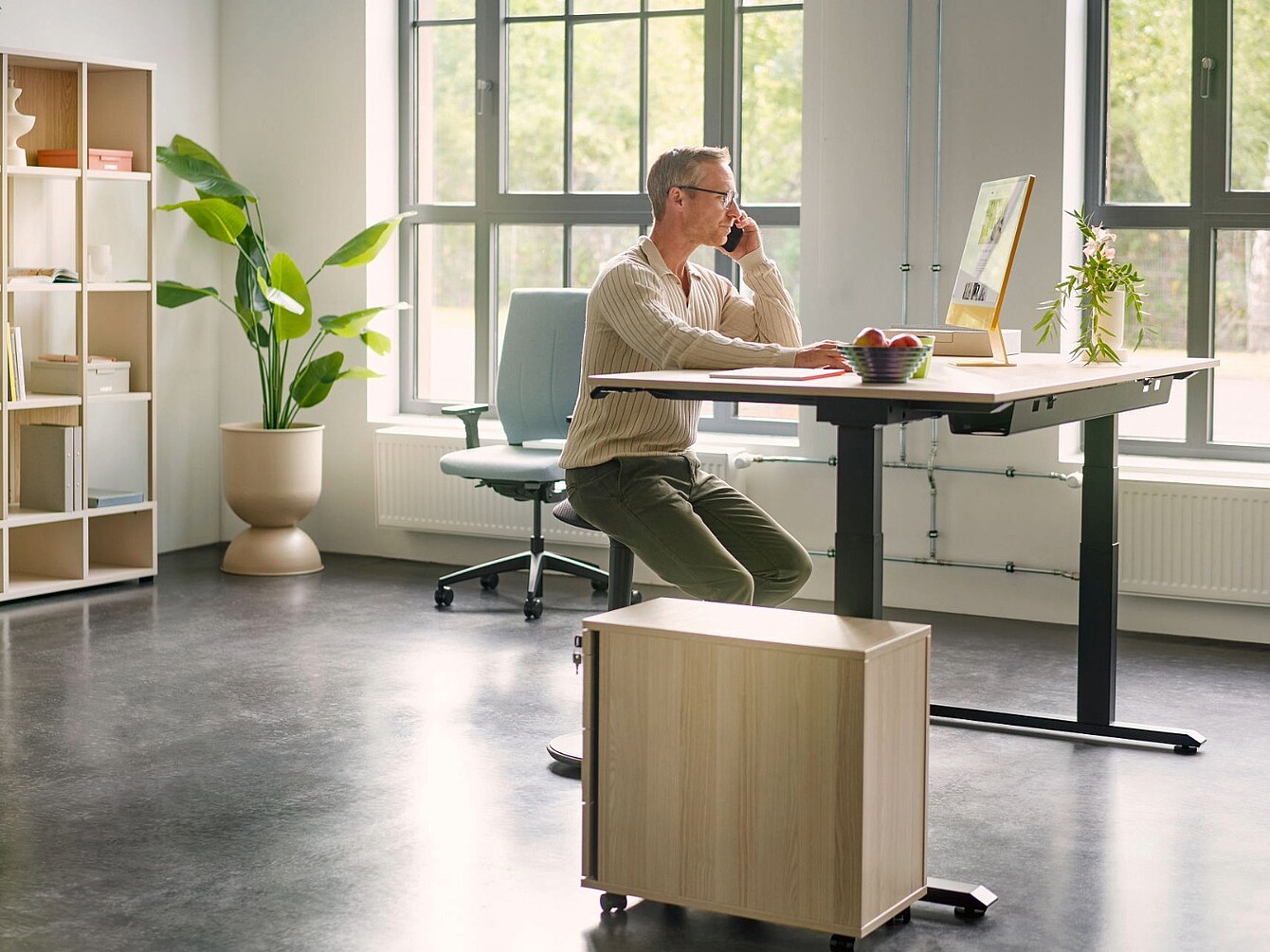
Dynamic sitting refers to a way of sitting that involves regularly changing your posture. Instead of remaining rigidly in one position, the body stays in motion – even while seated.
This can be achieved, for example, through:
- ergonomic office chairs with adjustable seats
- frequent shifts in sitting position
- conscious redistribution of body weight
- alternating between sitting and standing while working
These micro-movements help activate muscles, relieve pressure on the spine and promote blood circulation. As a result, dynamic sitting has become an essential element of modern workplace design.
Active breaks in the office: small movements, big impact
Alongside dynamic sitting, active breaks play a crucial role in maintaining wellbeing at work. An active break means consciously integrating short bursts of movement into your daily routine.
Just a few minutes are enough to recharge your batteries. Examples of active breaks include:
- short stretching exercises at your desk
- a quick walk around the office or outside
- light mobility exercises for the neck and shoulders
- taking the stairs instead of the lift
These brief moments of activity not only promote physical health but can also enhance focus and boost creativity.
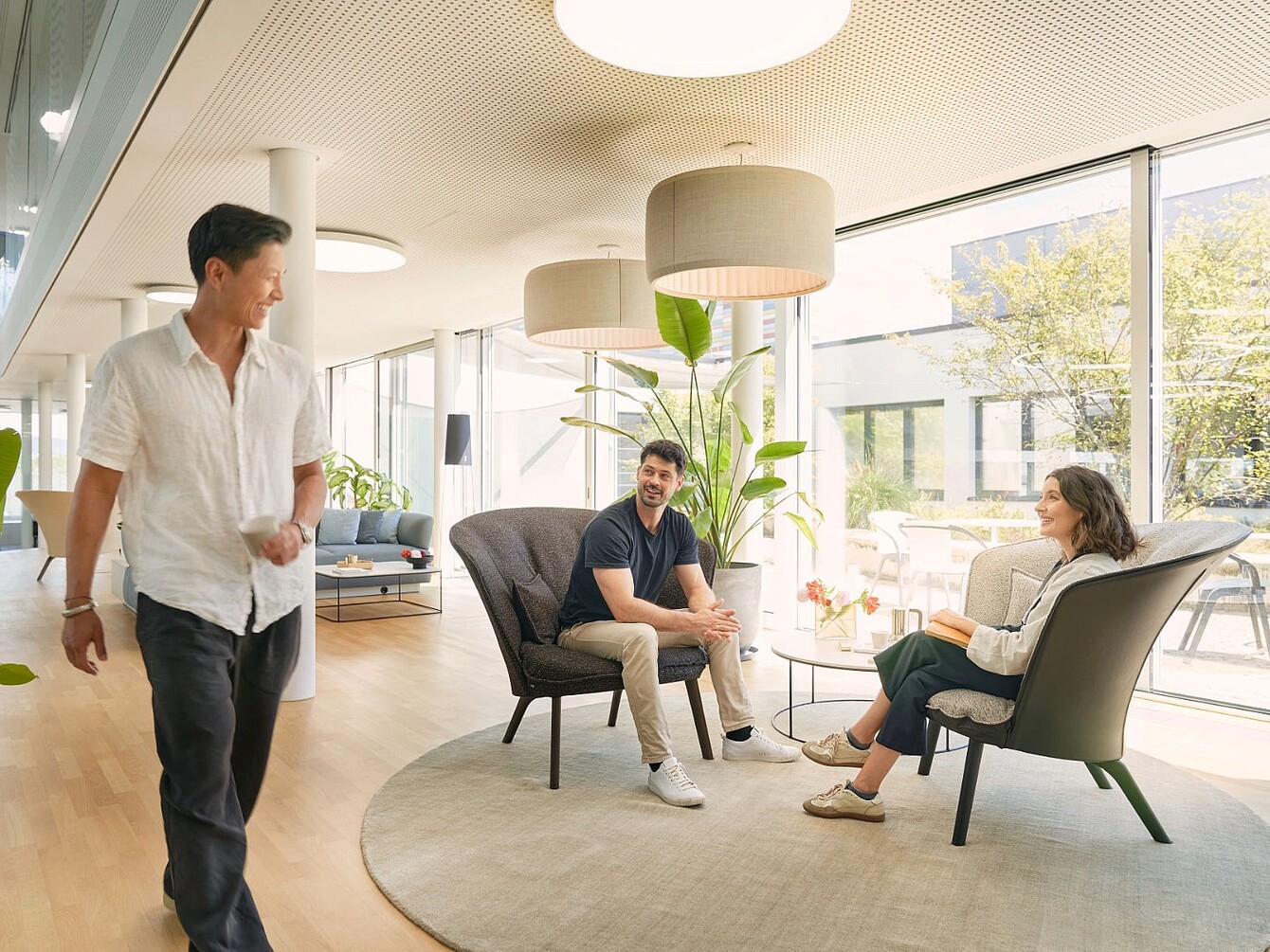
Exercise as part of modern workplace culture
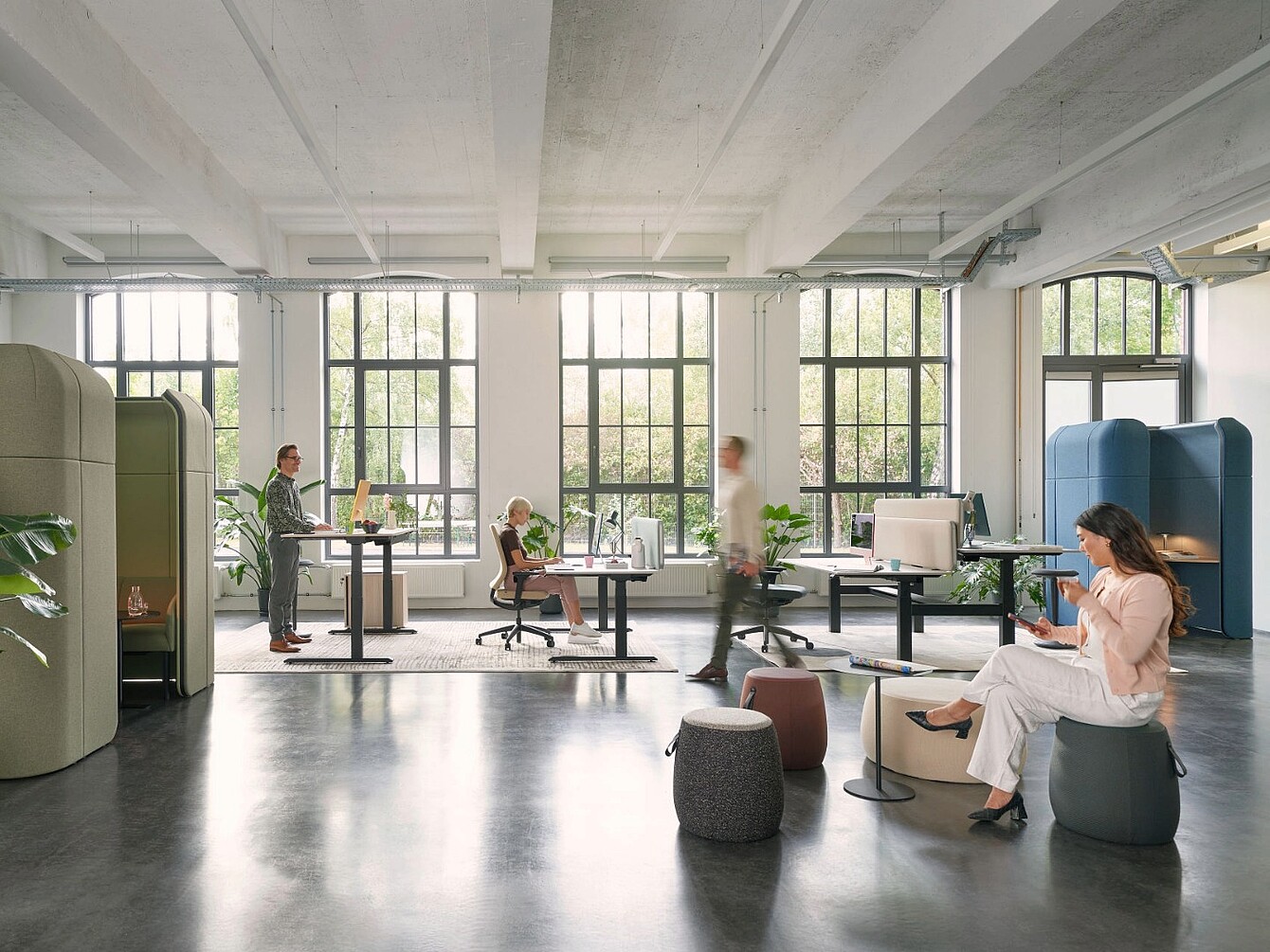
Companies are increasingly recognising the importance of physical activity in the workplace. Flexible space designs, ergonomic furniture and quiet spaces for short breaks help employees to stay active.
An activity-friendly office typically includes:
- height-adjustable desks
- ergonomic seating solutions
- open spaces for spontaneous movement
- quiet areas for short breaks
This way, movement is naturally integrated into the working day.
More movement, greater well-being
More movement in the workplace is a key factor for health, wellbeing and productivity. Dynamic sitting and regular active breaks in the office help to relieve physical strain and clear the mind.
Those who consciously integrate movement into their daily work routine benefit in the long term – both physically and mentally.

social media channels: