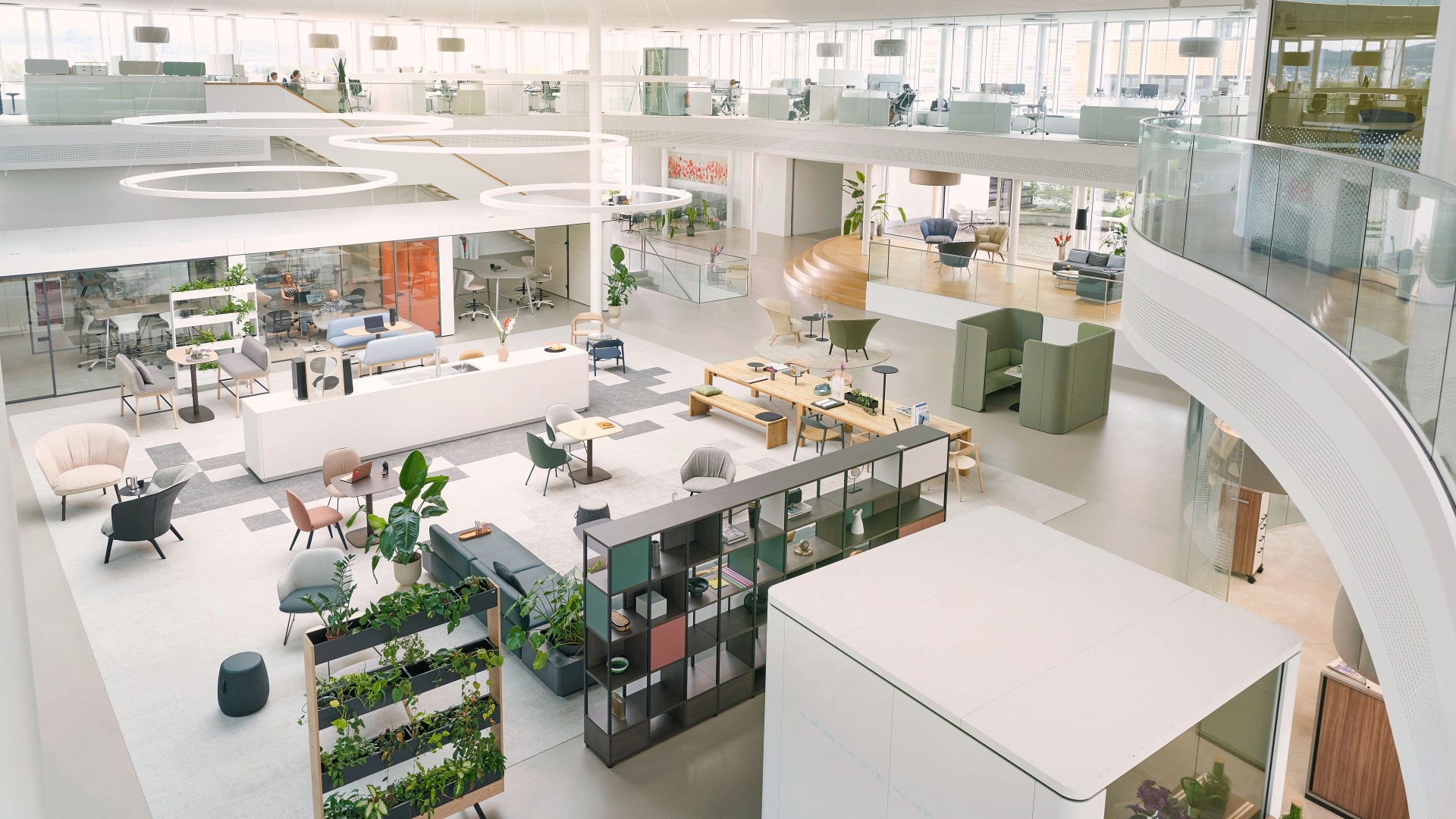

From functional space to cognitive zoning
Today, the office is more than just a place for individual tasks. It is an environment where concentration, collaboration, creativity and relaxation all take place in equal measure. Yet attention is not a permanent state. Depending on the task at hand, people require varying degrees of tranquillity, stimulation or social interaction.
This is where the principle of cognitive zoning comes into play. Rather than organising spaces solely according to function, environments are designed around their sensory impact. Light, colour, materials, acoustics and furnishings combine to create different atmospheres that support the transition between different states of attention and enable employees to choose the most suitable place to work.
Four atmospheres for different thought processes
The four office worlds of #designcodes can be understood as distinct sensory qualities, each of which promotes a specific working mode.
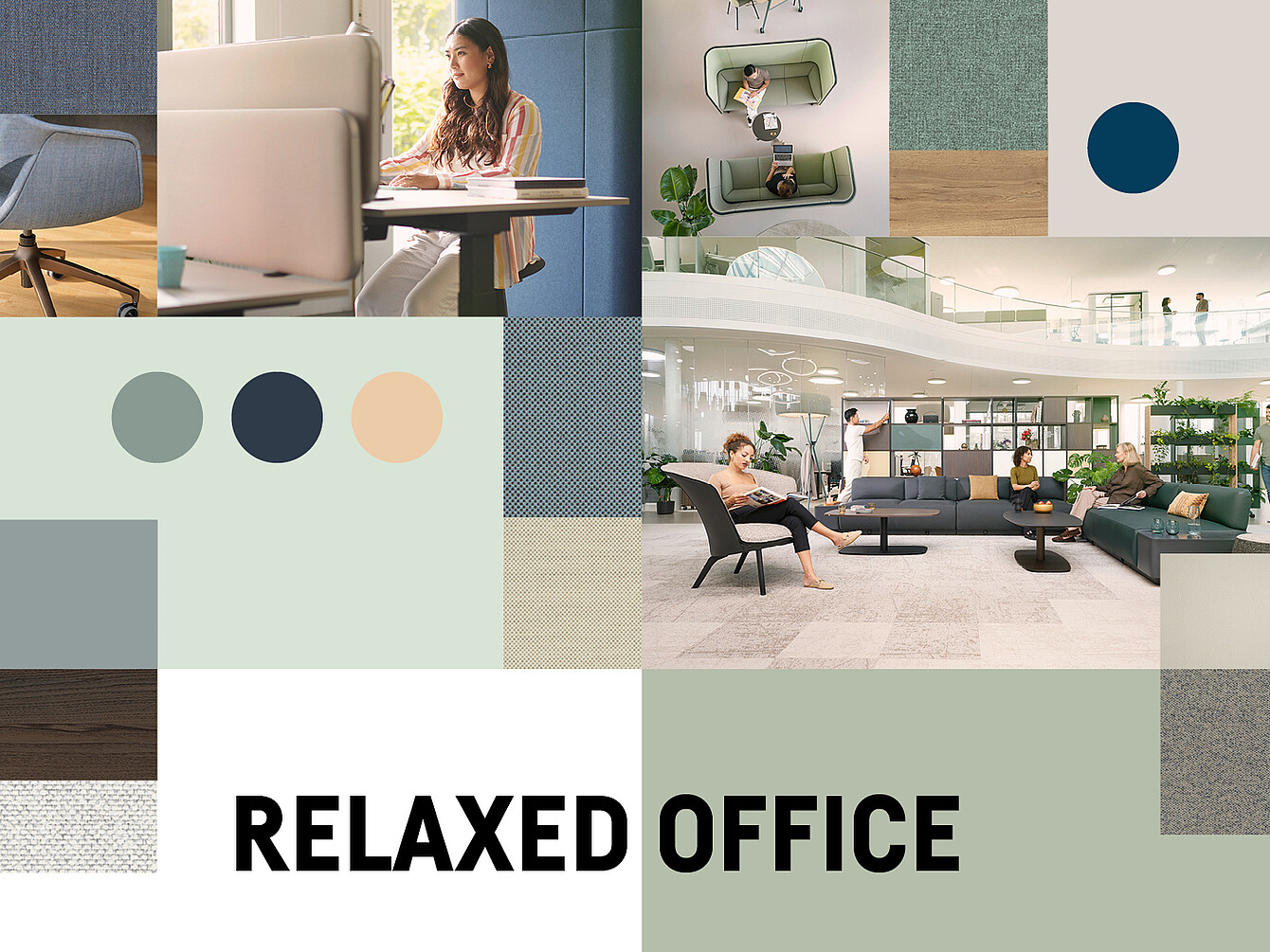
Relaxed – working together in a relaxed manner
The Relaxed Office creates a homely, trusting atmosphere. Natural materials, warm lighting and soft shades of blue and green reduce stress and encourage informal exchanges. This environment is particularly well-suited to communicative tasks, spontaneous conversations and collaborative work phases where openness and creativity are required.
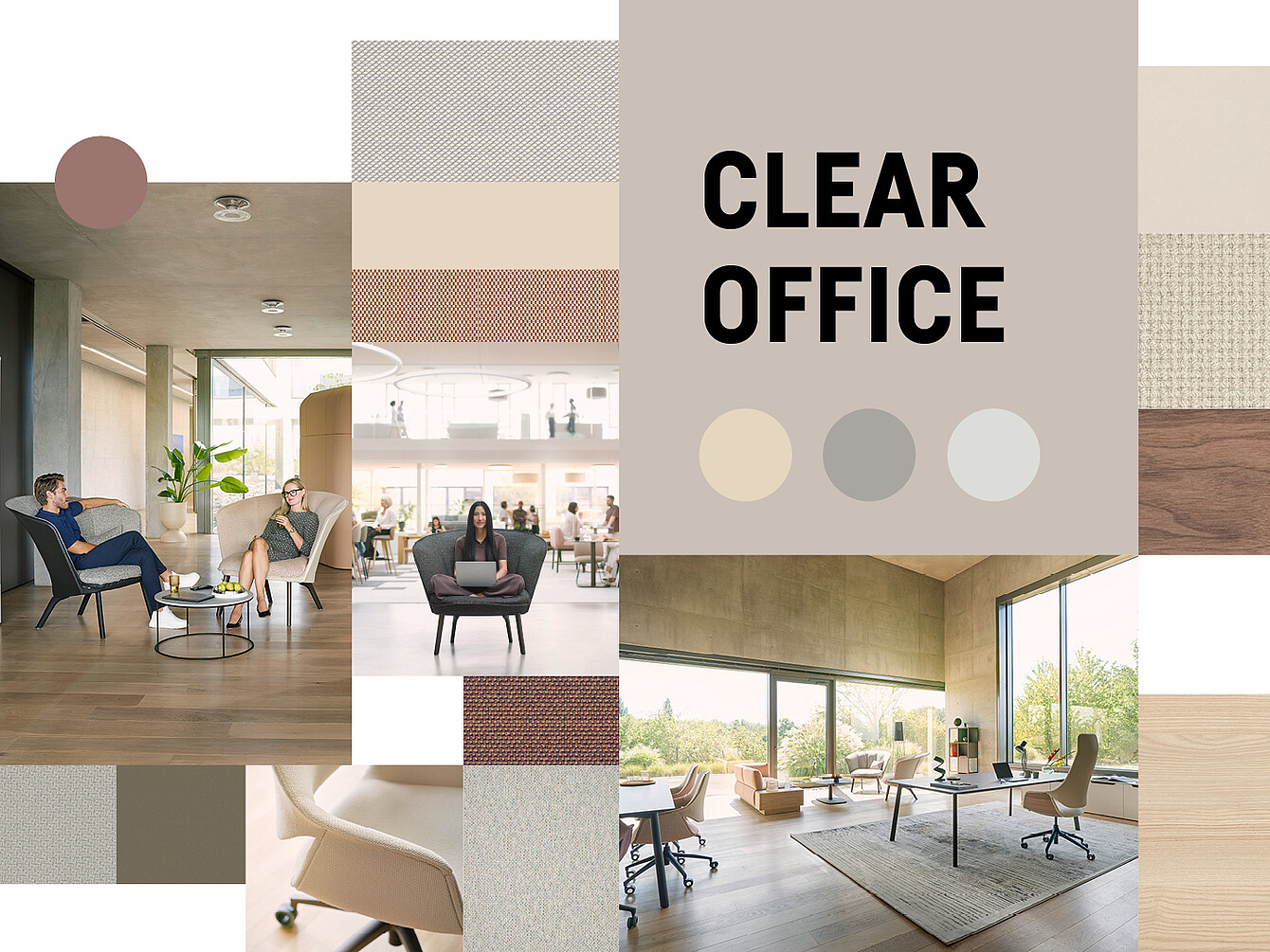
Clear – focused thinking
In the Clear Office, visual tranquillity and clarity take centre stage. Subtle shades of grey, minimalist design and carefully placed accents minimise distractions and create the ideal conditions for demanding work requiring concentration. The clear spatial ambience helps people to focus their attention on complex tasks for extended periods.
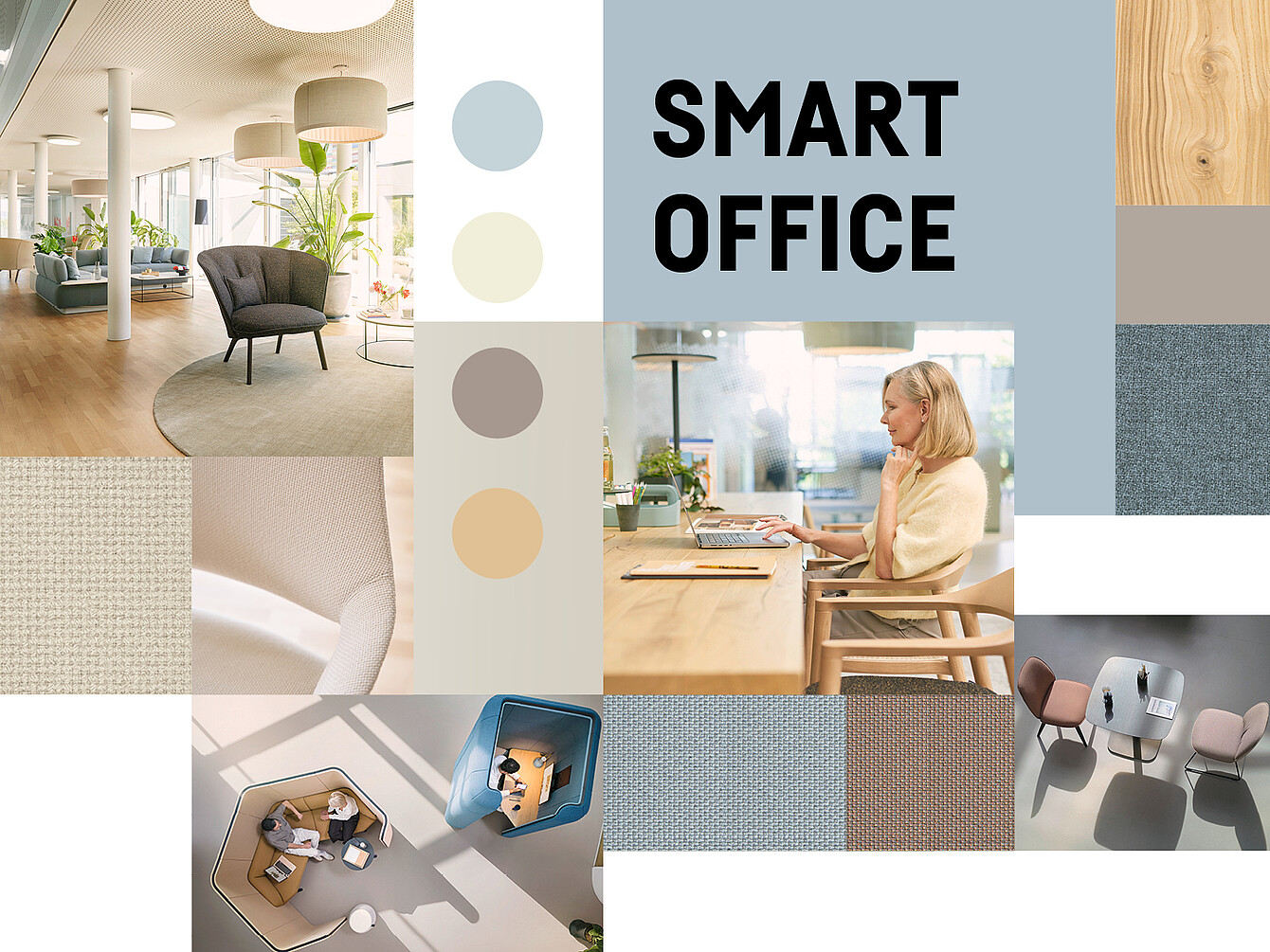
Smart – flexible working
The Smart Office combines technical precision with a warm, human atmosphere. Cool colour tones meet natural materials to create spaces that support both focused work and agile collaboration. This balanced design makes Smart areas versatile working environments for varied tasks and hybrid teams.
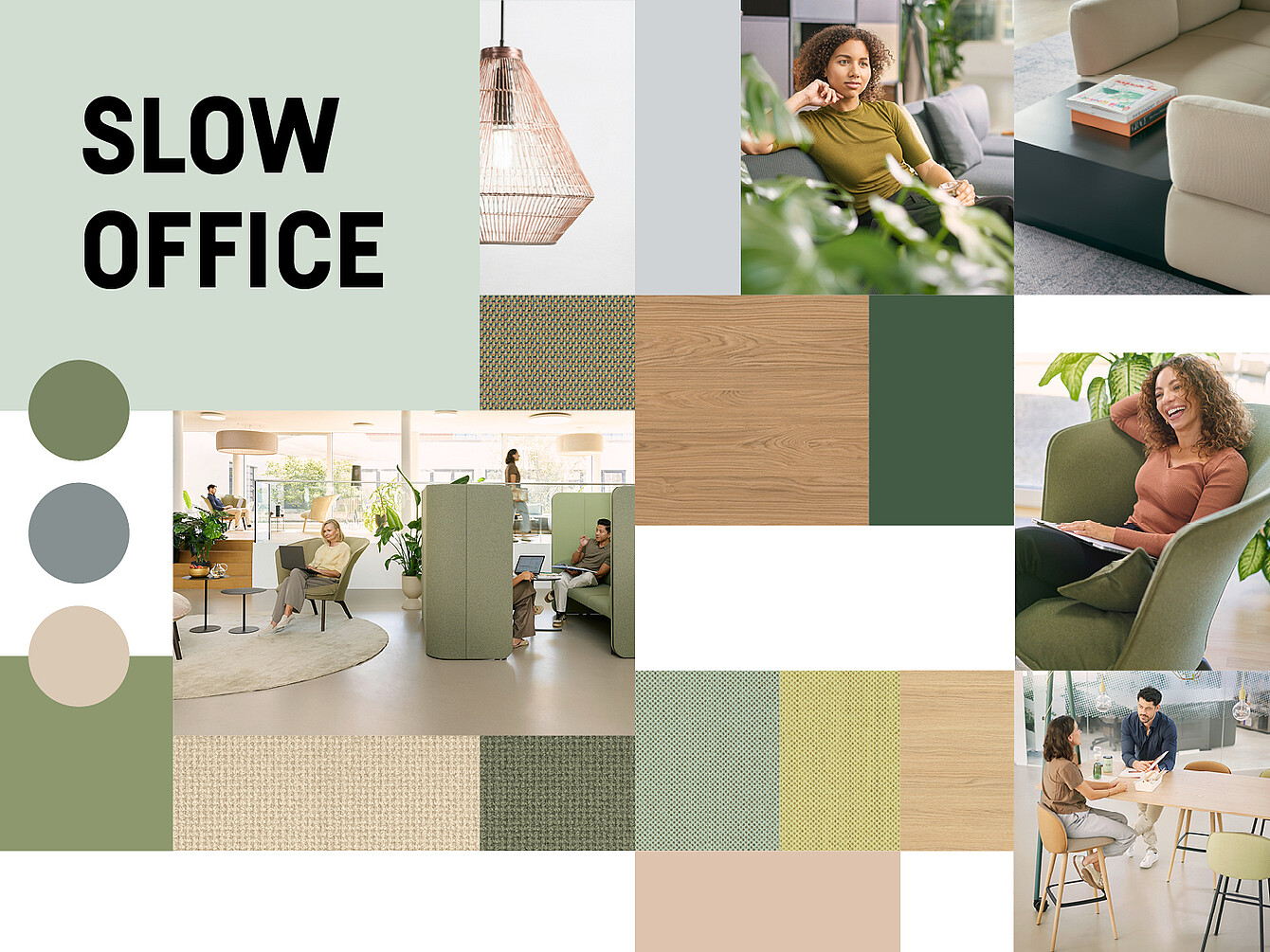
Slow – conscious regeneration
Productivity stems not only from concentration, but also from rest. The Slow Office offers thoughtfully designed retreats where staff can recharge their batteries. Biophilic design, natural shades of green and a calm atmosphere promote mental regeneration and make it easier to switch between periods of intensive work.
Design influences attention
Spaces therefore have an impact not only through their function, but above all through their sensory qualities. Colours, light, acoustics and materials influence how secure, focused or relaxed we feel. Working environments therefore benefit from a coordinated sequence of different atmospheres rather than a uniform design.
The four office concepts illustrate this principle: they show how emotional spatial qualities can be specifically utilised to support different ways of working – from intense focus and creative exchange to conscious regeneration.
The office as an ecosystem of attention
Modern working environments do not consist of a single ideal space, but rather of an interplay of different environments. The combination of Relaxed, Clear, Smart and Slow creates a spatial continuum that adapts flexibly to tasks, how one feels on a given day and individual needs.
In this way, the office becomes a place that does not leave attention to chance, but actively supports it. Or to put it another way: good working environments arise where design and atmosphere offer people exactly the space they need at any given moment.

social media channels: