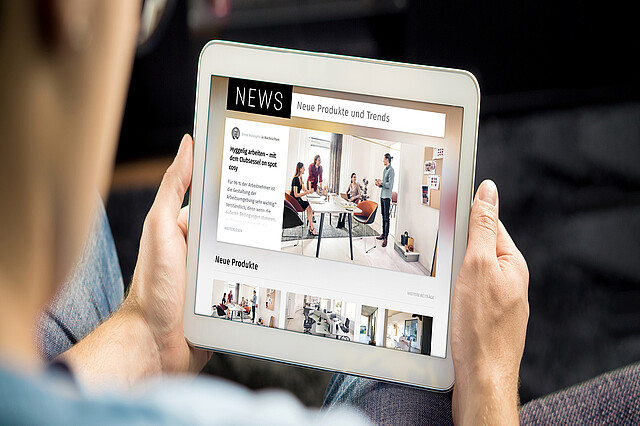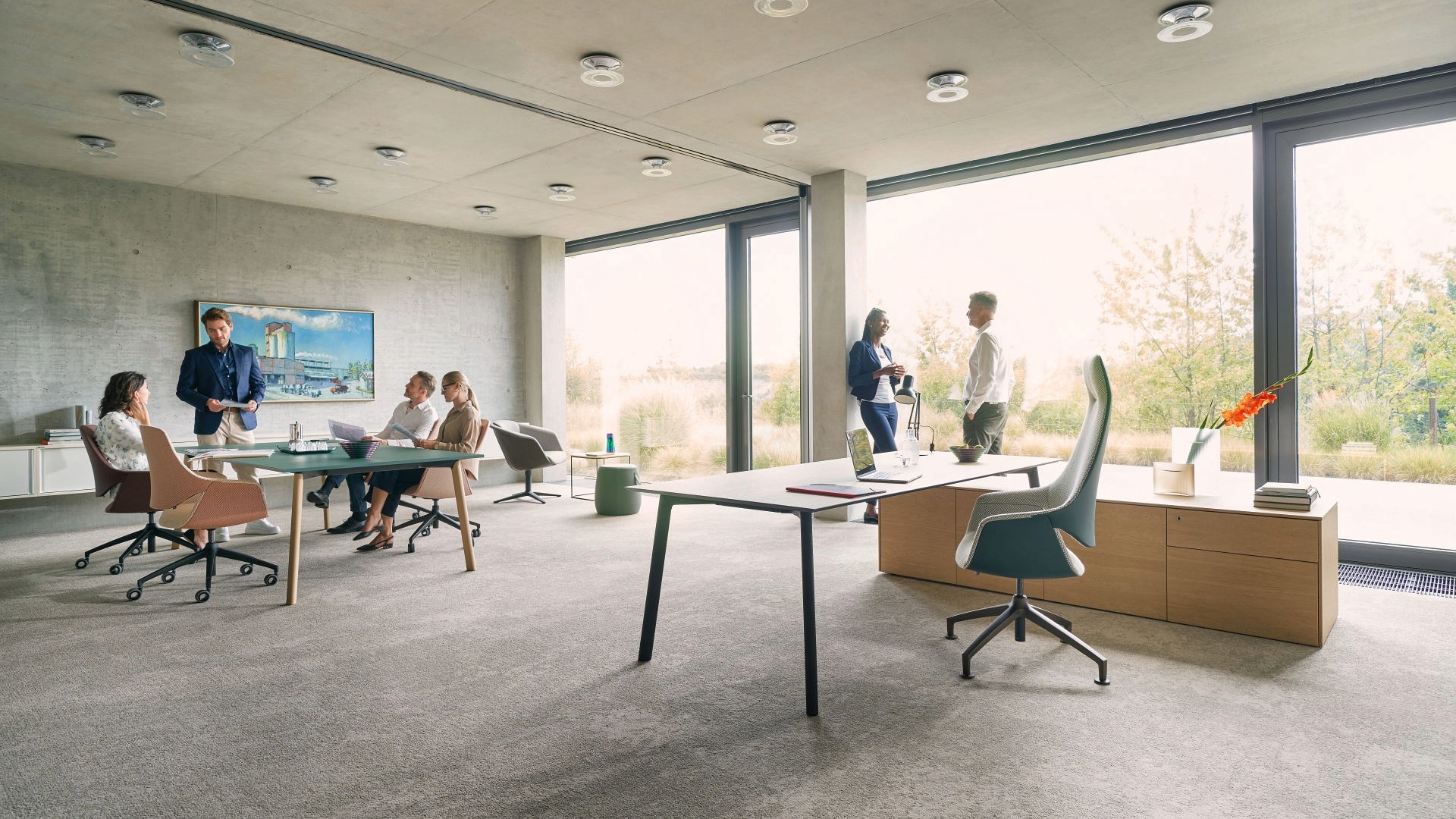

But how can companies respond to these developments in concrete terms? A look at the most important trends and their impact on workplace design and corporate culture.
1. Hybrid work is becoming the new standard
Hybrid work has evolved from a transitional model to a permanent reality. Today's employees expect maximum flexibility in terms of where and when they work. This does not make the office redundant, but rather changes its function.
New Work 2026 means:
- The office is becoming a place of encounter and identification
- Presence times are used specifically for exchange and creative processes
- Digital and analogue working environments are merging seamlessly
Companies are responding with flexible workplace concepts, desk-sharing models and intelligent booking systems. There is a demand for multifunctional furniture that can be quickly adapted to changing teams and tasks.
2. Well-being as a productivity factor
A central component of modern New Work trends is the focus on holistic well-being. Physical and mental health are increasingly recognised as factors for economic success.
The focus in 2026 will be on:
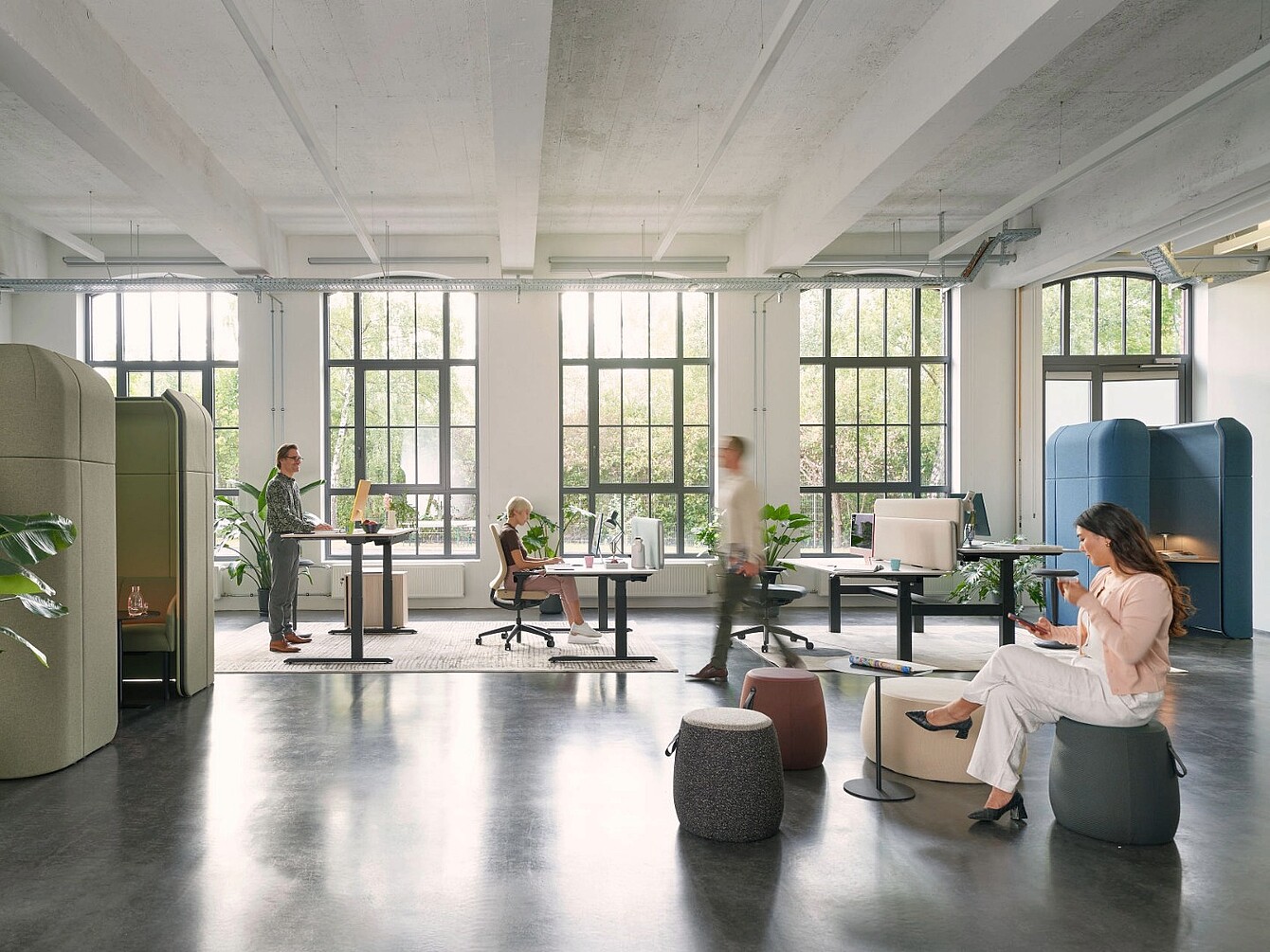
- Ergonomic, individually adaptable workplaces
- Biophilic design elements and natural materials
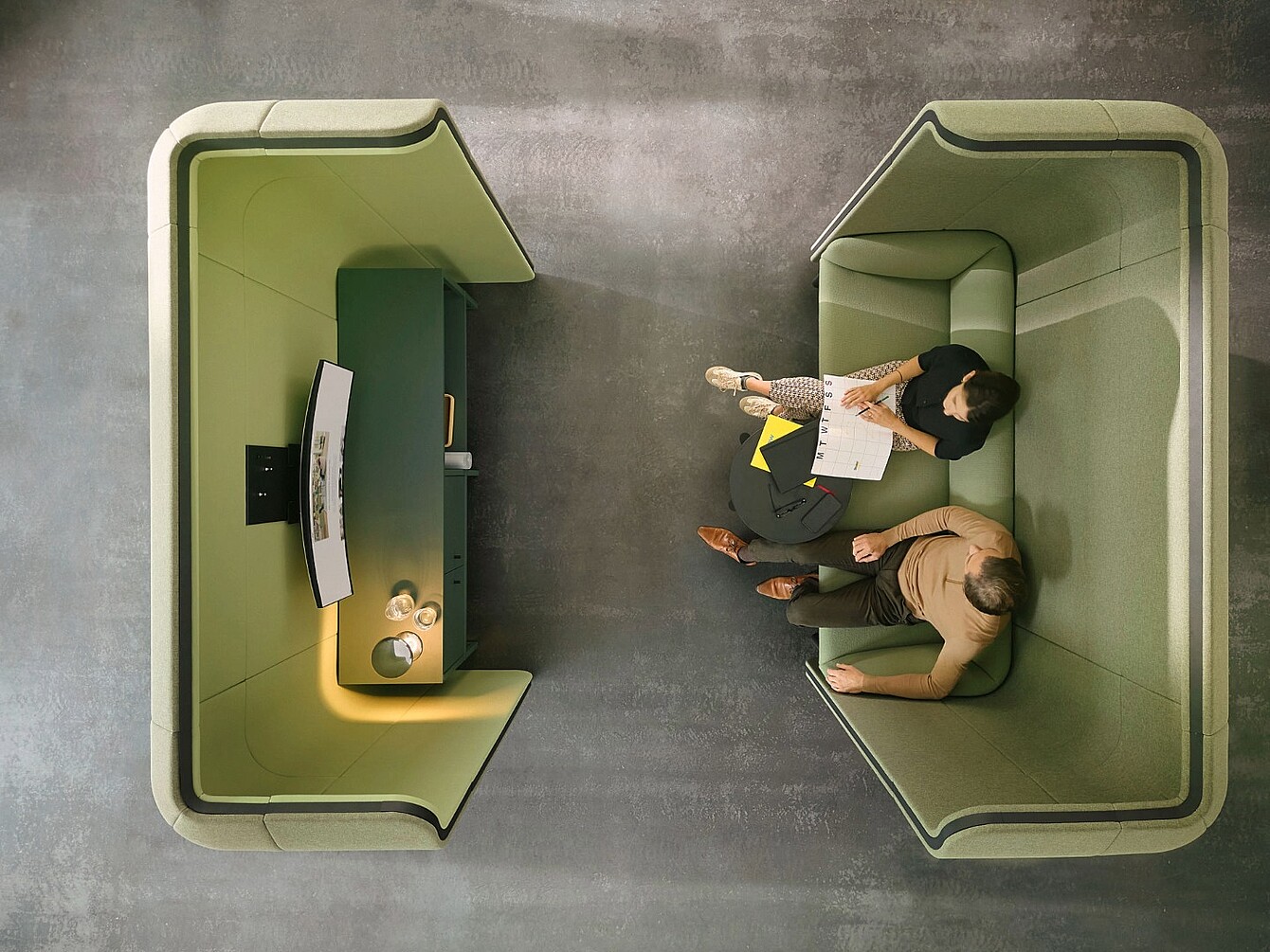
- Acoustic solutions for concentrated work
- Spaces for retreat and regeneration
Companies are investing specifically in health-promoting office concepts. Height-adjustable workstations, well-thought-out lighting concepts and comfortably designed communication zones create a working environment that supports motivation and performance.
3. Collaboration reimagined
Innovation arises from exchange. That is why office spaces are increasingly shifting towards collaborative use. Traditional individual workstations are declining, while project areas, creative spaces and open communication zones are on the rise.
New Work means:
- Flexible meeting formats
- Hybrid conference solutions with digital integration
- Spaces for spontaneous interaction
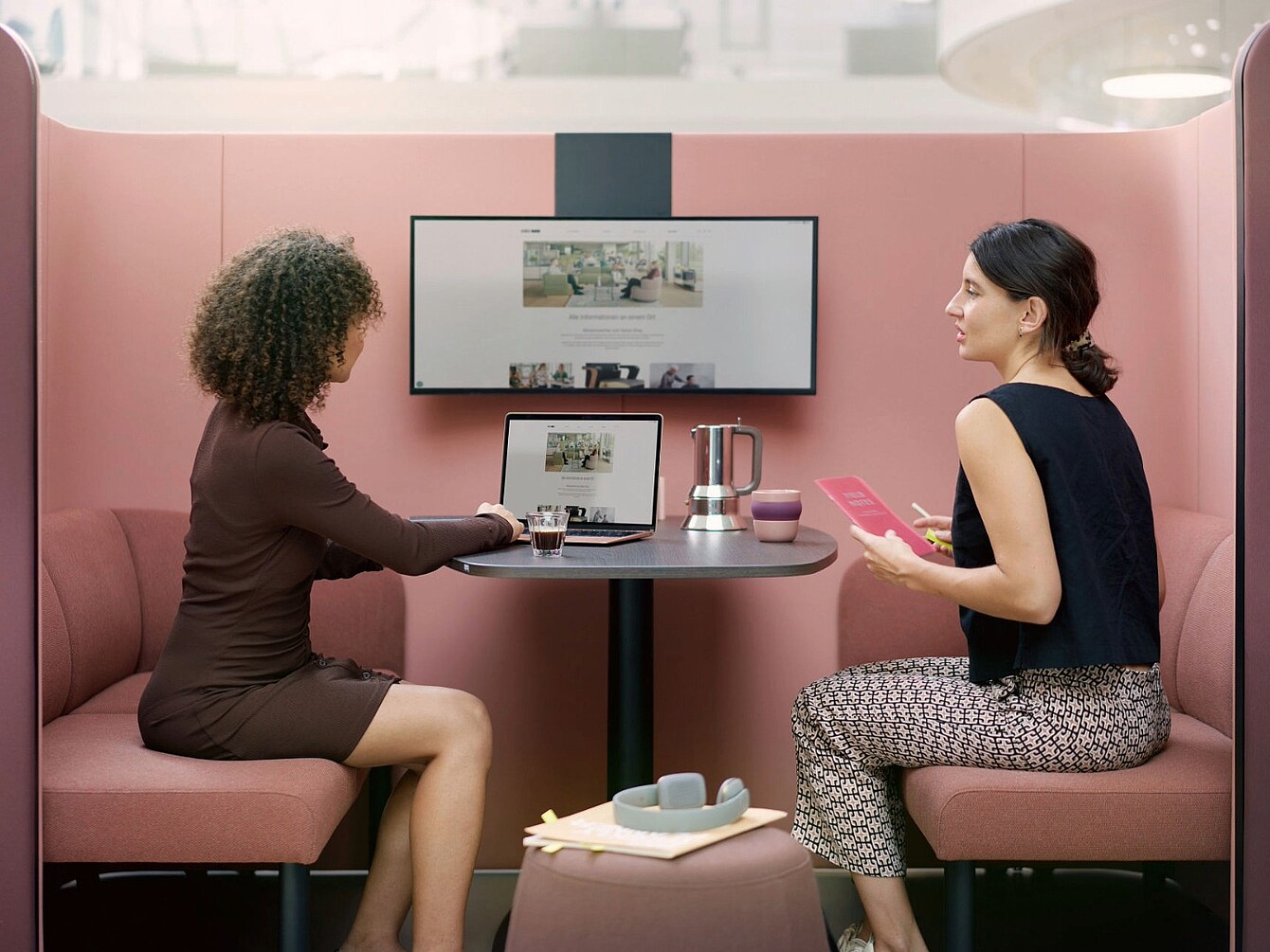
Modular furniture, mobile room dividers and flexibly configurable settings enable quick adjustments to different team sizes and work processes. The office becomes a platform for co-creation.
4. Space concepts with identity
In the wake of the New Work Trends 2026, the identity of the corporate space is gaining in importance. Employees no longer come to the office because they have to, but because it offers added value.
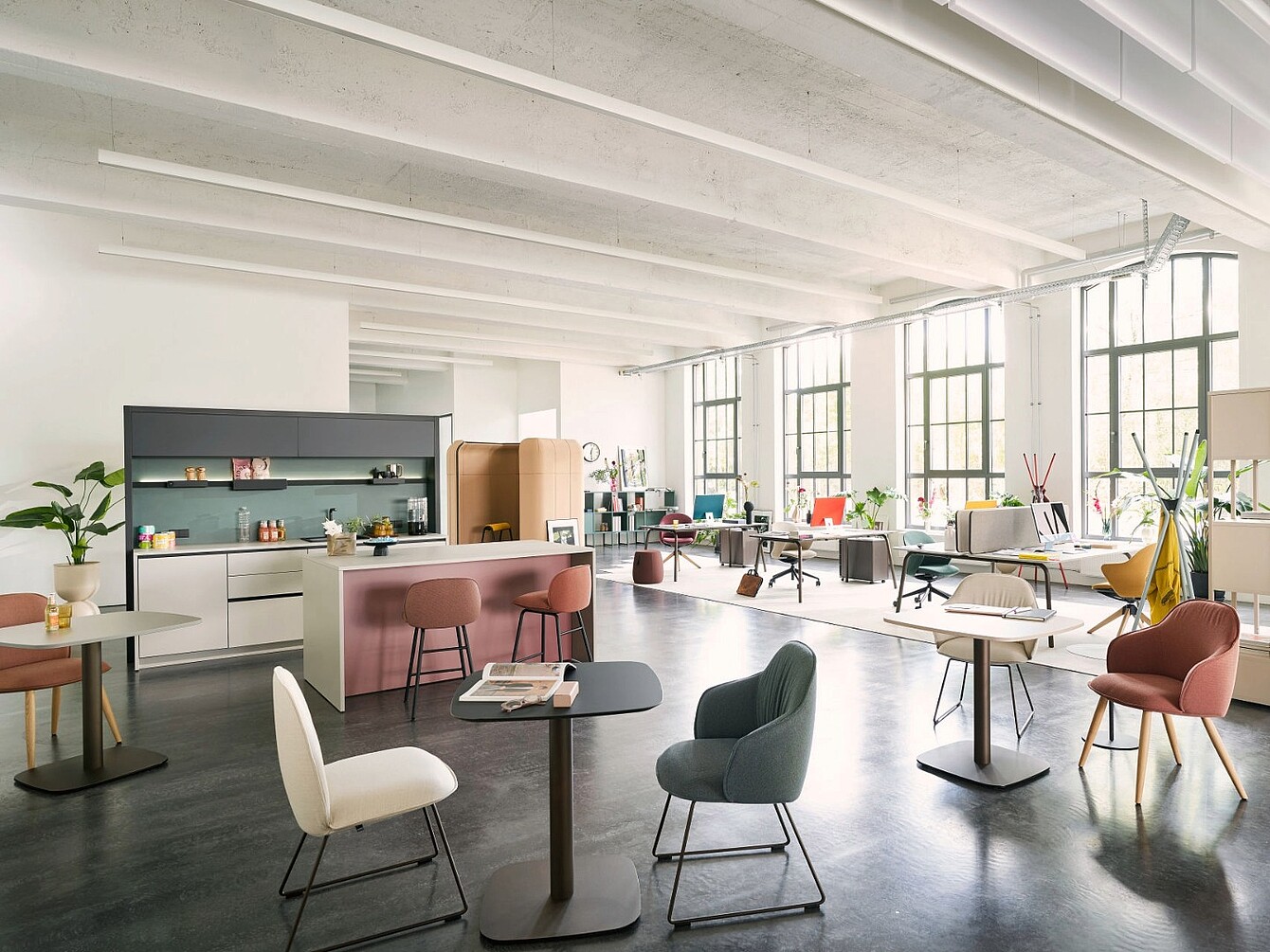
Future-proof space concepts are characterised by:
- Activity-based working zones
- Work cafés as social meeting places
- Project areas with a workshop character
- Retreat areas for focused work
The design is more activity-oriented. This creates differentiated working environments that promote both individuality and teamwork.
5. Sustainability as a matter of course
In 2026, sustainability will no longer be an added bonus, but a basic requirement. Companies will critically examine materials, supply chains and product life cycles.
In the context of New Work, this means:
- Durable, repairable furniture
- Resource-saving production processes
- Recyclable materials
- Transparent sustainability strategies
Sustainable office concepts combine ecological responsibility with aesthetic quality – and strengthen the employer brand at the same time.
How companies can strategically leverage New Work Trends
The transformation to a new work organisation requires more than just new furniture or room layouts. A holistic approach is crucial:
- Conduct a ‘needs analysis’: What working methods really characterise the company?
- Involve employees: Participation increases acceptance and identification.
- Create flexible structures: Spaces and furniture should enable change, not limit it.
- Combine culture and space: Architecture must support corporate culture.
New Work is not a short-term trend, but a continuous development process.
Conclusion: New Work as an opportunity for a sustainable office environment
The New Work Trends 2026 clearly show that the world of work is becoming more flexible, more human and more sustainable. Companies that invest now in intelligent space concepts, ergonomic solutions and collaborative structures are not only creating attractive workplaces – they are also securing their long-term innovative capacity.
New Work is therefore much more than an organisational adjustment. It is a strategic realignment that is fundamentally changing the office world and offers enormous potential for companies and employees.

social media channels: