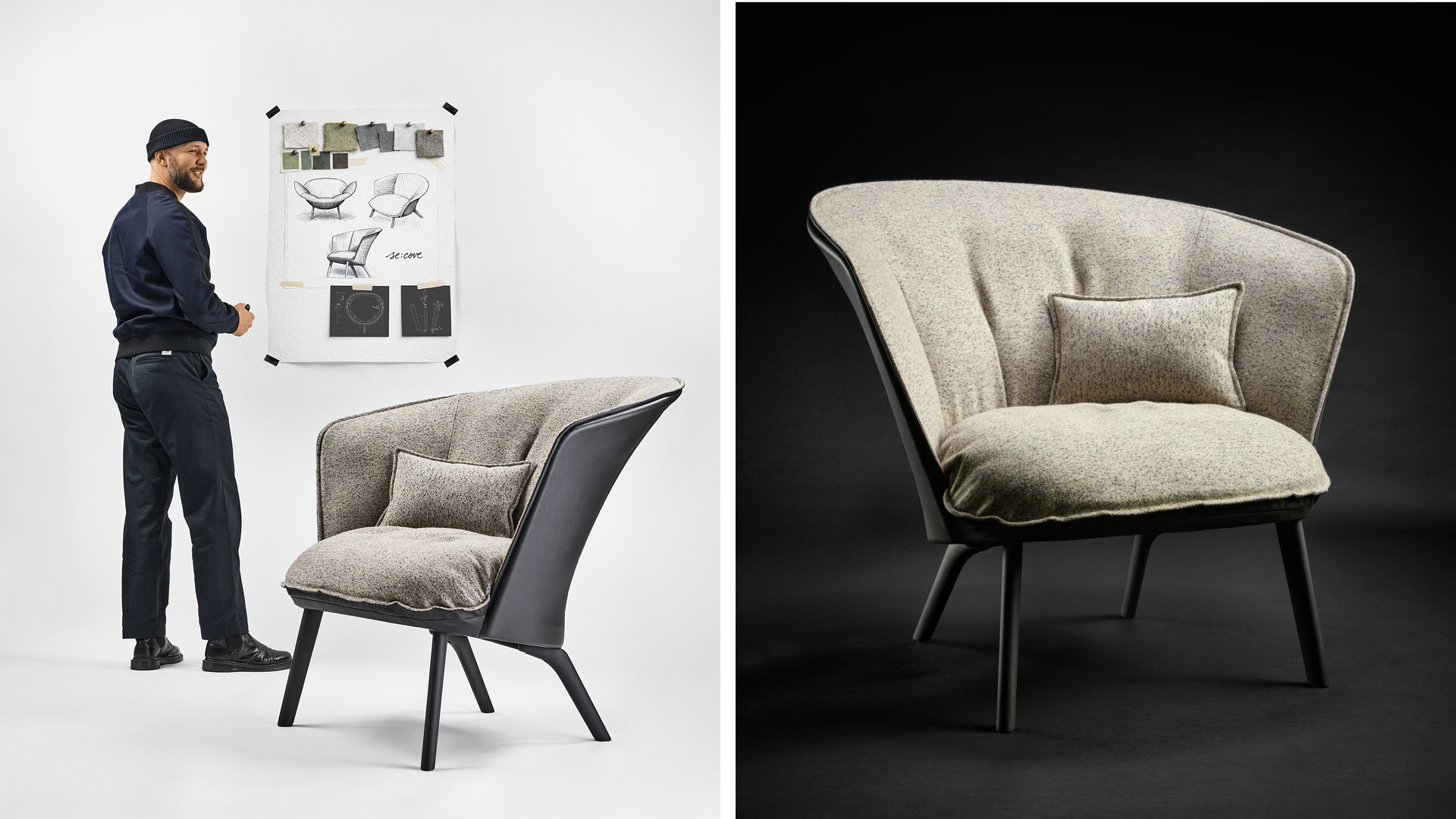

Konstantin, what made this project special for you?
“For me, se:cove was a particularly meaningful project because it was my first soft seating design of this kind and scale. The central challenge was to develop a durable, holistically conceived solution for a sustainable lounge piece - not as an add-on, but as a fundamental design principle. A key aspect was understanding how the form could actively support the use of sustainable materials. At the same time, se:cove also marked a new product category for us at Sedus, which meant rethinking established assumptions, experiment with new ideas and going through multiple iterations. It was precisely this open process that made the project so special for me and ultimately led to this final result.”
What role does se:cove play in the office?
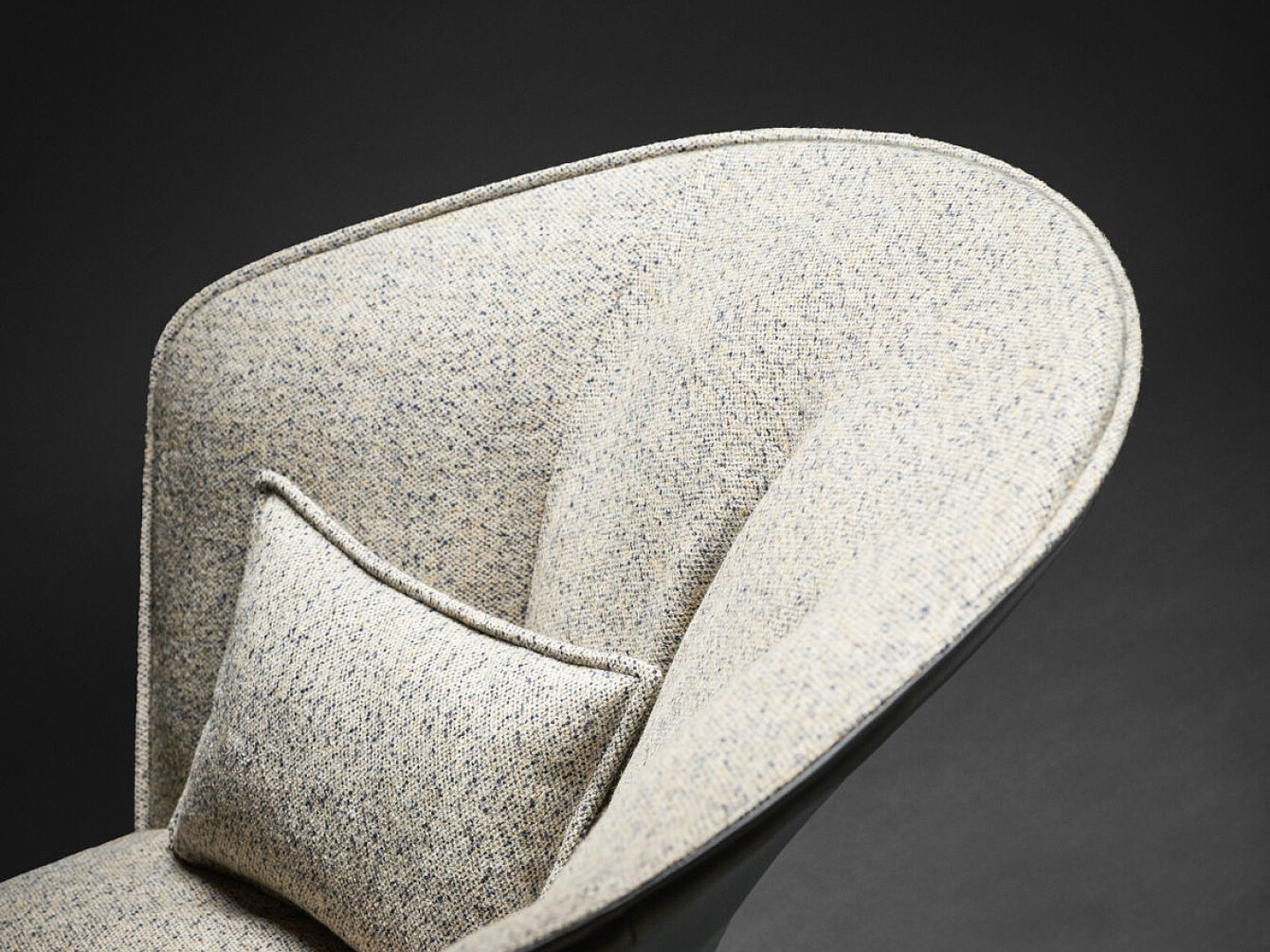
“se:cove takes on a role in the office that is becoming increasingly important in open work environments: the lounge chair creates a personal retreat that can be used spontaneously, functioning without technical means,” explains Thomas. “The surrounding form conveys a sense of protection without isolating the user from the environment. This creates a space for concentration, short breaks or confidential conversations - flexible, without predefined usage scenarios. The textile surface contributes to creating both acoustic and atmospheric calm, softening the space. In this sense, se:cove is less a seat in the traditional sense and more a small architectural element that brings structure and humanity to open offices.”
A true eye-catcher, this new lounge chair is the perfect choice for focused work, creative breaks or extended conversations. While the rear view conveys a sense of dynamism and structure, the front invites the user to take a seat with its open and welcoming design.
Sustainability as a Structural Principle
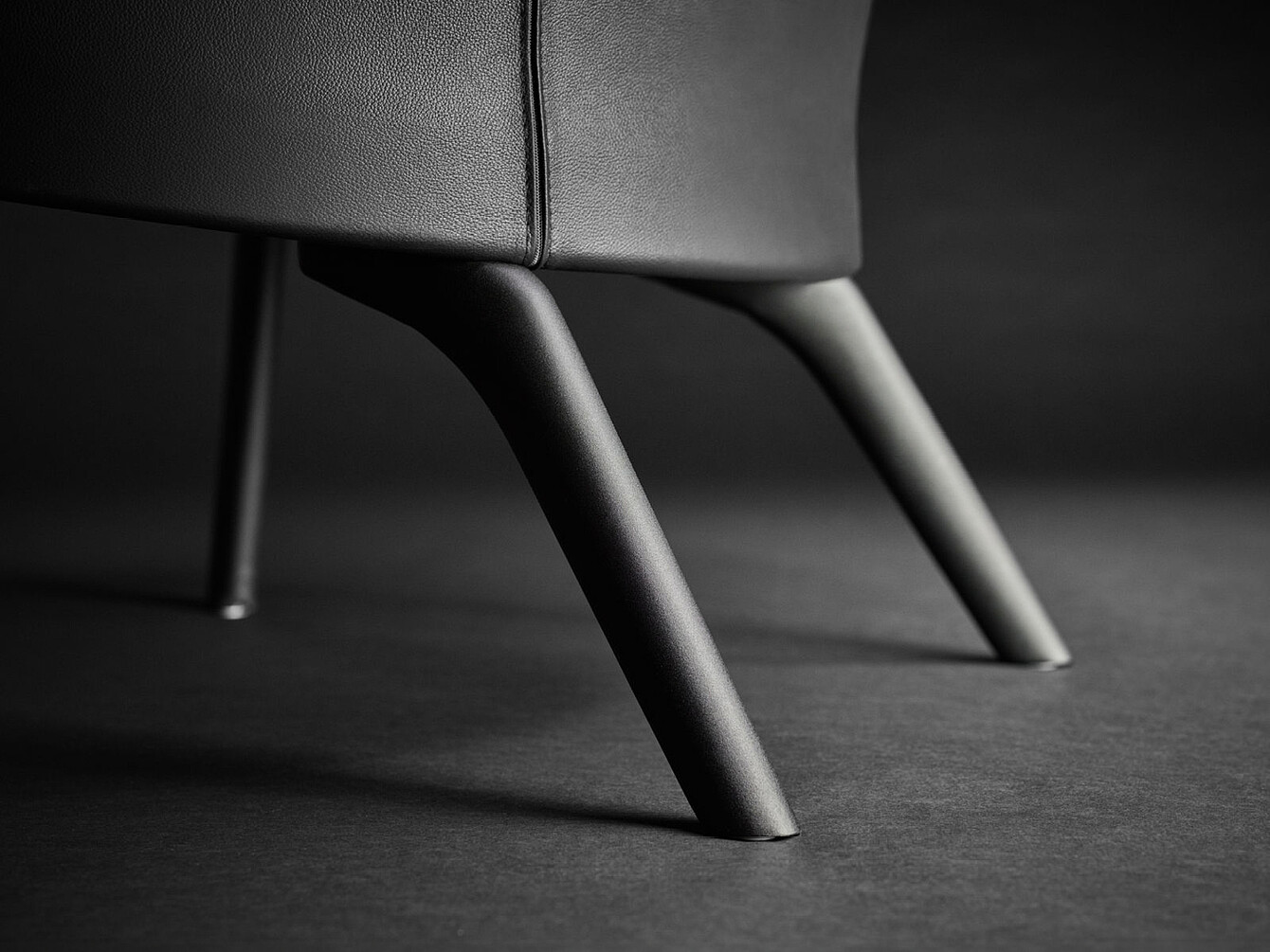
With se:cove, sustainability begins with the construction. The central approach is ‘Design for Disassembly’: the product is structured in such a way that each component can be separated by material type and replaced at the end of its life cycle.
A solid beechwood frame forms a robust, renewable base to which all other components are either screwed or tensioned. This allows the structure to remain usable for decades. The upholstery completely avoids conventional PUR foam and instead uses fillings made from 100% recycled PET, complemented by membrane layers that ensure comfort and dimensional stability. The textile cover is not glued but fixed using detachable connections, allowing it to be renewed at a later stage.
Sedus also relies on responsible decisions in production: around two thirds of the steel, aluminium and wood required for manufacturing are sourced in Germany, with almost all remaining materials procured within Europe. This prevents long transport routes and supports the local economy. Furthermore, materials are used that have been examined and evaluated with regard to potential health and environmental impacts.
se:cove demonstrates that a sustainable object does not need to convince through visible signals, but through a clear, well-considered construction that inherently incorporates responsibility.
Form, Material and Construction as One
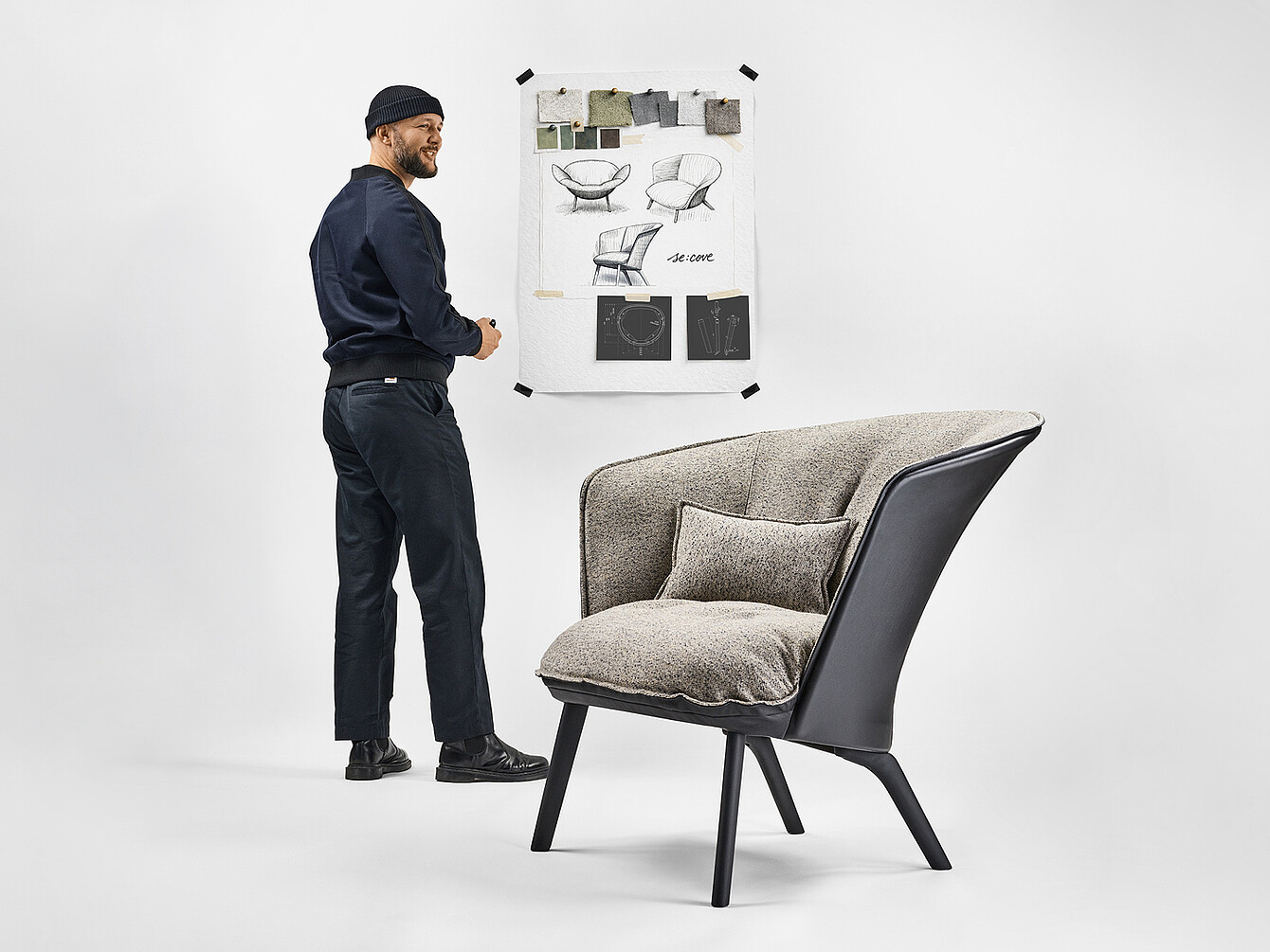
The form of the chair evolves from an intuitive gesture of protection: soft, embracing and yet clearly defined.
“The open, rounded basic geometry creates an object that asserts itself autonomously, yet is never too loud,” Thomas explains. “The textile surface defines its expression, lends warmth and calm, and allows the piece to integrate gently into various architectural contexts. Design and construction are not separate disciplines here, as the sustainable choice of materials and precise disassemblability form the structural core while simultaneously shaping the product’s aesthetic.”
The comfortable upholstery creates a cosy, inviting character and offers a high level of comfort. The relaxed upholstery appearance with refined folds further enhances its residential feel.
Individually Configurable
se:cove is available with either a four-leg wooden frame or a four-leg aluminium frame. The three upholstery covers - seat cushion, inner backrest cushion and outer backrest cushion - can be configured independently and selected from the Sedus upholstery portfolio.
A distinctive design feature is the surrounding decorative seam with a double-stitched seam allowance. The inner and outer sides are made from the respective selected upholstery material, and the thread colours follow the chosen fabric colour. This decorative seam is also used on the rectangular cushions.

social media channels: