
What exactly is lordosis?
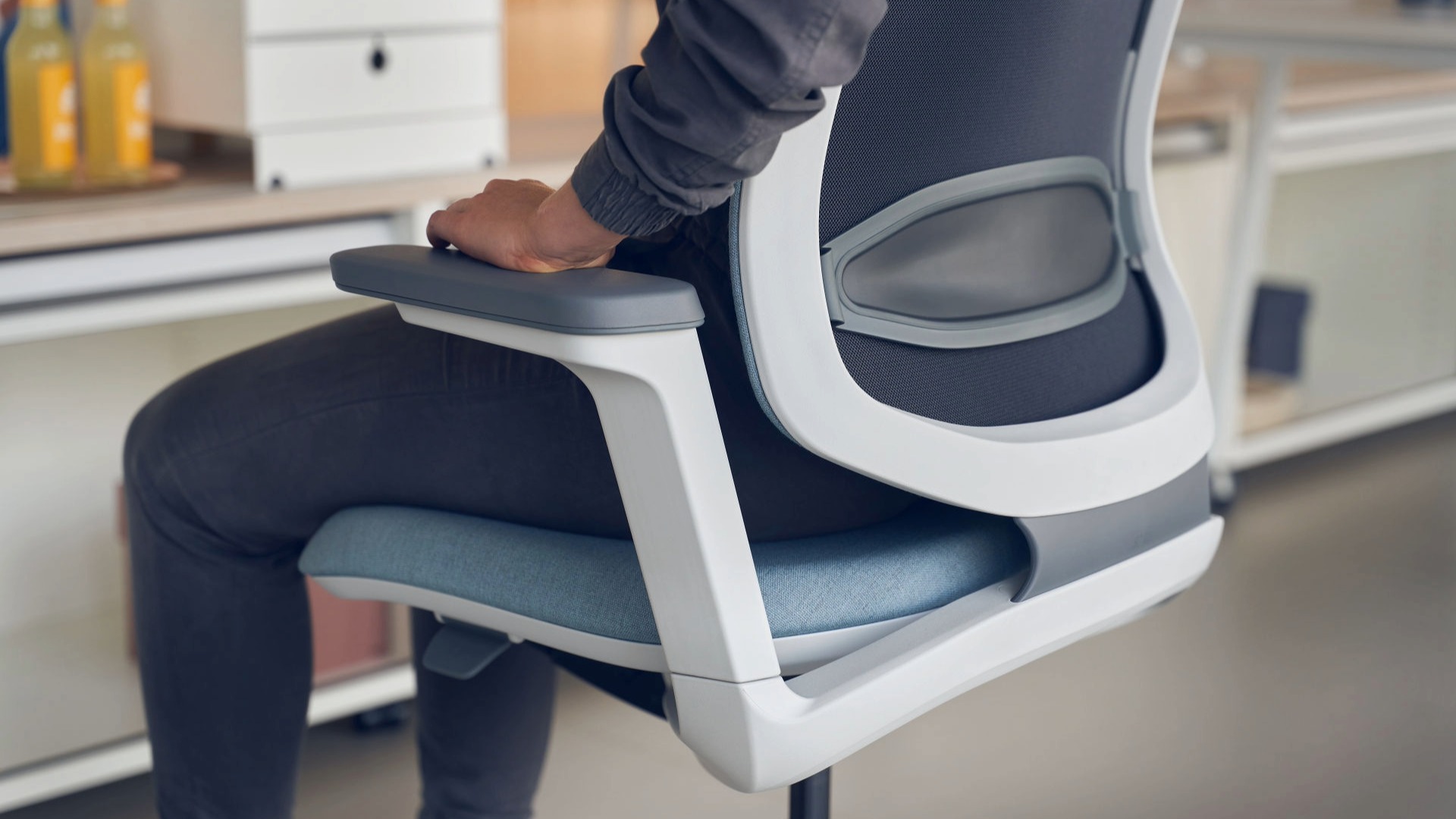
The human spine has a natural S-shape. Lordosis refers to the slight forward curve of the cervical and lumbar spine. This curve plays a particularly important role in the lower back: it distributes pressure evenly, stabilises posture and acts as a natural shock absorber.
Problems arise when prolonged sitting alters this natural shape. Anyone who slumps or maintains an unfavourable posture over time places unnecessary strain on the intervertebral discs, muscles and joints. This can lead to tension, pain and fatigue. That is exactly where lumbar support comes into play.
Why a lumbar support is so important
The lumbar support – also known as a lumbar cushion – supports the natural curve of the lumbar spine. It helps to stabilise the lower back and promote an ergonomic sitting posture. Especially during long hours at a desk, correctly adjusted support can significantly relieve pressure on the back.
Important to note: not every setting suits every person. Due to differences in height, back length and sitting habits, the lumbar support should be adjustable – both in height and depth.
Adjusting the lumbar support: How to do it properly
Many ergonomic office chairs offer the option to adjust the lumbar support individually. But how do you find the right setting?
1. Sit correctly in the chair
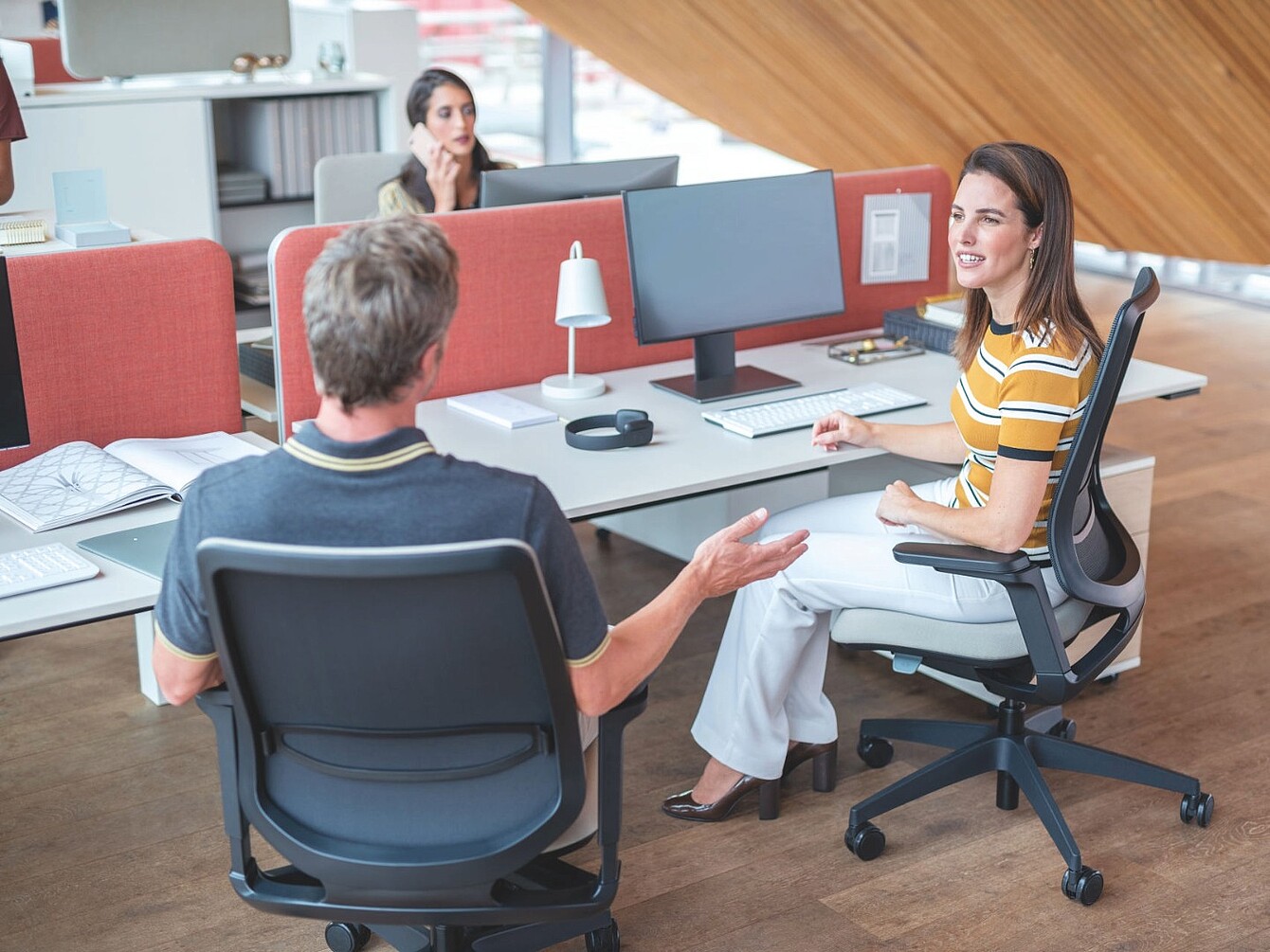
First, sit right back against the backrest. Both feet should be flat on the floor, with your knees at an angle of approximately 90 degrees. This basic posture forms the basis for all further adjustments.
2. Finding the right height
The lumbar support should be positioned roughly at the level of your lower back or the crest of your pelvis. It should rest gently against the natural inward curve of your lumbar spine.
If the support is set too high, it will tend to press into the middle of your back. If it is set too low, it loses its ergonomic effect.
3. Adjusting the correct pressure
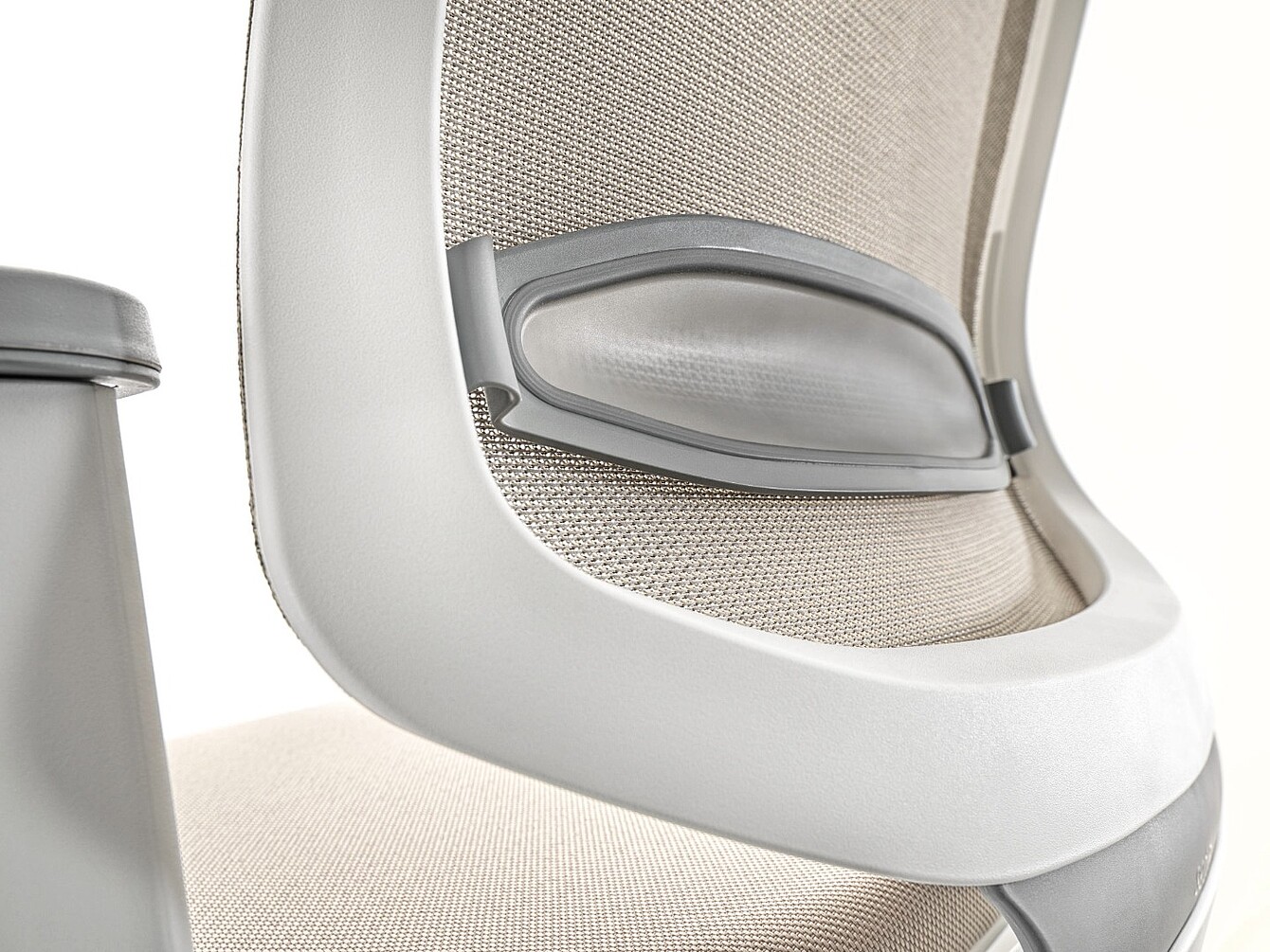
The support should be clearly noticeable but not cause pressure. The aim is to promote natural posture – not to force the back into a rigid position. Modern office chairs also allow for depth adjustment, enabling the distance between the lumbar support and the back to be individually adjusted.
4. Change your posture regularly
Even the best sitting position is no substitute for movement. It is therefore recommended to change your posture regularly, stand up from time to time and sit dynamically. Height-adjustable desks and flexible working environments provide additional support in this regard.
Common mistakes when sitting
Even high-quality office chairs only deliver their full ergonomic benefits when they are correctly adjusted. The most common mistakes include:
- a lumbar support set too high or too low
- a hunched back caused by sitting with a forward lean
- a lack of contact between the back and the backrest
- sitting in a rigid position for long periods without changing posture
- incorrectly adjusted seat height or armrests
These poor postures can increase the strain on the spine and lead to long-term discomfort.
Ergonomic sitting starts with the right workstation
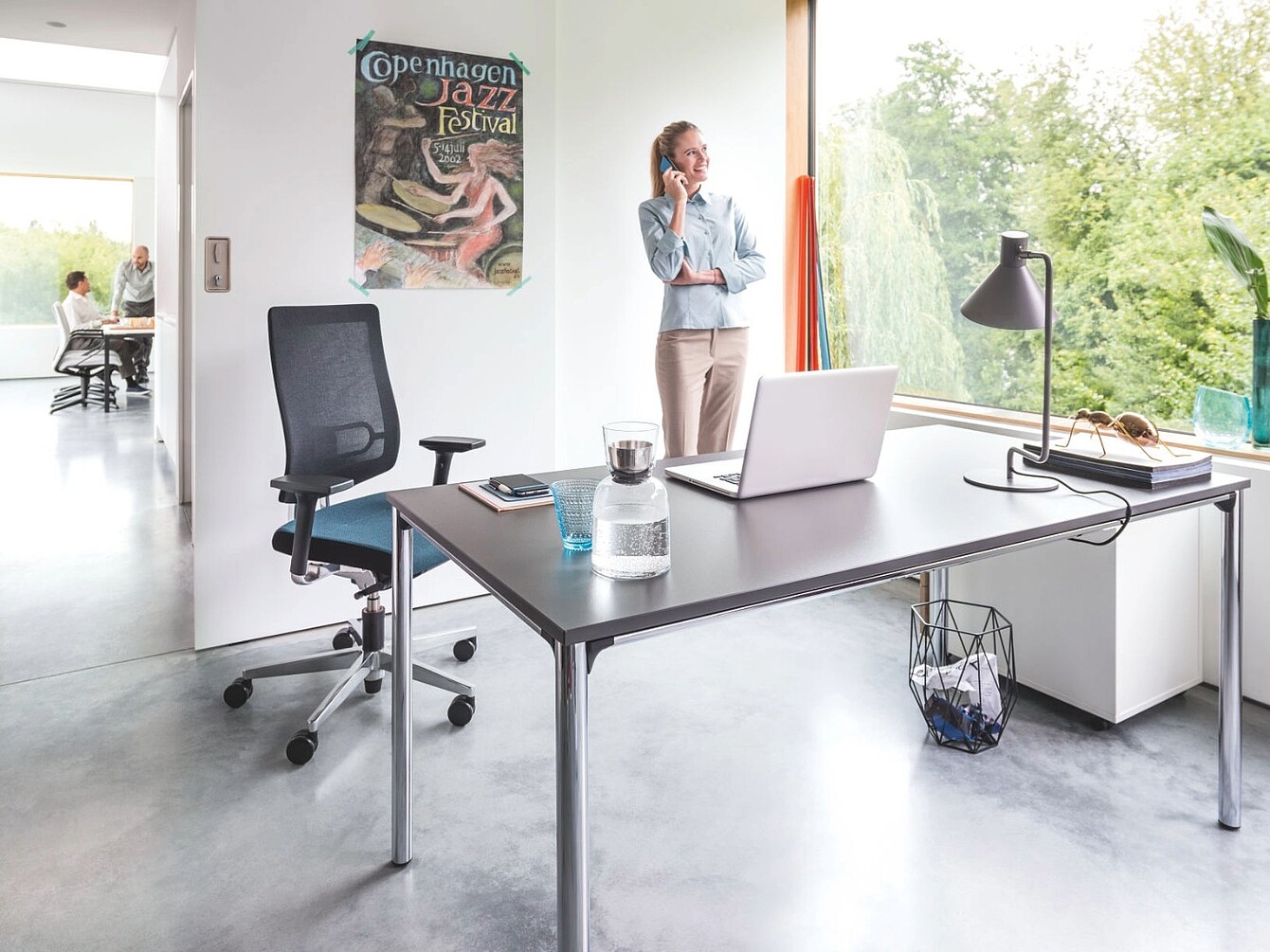
An ergonomic workstation takes into account not only the lumbar curve but the entire musculoskeletal system. That is why the office chair should always be individually adjusted to suit your own height and working style.
Further tips:
- Position the monitor at eye level
- Keep your shoulders relaxed
- Rest your forearms loosely
- Alternate regularly between sitting and standing
A workplace that supports focused and healthy working in the long term is only achieved through the interplay of office chair, desk, monitor and movement in the daily work routine.
Conclusion: Correct lumbar support promotes healthy working
The natural lordosis of the spine plays a central role in healthy sitting. A correctly adjusted lumbar support can help relieve pressure on the lumbar spine, promote an ergonomic posture and prevent back pain.
Those who tailor their workspace to their individual needs and consciously integrate movement into their daily work routine lay the foundations for greater well-being and long-term back health in the office.

social media channels: