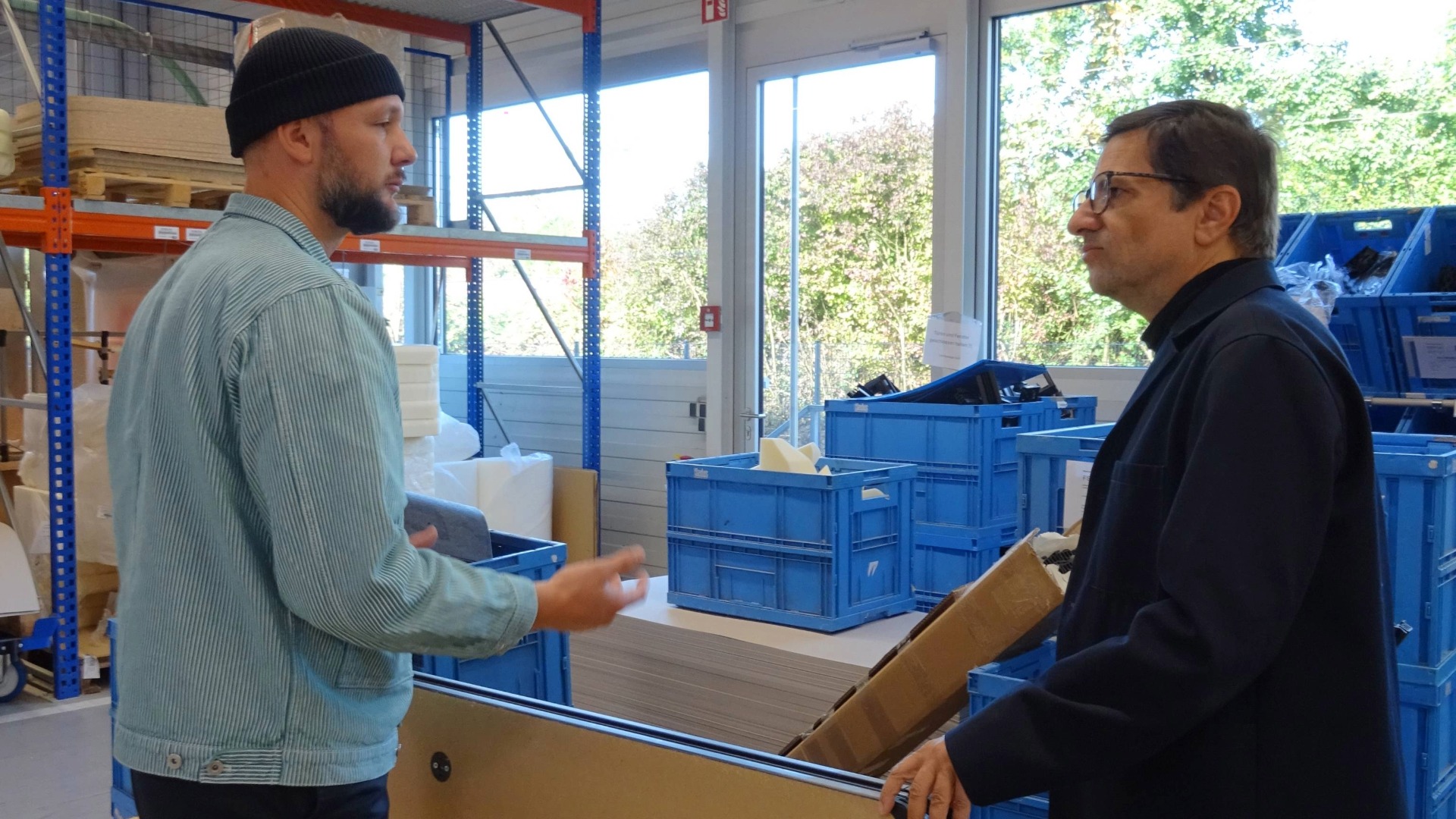

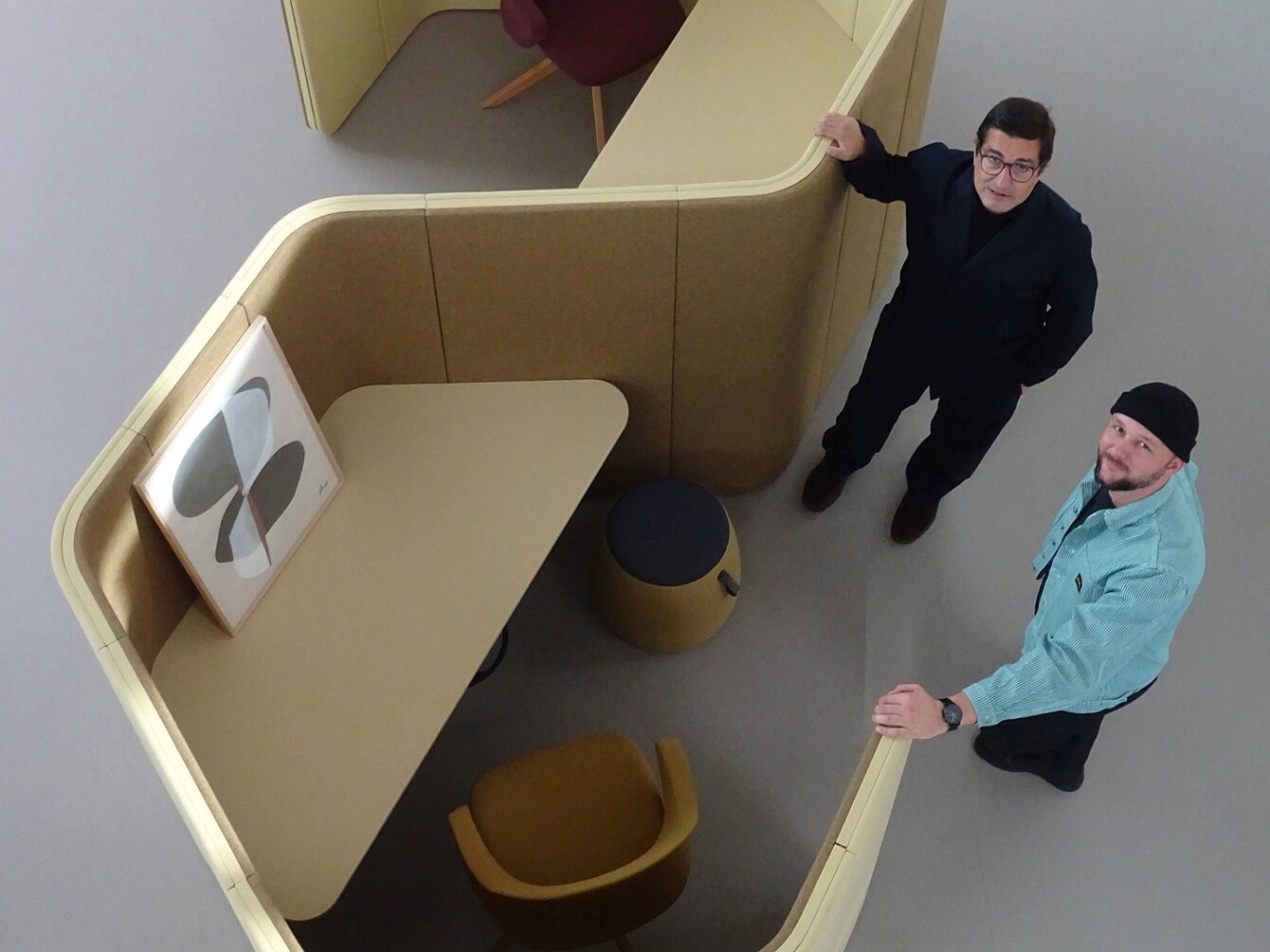
Acoustic solutions not only influence the audibility of a room, but also its atmosphere, its indoor climate and ultimately the wellbeing of the people who work in it. With se:hive, Sedus has reinterpreted this claim – together with Gutex, a leading manufacturer of ecological insulation materials made from wood fibre.
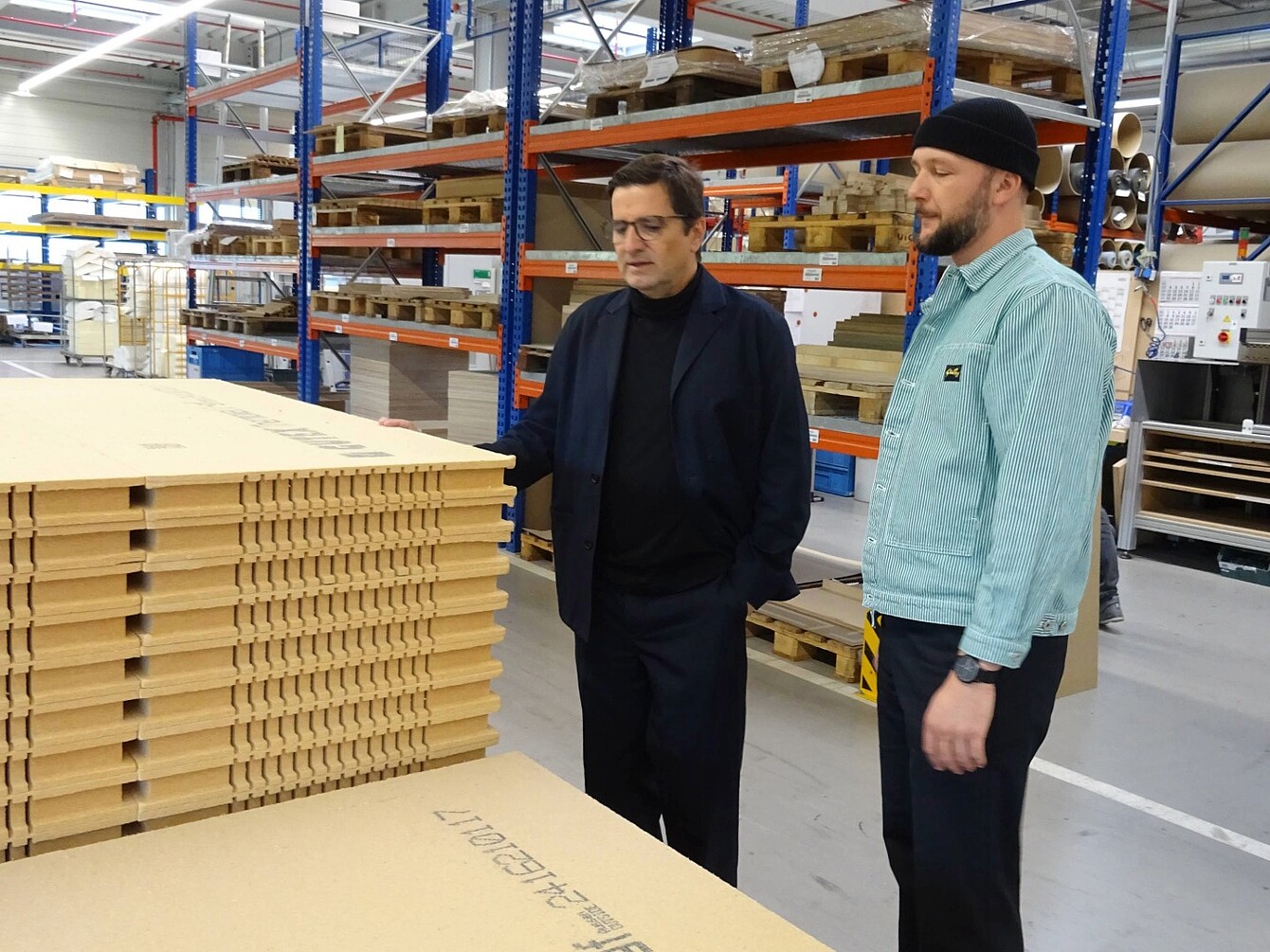
In this interview, Rudi Raschke, Corporate Communications Manager at Gutex, talks about the special properties of wood fibre, regional value creation in the Black Forest, and how a classic building product could become a defining element of sustainable interior design.
Gutex has been a pioneer in wood fibre insulation in Europe for more than 90 years. What distinguishes wood fibre from other insulation materials?
Wood fibre works because it is made from the right material: it breathes, stores heat, regulates moisture and feels like a natural ally in construction. Unlike purely synthetic insulation materials, this creates a feeling that people instinctively find pleasant. And because the raw material comes directly from our forests, the entire value creation process remains traceable and sustainable.
Like Sedus, Gutex has been rooted in the Black Forest for generations. How does this regional origin shape the company's attitude to materials, production and sustainability?
The way our company once used hydropower to produce paper and then moved on to wood fibre certainly plays a role. Gutex insulation is the result of decades of continuous improvement and inventiveness. At the same time, it works with the material that characterises our region. And, of course, we also want to contribute to nature's natural cycles – even when our insulation has already completed its long life cycle.
Can you briefly outline the journey of wood fibre – from the tree in the forest to the finished wood fibreboard?
We source two types of predominantly regional wood: wood chips on the one hand, and round timber on the other, i.e. cut logs that are stripped of their bark and chopped up. They are dried via a complex process and then processed into soft or solid insulation boards or loose blow-in wool.
For the Sedus se:hive product, the wood fibreboards had to be made "bendable". The teams at Gutex and Sedus worked closely together to achieve this. How did the collaboration with Sedus and se:hive designer Konstantin Thomas go?
It was certainly not a quick process, but rather a lengthy one until this great result was achieved. We were curious about how it would work and we need to supply a lot of material. Sedus designer Konstantin Thomas then came up with the right ideas and the best technology to ensure that this unique product came to fruition.
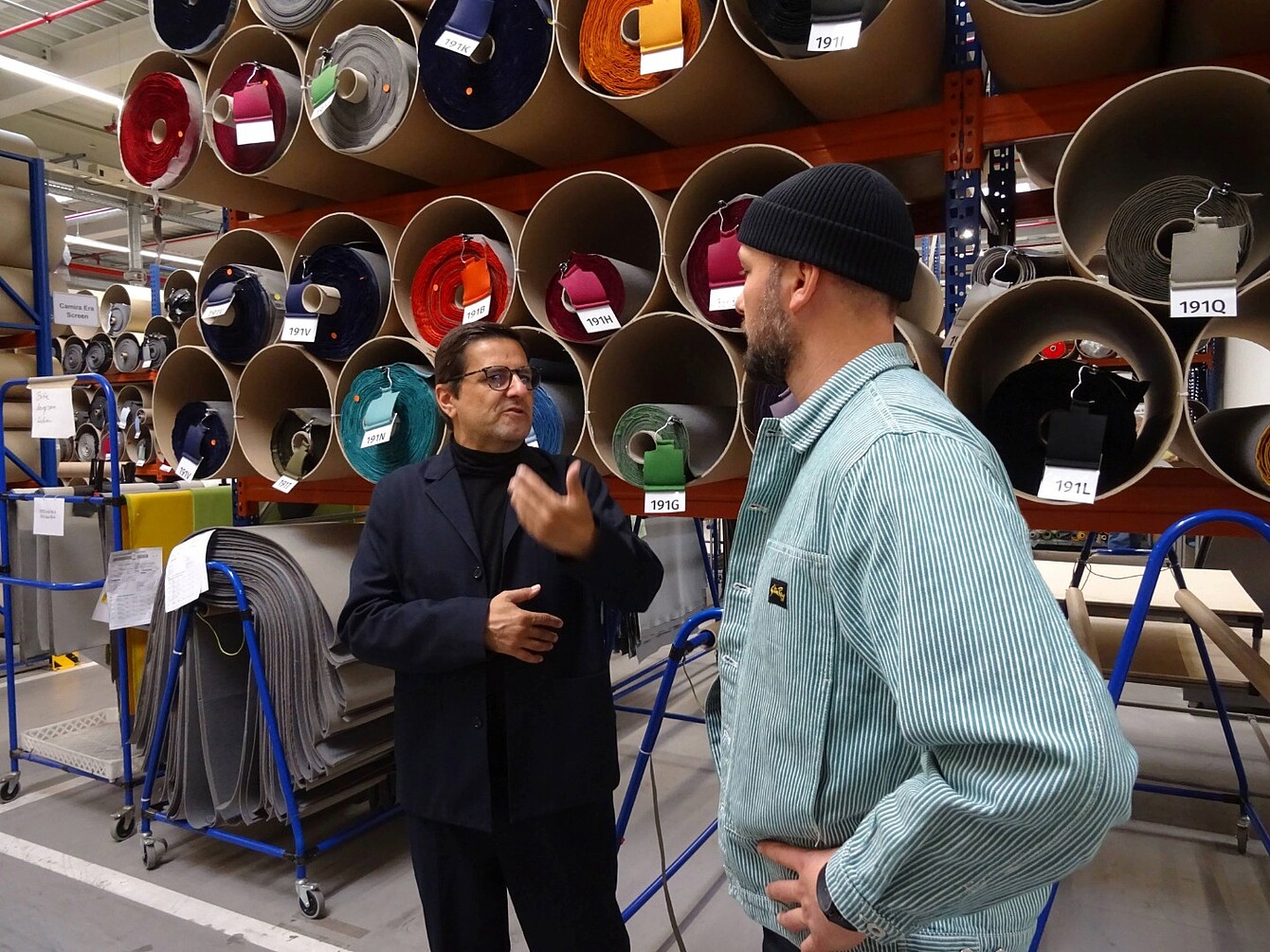
What do you think: could the "bendable" panels open up further new areas of application for Gutex?
In the area of façades and roofs for new buildings or renovations, this has not played a major role for us so far. Among our partners, Sedus is still very much in a league of its own with this idea for interiors.
Wood fibre is considered particularly beneficial for the indoor climate. Why is that?
Wood fibre has three properties that other insulation materials do not combine: high heat storage capacity, diffusion-open constructions and natural moisture buffering. This stabilises the indoor climate and protects against structural damage.
se:hive is not just about acoustics, but also about atmosphere. How did Gutex contribute to the product's special warmth and naturalness?
First of all, perhaps simply through the reassuring feeling that this is a natural product made of wood and nothing synthetic. The rest is certainly also due to the Sedus design and the high-quality fabrics.
What new insights or inspiration have you gained from the collaboration with Sedus?
That it works wonderfully when two companies located just ten kilometres apart combine their ambitions. This brings together a great deal of innovative strength, creative ability and tradition. We think that this is clearly evident in the result of the collaboration.
Conclusion: regional strength, shared vision
The collaboration between Sedus and Gutex impressively demonstrates the potential that arises when material expertise, design and shared values come together. se:hive is therefore not just an acoustic solution, but an expression of a holistic understanding of sustainability, atmosphere and responsibility.
If you would like to find out more about the design idea behind se:hive and the collaboration with Gutex, Sedus LOOKBOOK N° 03 features an in-depth interview with designer Konstantin Thomas, who explains the process, from the choice of materials to the modular system concept.

social media channels: