
But what defines successful collaboration today – and how can companies design their offices accordingly?
Why collaboration in the office needs a rethink
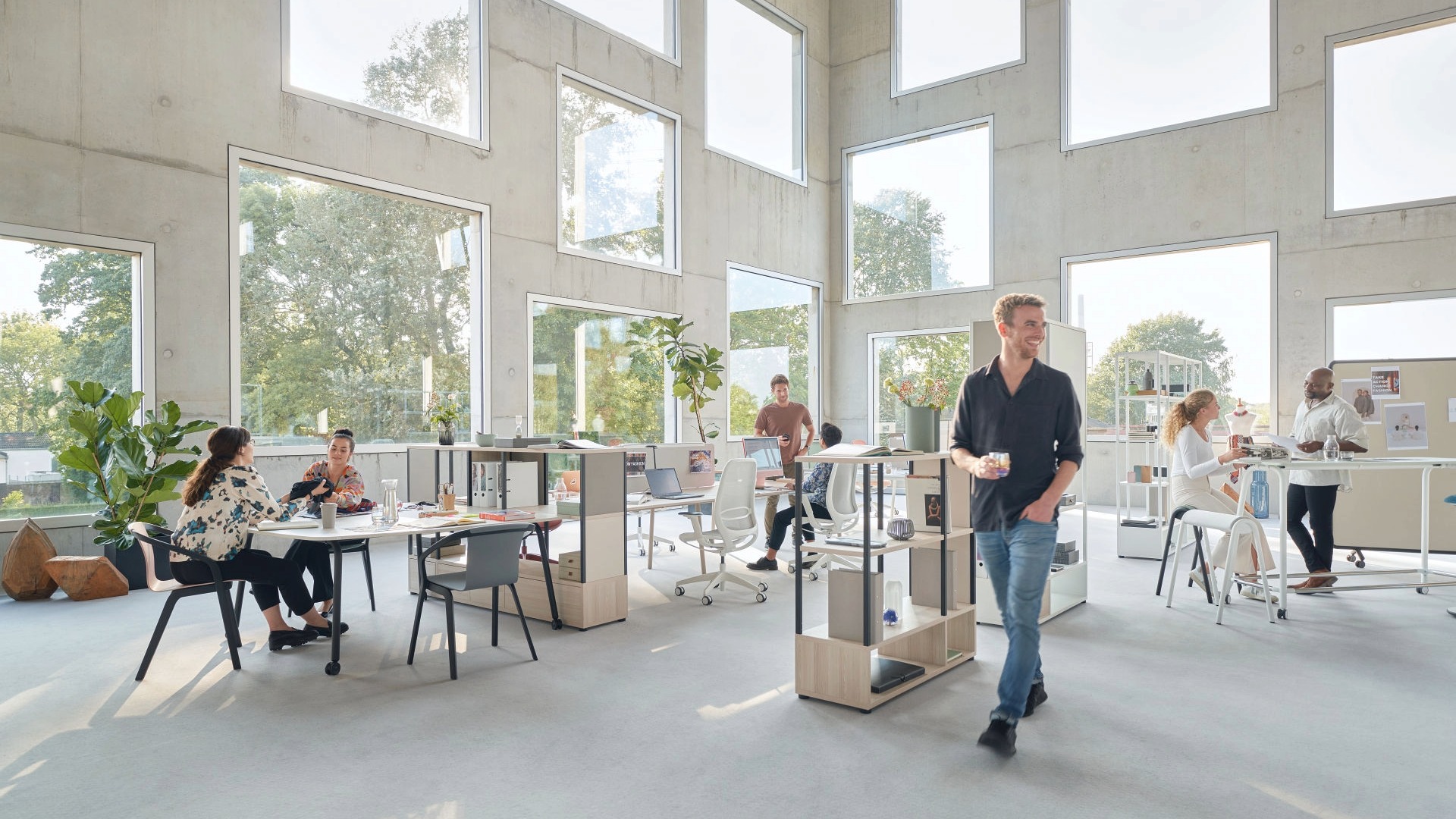
Hybrid working models, rising demands for innovation and interdisciplinary teams are placing new demands on working environments. Whilst focused work remains important, the joint development of ideas is becoming increasingly significant.
The traditional office layout, with fixed individual workstations, quickly reaches its limits here. What is needed instead are flexible spatial solutions that facilitate spontaneous meetings, creative exchange, and structured collaboration in equal measure.
Collaborative spaces as a key to success
Collaborative spaces are specifically designed to encourage interaction. They create places where teams can come together, develop ideas and work out solutions.
Typical features of such spaces include:
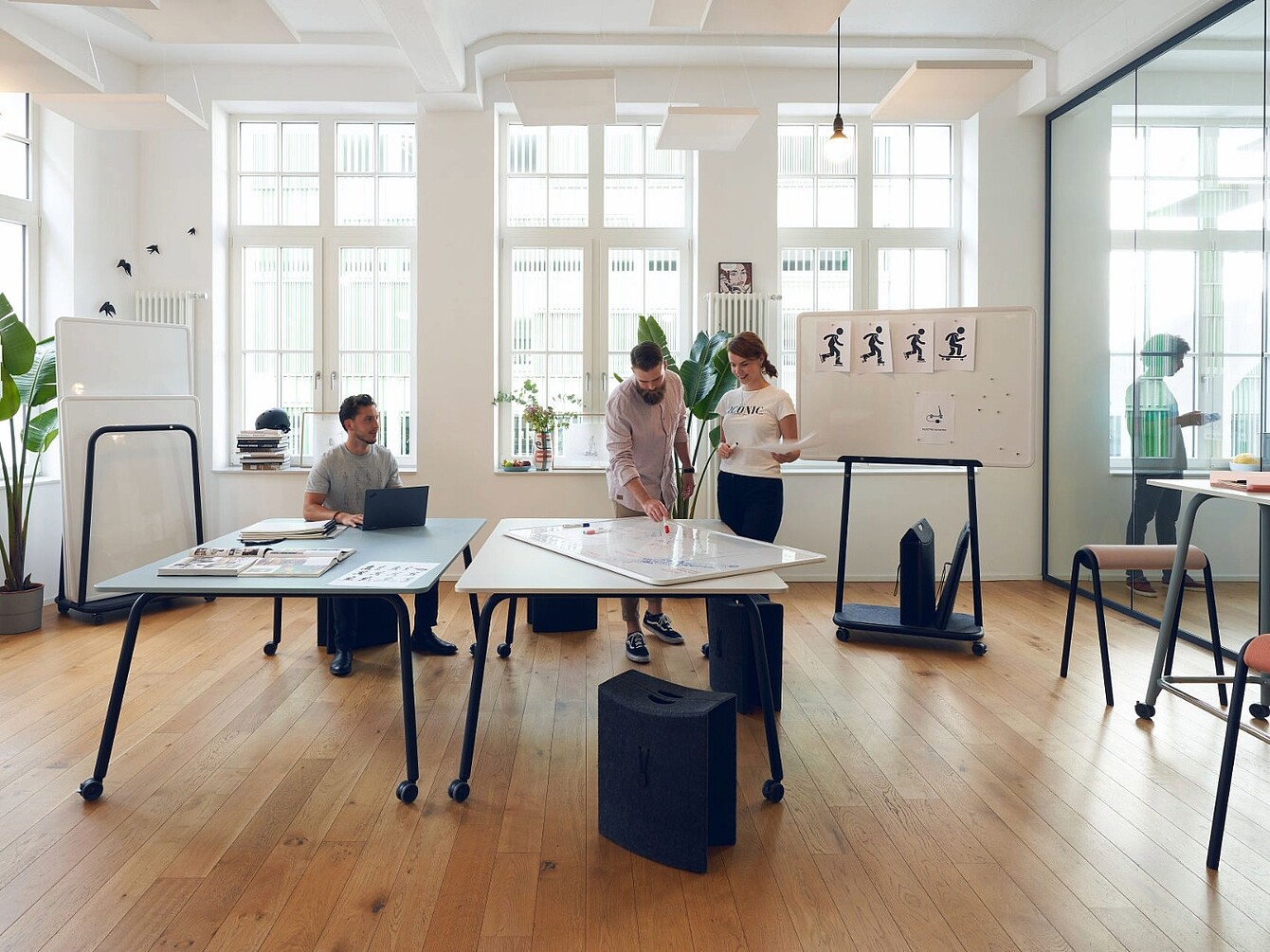
- Flexible furniture that can be quickly adapted to different usage scenarios (e.g. se:lab)
- An open, inviting design that encourages spontaneous encounters
- Technical equipment for hybrid collaboration
- Different zones for informal and formal interaction
Whether it’s a workshop, brainstorming session or project meeting – collaborative spaces provide the ideal setting for a variety of working styles.
Promoting teamwork through well-thought-out spatial concepts
To truly promote teamwork, it is not enough simply to provide traditional meeting rooms. What is crucial is a holistic spatial concept that takes various needs into account:
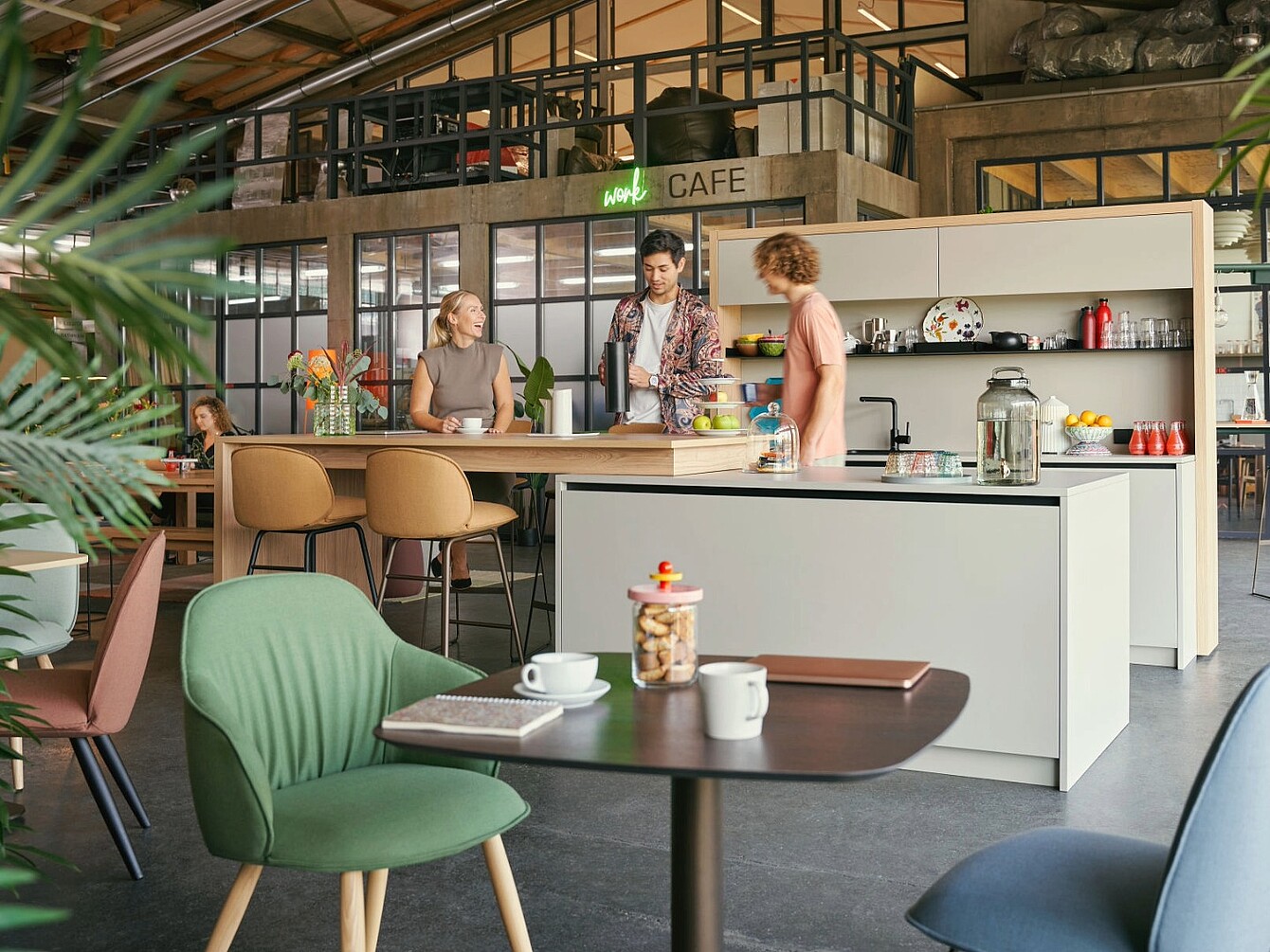
- Creating communication zones: Open areas such as lounges or work cafés encourage spontaneous conversations. This is often where the best ideas emerge – unplanned and informally.
- Integrating creative spaces: Specially designed rooms with whiteboards, modular furniture and an inspiring atmosphere support creative processes and design thinking.
- Provide quiet spaces: Effective collaboration also requires periods of concentration. Acoustically screened areas enable focused work between collaborative sessions.
- Use technology sensibly: Digital tools and media technology are essential for connecting teams on-site and remotely.

The role of design and atmosphere
Alongside functionality, design also plays a crucial role. Colours, materials and lighting significantly influence the mood and thus the quality of collaboration.
A homely, inspiring environment encourages openness and exchange. At the same time, the design should provide orientation and make different zones clearly recognisable.

Benefits of collaborative working environments
Companies that specifically focus on collaborative spaces benefit in several ways:
- Greater innovation through more intensive exchange of ideas
- Higher employee satisfaction through attractive working environments
- More efficient processes thanks to better coordination within the team
- A stronger corporate culture through active collaboration
Conclusion: Actively shaping collaboration in the office
Collaboration in the office is a critical success factor for modern businesses. Thoughtfully designed spaces, and the targeted use of collaborative environments can strengthen teamwork and lay the foundations for innovation.
Organisations that shape their workplaces in this way aren’t just investing in physical space - they’re investing in the future performance, creativity, and resilience of their people.

social media channels: