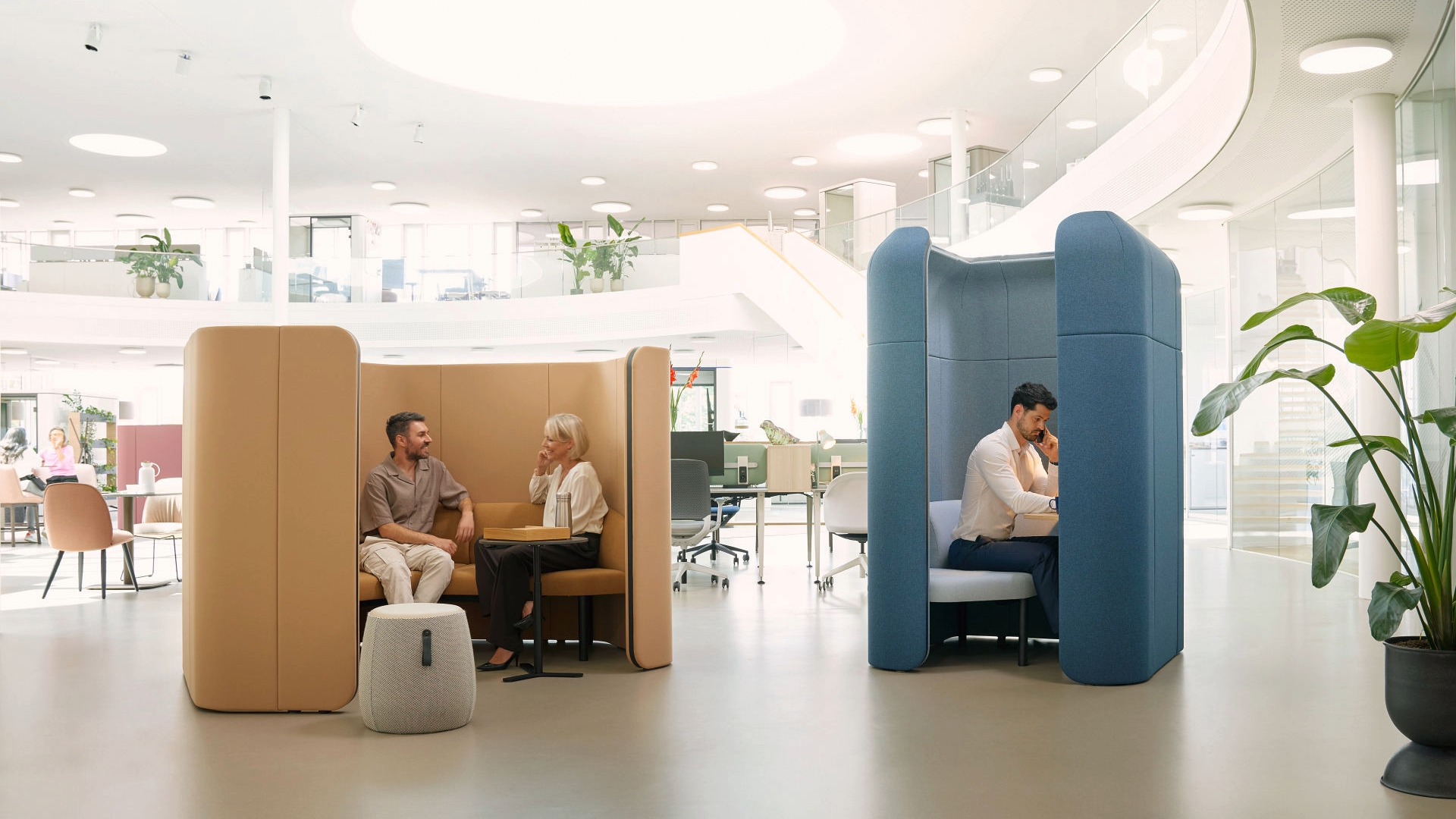

This is exactly where se:hive comes in. As micro-architecture within a space, the modular system creates opportunities for retreat where they are needed – without sacrificing the open character of modern office landscapes.
Focus is not a state of mind, but a space
We live in a world of constant distraction. Screens, notifications, conversations, movement in the room: our brains are constantly busy filtering stimuli. Neuroscientific research shows that deep concentration is not a permanent state. It occurs cyclically, requires start-up time and can only be maintained under the right conditions.
In the office, this means that not every place is suitable for every task. While communication and routine activities tolerate openness, focused work requires visual and acoustic shielding – and the feeling of being able to control one's own workspace.
Modern offices therefore need distributed focus areas: rooms within rooms that allow employees to switch between interaction and retreat depending on the situation.
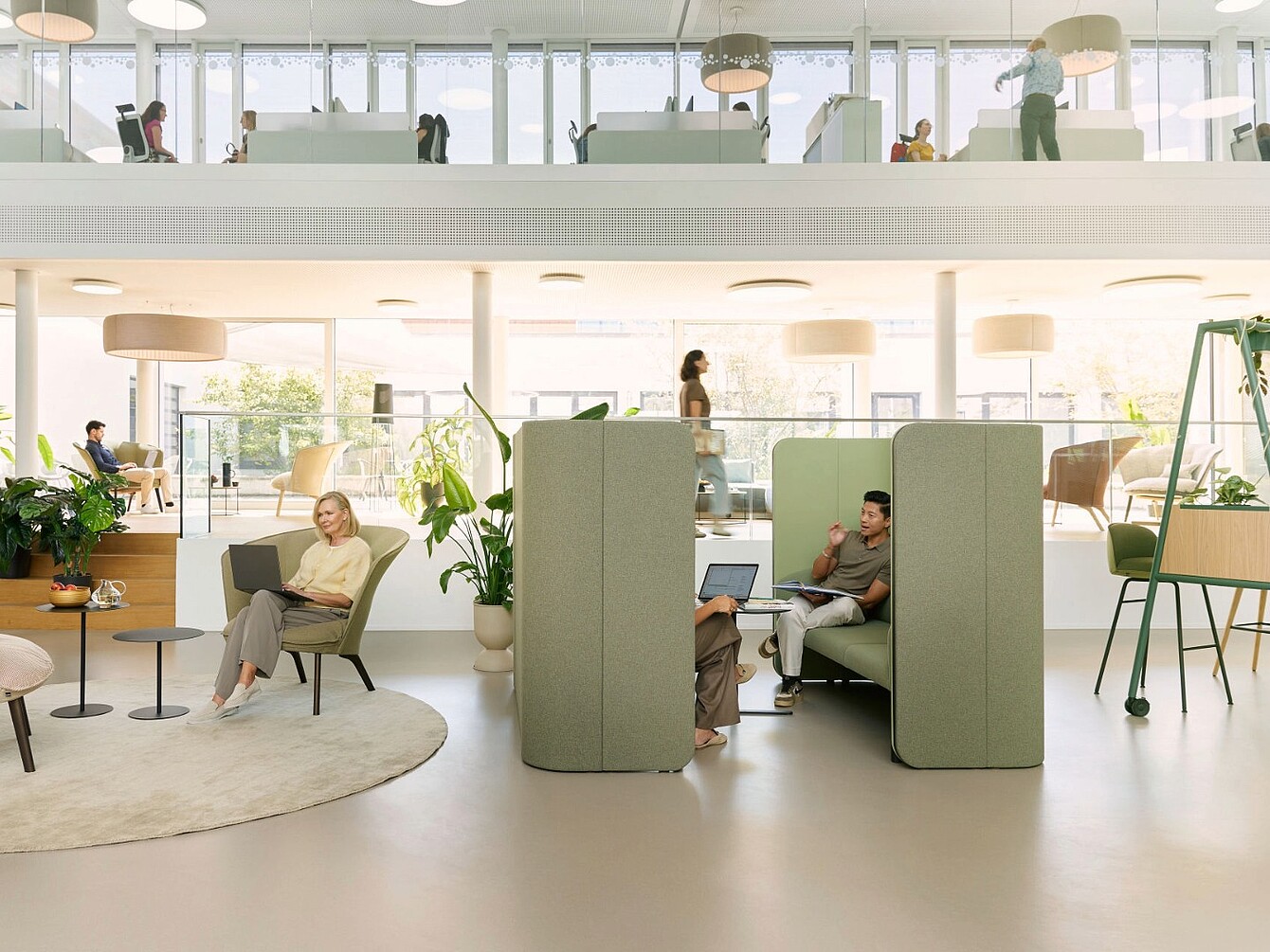
se:hive as a retreat for deep concentration
With se:hive, Sedus is adding an architectural dimension to the classic understanding of furniture. The modular enclosures visually structure open spaces, zone working environments and create protected areas – without fixed walls or structural interventions.
Textile surfaces create an acoustically dampened, homely atmosphere, while the clear design language maintains openness. This creates a balance between screening and belonging – a key factor for concentrated work in the hybrid office.
This approach is particularly evident in the new product, se:hive private. The enclosure, with integrated sofa element and table, functions as a deliberately minimalist place of focus: no visual clutter, no external distractions, no excess of functions.
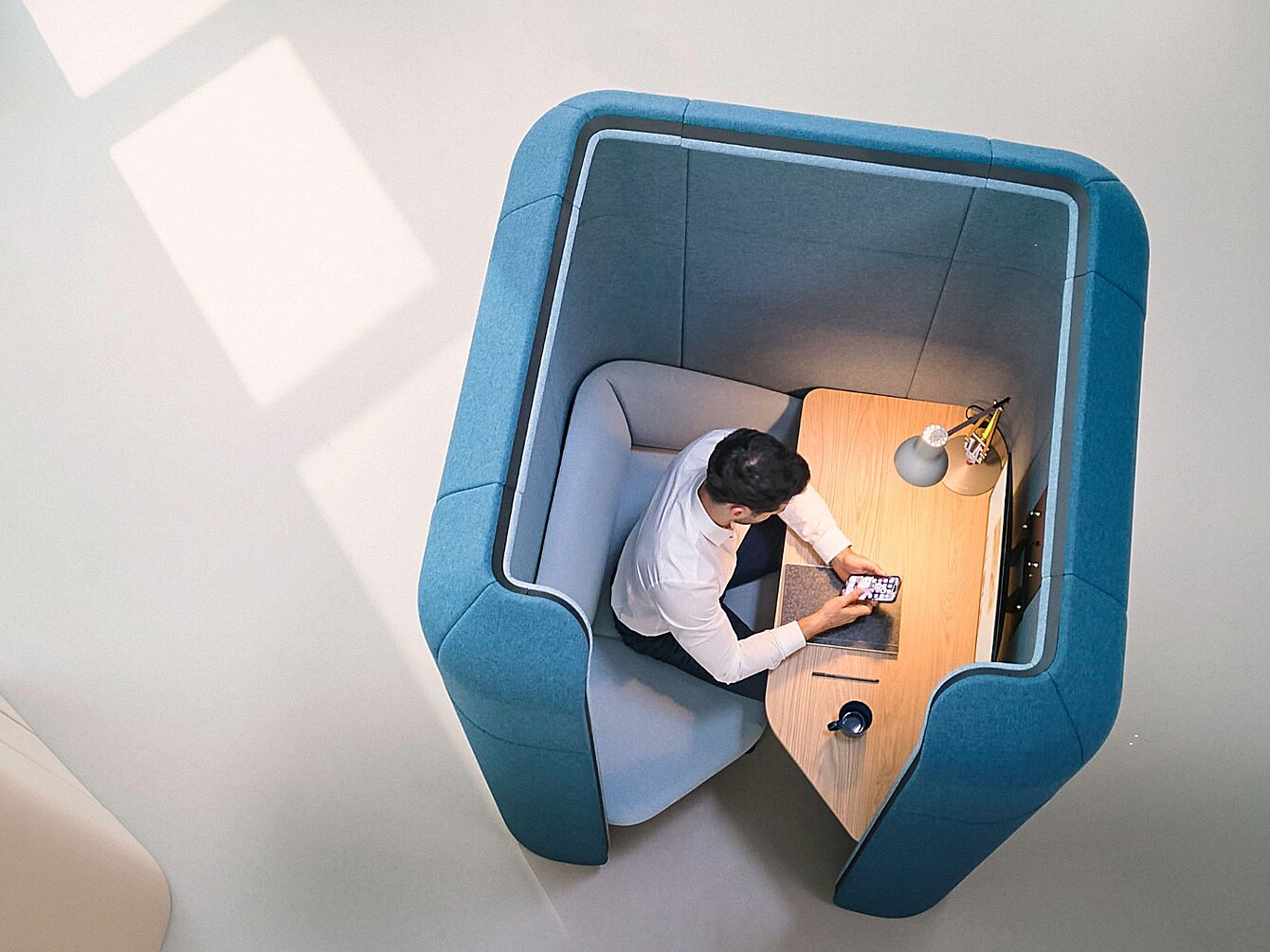
As a micro-architecture for individual work, se:hive private supports precisely those phases of deep concentration that are crucial for complex tasks – such as planning, analysing or designing. This creates a personal workspace in the middle of the open space.
Acoustics, privacy and peripersonal space
Current findings from work and neuroscience show that concentration is not only determined by the volume in the room, but also by how well the so-called peripersonal space is protected – i.e. the immediate area around one's own body, which the brain constantly monitors.
Visual movements behind you, unexpected noises or a lack of privacy increase alertness and make it difficult to focus on your work. se:hive counteracts this phenomenon with textile enclosures, clear room edges and targeted screening – thus reducing unconscious stress stimuli. Different sizes, shapes and furnishings make it possible to individually adjust the degree of protection – from partial shielding to highly protected configurations.
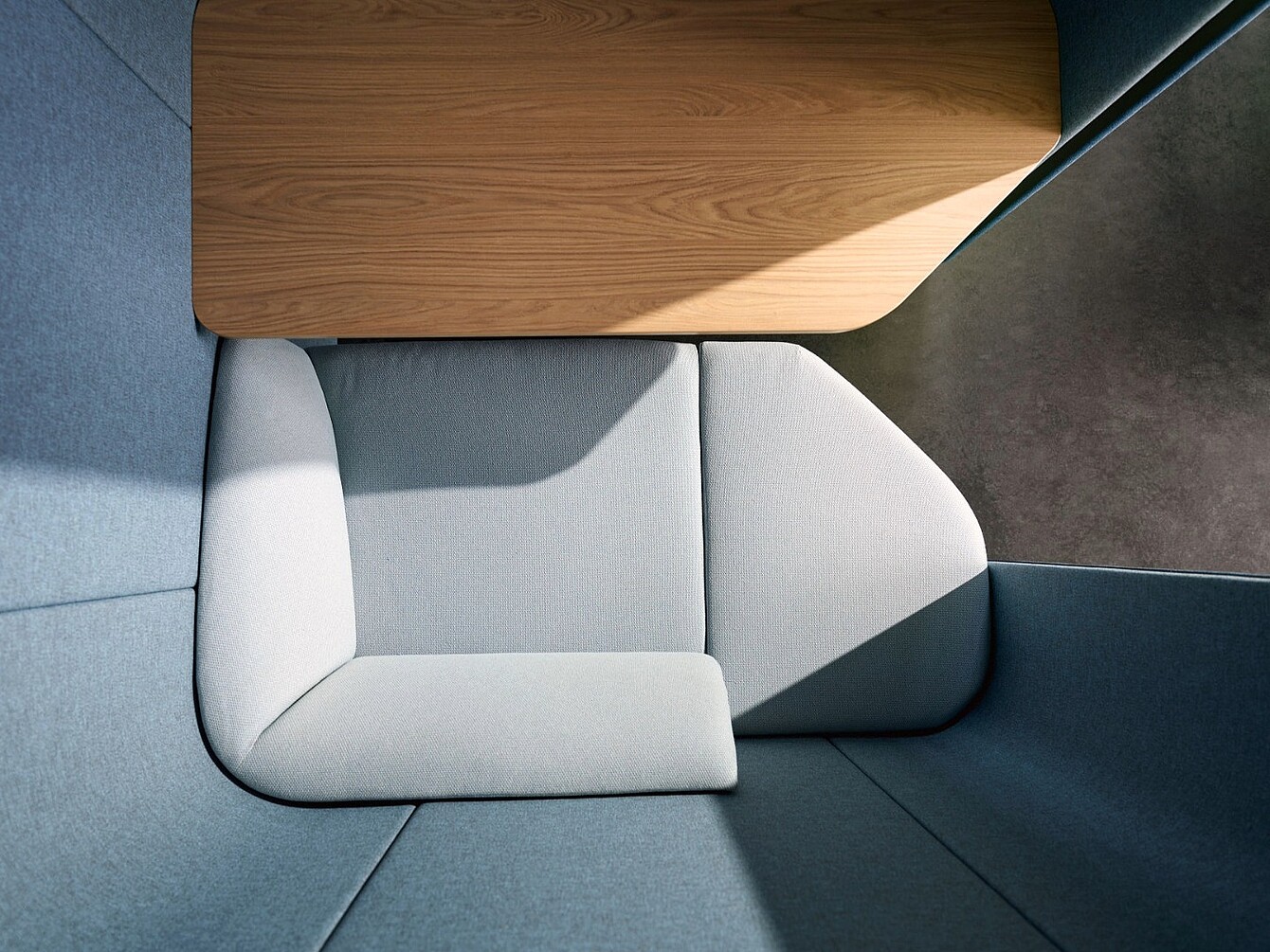
The result: a noticeably calmer, more controllable working environment.
More than just focus: versatile zones for everyday work
se:hive is consistently designed as a product family of retreats. In addition to se:hive private, other products complement the system:
- se:hive single as an unfurnished enclosure without interior fittings
- se:hive desk with integrated table for workplace-oriented retreat
- se:hive bench and se:hive circle with fully upholstered sofa elements for informal exchanges, team meetings or breaks
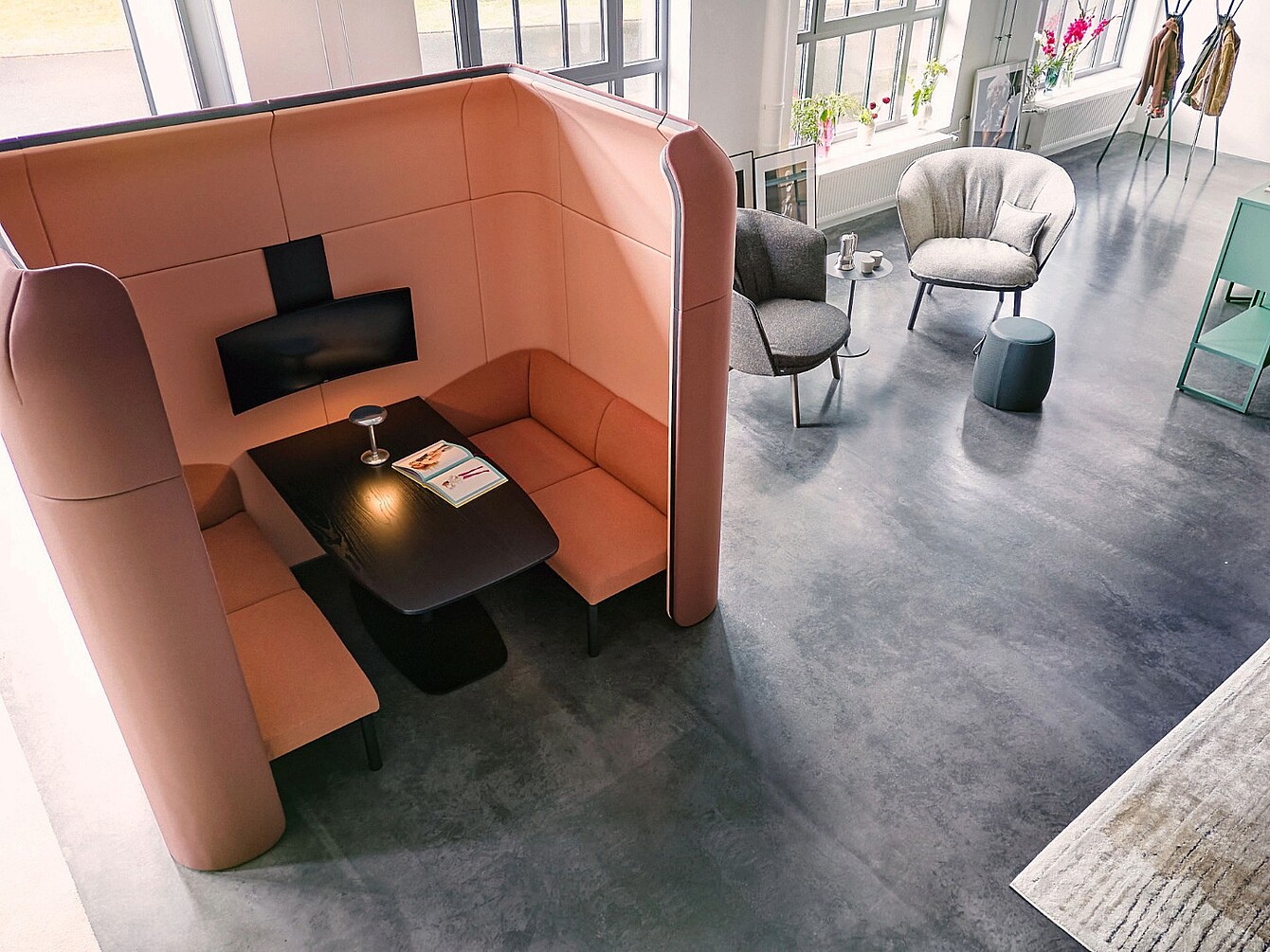
- se:hive diner with a central table for four or six people
se:hive thus supports different modes of work – from deep concentration and parallel working to communication and relaxation.
Design freedom for hybrid working environments
Whether as a focus zone, lounge, meeting place or visual structuring of intermediate zones: se:hive can be flexibly integrated into existing floor plans. A large selection of fabrics, colours and optional accessories, such as electrification or monitor holders, enables individual solutions – tailored to the corporate culture and the respective usage scenario.
At the same time, se:hive can also elegantly conceal functional areas, such as storage space or less attractive zones, and integrate them into the overall picture.
Conclusion: concentration needs architecture – even on a small scale
Hybrid offices must do more than just enable collaboration. They must give employees the freedom to choose the right place for the task at hand. se:hive creates precisely this freedom – with micro-architecture that enables focus without forcing isolation.
As a "room within a room", se:hive combines openness with seclusion, structure with comfort and design with neuroscientific findings. For working environments where concentration once again has a firm place.

social media channels: