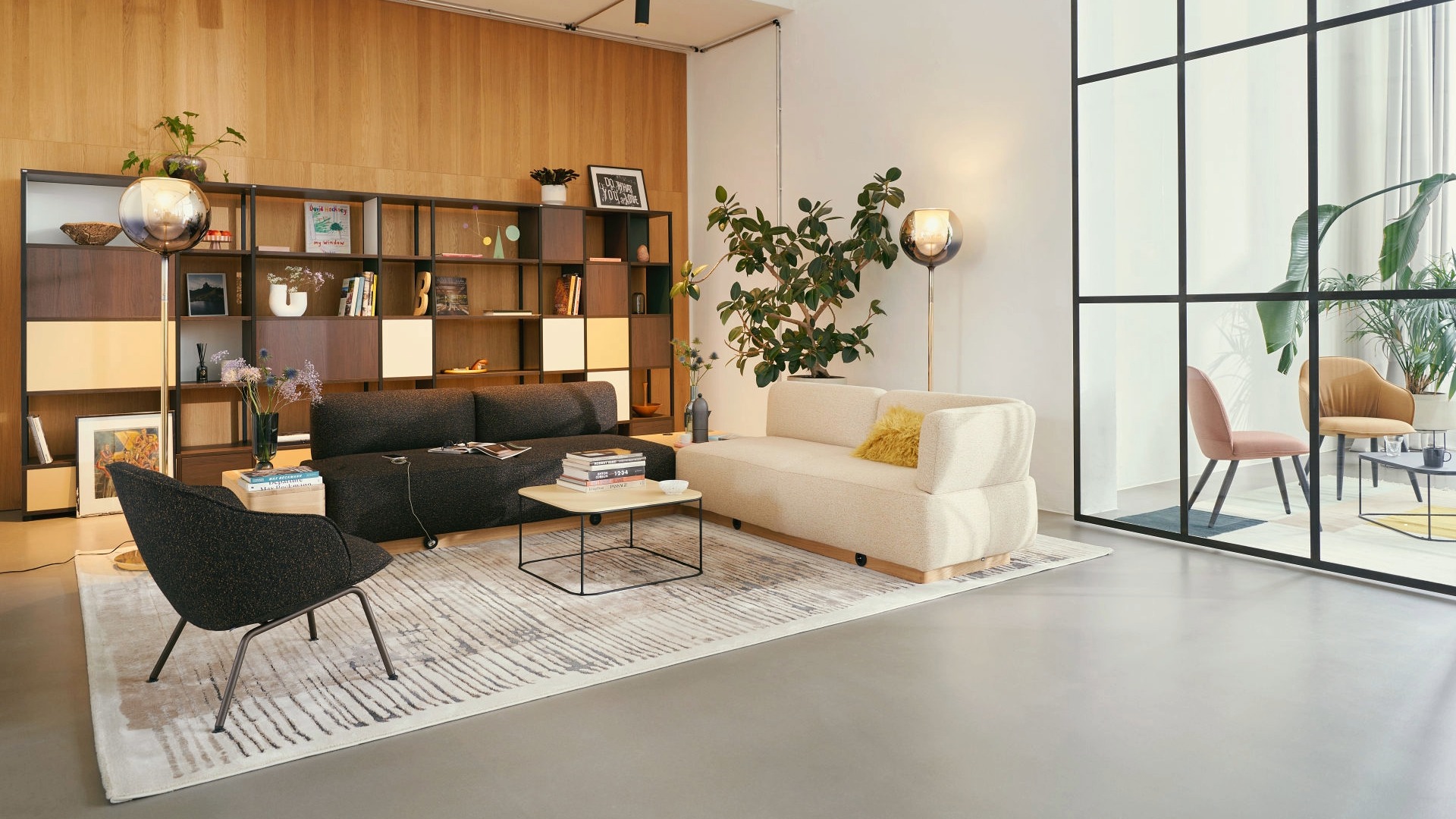

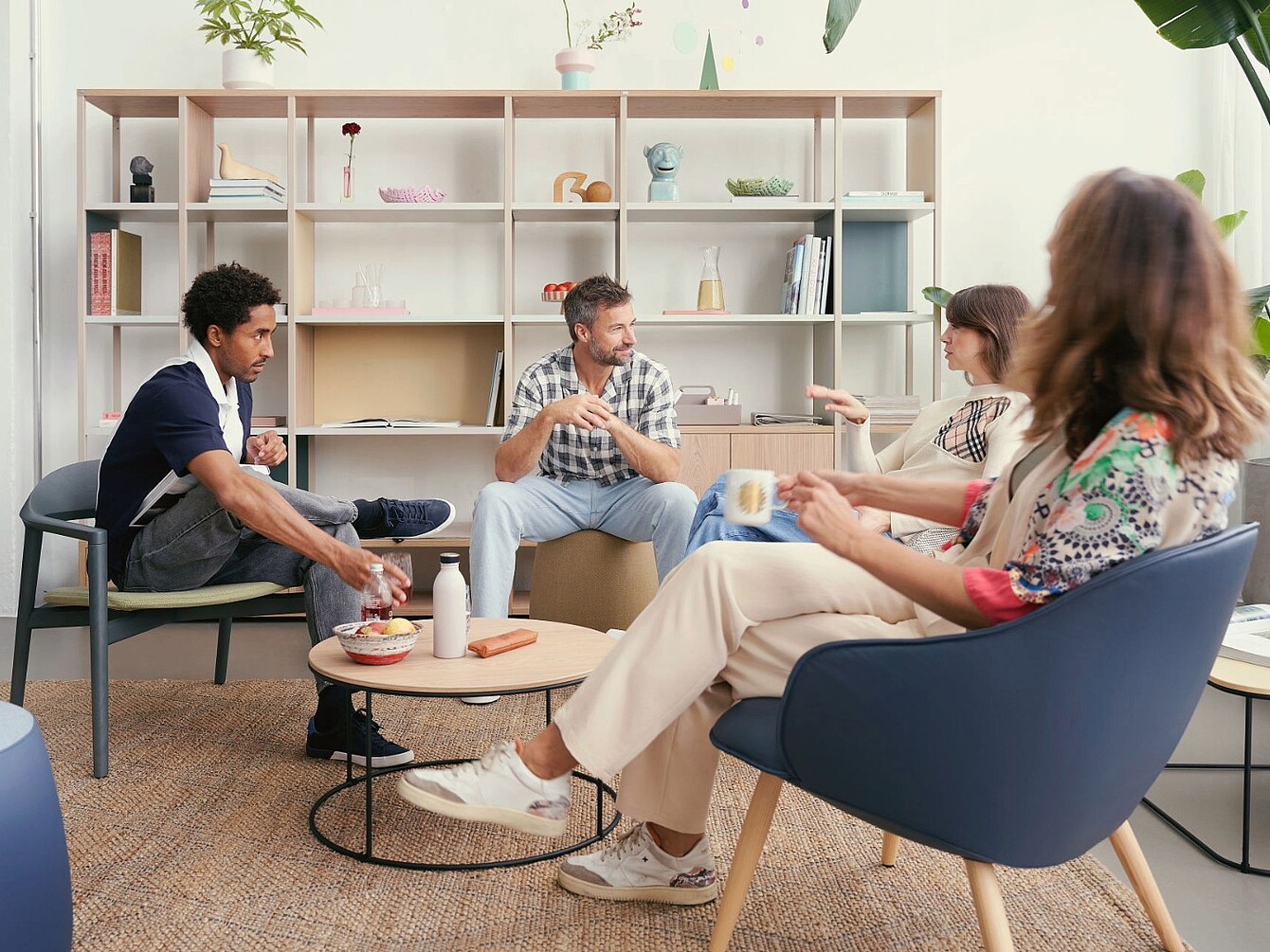
In a well-designed New Work Lounge, exchange, retreat and informal working merge into a holistic spatial experience.
Why lounge furniture is indispensable today
Modern office concepts focus on zones rather than rigid structures. Employees choose the appropriate location depending on the task at hand: concentrated work, team meetings or informal discussions. Lounge furniture creates the ideal basis for this.
It offers:
- A homely atmosphere that breaks down inhibitions
- Flexible settings for spontaneous meetings
- Comfortable retreats for focused work
- Spaces for creative thinking
The quality of the office environment is becoming increasingly important, especially in the context of hybrid working models. People who come to the office are looking for interaction, inspiration and community – qualities that a traditional workplace structure alone can hardly offer.
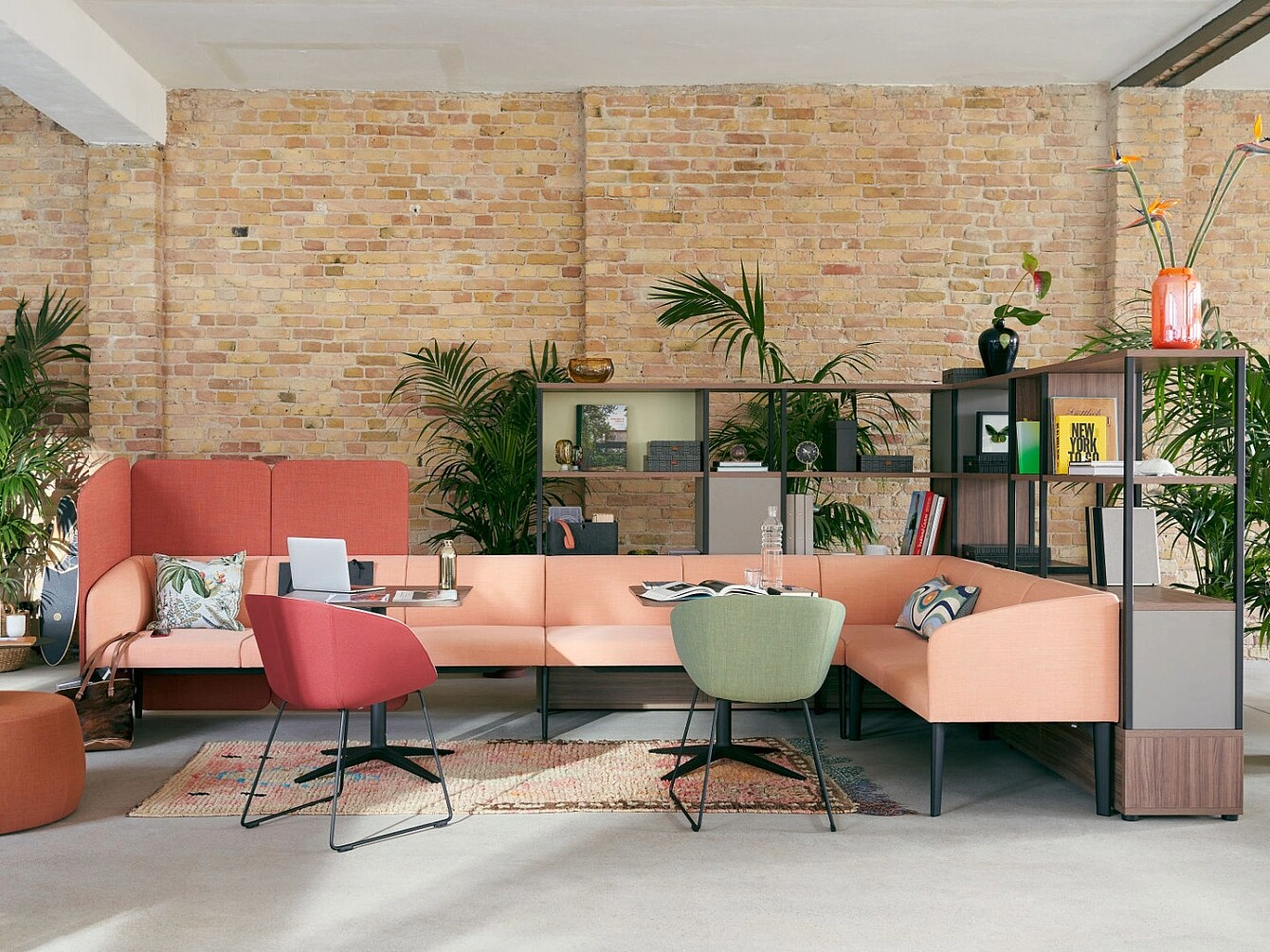
The New Work Lounge as the heart of modern office environments
A New Work Lounge is more than just a waiting area with a sofa. It is a multifunctional space that is specifically tailored to the needs of modern teams.
This is where spontaneous conversations, innovative ideas and new perspectives arise. Modular lounge furniture allows rooms to be dynamically adapted – from open communication areas to semi-protected team zones.
Characteristic features of a New Work Lounge are:
- Modular sofa elements for flexible configurations (e.g. se:works)
- High-quality side tables for flexible working (e.g. se:assist)
- Acoustically effective elements to reduce background noise (e.g. se:hive single)
- Different seat heights for various usage scenarios (e.g. se:café soft chair family)
- High-quality materials for a cosy atmosphere (e.g. se:living)
This is how the lounge becomes the social hub of the company.
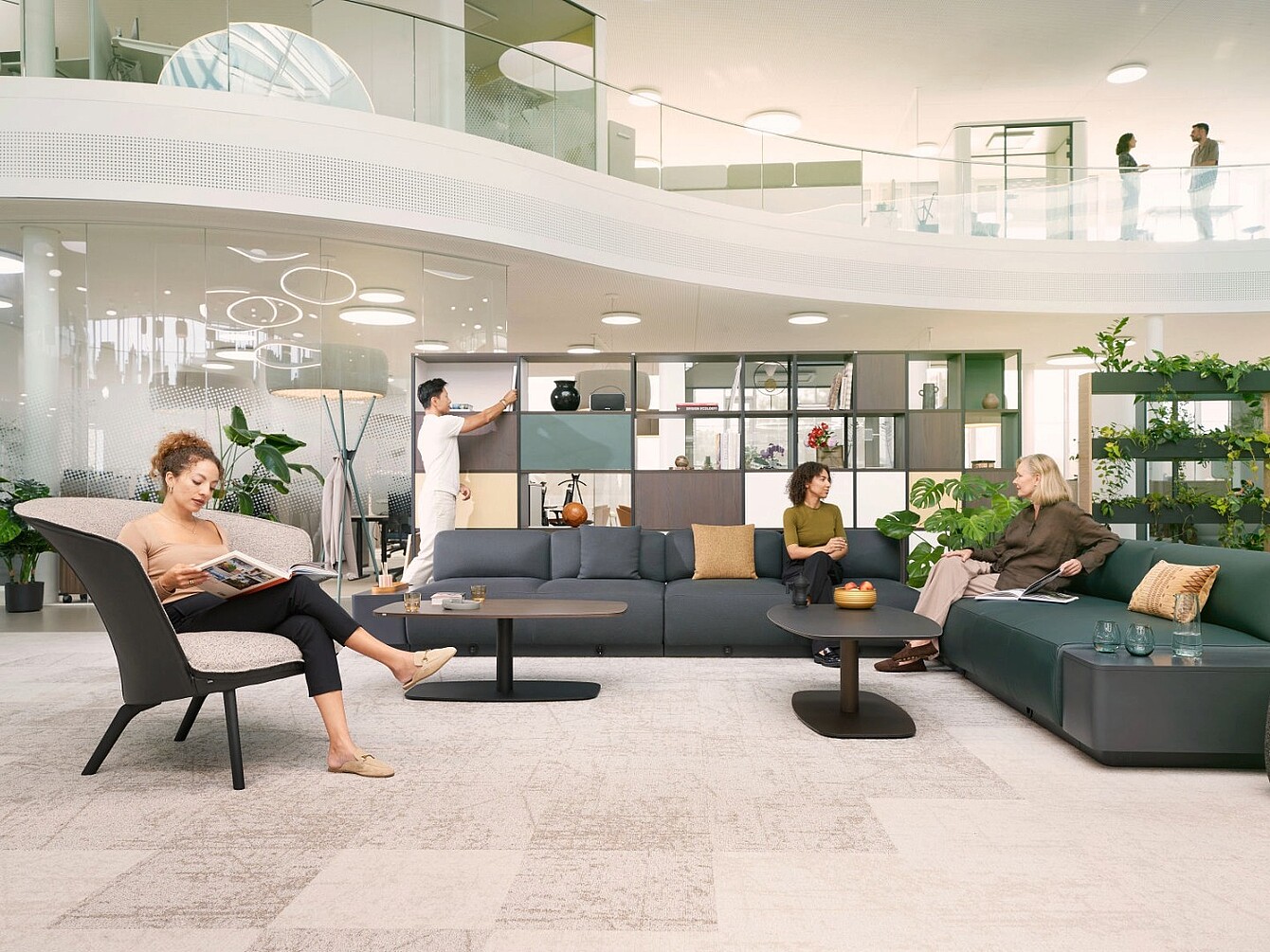
Collaboration reimagined: communication at eye level
Traditional conference rooms often feel formal and hierarchical. Lounge furniture, on the other hand, promotes communication at eye level. Soft upholstery, open seating areas and informal arrangements create a relaxed atmosphere – ideal for brainstorming, project meetings or informal feedback sessions.
Creative processes in particular benefit from spatial flexibility. Employees can move around, change perspectives and actively shape their environment. This not only increases motivation, but also innovation.
Relaxation as a productivity factor
Rest is not a luxury, but a prerequisite for performance. In modern working environments, consciously designed break areas are a matter of course.
Lounge furniture supports a healthy balance between activity and regeneration. Comfortable seating, harmonious colour schemes and natural materials help to reduce stress and recharge your batteries.
A well-planned New Work Lounge therefore offers not only space for meetings, but also for short breaks – whether for a coffee or an informal chat.
Lounge furniture as a strategic element of hybrid working models
In the hybrid working model, the office becomes a meeting place. Employees come together specifically for collaboration, workshops or team activities. This is exactly where lounge furniture comes into its own.
Flexible lounge areas enable:
- Quick redesign for workshops
- Temporary project areas
- Informal networking zones
- Attractive lounge areas for guests and applicants
This means they actively contribute to employer attractiveness. Companies that invest in high-quality lounge furniture signal appreciation, a willingness to innovate and a forward-looking approach.
Design tips for a successful New Work Lounge
To ensure that a lounge reaches its full potential, companies should consider the following aspects:
- Conduct a needs analysis: What types of work should be supported?
- Prioritise flexibility: Modular lounge furniture allows for adjustments.
- Consider acoustics: Textile surfaces and screens improve the quality of the space.
- Integrate technology: Don't forget power connections and media solutions.
- Incorporate brand identity: Colours and materials should reflect the corporate culture.
The result is a New Work Lounge that is both functionally impressive and emotionally inspiring.

Conclusion: lounge furniture shapes the working world of tomorrow
Lounge furniture is much more than just an interior design trend. It symbolises the shift towards flexible, people-centred working environments.
A well-designed New Work Lounge combines collaboration, relaxation and hybrid working styles to create a vibrant overall concept. Companies that invest in lounge areas create spaces for innovation, interaction and well-being – and thus lay the foundation for sustainable success.

social media channels: