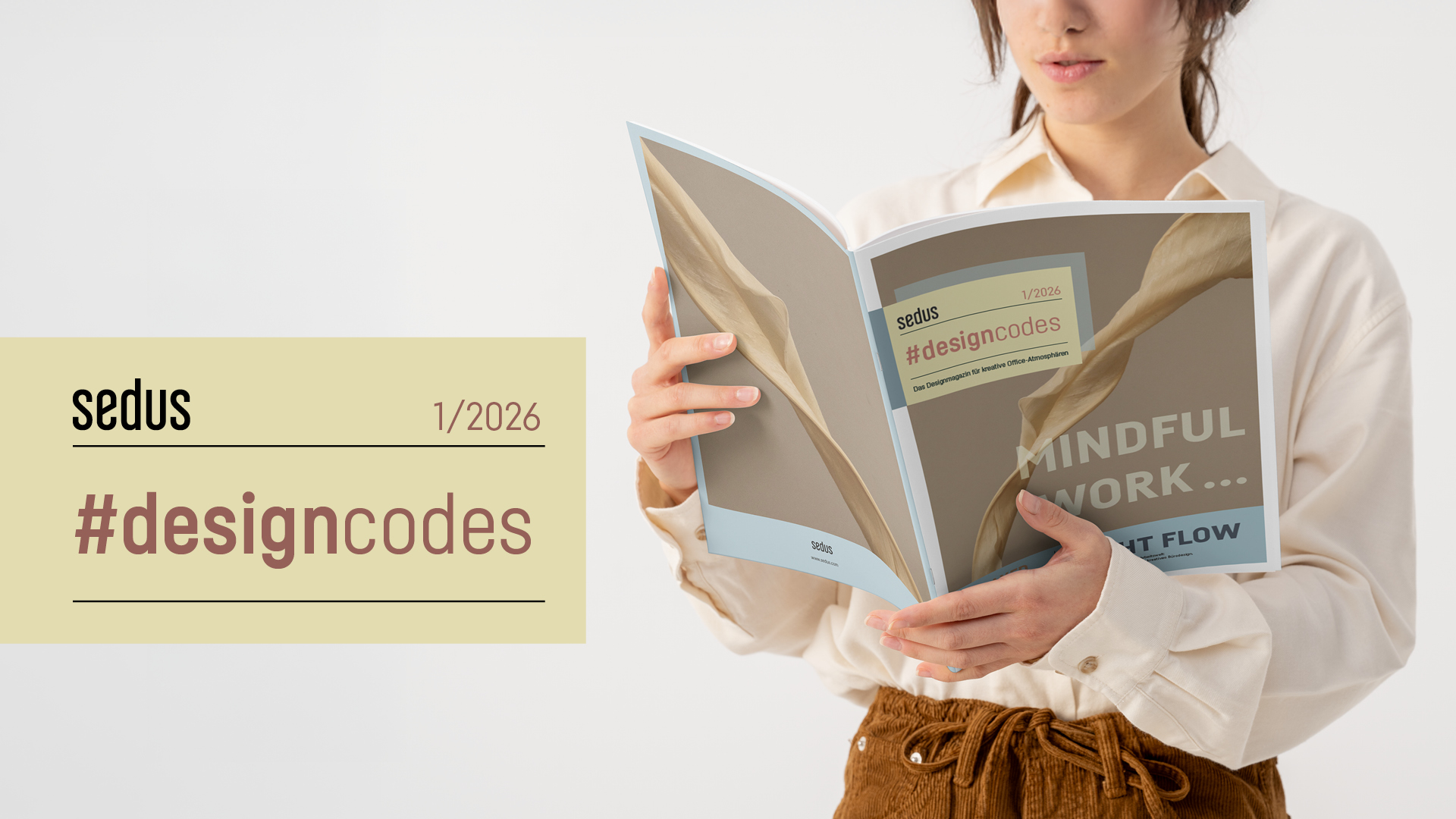

The “Mindful Work” trend reflects this evolution. Colours, materials and textures are no longer used solely to shape aesthetics; they actively influence perception, stress levels and concentration. Especially in open-plan environments, this design dimension becomes essential. In spaces filled with constant stimuli, employees need environments that calm the peripersonal space — the immediate area surrounding the body that people instinctively perceive as a zone of comfort and security.
The current “Mindful Work” design code demonstrates how this atmosphere can be created: through soft colour palettes, natural materiality and a deliberate focus on reduction, grounding and sensory calm.
A New Focus in the Office: Less Stimulation, More Resonance
The workplace is moving away from constant activation towards conscious regeneration. Terms such as “Slow Office”, “Relaxed Office” and “Balanced Office Concepts” no longer describe mere stylistic trends, but entirely new attitudes towards work.
For planners and architects, the challenge today lies in creating spaces that support both collaboration and retreat. Concentration is no longer achieved through acoustic shielding alone. Visual stimuli, material surfaces and colour contrasts also have a significant impact on cognitive load.
Research in neuroarchitecture and environmental psychology suggests that soft transitions, matte finishes and natural colour spectrums can calm the nervous system. Spaces therefore feel less demanding and allow for longer periods of focused work. This is precisely where the “Mindful Work” approach comes into play: it reduces sensory overload while creating a sense of orientation and psychological safety.
At its core are colours and materials that do not dominate the space, but quietly support it.
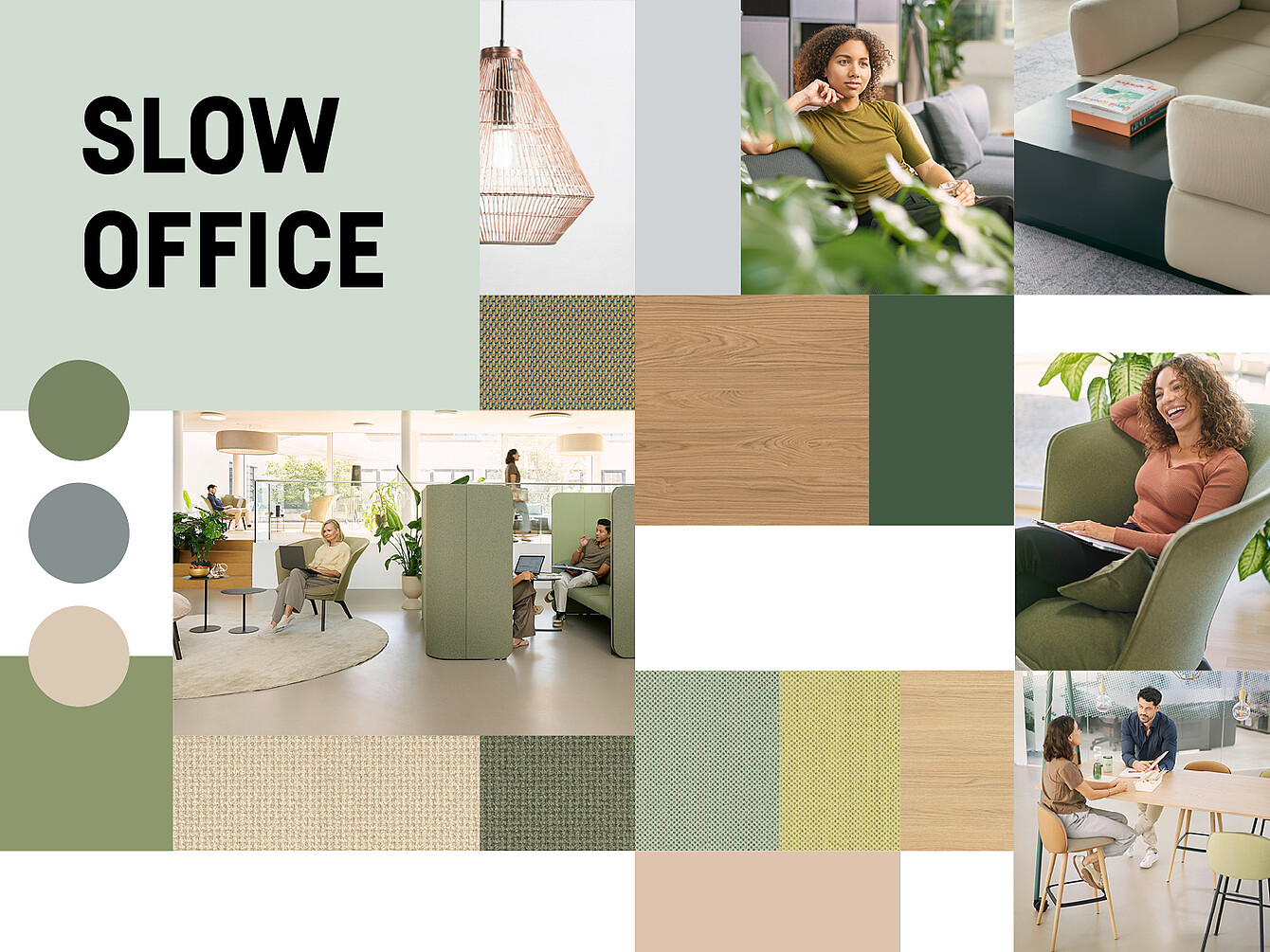
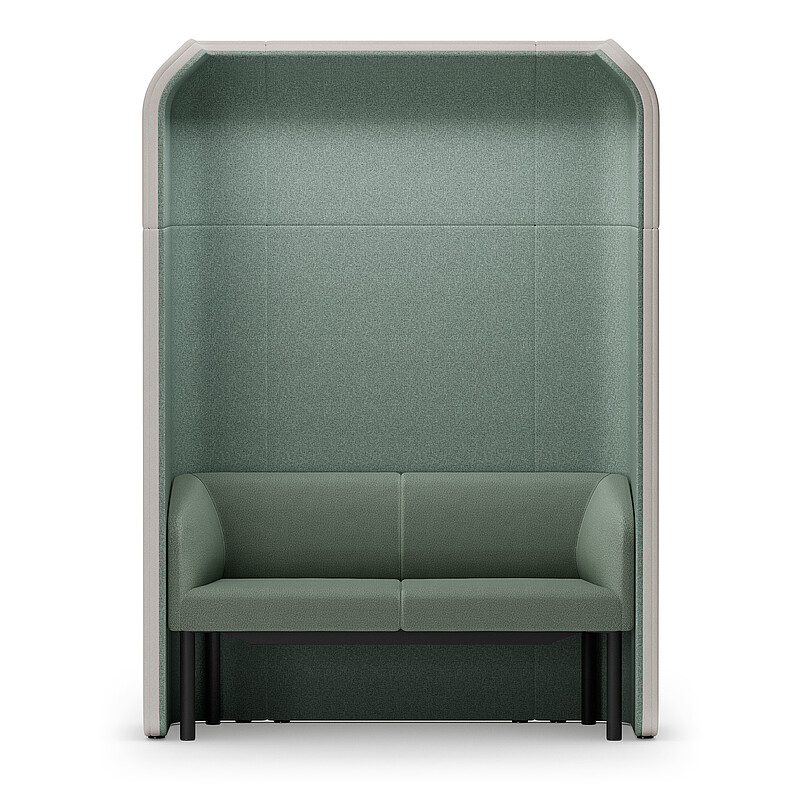
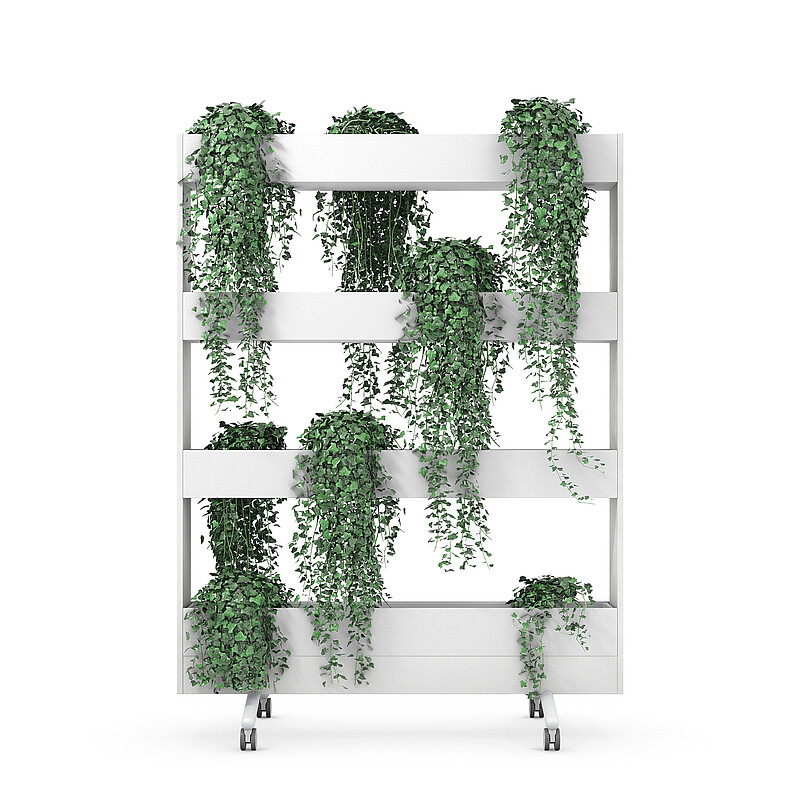
A calming zone in the office combines freshness with vitality. It serves as a smart retreat, where breaks are valued as meaningful and productive moments. Spaces like this help break down habitual thought patterns and encourage both interactive and innovative approaches to problem-solving. Colour palettes inspired by the healthcare and wellness sector in particular are beneficial to wellbeing and have a revitalising effect. Soft sage, light beige tones, and invigorating greens are combined with plants to create a fresh yet soothing office atmosphere that engages all the senses.
Grounding Colour Worlds as an Antidote to Sensory Overload
One of the most striking developments is the return of warm, nature-inspired tones. Instead of stark black-and-white contrasts or cool technological aesthetics, contemporary office concepts are increasingly defined by sand, sage, warm greys, clay, beige and muted greens.
These colour palettes feel familiar for a reason. Inspired by natural landscapes and materials, they create emotional proximity — an effect that becomes particularly important in open-plan settings. People instinctively associate such tones with calmness and comfort, which can directly influence concentration and stress regulation.
Within the “Relaxed Office” approach, petrol and sage tones are paired with dark or rustic woods to create an atmosphere that feels both residential and professional. Unlike highly contrasting schemes, these combinations do not generate visual tension; instead, they produce a quiet sense of depth and calm.
Similarly, the “Slow Office” concept relies on soft greens, light beige nuances and natural wooden finishes. Drawing inspiration from wellness and hospitality environments, it translates these qualities into the workplace. The result is an environment that does not continuously stimulate, but rather mentally decelerates.
For planners, this means colour increasingly becomes a tool for emotional zoning. Spaces are no longer defined by loudness or maximum visibility, but by their atmospheric impact.
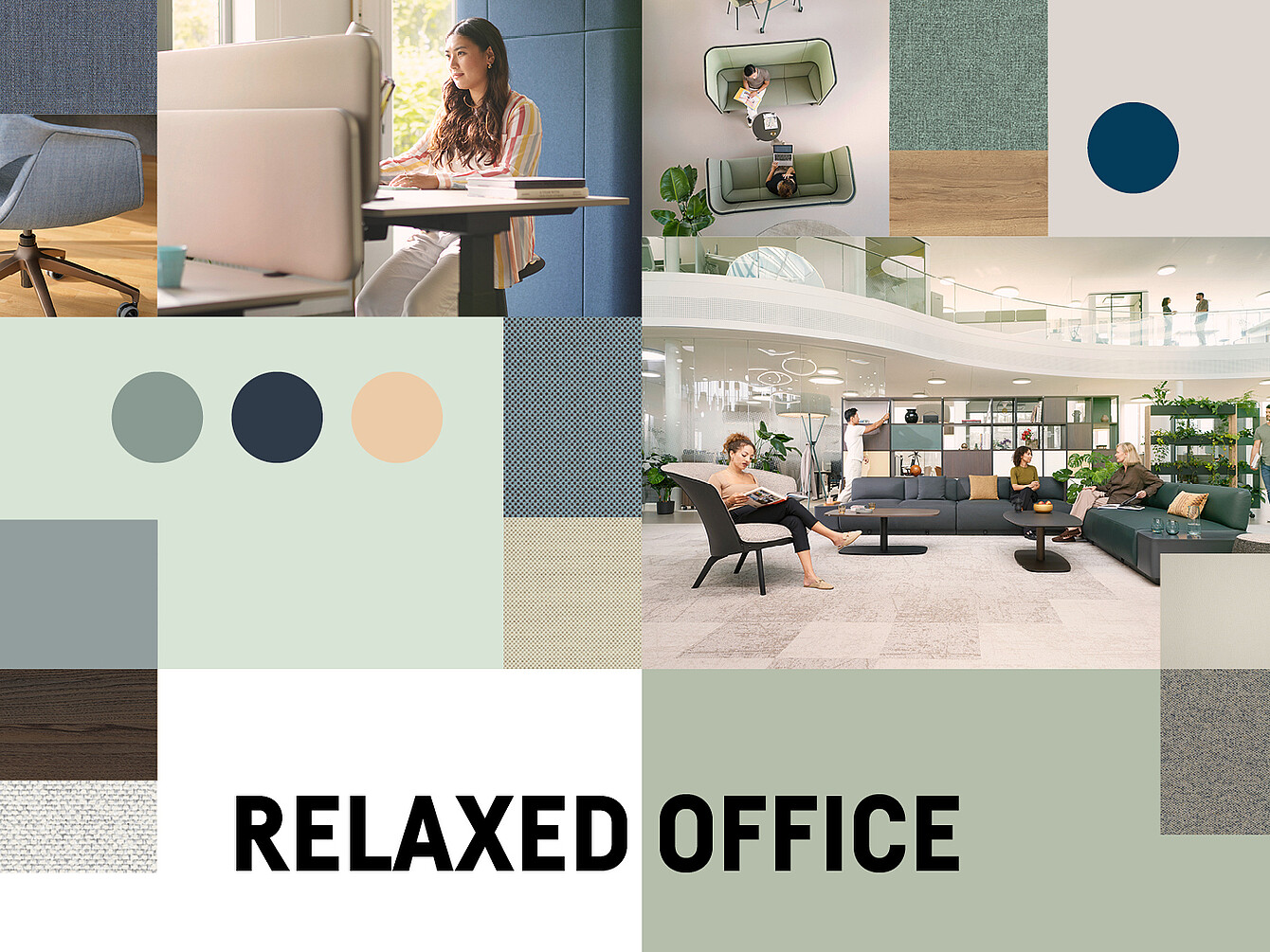
The “Relaxed Office” describes a modern work environment defined by a casual, relaxed atmosphere that actively contributes to stress reduction among employees. Homely elements such as sofas or bar areas, combined with natural materials and warm, inviting light, lend the space a personal, cosy touch. Soft, watery shades – ranging from petrol to sage – are juxtaposed with dark or rustic woods to create an open, familiar elegance with a stylish character.
Materiality as Sensory Architecture
Alongside colour, materiality is gaining new significance. People experience spaces not only visually, but multisensorially. Surfaces subconsciously shape whether a room feels warm, calm or approachable.
The “Mindful Work” design code therefore focuses deliberately on natural textures such as fine marble, warm concrete, linen-inspired fabrics and light wood finishes. Particularly compelling is the interplay between tactile and visual qualities: matte textiles, soft upholstery and textured surfaces not only absorb sound, but also reduce visual hardness.
In open-plan offices, this creates a more nuanced spatial experience. Large areas feel less technical and anonymous, while zones with a residential sense of resonance begin to emerge. Organic surfaces and textile elements soften transitions and make spaces emotionally more legible.
This shift is also reflected in the growing integration of hospitality-inspired elements into office environments. Lounge settings, textile retreats and residential-style work cafés are increasingly replacing conventional office typologies.
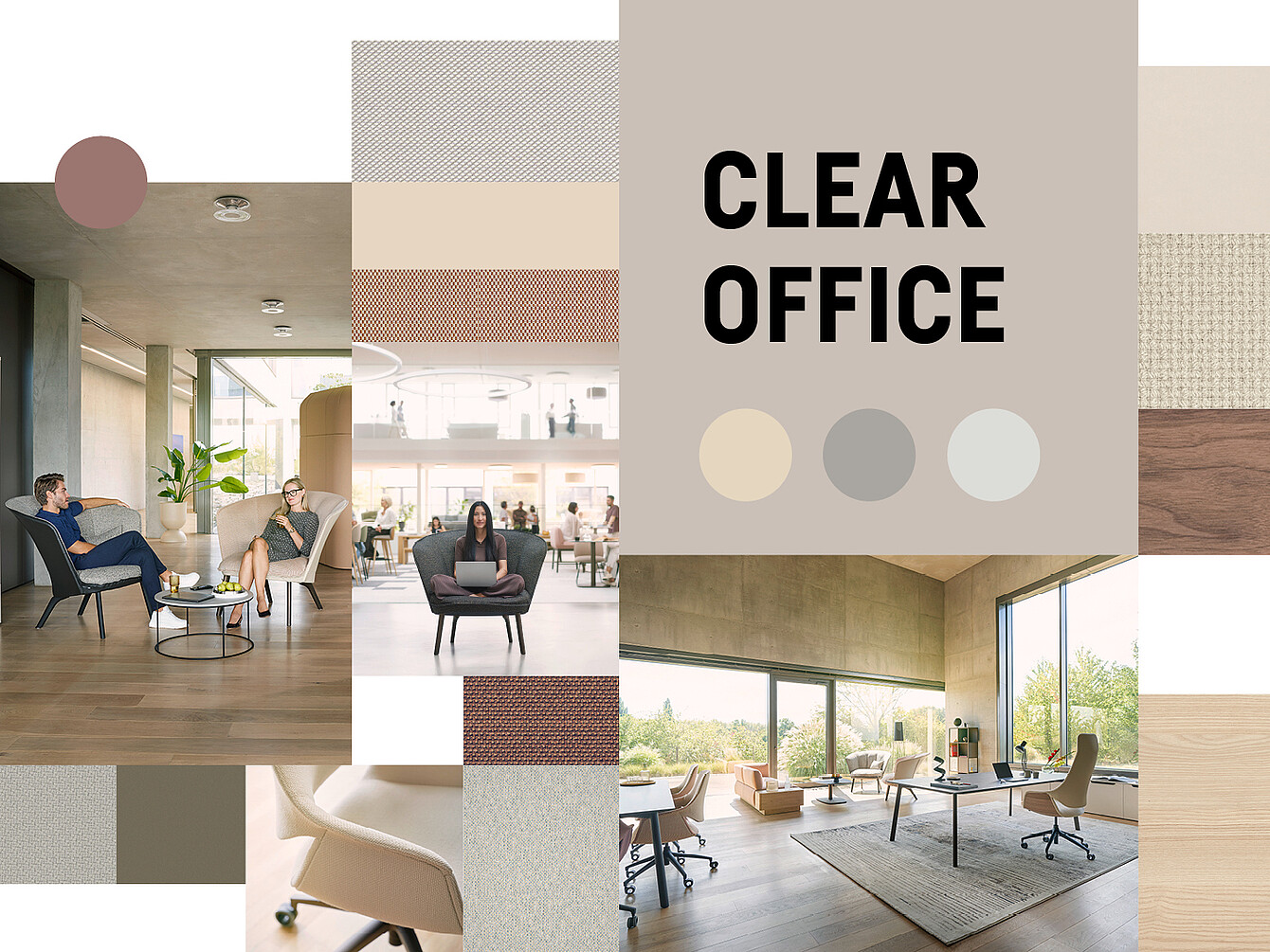
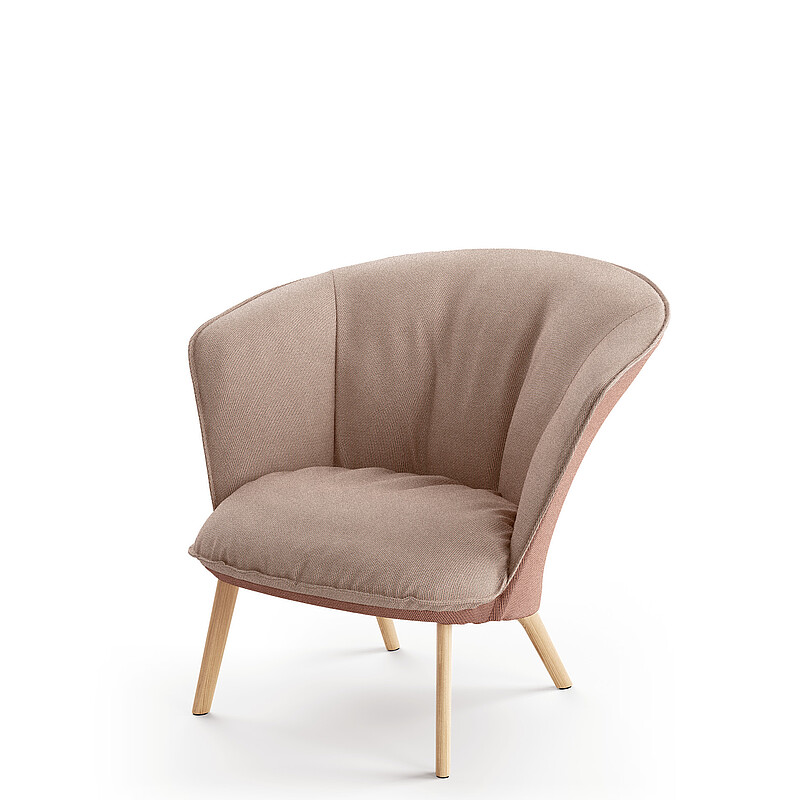
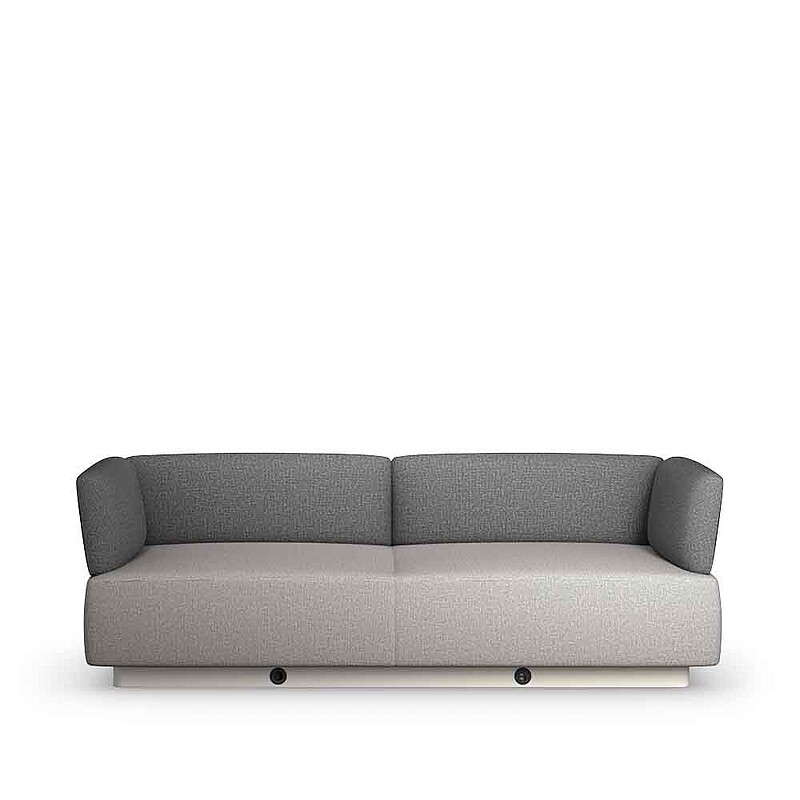
In a clear, minimalist configuration, the mind has free rein and opportunities to find calm. Soft nuances in varying shades of grey – from sandy-warm, reddish hues to cool, bold gradations – lend the space a sense of calm and a soothing elegance. Warm accents in deep rose and elegant bronze offer a sense of comfort and closeness to an otherwise understated atmosphere.
The Peripersonal Space as a New Planning Dimension
This development becomes especially relevant within hybrid and open workplace concepts. While open spaces encourage communication, they often create a feeling of constant exposure. Employees lose their protected personal zone — with direct consequences for concentration and wellbeing.
As a result, micro-architectures and semi-enclosed settings are becoming increasingly important. Retreat spaces no longer need to be fully closed off. Often, a subtle spatial boundary is enough to foster a sense of safety and focus.
Acoustically effective elements such as textile screens, upholstered structures or softly enclosing furniture create exactly this quality. Solutions such as se:hive embrace this idea by zoning open areas while simultaneously enabling retreat, without compromising the communicative character of the workspace.
Lounge-inspired settings such as se:cove further demonstrate how closely comfort and concentration are connected today. Instead of traditional meeting rooms, these spaces create residential atmospheres that support focused work just as much as informal conversations or short moments of regeneration.
The trend is clearly moving away from the static workstation towards emotionally differentiated workplace landscapes. Employees consciously choose the environment that best supports their respective mental task.
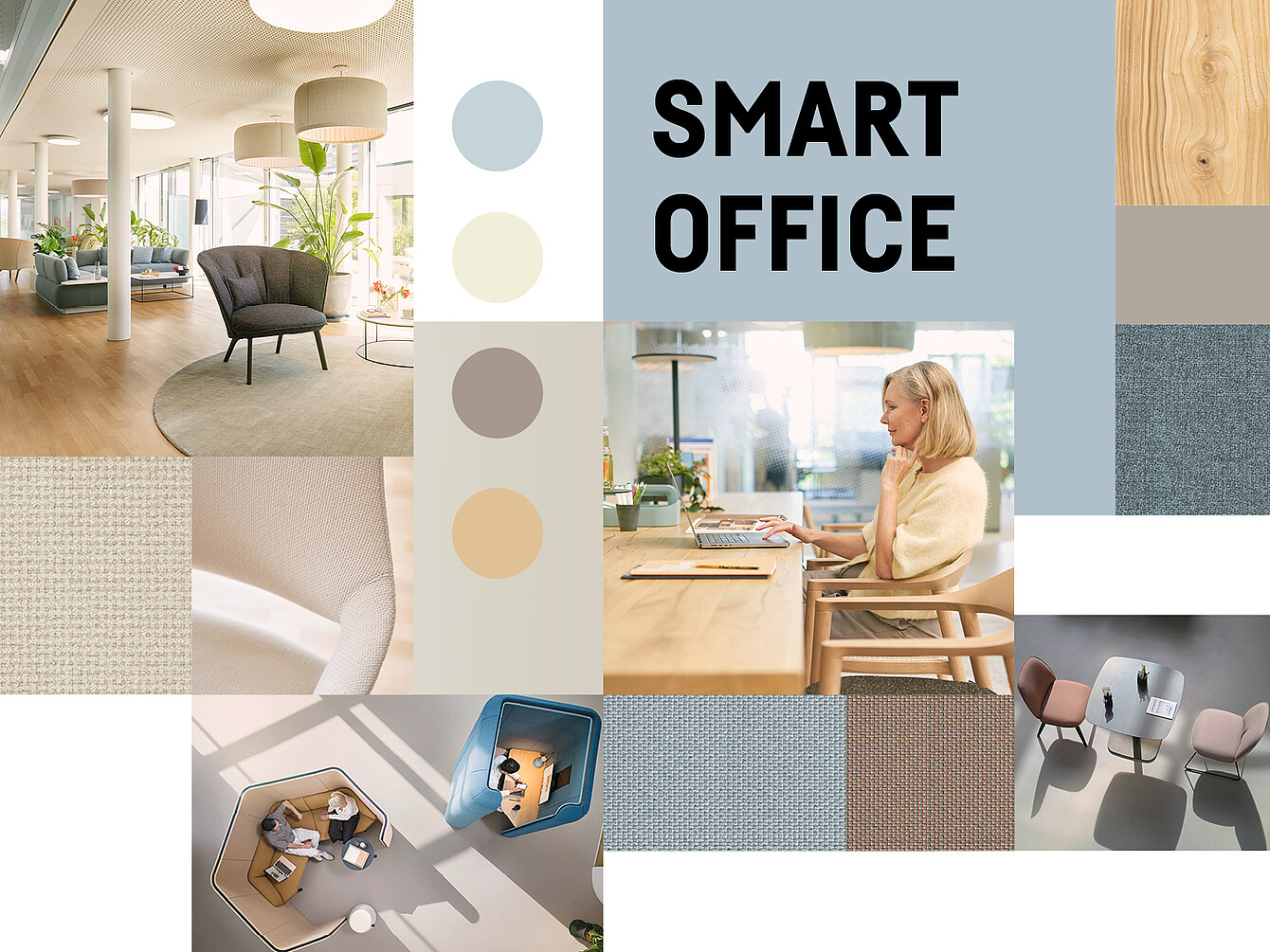
Smart design embodies progress, intelligence, and a cosmopolitan outlook. It thrives on a harmonious interplay between technical sophistication and human sensitivity. Clear, cool tones such as water blue or delicate matcha underscore the functional atmosphere, while natural materials such as light ash or oak, along with earthy hues like sand and clay, give the space an open, inviting, and warmly expressive presence.
Mindfulness as a Design Attitude
Ultimately, “Mindful Work” represents far more than a colour trend. It reflects a fundamentally new understanding of work itself. Spaces should not permanently stimulate users, but instead support different mental states: focus, interaction, reflection and recovery.
As a result, workplace design becomes more empathetic. Rather than standardised office layouts, environments are emerging that genuinely respond to human needs — offering spaces for concentration as well as regeneration.
For architects and planners, this opens up entirely new creative possibilities. The value of an office will no longer be defined solely by space efficiency or technology, but increasingly by atmosphere. Workplaces must function intuitively, reduce stress and simultaneously inspire.
Colours, materials and textures therefore become strategic design tools. They shape not only the aesthetic identity of a workplace, but directly influence how people feel within it — and how well they are able to focus.
The future of the open-plan office will therefore not lie in even greater openness, but in a more refined balance between connection and retreat. This is precisely where the strength of the “Mindful Work” approach lies: it creates quieter spaces so that people can think more clearly.
Discover more about the #designcodes 1/2026 and the complete colour concepts here: Designcodes 2026
Related posts
Colour with impact: How Jutta Werner from Zukunftstil is helping to shape the world of work
Planning for Neurodiversity: Offices for Diverse Sensory Profiles
Biophilic Design – How to improve the working environment with office plants

social media channels: