
The answer lies, among other things, in multisensory design. A well-planned workspace does more than appeal to the eye. It takes into account what we hear, feel and perceive in our surroundings, creating an environment that supports focus, concentration and sustained productivity.
Focus is also a matter of the senses
The modern office is full of stimuli. Conversations, movement, screens, notifications, changing lighting conditions and visual impressions all compete for our attention. At the same time, the office is meant to facilitate communication and interaction – whilst also providing spaces for focused individual work.
Sedus INSIGHTS N° 20, “Focus Office”, explores precisely this tension. The latest issue of the Trend Monitor views concentration as a strategic resource. It shows how hybrid offices can become “oases of concentration”. A key point here is that materials, light and acoustics influence the mental state of the people in the room. As a result, multisensory design evolves from an aesthetic bonus into a functional tool.
Light: steering attention
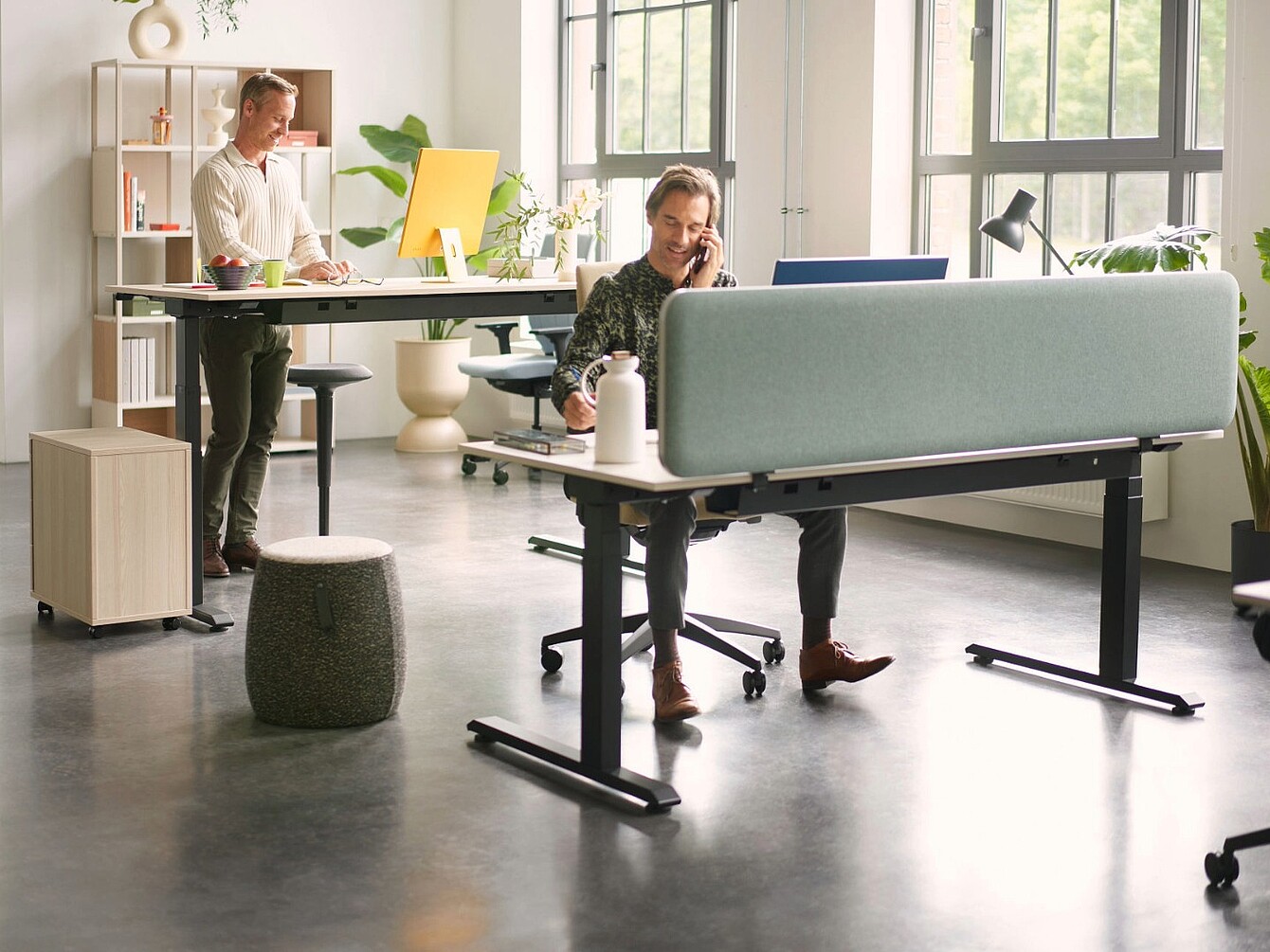
Light is one of the most immediate environmental factors in the workplace. Too much light can be just as distracting as too little light. Added to this are individual needs, different tasks and the natural rhythm of the day.
This is why adjustable lighting is becoming increasingly important. When employees can adapt the lighting to suit their task, the time of day and their personal preferences, they gain greater control over their working environment.
It is not simply a question of brightness. Daylight, indirect lighting, contrast and the deliberate design of different lighting zones can help define and distinguish spaces: one area may encourage interaction, another create a quieter setting, while elesewhere the emphasis is on focused, individual work.
Acoustics: Fewer distractions, greater focus
A conversation two desks away, a spontaneous phone call or footsteps across the room: it is difficult to block out acoustic stimuli. Speech, in particular, naturally attracts attention – even when it has nothing to do with the task at hand.
Good acoustic design is therefore not about creating complete silence. Rather, it is about reducing unwanted disturbances while providing different acoustic qualities for different activities.
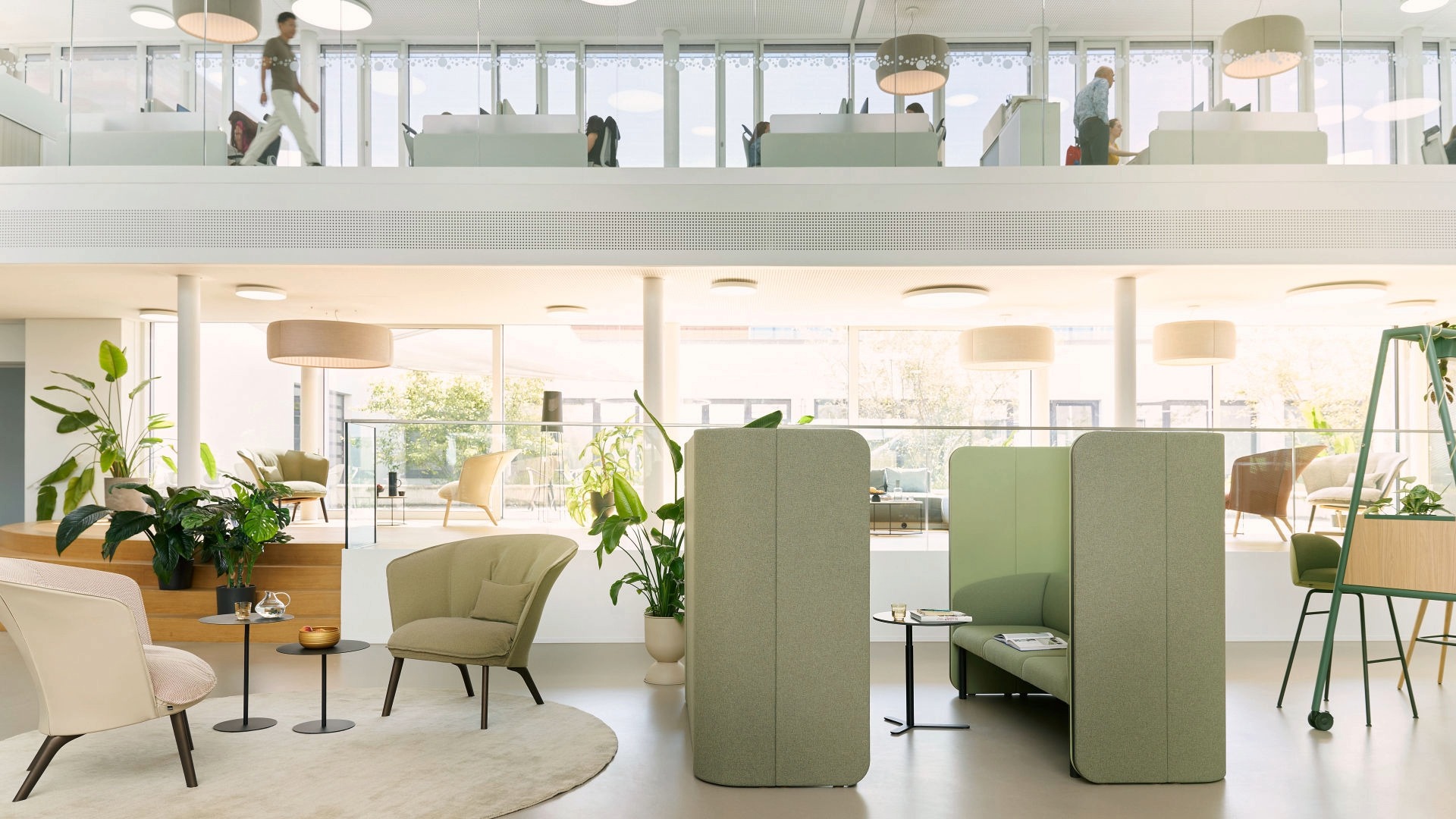
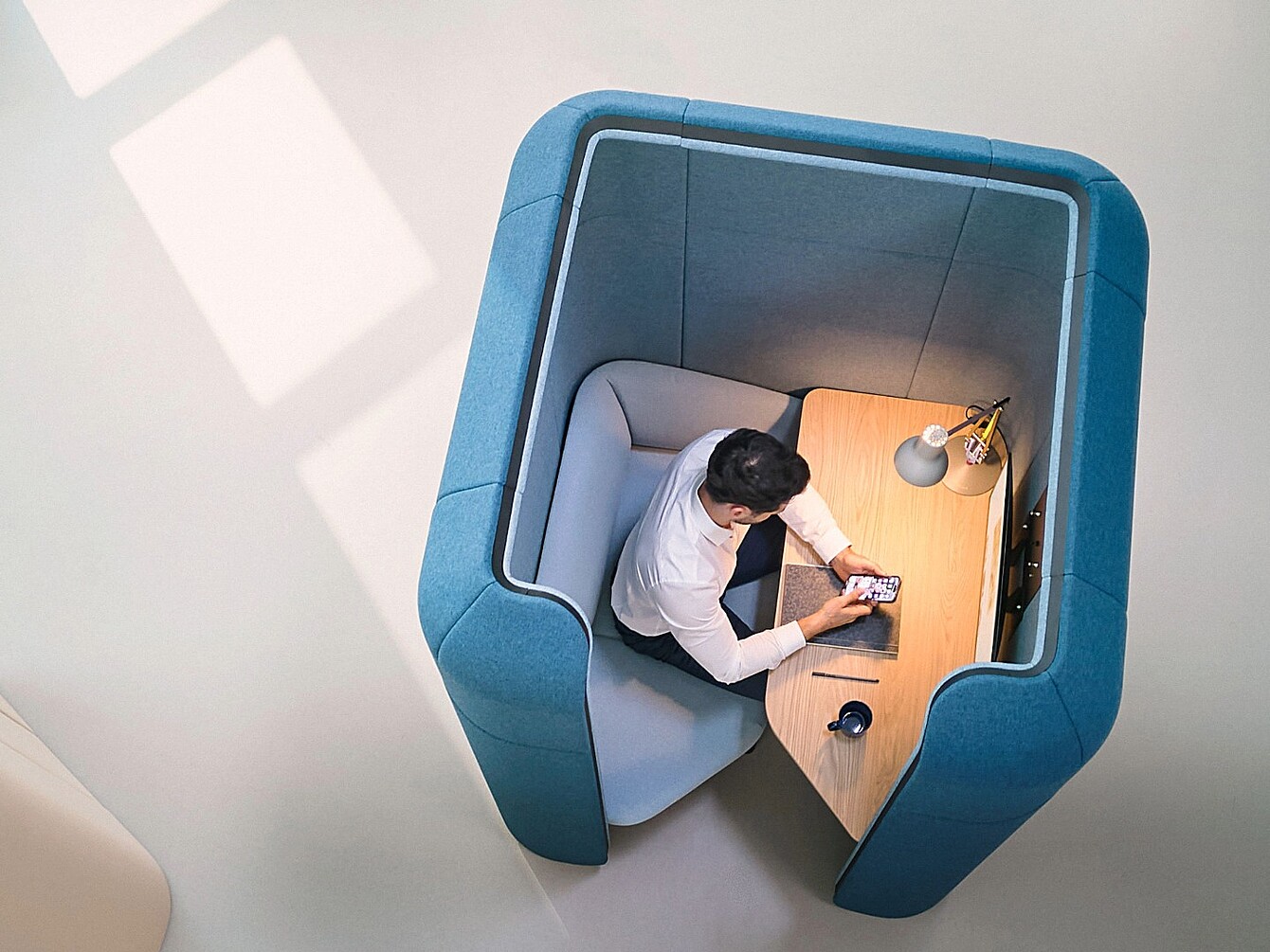
Sound-absorbing surfaces, screens, textile materials, room-in-room solutions and well-thought-out zoning can help to limit noise where concentration is required. At the same time, areas designated for communication can remain more lively and dynamic. This creates an acoustic landscape that responds to the needs of each activity.
This is particularly important in the hybrid office. When employees make a conscious decision to come into the office, they should have more than spaces for collaboration at their disposal, but also a genuine alternative for focused, individual work.
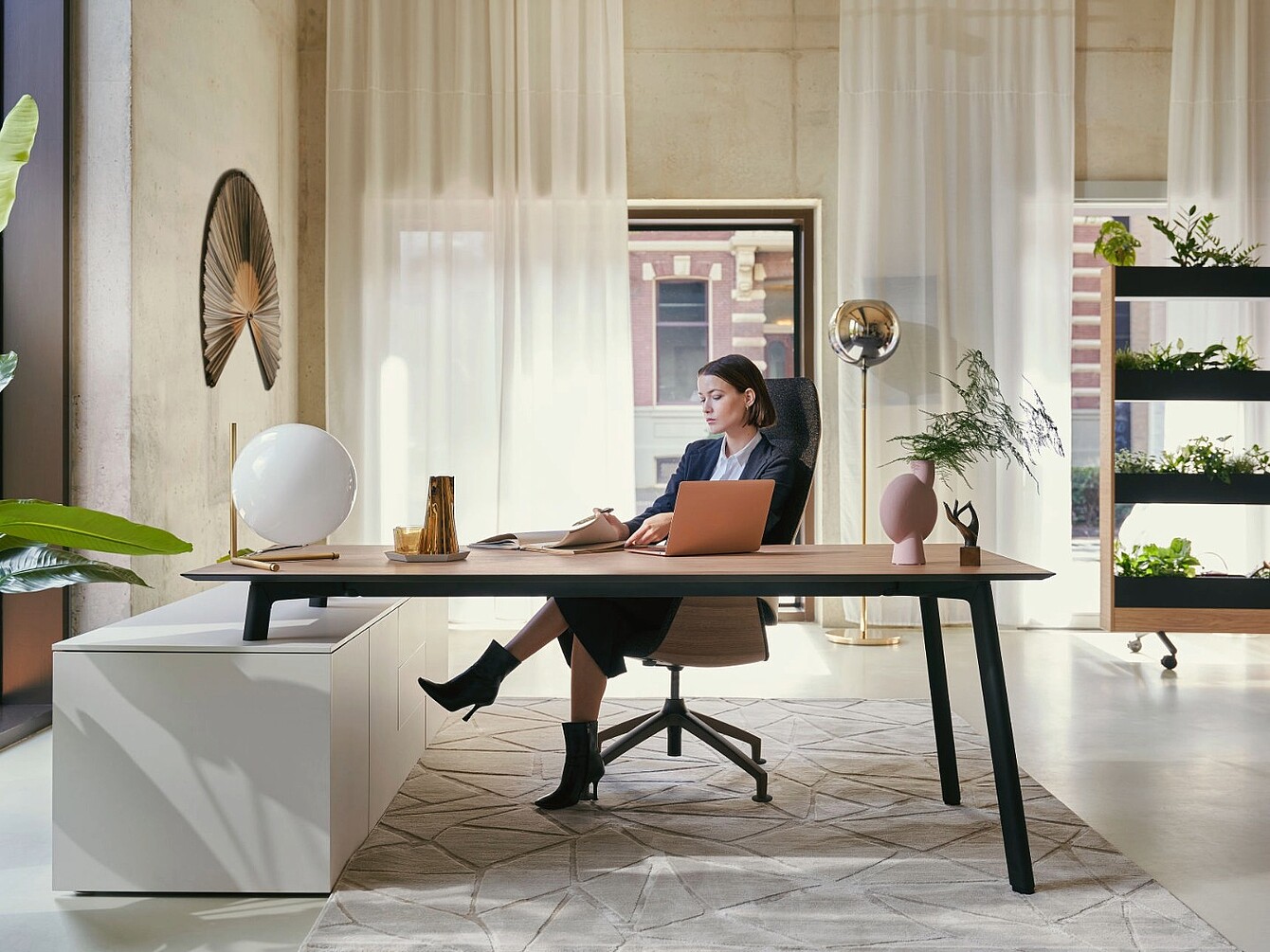
Haptics: Why surfaces can do more than just look good
While light and acoustics are readily associated with well-being in office planning, one sense often remains in the background: touch.
In doing so, we are in constant physical contact with our working environment. We touch table surfaces, armrests, fabrics, handles and other materials throughout the day. Whether smooth or textured, cool or warm, hard or soft: materiality shapes our perception of a space.
Natural textures and varied surfaces can lend an environment depth and a pleasant sensory quality. They also offer a welcome contrast to the smooth digital surfaces that dominate much of the working day.
This adds another dimension to the choice of materials: surfaces do not merely fulfil functional and design requirements. They become part of an overall multisensory experience. What matters is not any single material, but the harmonious interplay of the various sensory impressions.
Multisensory does not mean: as many stimuli as possible
A multisensory office should not aim to offer as much sensory stimulation as possible. On the contrary, good multisensory design is about reducing sensory competition and creating balance.
Light, acoustics, colours, surfaces and materials should not compete for attention. Instead, they should work together to create a coherent atmosphere. Particularly in focus areas, restraint can therefore be a virtue: comfortable lighting, reduced acoustic distractions, natural materials and a clear spatial structure can help create an environment that supports concentration.
At the same time, people differ in terms of which stimuli they find pleasant or distracting. Multisensory design therefore also touches on the topic of neurodiversity. Sedus INSIGHTS N° 20 emphasises that modern working environments should take into account different needs in terms of perception and concentration. The goal is therefore not to create one universal “perfect” workplace, but to provide a range of settings from which people can choose according to their individual needs and activities.
From the workstation to the focus landscape
This also changes the approach to office planning. Instead of equipping every workstation as identically as possible, working environments can offer different sensory qualities.
One area encourages communication and spontaneous encounters. Another offers visual and acoustic screening. Yet another combines natural materials, pleasant lighting and biophilic elements to create a particularly tranquil atmosphere. Employees can therefore decide which environment is right for them at any given moment, depending on the task at hand and their personal needs.
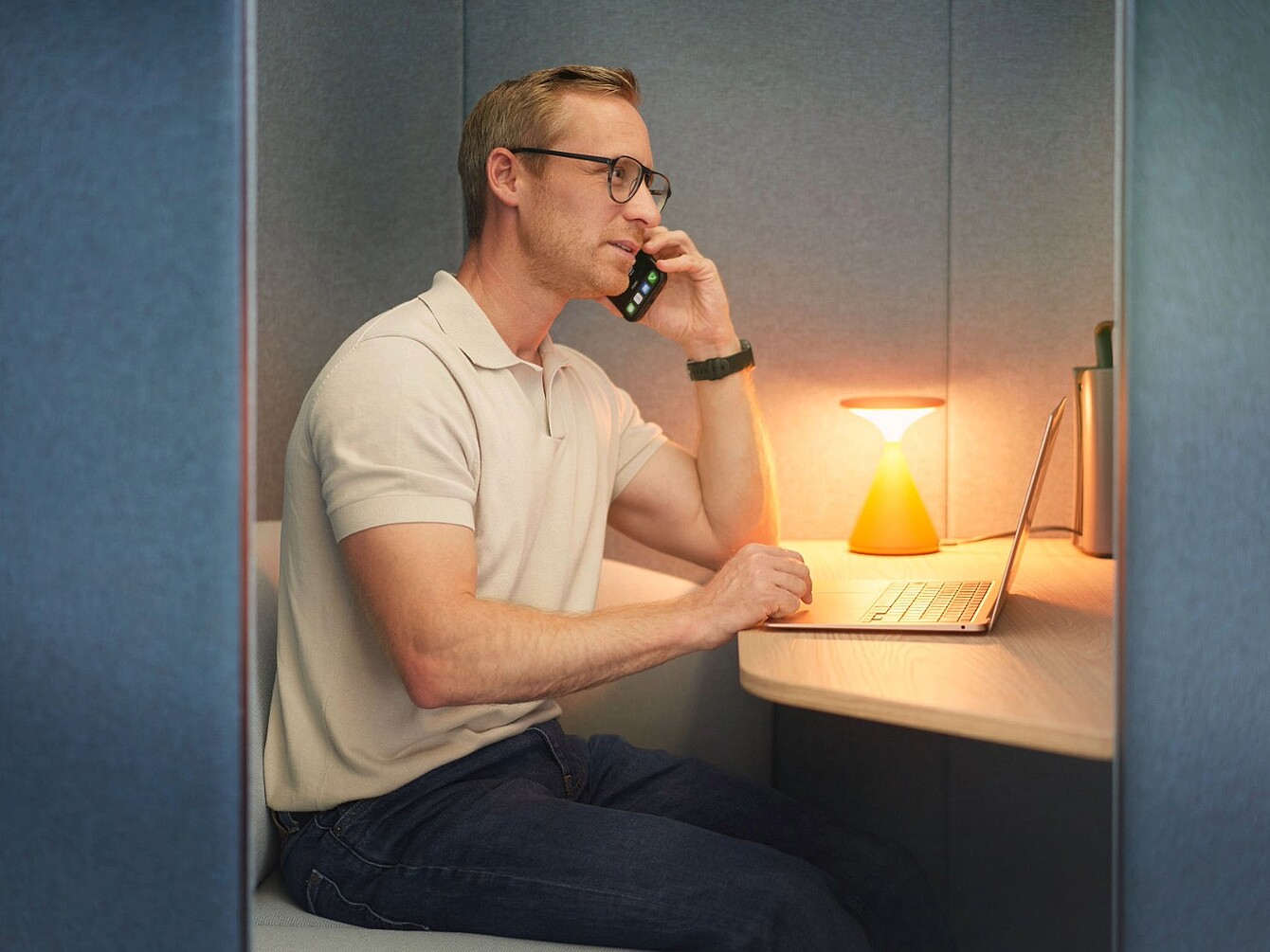
Focus arises through interaction
Concentrated work cannot be achieved by a single light fitting, an acoustic screen or a specific surface. Nor is focus solely a matter of personal discipline. It arises from the interplay of space, design, technology, organisation and corporate culture.
Multisensory office design can create important conditions for this. Regulated lighting reduces unnecessary visual strain. Well-designed acoustics keep disruptive noise at bay. Materials and surfaces give spaces a tactile, natural quality. Finally, flexible settings enable people to decide for themselves which environment they need for their current task.
In this way, the office does not become less stimulating at any cost – but rather more mindful of stimulation.
And perhaps this is precisely one of the most important tasks for future working environments: not to compete for our attention even more, but to create spaces that respect it.
More on the topic of “Focus Office”
Sedus INSIGHTS N° 20 explores in detail how hybrid offices can support focused work. Among other things, the trend magazine examines multisensory design, neurodiversity, biophilic design, flexible space concepts, Calm Tech and the cultural prerequisites for greater focus in everyday working life:

social media channels: