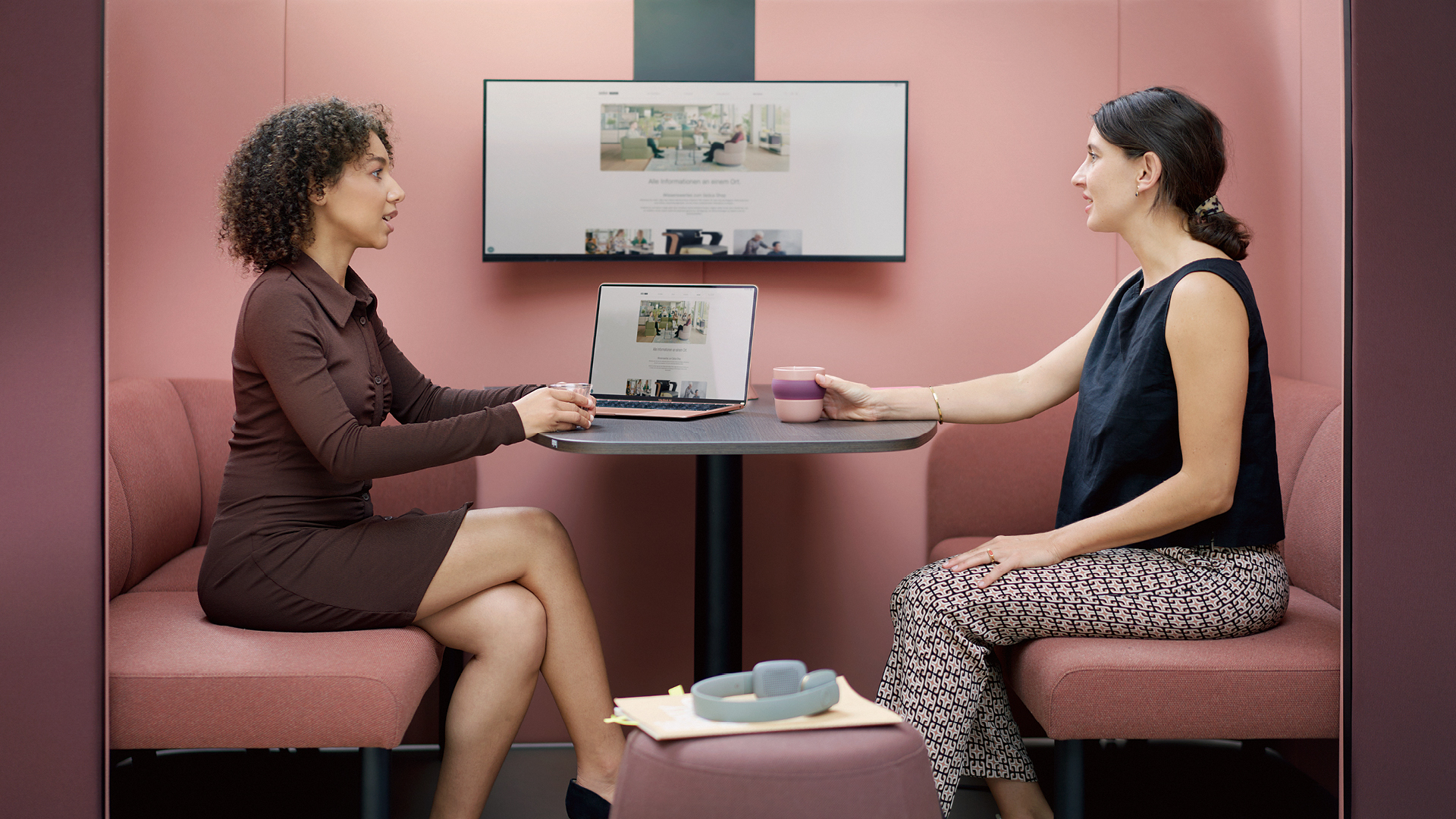

Concentration Is Not a Constant — It Is a Condition
Neuroscientific research shows that deep concentration can only be sustained for limited periods. It emerges from the interplay between individual disposition, task complexity, time of day and — crucially — spatial conditions.
Central to this is the concept of peripersonal space: the immediate zone surrounding our body in which visual, acoustic, tactile and proprioceptive stimuli are processed and integrated.
When this space becomes unstable — due to constant movement in one’s peripheral vision, undefined spatial boundaries or acoustic disturbance — the capacity to channel cognitive energy declines. For neurodivergent individuals, this instability can be particularly challenging. What others perceive as background noise may become a source of continuous cognitive strain.
Neuroinclusive workplaces do not respond with standardisation. They respond with differentiation. They offer alternatives. And above all, they allow choice.
Protection Where It Is Needed
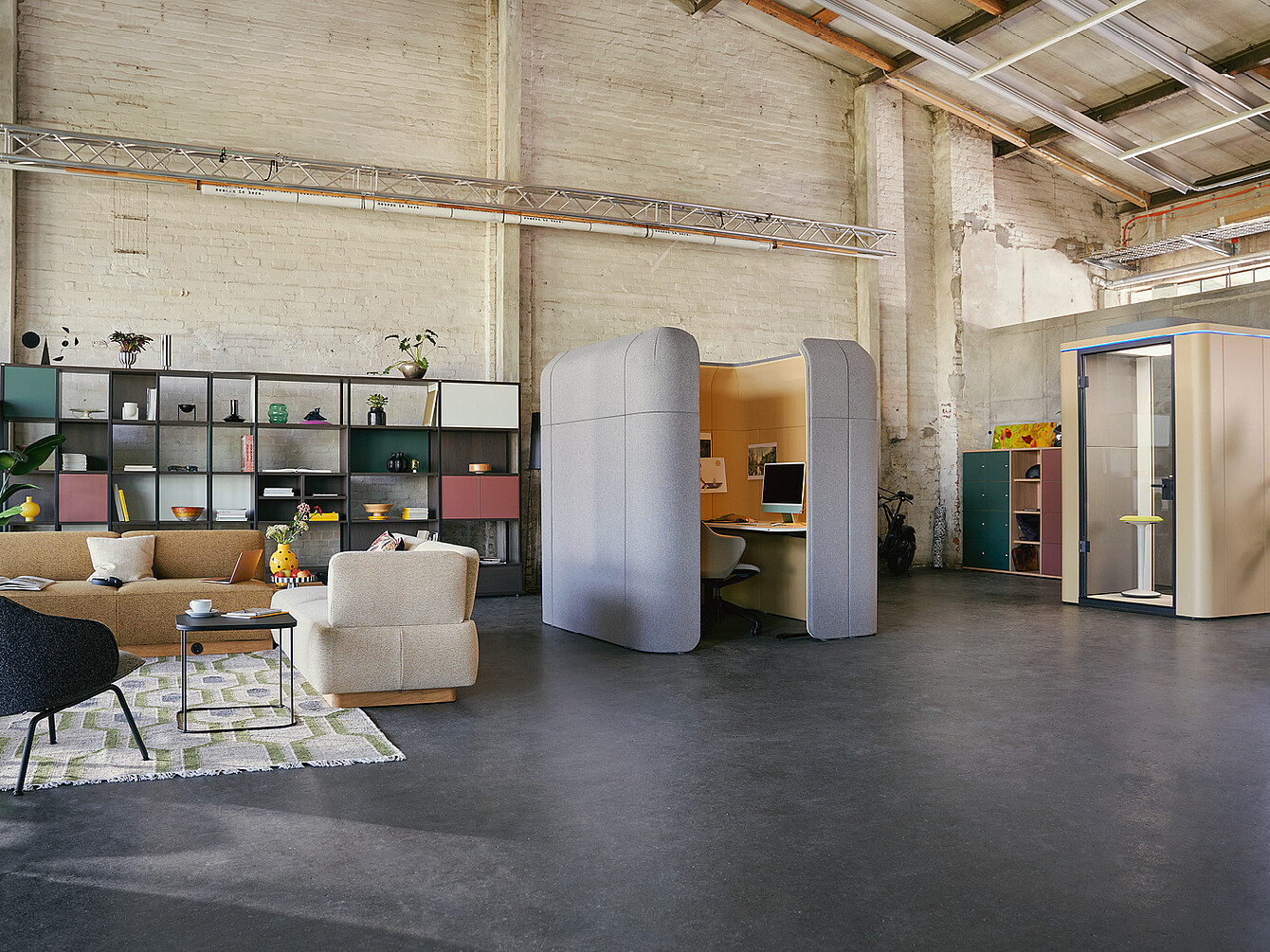
Deep focus requires protection. In open office environments, such protection cannot be achieved through distance alone, but through spatial quality.
With solutions such as se:cube, Sedus creates clearly defined retreats within open-plan structures. The space is not only acoustically and visually shielded; it becomes psychologically tangible. Entering a se:cube is crossing a threshold - a spatial signal that focus begins here. For individuals with heightened sensory sensitivity, this clarity of enclosure fosters a sense of control and security.
Yet not every task calls for full isolation. Often, partial shielding is sufficient to stabilise the peripersonal space. With se:hive, semi-enclosed niches provide visual calm without severing social connection. This gradation between openness and retreat is a core principle of neuroinclusive design: not everyone requires the same level of protection - but everyone should be able to choose it.
Transitions as Cognitive Thresholds

Transitions are frequently underestimated in workplace planning. Yet they are essential for enabling mental shifts. Concentration is cyclical - phases of intense focus alternate with periods of recovery and informal exchange. Between these states, spatial buffers are indispensable.
Here, solutions such as se:cove reveal their strength. With its high backrest and enveloping form, the lounge chair creates a protected micro-space within an open environment. It allows withdrawal without isolation, regeneration without disengagement. For many neurodivergent individuals, such intermediary spaces are crucial for gradually regulating sensory intensity.
Similarly, elements like the se:hive bench, positioned along circulation routes or at the edges of collaborative zones, function as subtle transitional spaces. They offer opportunities to pause, recalibrate or prepare for a cognitive shift. In their apparent simplicity, they play a vital role in supporting self-regulation.
Collective Focus Instead of Constant Interaction
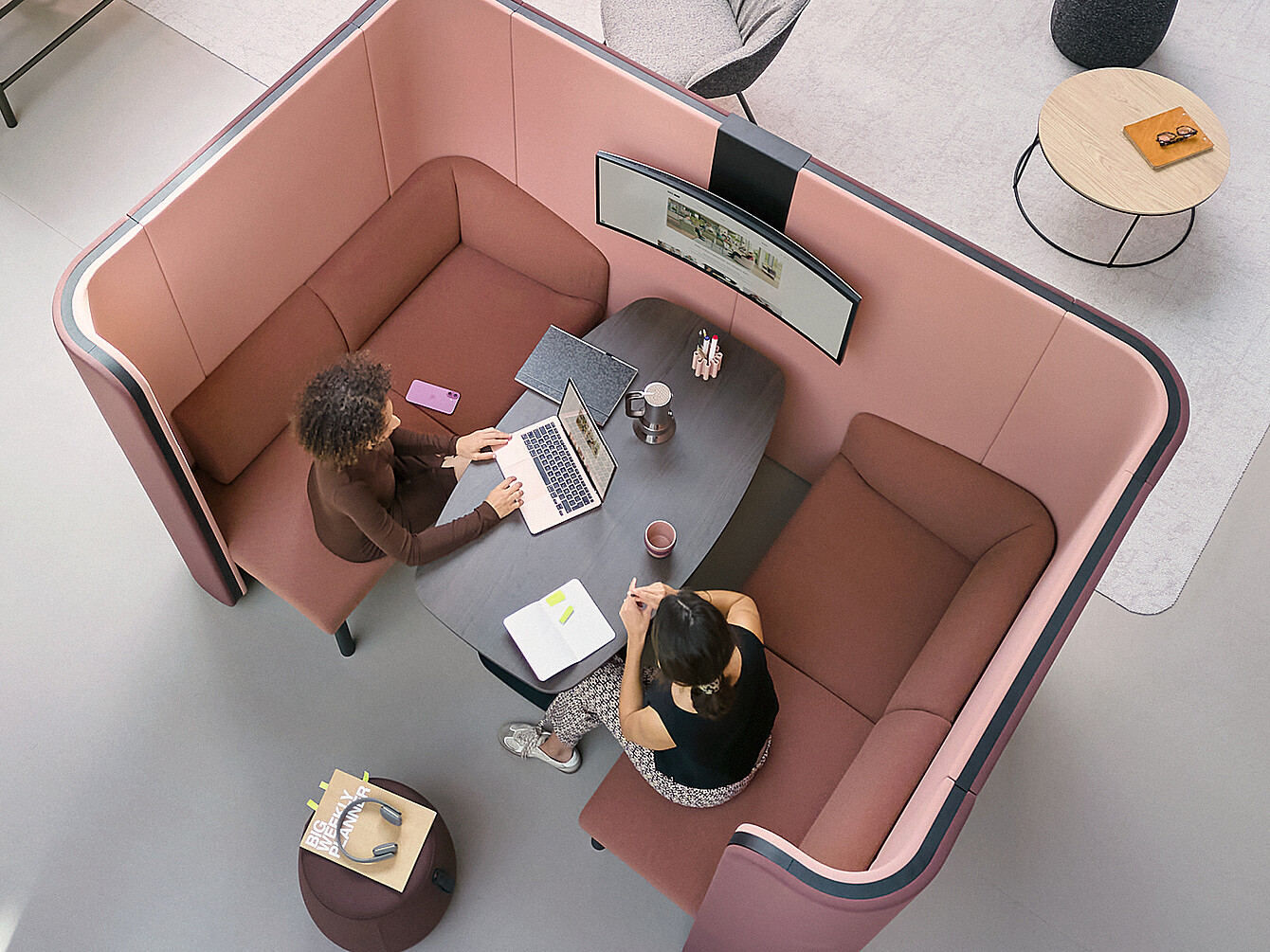
Neuroinclusion does not mean diminishing social spaces; it means designing them with nuance. As emphasised in Sedus INSIGHTS, offices should form a sequence of spaces that reflect different modes of attention. A Work Café, for example, can become more than a place of social encounter. With the se:café team table, environments emerge where people can work collectively yet quietly - reminiscent of a library setting. Social presence remains, but the atmosphere communicates calm and mutual respect for concentration. Implicit rules - no phone calls, reduced noise levels - reinforce this effect.
For individuals who rely on clear structure and predictable behavioural cues, such spatial legibility provides orientation. The environment communicates what is expected. Cognitive load is reduced. A sense of security emerges.
Freedom of Choice as Self-Determination
A central theme of Sedus INSIGHTS is autonomy. People work more effectively when they can decide where and how to carry out their tasks.
In neuroinclusive workplaces, freedom of choice is not merely a matter of comfort - it is foundational to performance. The ability to move between fully enclosed spaces such as se:cube, semi-protected niches like se:hive, structured collective areas featuring se:café team table, or restorative retreats like se:cove allows individuals to regulate sensory intensity and social proximity according to their needs.
Not everyone requires the same space. But everyone benefits from the ability to choose.
The Subtle Lever Lies in Structure
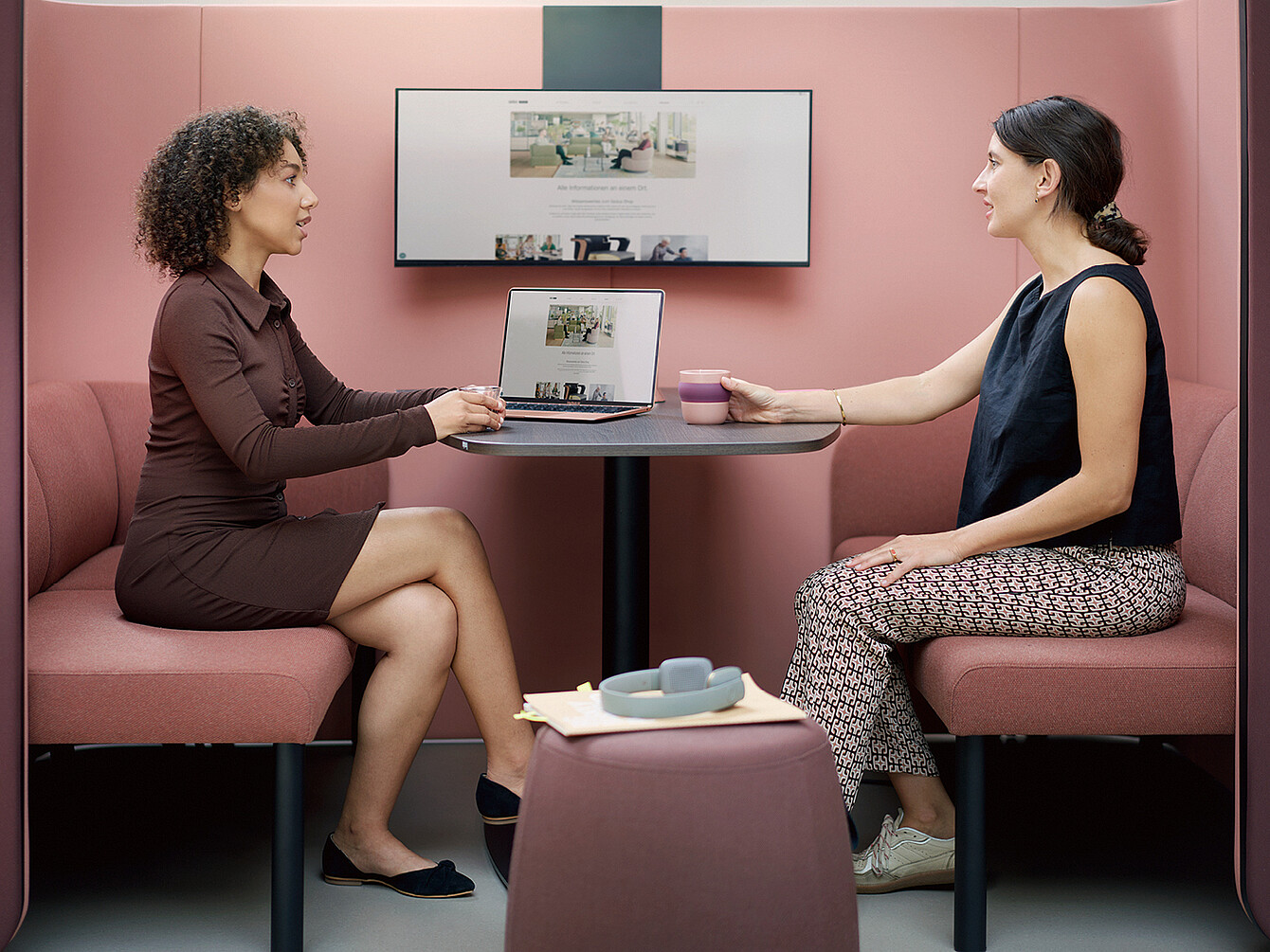
Neuroinclusion does not arise from a single piece of furniture. It emerges from coherent spatial logic, from gradual transitions, from clearly legible zones - and from furniture solutions that offer graduated levels of protection.
Sedus products such as se:cube, se:hive, se:cove and se:café team table are not isolated objects; they are components of a differentiated attention ecosystem. They help stabilise peripersonal space, modulate sensory input and enable self-determination.
In a working world where attention has become the scarcest resource, neuroinclusive design becomes a strategic imperative. It begins where pathways do more than connect - they provide orientation; where transitions function as mental thresholds; and where freedom of choice becomes an architectural principle.

social media channels: