
What is peripersonal space - and why does it matter?
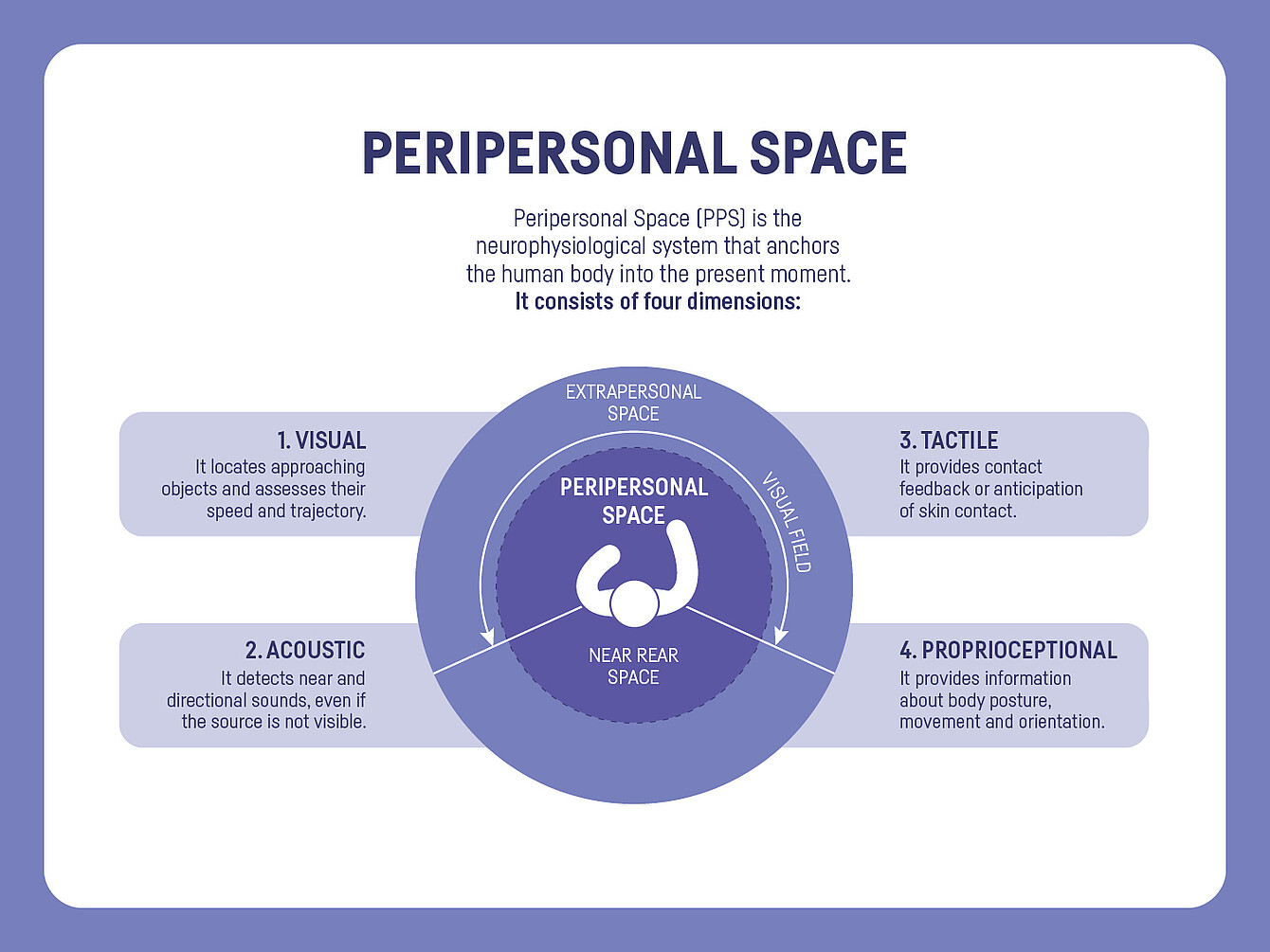
Peripersonal space refers to the immediate area surrounding our body - a neurophysiological system that integrates visual, auditory, tactile, and proprioceptive stimuli.
It is not static. It constantly adapts depending on the environment, the situation, and the social context. Sometimes it expands when we seek protection. Sometimes it contracts when we feel safe.
This dynamic has a direct impact on our ability to concentrate.
Because:
Focus doesn’t happen just in the mind. It emerges through our interaction with space.
Why traditional office design reaches its limits

For a long time, workplaces were designed from a purely functional perspective: space, usage, efficiency. Later, the focus shifted toward communication, openness, and collaboration.
What often fell behind:
individual concentration.
Yet the reality is clear:
- Distractions are everywhere
- It can take up to 30 minutes to reach deep focus
- And this state typically lasts only 60–90 minutes
At the same time, a significant portion of our work requires exactly this level of depth.
So the issue is not a lack of discipline.
It’s a mismatch between space and cognitive needs.
Peripersonal space as a new design dimension

To rethink workplaces today means understanding this:
people don’t simply work in a space - they work from within their peripersonal space.
It acts as the interface between the individual and their environment.
In practical terms, this means:
- Visual stimuli influence what we focus on
- Sounds determine cognitive load
- Materials affect bodily perception
- Spatial boundaries shape our sense of control and safety
Or put differently:
The true boundary of space is the body, not the architecture around it.
Control as the key to concentration
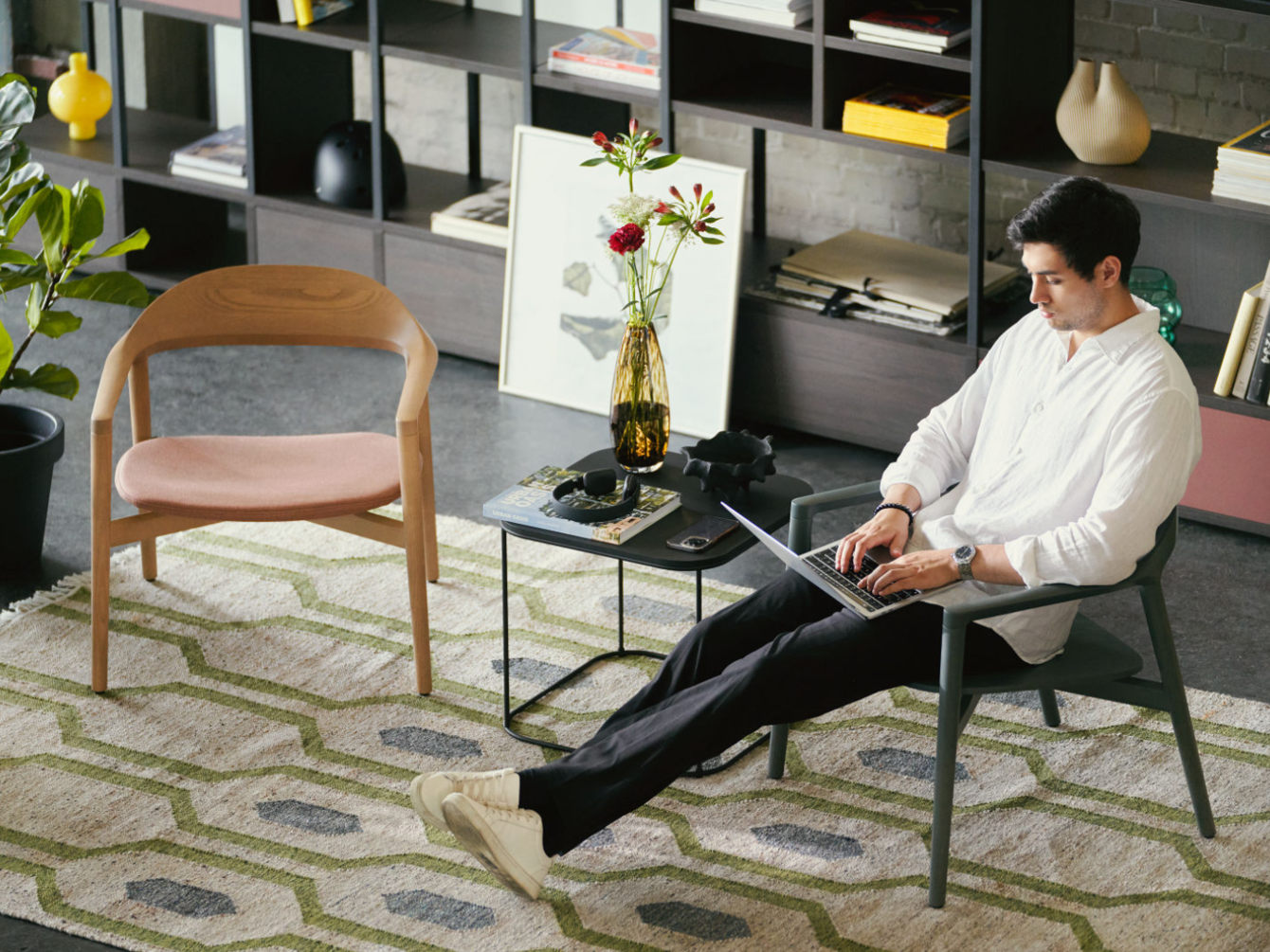
A central principle of focused work is control.
Not in the sense of isolation, but in terms of:
- choice
- adaptability
- autonomy
Studies show that the perception of control over one’s immediate environment is a critical factor for concentration.
This is why rigid spatial concepts are becoming less effective.
Instead, we are seeing the rise of an ecological approach to focus:
the context is actively shaped - not just used.
From space to system: workplaces as landscapes of concentration
A single space can rarely meet all these requirements.
What’s needed is a system of environments.
Insights clearly show that successful workplaces create a sequence of spaces supporting different modes of attention.
These include:
- areas for light, routine tasks
- zones for medium-level concentration
- retreat spaces for deep work
- transition areas for mental recovery
This differentiation is essential.
Because attention is not constant - it is cyclical.
Multisensory design: how space actively supports focus
One often underestimated factor is the sensory quality of a space.
Focus is not achieved through the absence of stimuli alone.
It requires coherent stimuli.
This means:
- Light influences not only well-being but cognitive performance
- Acoustics determine mental load
- Materials provide grounding and orientation
- Colours affect emotional states
Most importantly:
the peripersonal space needs to remain stable.
In chaotic or sensory-deprived environments, it becomes disrupted - and so does our ability to focus.
Focus requires retreat - but also transition

Interestingly, the best work environments are not the quietest ones.
They are the most differentiated.
Practical examples show:
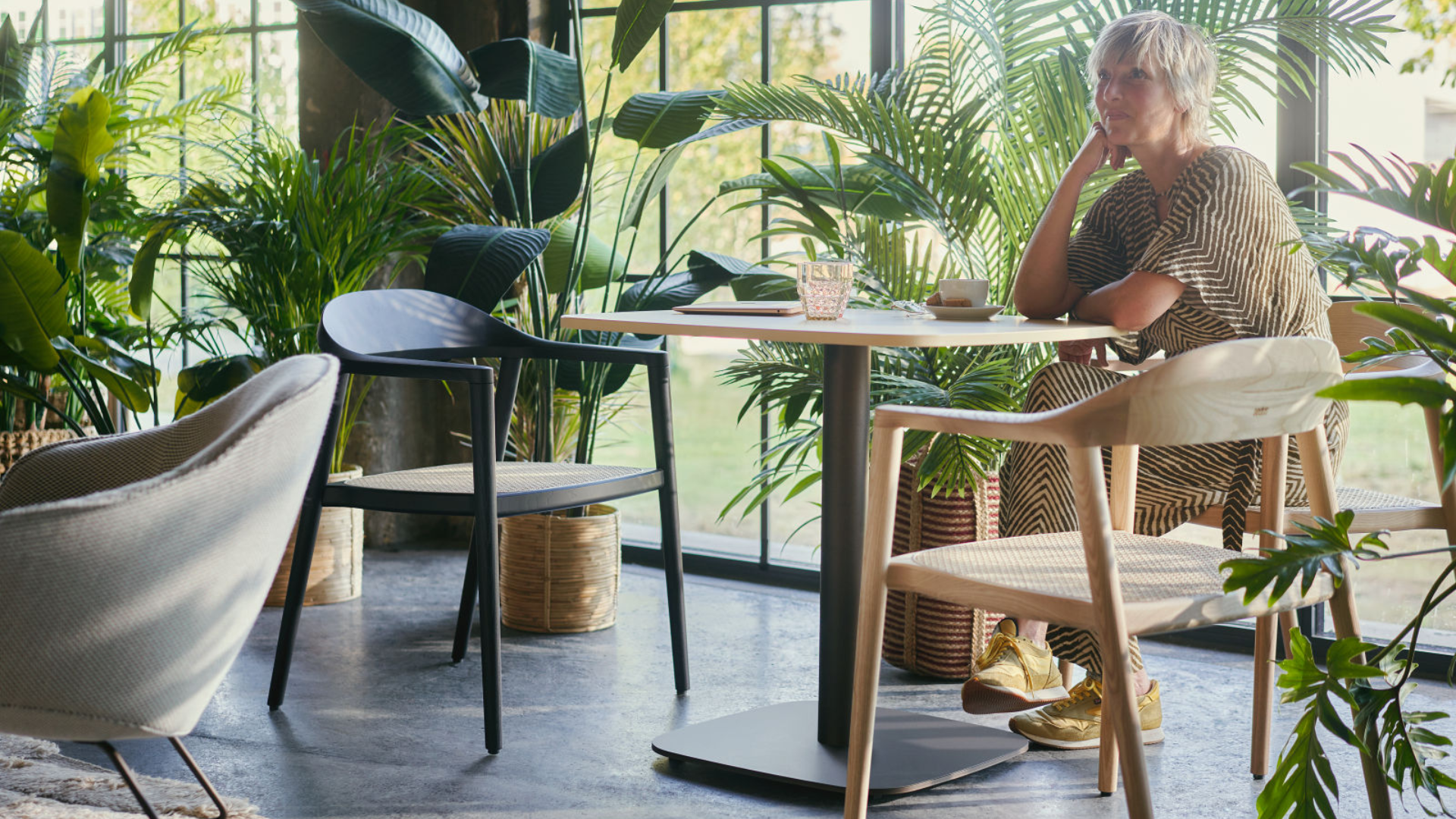
- Semi-open niches enable focus without isolation
- Library-like environments naturally promote quiet behaviour
- Work cafés combine recovery with light concentration
- Transition zones support cognitive shifts
The key insight:
Not every moment requires maximum isolation.
But every moment requires the right context.
The social dimension: when space is shared
Peripersonal space also shifts in social contexts.
At the beginning of collaboration, it remains clearly defined.
Over time, it expands into a shared action space.
This has direct implications for workplace design:
- Collaboration requires proximity
- Concentration requires distance
- Both must coexist - without friction
So it’s not about choosing one over the other.
It’s about designing an intelligent balance.
Why the future of the office starts with the individual
Perhaps the most important takeaway:
A focus-supporting environment is not created in abstraction.
It emerges where people sit, think, and work.
This fundamentally shifts the perspective.
Today, design means:
- not just shaping spaces
- but orchestrating experiences
- and taking individual needs seriously
Conclusion: peripersonal space as the key to modern workplaces
The concept of peripersonal space introduces a new dimension to workplace design.
It shifts the focus:
- away from space as a static object
- toward the human being as the starting point
Focus is not accidental.
It is the result of a carefully balanced interplay between:
- environment
- perception
- control
- and context
Workplaces that understand this create more than functional spaces.
They create conditions in which people can truly work.
And that is where their real value lies.

social media channels: