
Between Interaction and Withdrawal
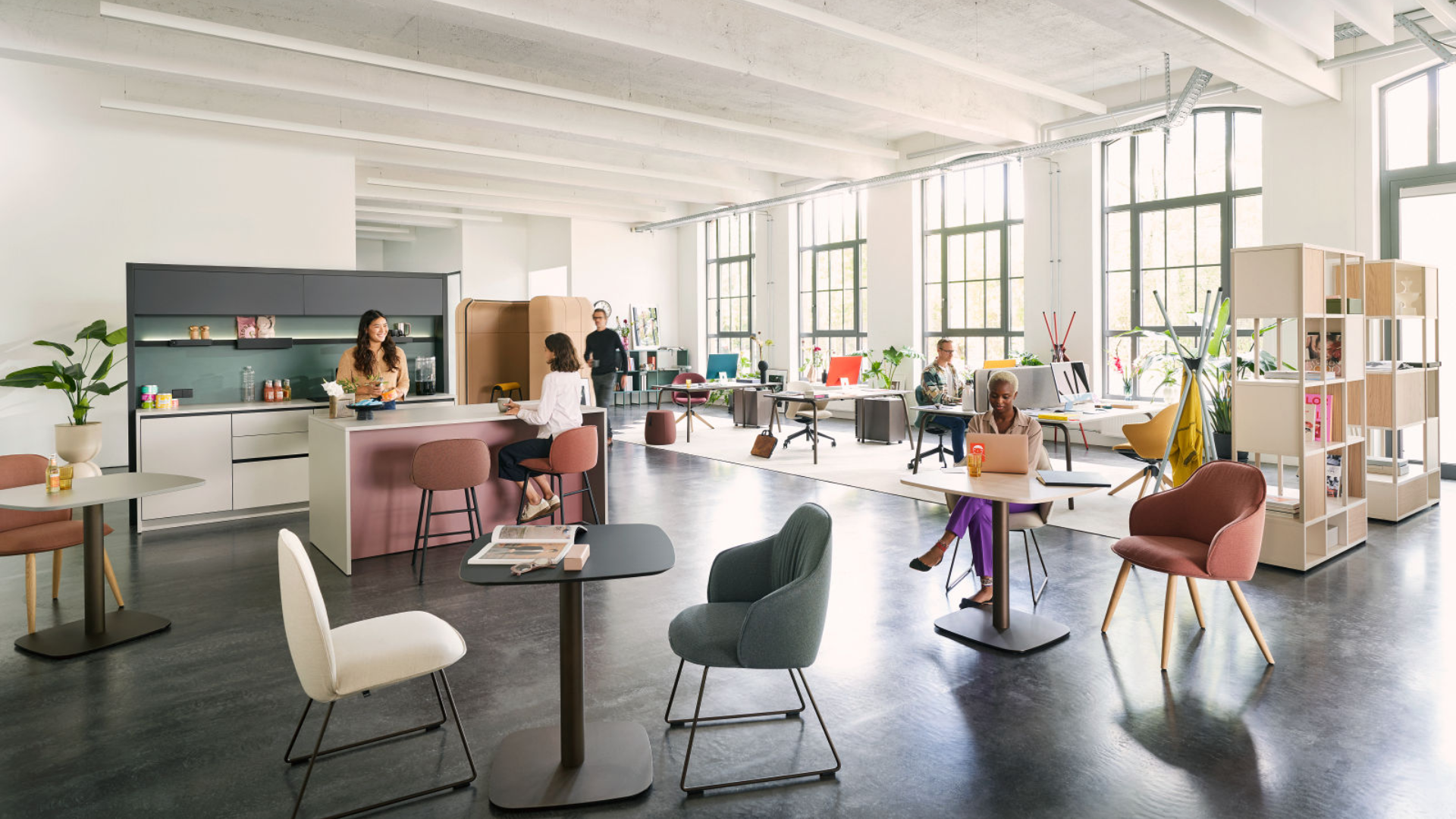
Within hybrid working models, the role of the office has been fundamentally redefined. It is no longer primarily the setting for focused individual work - quieter alternatives often exist for that purpose. Instead, the office gains significance where it offers something unique: social interaction, inspiration, and a deliberately designed environment.
Yet this shift introduces a tension. As communication and openness are encouraged, another essential need can quickly recede into the background: the ability to concentrate. Studies indicate that focused work in the office is becoming increasingly challenging, not least due to constant interruptions and fragmented workflows.
The work café operates precisely at this intersection. It creates an environment in which both interaction and focus can coexist.
The Third Place Within the Organisation

Inspired by traditional “third places” such as cafés or libraries, the work café introduces a distinctive quality into the workplace: freedom of choice. It is a space that does not prescribe how work should be done, but instead offers possibilities.
Here, multiple scenarios unfold simultaneously:
- Informal conversations at a standing table
- Focused work within a quiet niche
- Creative pauses on a sofa
- Spontaneous meetings in an open setting
This coexistence is intentional. Throughout the day, attention naturally shifts between different states of focus; from light to deep concentration. A space that supports these transitions naturally enhances productivity.
Focus Requires Variety - Also in the Work Café
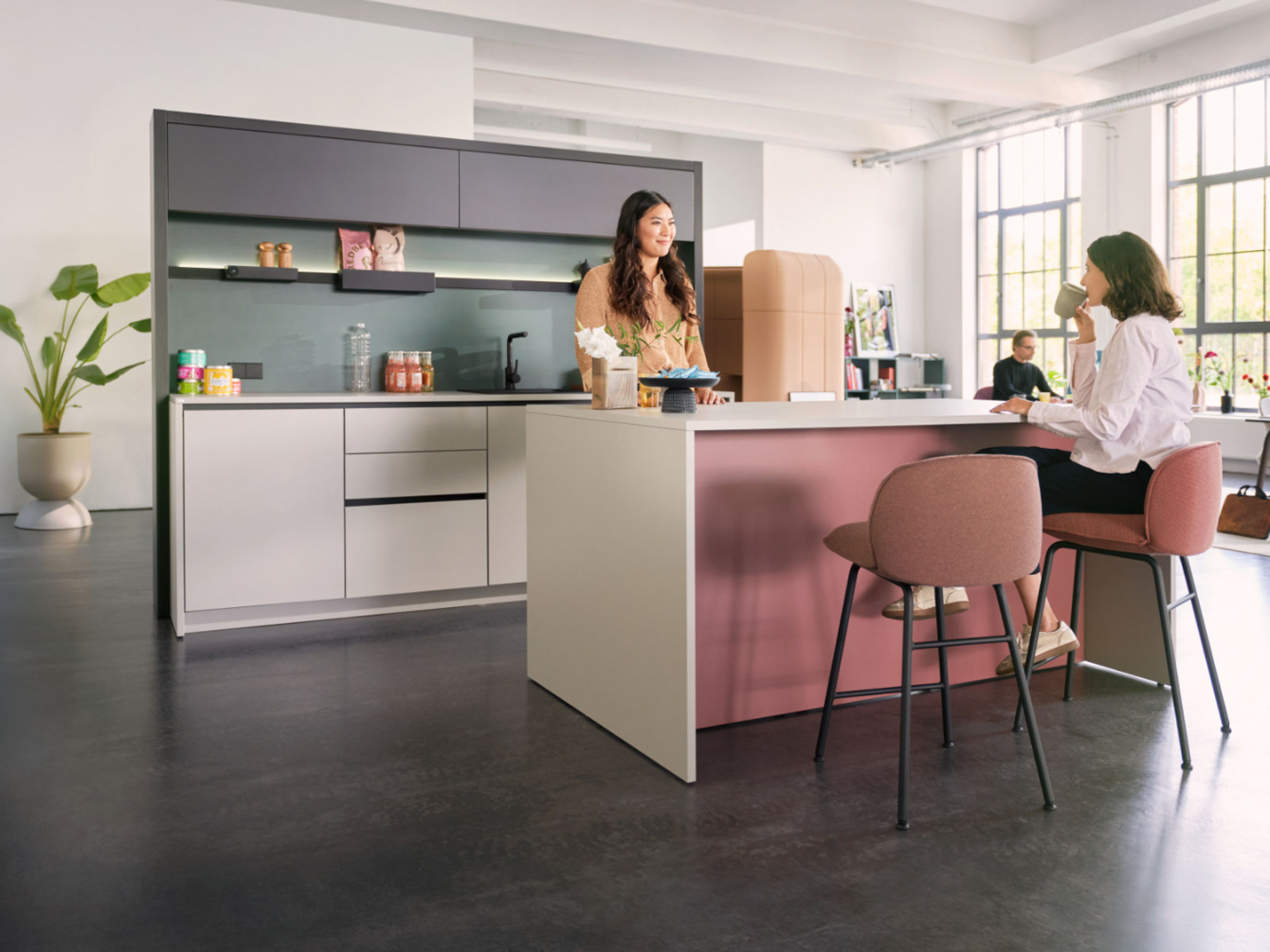
A common misconception is that concentration can only occur in enclosed, silent environments. In reality, it is highly context-dependent. What matters is not absolute quiet, but the alignment between task and setting.
This is where the strength of the work café lies. When thoughtfully designed, it offers a nuanced spectrum of environments:
- Open zones for exchange and energy
- Semi-sheltered areas for parallel work
- Quiet corners for focused tasks
- Lounge spaces for mental recovery
Such diversity allows individuals to choose their mode of work situationally. This autonomy is a key driver of both productivity and satisfaction.
Why Focus Cannot Exist Without Breaks
A key point from Sedus INSIGHTS: concentration is not a permanent state, but a cycle. Phases of intense work alternate with moments of recovery. Deep focus can typically be sustained for only 60 to 90 minutes before attention naturally declines.
The work café supports this natural rhythm in an ideal way. It enables:
- Brief mental reset moments
- Active breaks through social interaction
- Gentle transitions between work and recovery
Importantly, the most effective breaks are not passive, but active and inspiring. Spaces that invite people to linger, read, or engage informally contribute more to regeneration than sterile retreat areas.
Design as a Key Factor: When Atmosphere Shapes Productivity

For a work café to truly function as a space for focus, good design alone is not sufficient. What matters is the interplay of several factors:
Zoning
Different uses require different spatial conditions. A clear yet fluid structure prevents disruption and provides orientation.
Acoustics
Sound is one of the most significant sources of distraction. Materials, furniture, and spatial configuration must be carefully orchestrated to create a balanced acoustic environment.
Light and Materials
Natural light, warm tones, and tactile surfaces have been shown to enhance cognitive performance and well-being.
Multisensory Quality
Spaces always operate on multiple levels simultaneously. Visual, acoustic, and tactile stimuli influence how stable our focus feels - a concept closely related to the notion of peripersonal space.
From Space to Culture

A work café is never merely a space; it is an expression of a mindset. Organisations that create such environments signal trust - trust in people’s ability to decide how they work best.
This shift transforms more than just the working day:
- Collaboration becomes more natural
- Concentration is shaped more consciously
- A sense of belonging emerges through the quality of place
In other words, the work café is not a compromise between interaction and individual work. It is the spatial response to the understanding that both are inherently interconnected.
Productivity Begins with Choice
In conclusion, as the world of work becomes increasingly complex and dynamic, there is a need for spaces that do not dictate, but enable. The work café is precisely such a space.
It functions best when it is not conceived as an “extra,” but as an integral part of a diverse spatial concept - an environment that energises while simultaneously allowing for concentration.
Sometimes, the best ideas emerge exactly where you least expect them: between a conversation, a thought - and a good cup of coffee.

social media channels: