
While many hotels today offer multifunctional rooms, restaurants, conference areas or bars and thus see themselves as hybrid concepts, hybrid hospitality goes much further. It is not just about mixing uses, but about a deep understanding of human needs: belonging, encounter, comfort and meaning. A place that embodies hybrid hospitality offers a holistic experience – regardless of whether someone stays for a day, a week or a month.
For companies and designers of modern office environments, this raises the question: what can offices learn from these hospitality role models? The answer can be found in two impressive examples, each of which shows in its own way how spaces can shape community and enhance productive work.
1. The Social Hub: A home away from home for students, digital nomads, entrepreneurs and neighbours
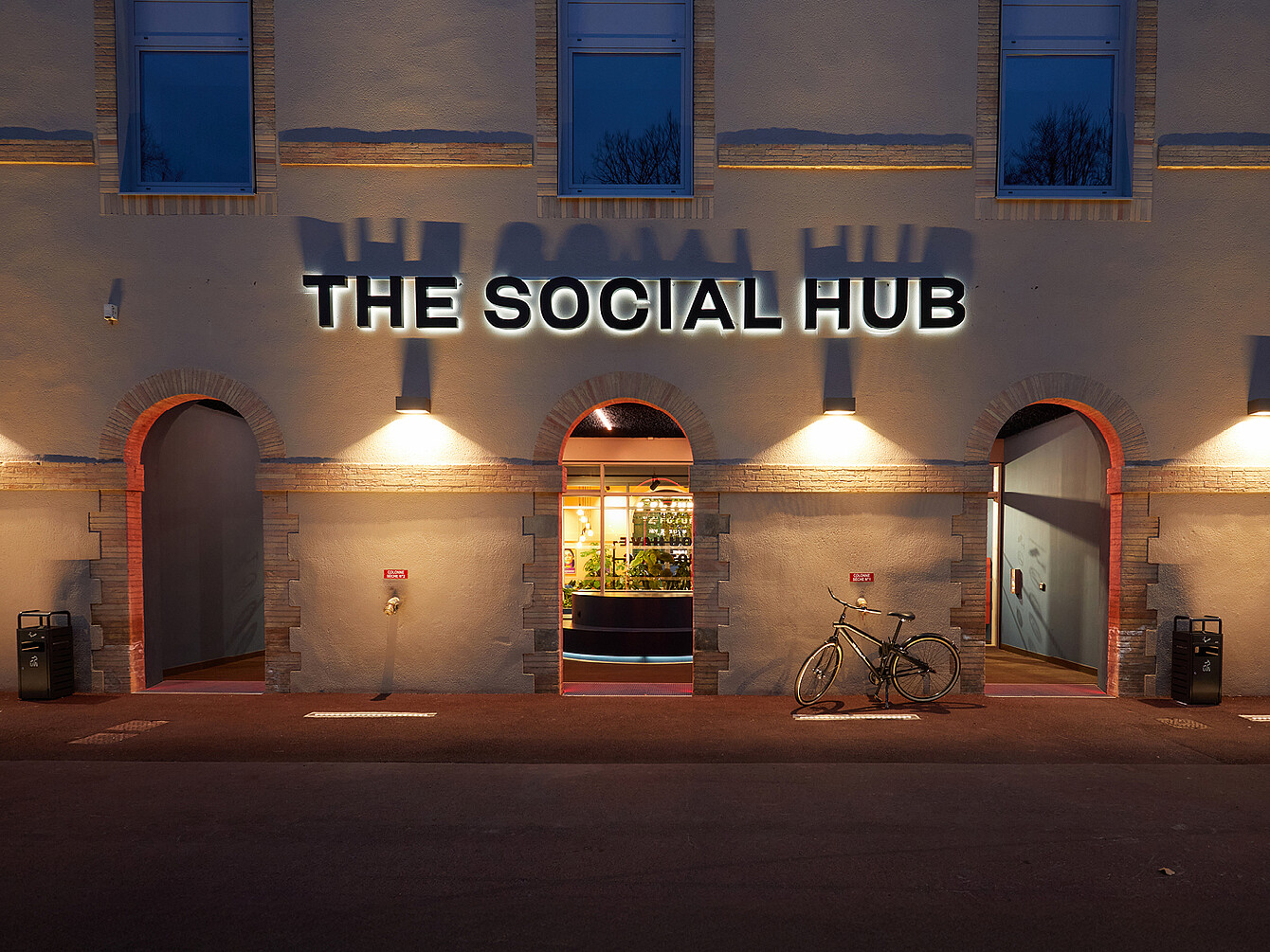
What began as an idea for a better student hotel has developed into a European success story and symbol of hybrid hospitality: The Social Hub (TSH). Founder Charlie MacGregor's vision was to give young people a place where they could feel at home, grow and shape their future. But over the years, the student hotel has become a lively, inclusive hybrid space where a wide variety of lifestyles intersect.
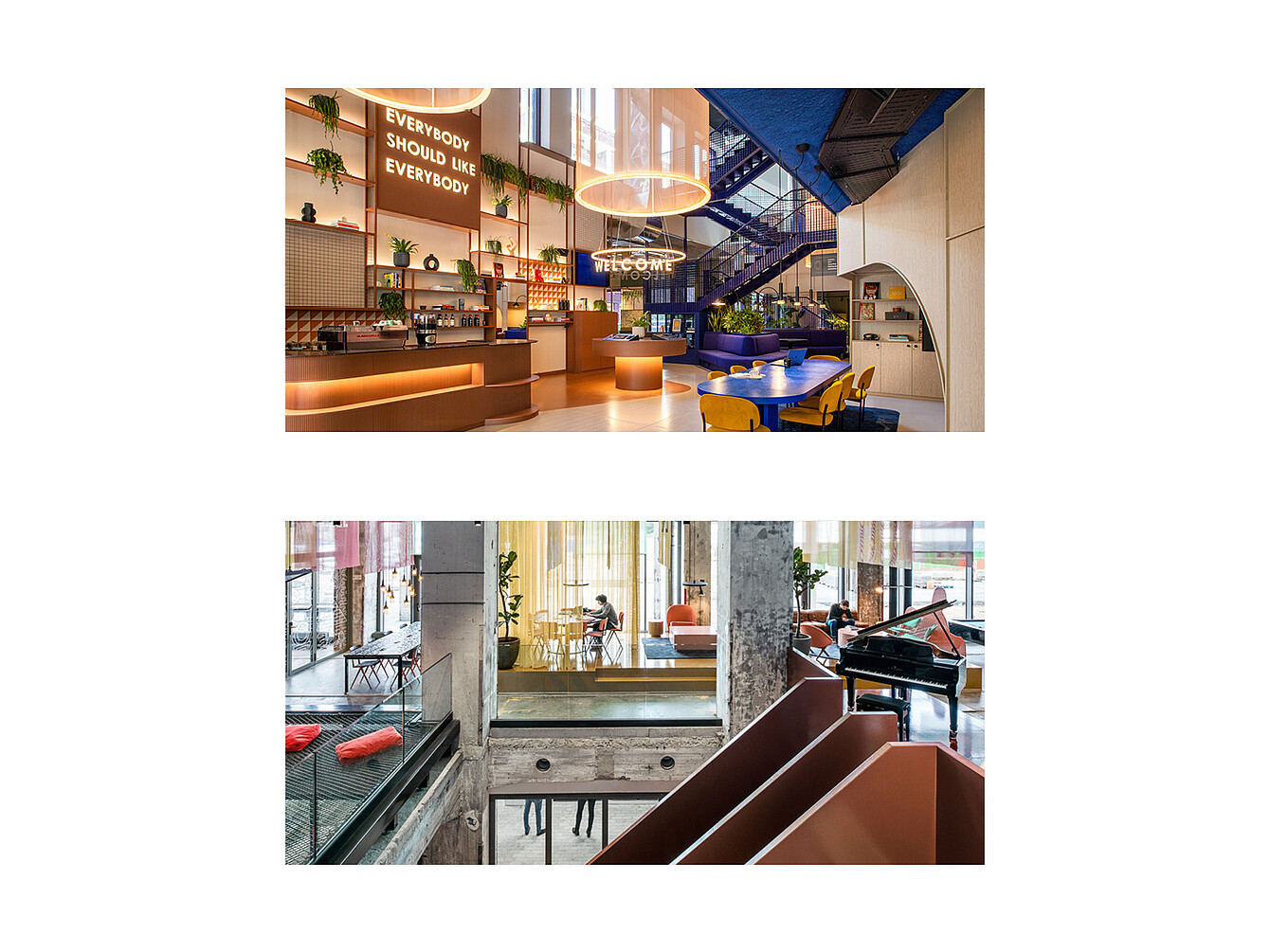
TSH aims to bring students, tourists, business travellers and neighbours together under one roof and create shared experiences for them.
The open-plan common areas allow the international community to quickly get in touch with each other. The room concept encourages interaction and breaks down the boundaries between learning, living, working and relaxing.
A hub for community and encounters
TSH combines under one roof:
- Hotel rooms for short-stay travellers
- Coliving for long-term guests
- Coworking for start-ups, digital nomads and creative types
- Community spaces for workshops, sports, culture and cuisine
The result: a melting pot of students, locals, entrepreneurs, travellers and creative types that facilitates genuine, everyday encounters. This "complete connected community" is no accident – it has been deliberately designed. The spaces promote exchange, openness and a sense of being part of something bigger.
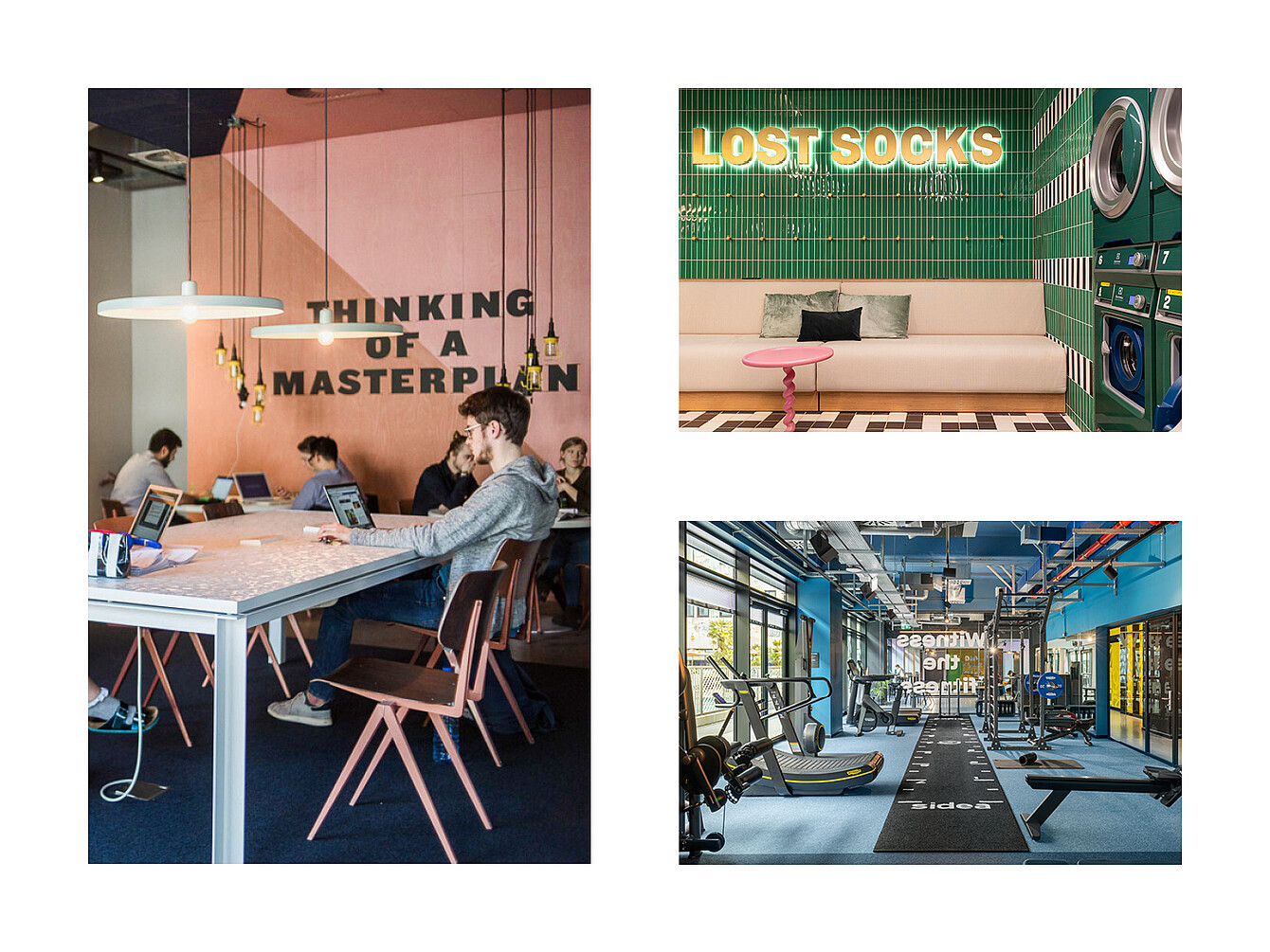
Each TSH has a coworking space that is shared by the community. The large team tables promote collaboration, turning each hub into a think tank where innovation flourishes thanks to the connected community.
The shared spaces also include a laundry room, which is freely accessible to the community at any time of the day.
All inclusive: Sports enthusiasts can also work out at TSH. A wide range of sports equipment is available for guests in the fitness rooms.
Coworking as a driver of innovation
The growing digital economy has shown that people benefit enormously from physical proximity to other innovative minds. TSH has recognised this and created professional coworking areas that enable focus or collaboration depending on the mood of the day – a principle that is also essential in modern office environments.
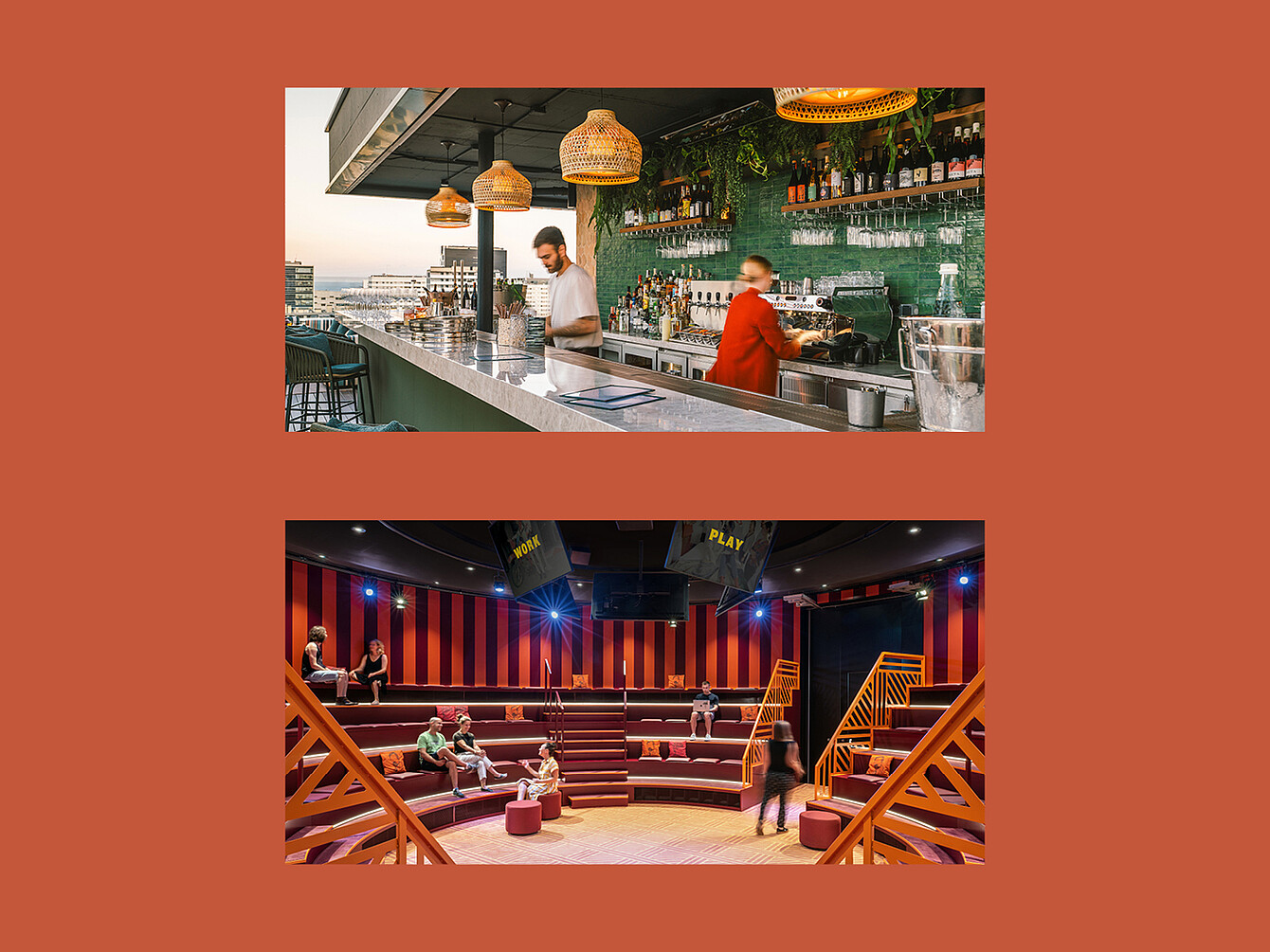
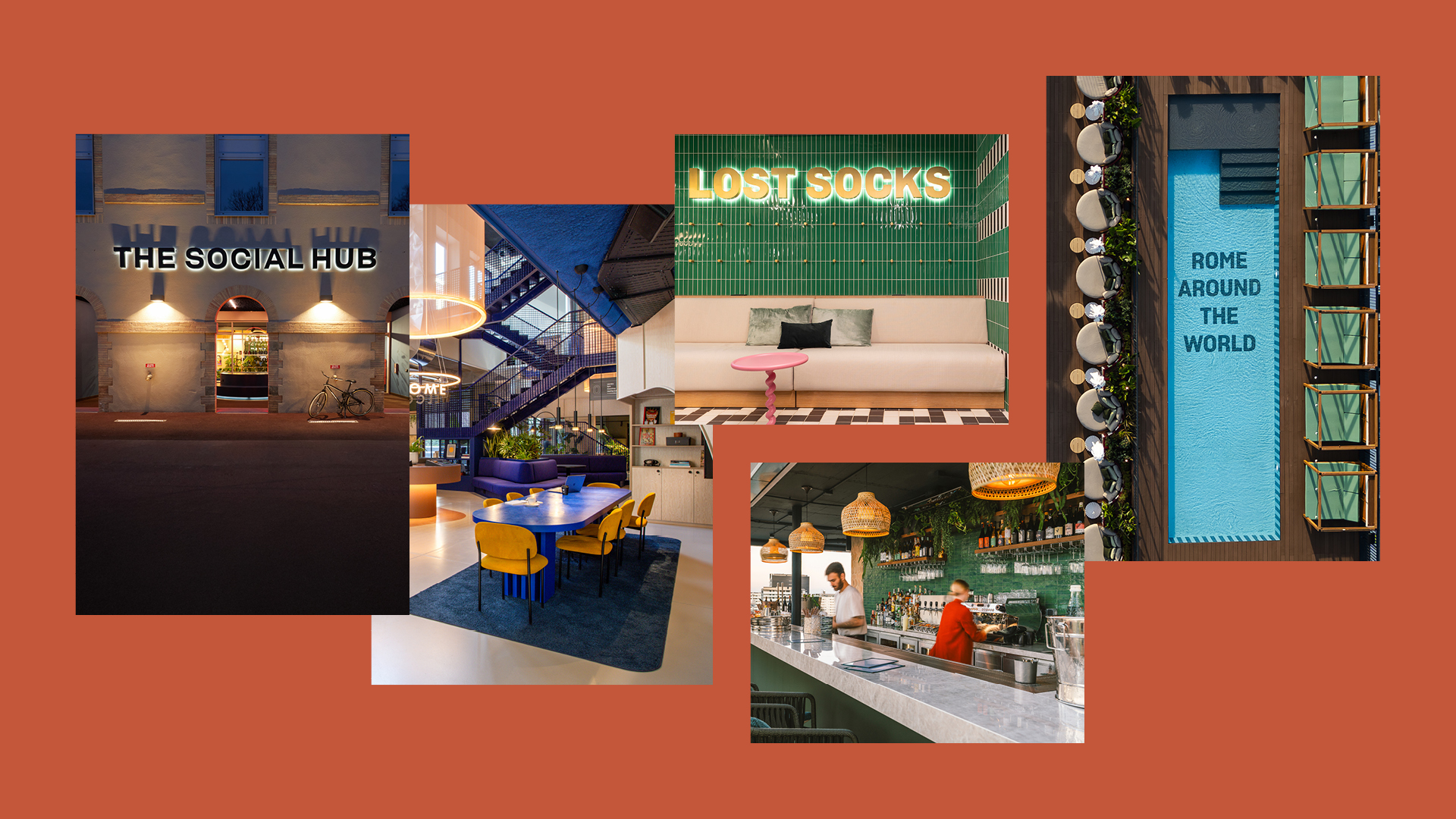
In September 2025, the rooftop restaurant “SíSí” opened at TSH Barcelona, offering its guests a unique blend of Mexican-American flavours and a carefully curated cocktail programme. SíSí guarantees a stylish rooftop experience with a pool, bar, sun loungers and panoramic views of Barcelona.
In 2024, TSH launched the “Better Society Academy”, a series of masterclasses aimed at nurturing the next generation of social changemakers. Each masterclass was designed in collaboration with renowned learning experience partner “Hyper Island”.
Social responsibility as part of the brand
With the TSH Talent Foundation, founded in 2024, the company is setting an example: 1% of annual revenue goes towards scholarship programmes for underrepresented students. This approach shows how Hybrid Hospitality not only designs spaces, but can also have a social impact.
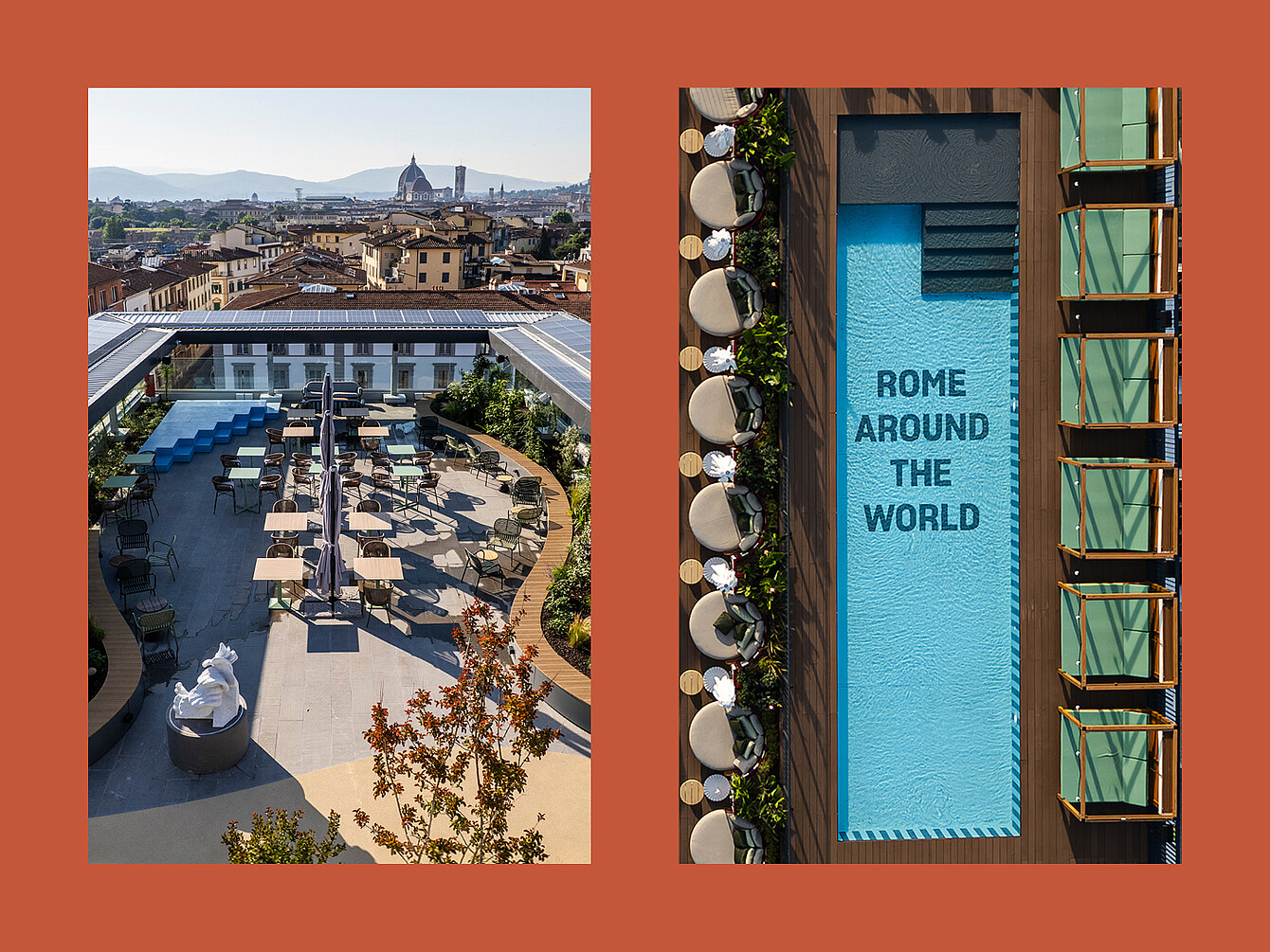
TSH Rome has a stunning rooftop cocktail bar and pool with the playful, Instagram-worthy slogan, “Rome around the World”, marked out on the pool floor.
Open to the city: spaces that connect
TSH also goes beyond its own buildings: in Italy, two large public parks were opened in 2025 – true urban oases that actively involve neighbourhoods. The message: hospitality means strengthening community – in the building and far beyond.
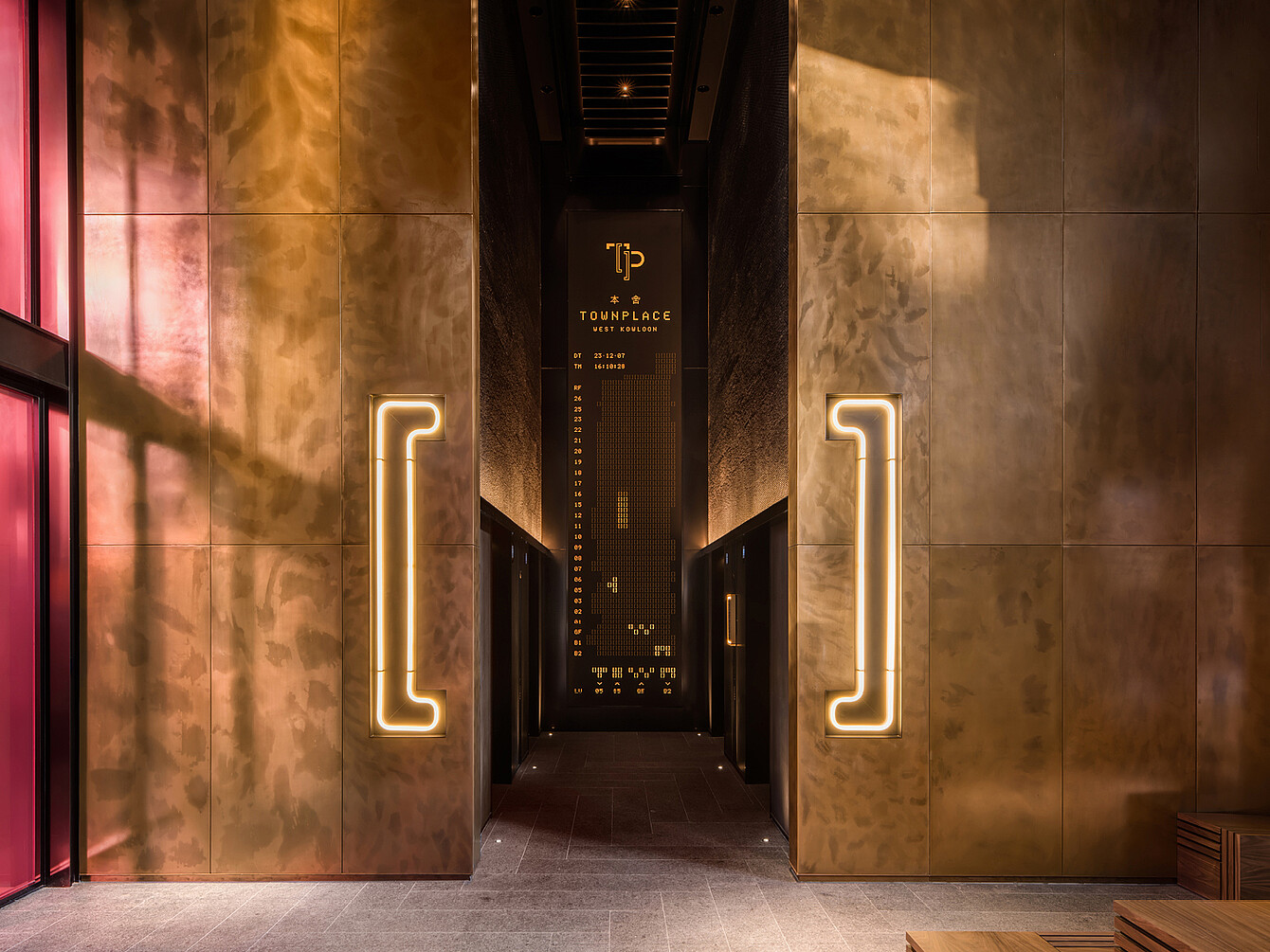
2. Townplace West Kowloon: The 'bleisure' revolution in Hong Kong
Townplace West Kowloon shows a completely different, maximally futuristic facet of hybrid hospitality. As a new aparthotel in trendy West Kowloon, it combines serviced living with a flexible lifestyle offering for young professionals, digital nomads and long-term guests.
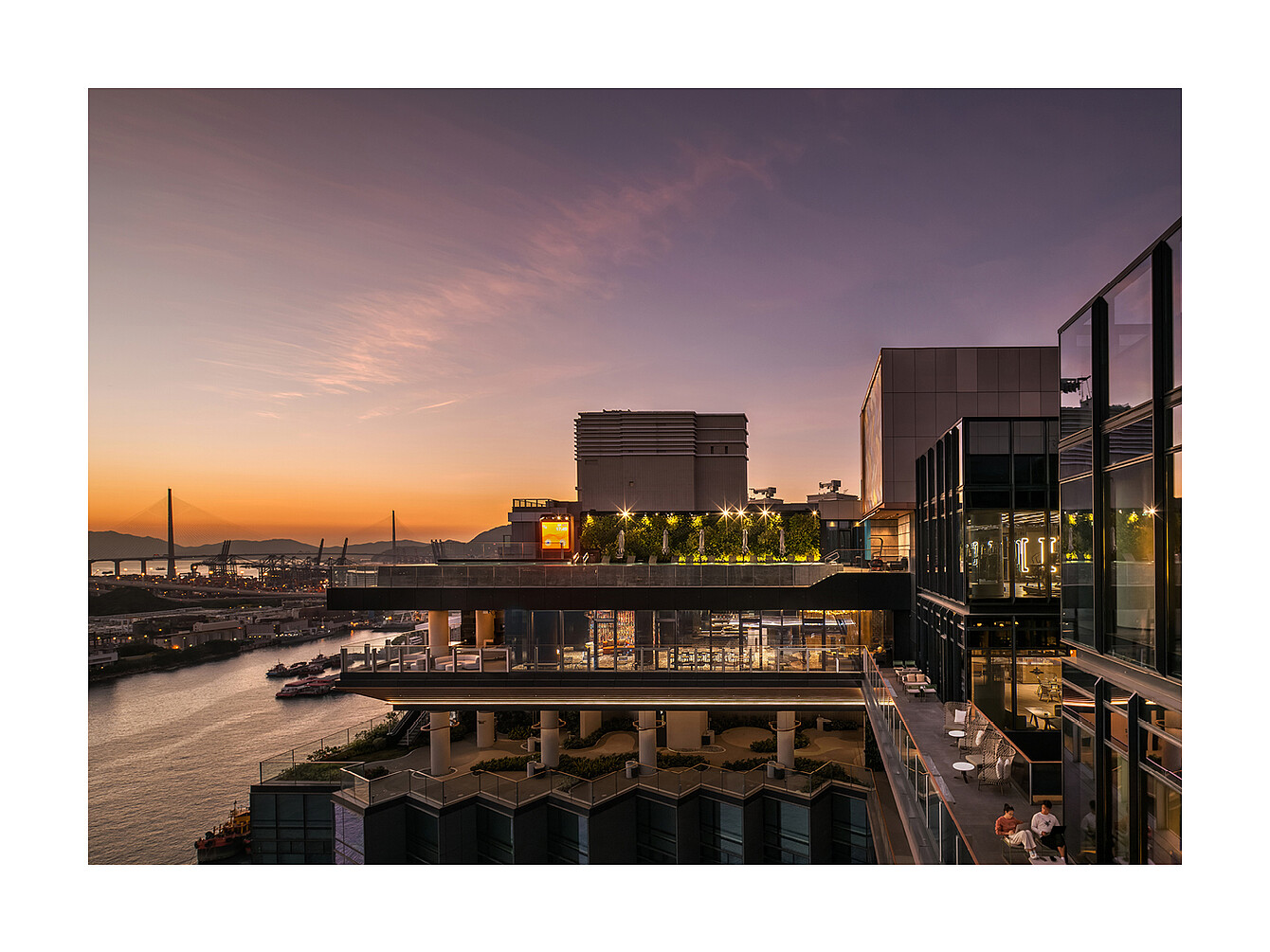
Townplace West Kowloon is strategically located near Nam Cheong MTR station, allowing guests to easily access Hong Kong’s transport network, including the high-speed rail and Hong Kong International Airport, as well as the nearby business centres of Central and Tsim Sha Tsui.
Work, life and leisure as a fluid experience
Covering around 34,750 m², it combines:
- fully equipped co-working spaces
- community terraces & social areas
- sports & wellness areas
- event rooms, kitchen areas and outdoor areas
- smart studio flats and 3-room apartments
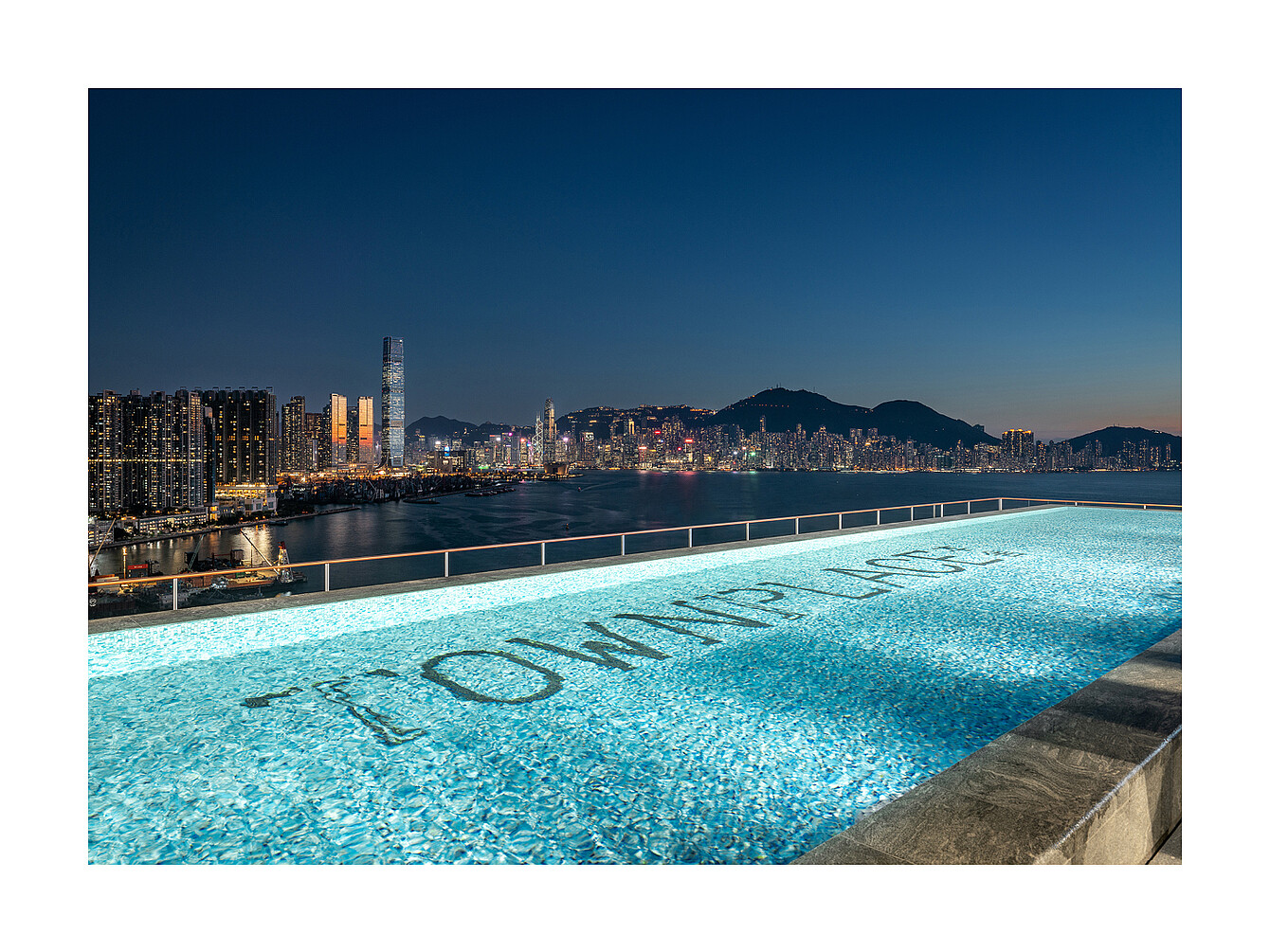
The architectural openness is particularly fascinating: sightlines connect the gym, pool, coworking space and terraces – a spatial expression of the basic idea of connecting people across activities.
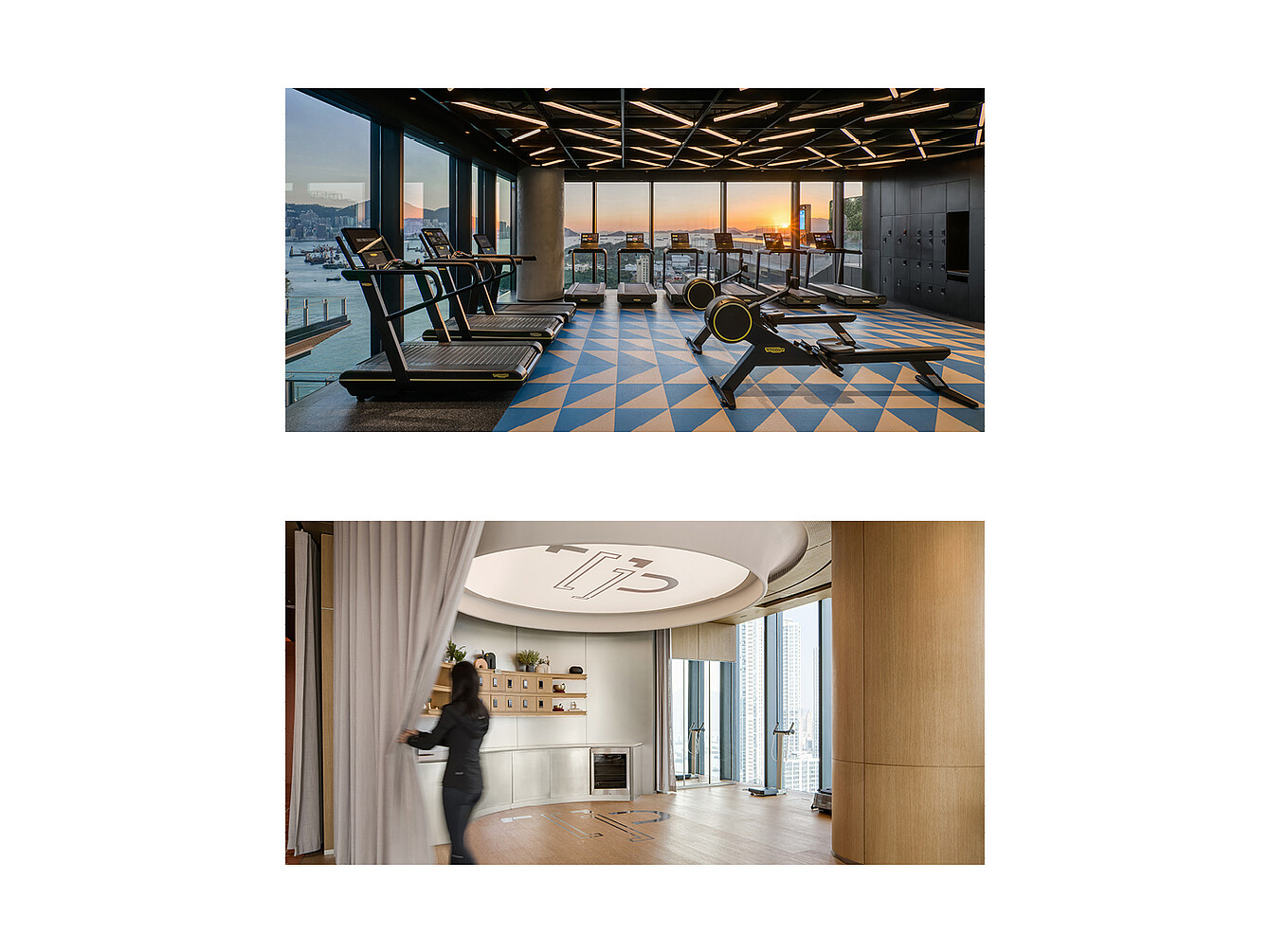
“Beast Studio”: The approximately 930 mª hardcore gym has a wide range of equipment that allows users to achieve their fitness goals in a fun way.
“The Mindful Wellness Gym” is the counterpart to the hardcore gym. Wood and warm earth tones create a relaxed atmosphere and make the training experience all the more invigorating.
A building as a community-building tool
The division into different atmospheres – green zone, industrial loft, gaming area – creates spaces for concentrated work, lively meetings or relaxed socialising. The Flavour Lounge with communal kitchens, hotpot stations and workshop areas is the heart of the building: a place that understands hospitality as a social, not a consumer-oriented activity.
Technology as a comfort factor
The smart "SmarTone Total Solutions" system intuitively and seamlessly controls the entire stay – an aspect that shows how important user-friendly technology has become in productive working environments.
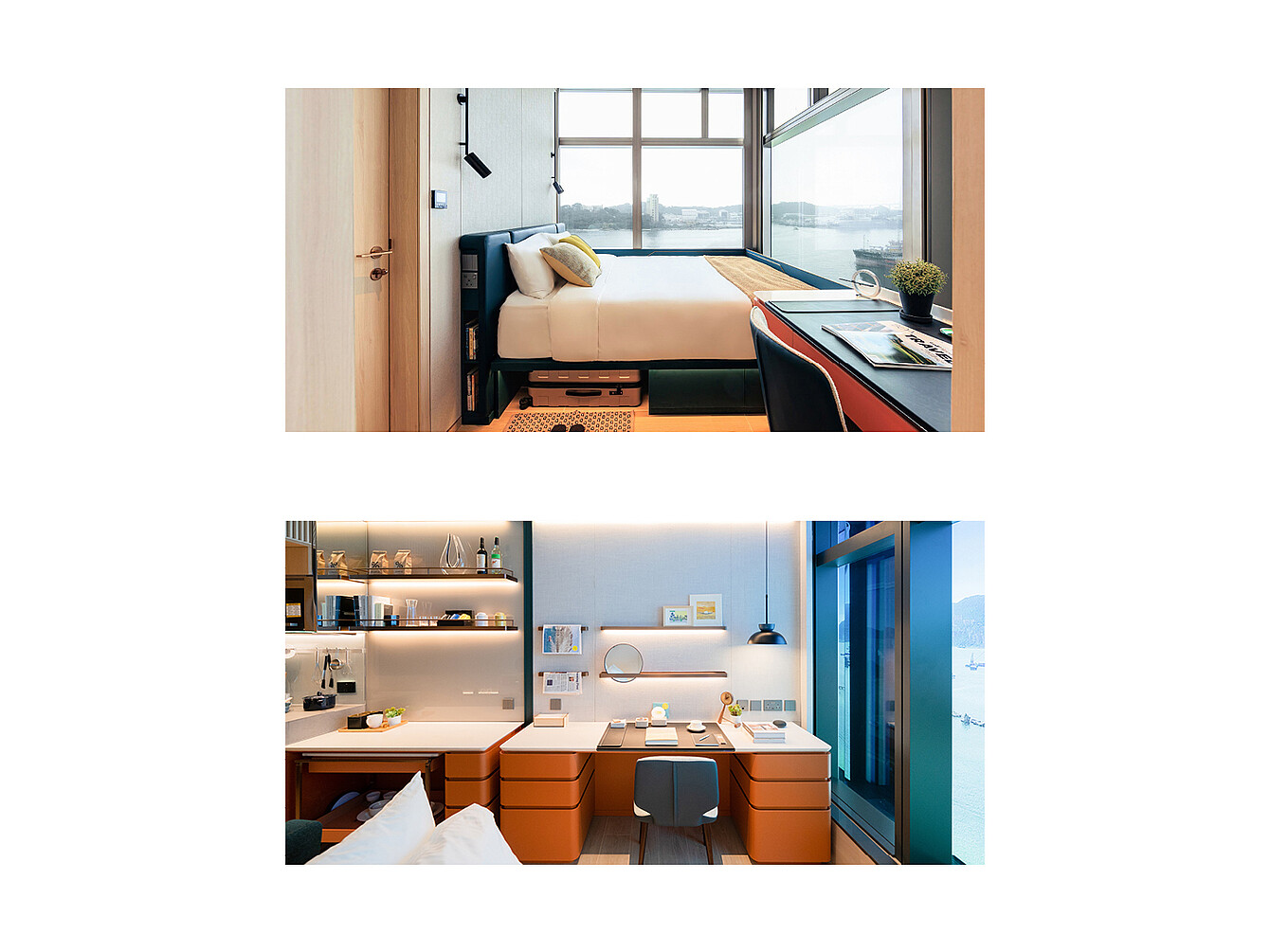
LAAB Architects drew inspiration from the West Kowloon district when designing the various room types: the studios are decorated in soft, warm colours and furnished with natural wood elements to create a cosy atmosphere.
Hybrid hospitality as a model for modern offices
What can companies and office planners learn from these examples?
1. Spaces must create a sense of belonging
Offices are becoming places that people consciously seek out – not just for work. Common areas, lounge zones, work cafés and open meeting places are taking on the role of social anchors.
2. Focus and interaction must be equally possible
As in hotels or hybrid hubs, today's offices need:
- quiet retreats
- flexible, acoustically stable focus zones
- Lively meeting areas
Only this combination creates a working environment where people can develop their full potential.
3. Hospitality means comfort, atmosphere and wellbeing
In contrast to classic office design, hybrid hospitality focuses on emotional factors:
- Light, colours and materials
- Comfortable furniture
- Intuitive wayfinding
- multisensory experiences
An office that feels good will also be used well.
4. Community is created – not left to chance
As TSH shows, community kitchens, events, open spaces and cultural offerings strengthen togetherness. For companies, this means that culture needs space, both literally and figuratively.
5. Flexibility is not a trend, but standard
Whether it's a short visit, a project phase or a team quarterly meeting, spaces need to grow with you. Modular furniture and zoned areas are essential.
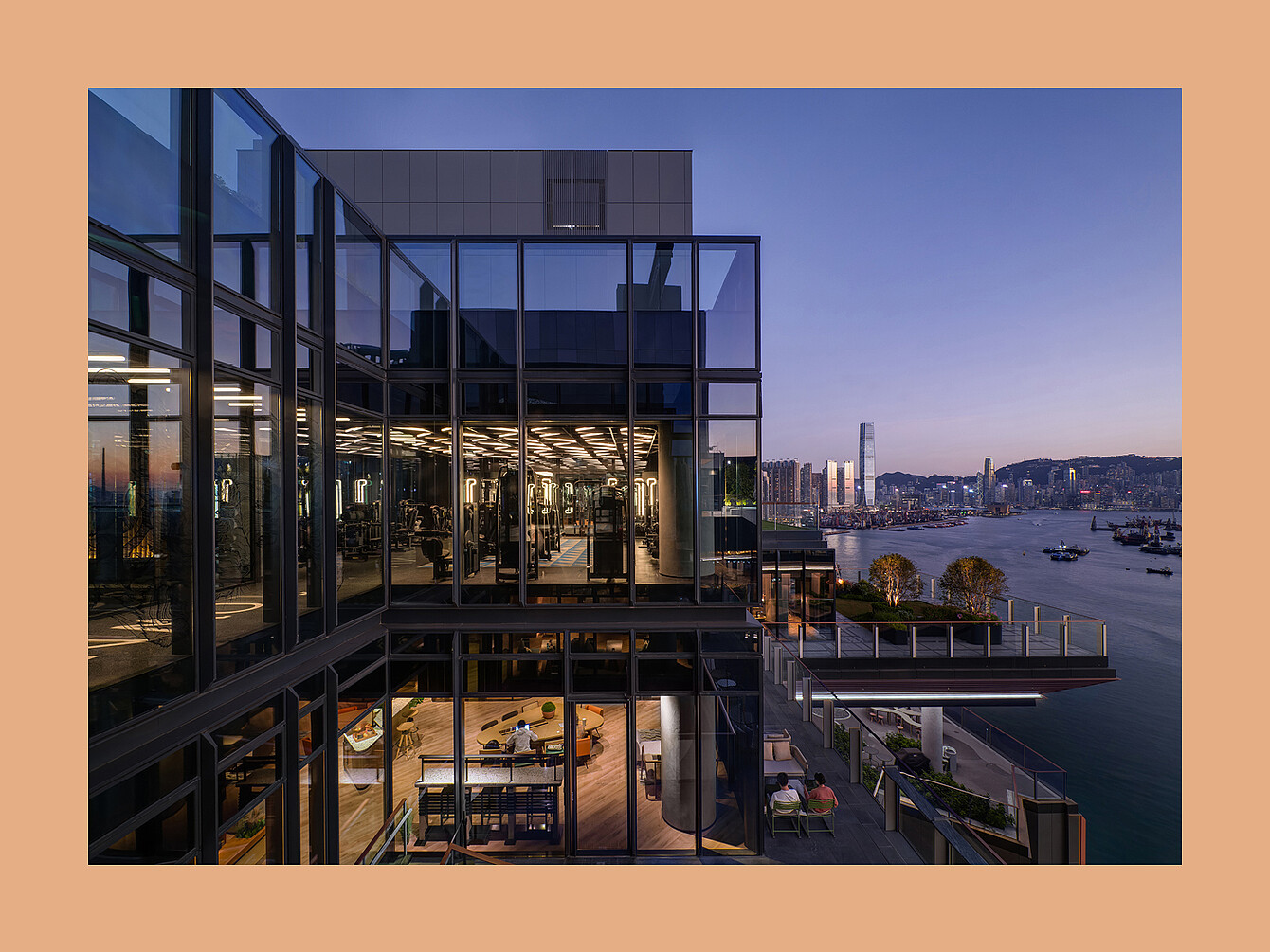
The architecture and design of the Townplace West Kowloon building complex is unique: the premium premises are designed for a lifestyle that effortlessly combines work, leisure and living
Conclusion: the office of the future thinks like a hotel – and like a home
Hybrid hospitality shows how spaces can become catalysts for encounters, connections and productivity. Offices that are successful today offer more than just workplaces – they offer experiences, atmosphere and genuine community.
The Social Hub and Townplace West Kowloon prove that when architecture, design and attitude work together, the result is an environment where people don't just work, they thrive. And that is precisely the opportunity for modern workplaces: to become places where people not only work, but also want to be.
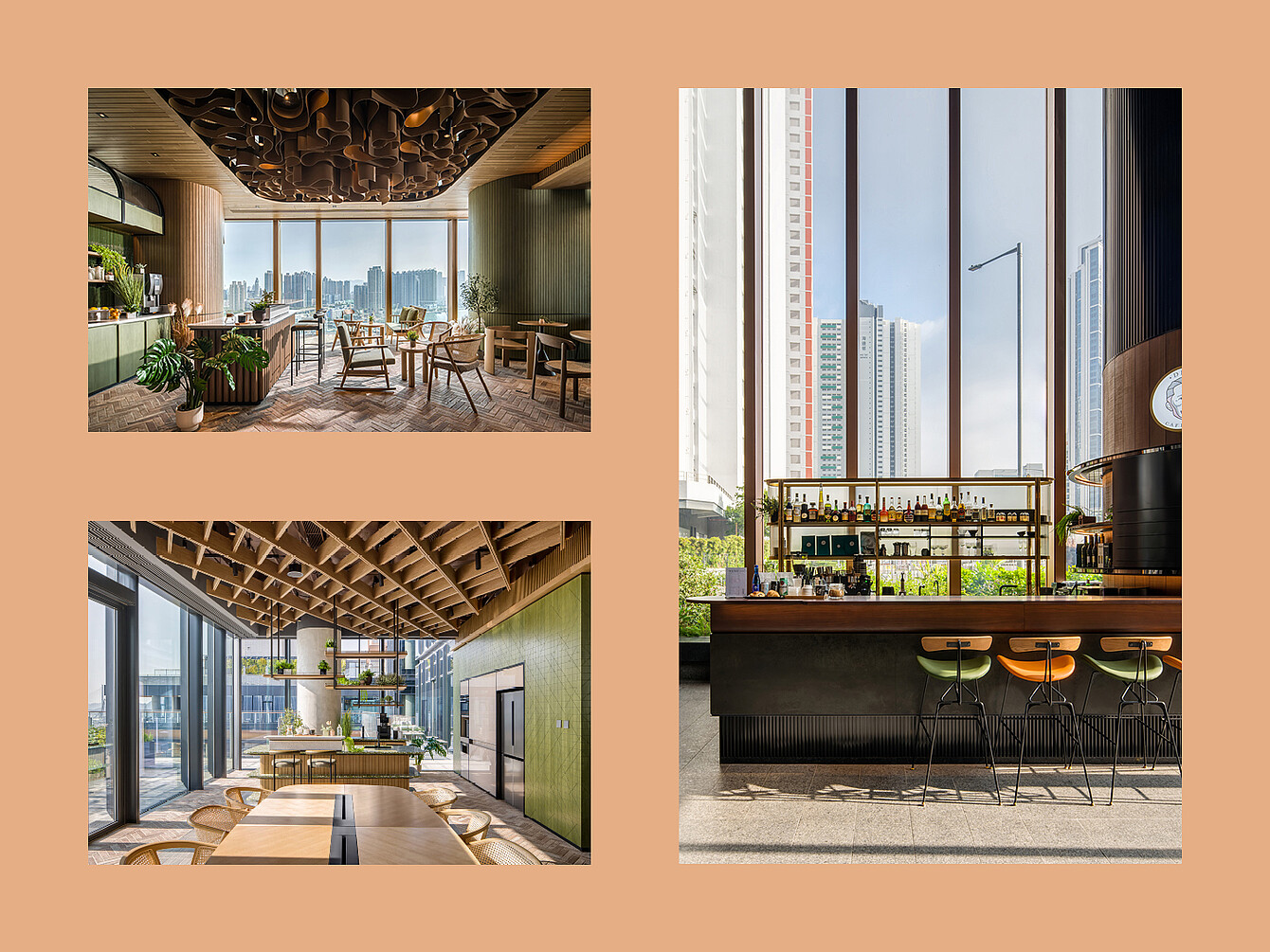
In the “Flavour Lounge”, Towners have access to a well-equipped kitchen with a wide range of kitchen appliances. Here, they can grab a frying pan and saucepan and develop culinary creations as a team.
More on this topic in Sedus LOOKBOOK N° 03
In the latest issue of Sedus LOOKBOOK, we devote an entire chapter to the topic of ‘Hybrid Hospitality’. You can order the entire issue of the magazine free of charge by email here.

social media channels: