
How “library principles” are being reimagined in the office
A colleague is on a video call. Two desks away, people are discussing a project. Someone walks past, and the next notification appears on the screen.
Modern offices are places of encounter. They are designed to enable communication, encourage spontaneous conversations and make collaboration easier. But this openness also has a downside: anyone who wants to read, write, analyse or simply think without interruption for a while does not always find the right environment.
Perhaps it is therefore worth taking a closer look at a type of space whose rules have worked for centuries: the library.
People work together there in the same room without constantly interacting with one another. Nobody has to completely withdraw. And yet, a sense of calm emerges. Not through isolation, but through a shared expectation of behaviour.
This very principle is becoming increasingly relevant in the modern office.
Library 2.0 is not a nostalgic reading room. It is a deliberately designed communal space for concentration, calm and mental grounding.
Why calm is becoming valuable again
The world of work has become more communicative.
Chats, video conferences and digital platforms enable collaboration almost independently of time and place. At the same time, many office spaces have become more open and flexible.
This brings advantages. Information flows faster, teams encounter one another more frequently, and spaces can be used in more versatile ways.
But not every task benefits from communication.
Writing a concept, understanding complex information, analysing data or thinking through a strategic decision requires something else: time, continuity and as few interruptions as possible. This also changes the role of the office.
It is no longer enough to plan spaces solely according to how many people can work there. What matters is which form of attention a space supports.
Open areas create energy. Meeting rooms enable exchange. Lounge areas encourage encounters.
And the library? It gives calm a place of its own.
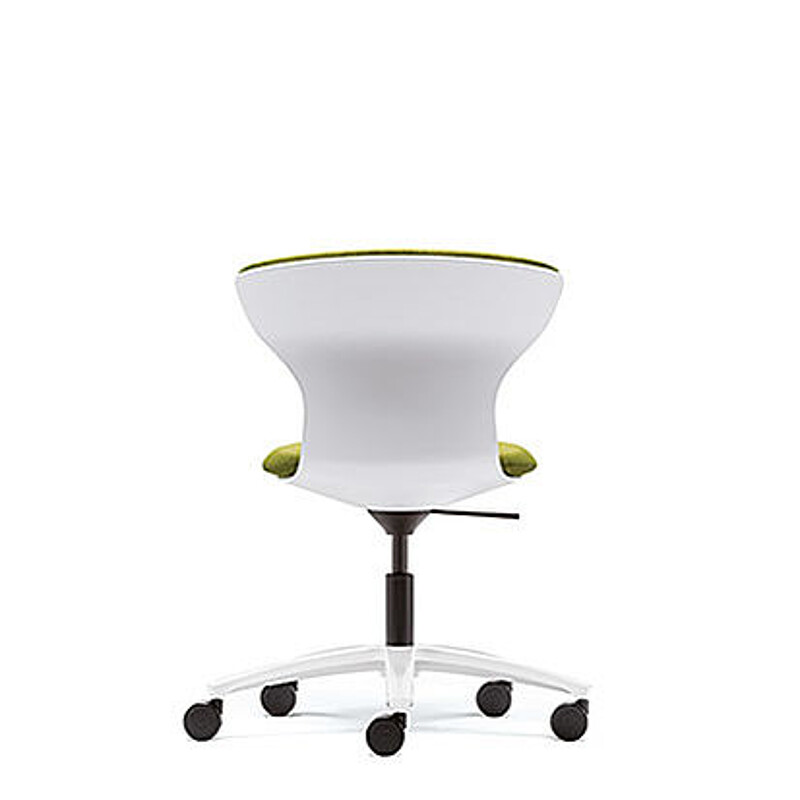
The library is a social space
In the office, calm often equates to withdrawal.
Anyone who wants to work with concentration goes into a focus room, puts on headphones or retreats as far away from others as possible.
But concentration does not automatically have to mean isolation.
This is precisely where the quality of the library principle lies.
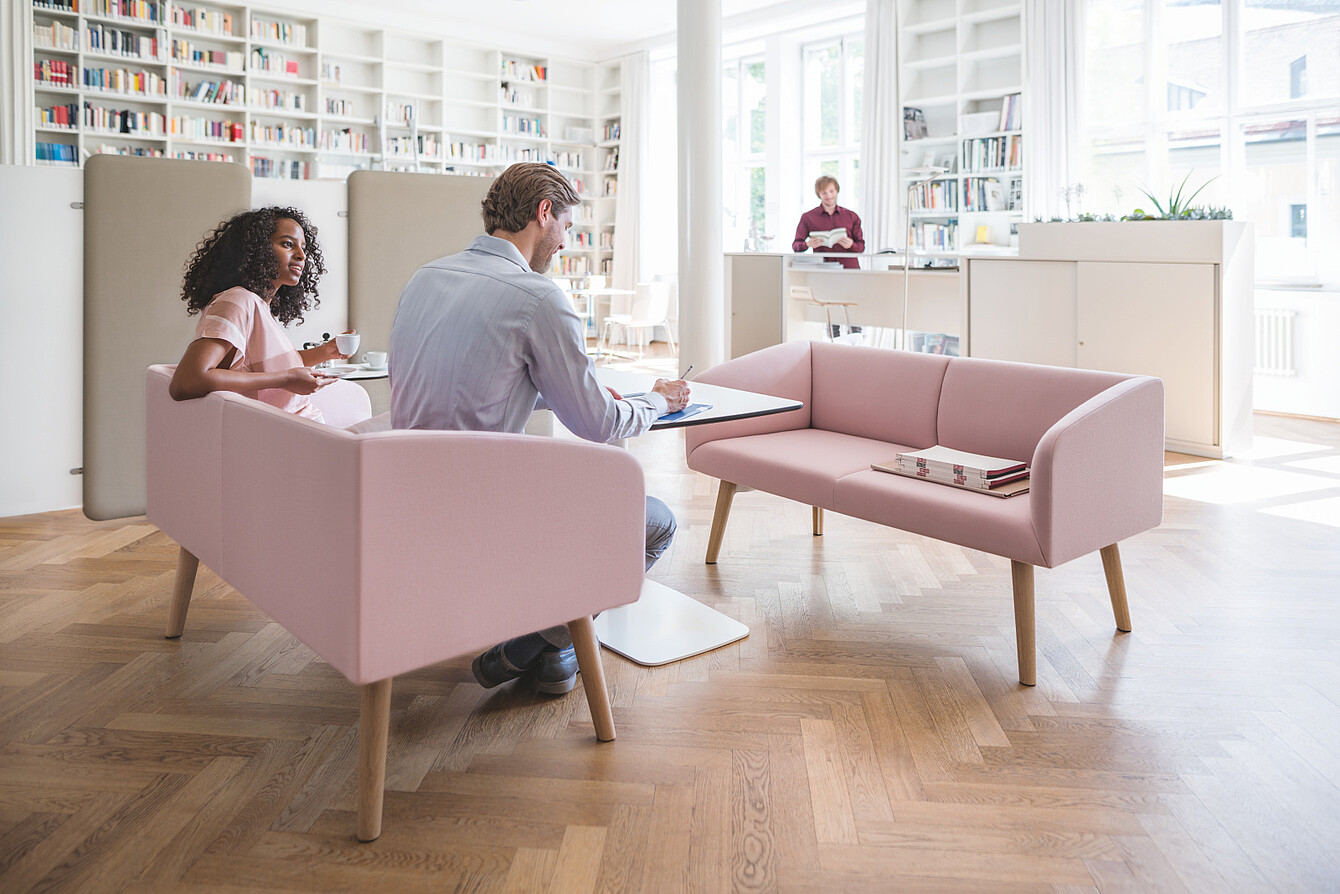
In a traditional reading room, many people sit together at the same time. Everyone is focused on their own task. And yet, a sense of community emerges.
You work alone, but not in isolation.
This form of being alone together can also be interesting for modern working environments.
Library 2.0 creates a space where people can work with concentration alongside one another without communication automatically becoming necessary.
It therefore sits somewhere between an open workstation and an enclosed focus room.
Clear rules create freedom
Why does a library work so naturally? One important reason is its social code.
When people enter, their behaviour changes almost automatically. Conversations become quieter, phone calls are avoided, and movements become more subdued.
Usually, this does not require a long list of prohibitions. The space itself communicates what kind of behaviour is expected.
This contains an important principle for office planning:
Good spaces communicate their intended use as intuitively as possible.
If a focus zone is located directly next to the coffee machine, with people constantly walking through it and spontaneous meetings are taking place nearby, a sign saying “Quiet Zone” can only do so much.
Library 2.0 therefore works particularly well when design, location and behavioural rules all communicate the same message:
You may work here. You may be together here. But nobody has to communicate here.
Calm begins with zoning
A quiet zone cannot be planned independently of its surroundings.
Its position within the office is crucial.
Kitchens, meeting areas, printer zones and heavily frequented circulation routes naturally generate movement and noise. A library should therefore ideally be located where a certain degree of spatial calm already exists.
Transitions also play an important role.
Between a lively communication area and a quiet zone, plants, shelving, storage or semi-protected workstations can create a gradual transition.
The atmosphere becomes calmer step by step.
One possible sequence might look like this:
Communication → informal work → quiet work → deep concentration
This creates different levels of separation between which employees can choose depending on the task at hand.
Acoustics are about more than volume
When people think of a library, they often think first of silence.
But acoustic quality does not necessarily mean that no sound should be audible at all.
A completely silent room can also feel uncomfortable. Keyboard noises, footsteps or the movement of a chair can suddenly become especially noticeable.
What matters is therefore a balanced sound environment.
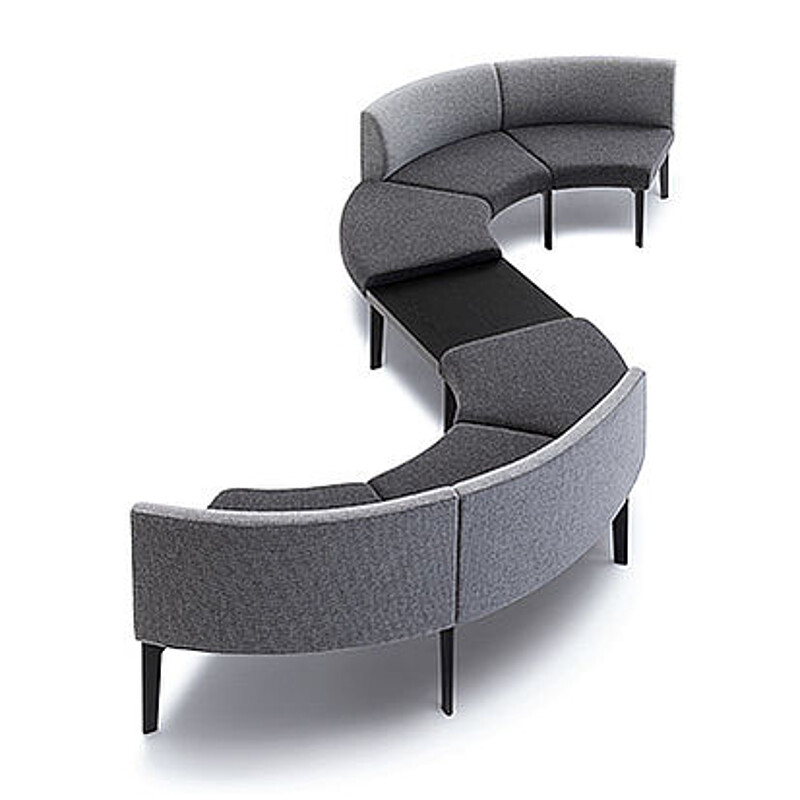
Soft surfaces, carpets, upholstered furniture, acoustic elements and suitable spatial structures can help absorb noise and reduce its spread.
At the same time, the way the space is used should match its acoustic environment.
Short, quiet conversations may be possible, while longer discussions or video calls are deliberately moved to other areas.
This does not create forced silence. It creates reliable calm.
Visual calm is just as important
Distraction is not caused by sound alone.
Movement also demands attention.
People walk past. Doors open. Content changes on screens. Something is constantly happening in the corner of your eye.
Library 2.0 should therefore create calm not only acoustically, but visually too.
This can be achieved through clear spatial structures, reduced sightlines, screens, shelving, plants and a calm material and colour palette.
The aim is not to make the room feel sterile.
Quite the opposite.
A library can feel warm, comfortable and inviting.
Its design should simply send fewer signals than the more active areas of the office.
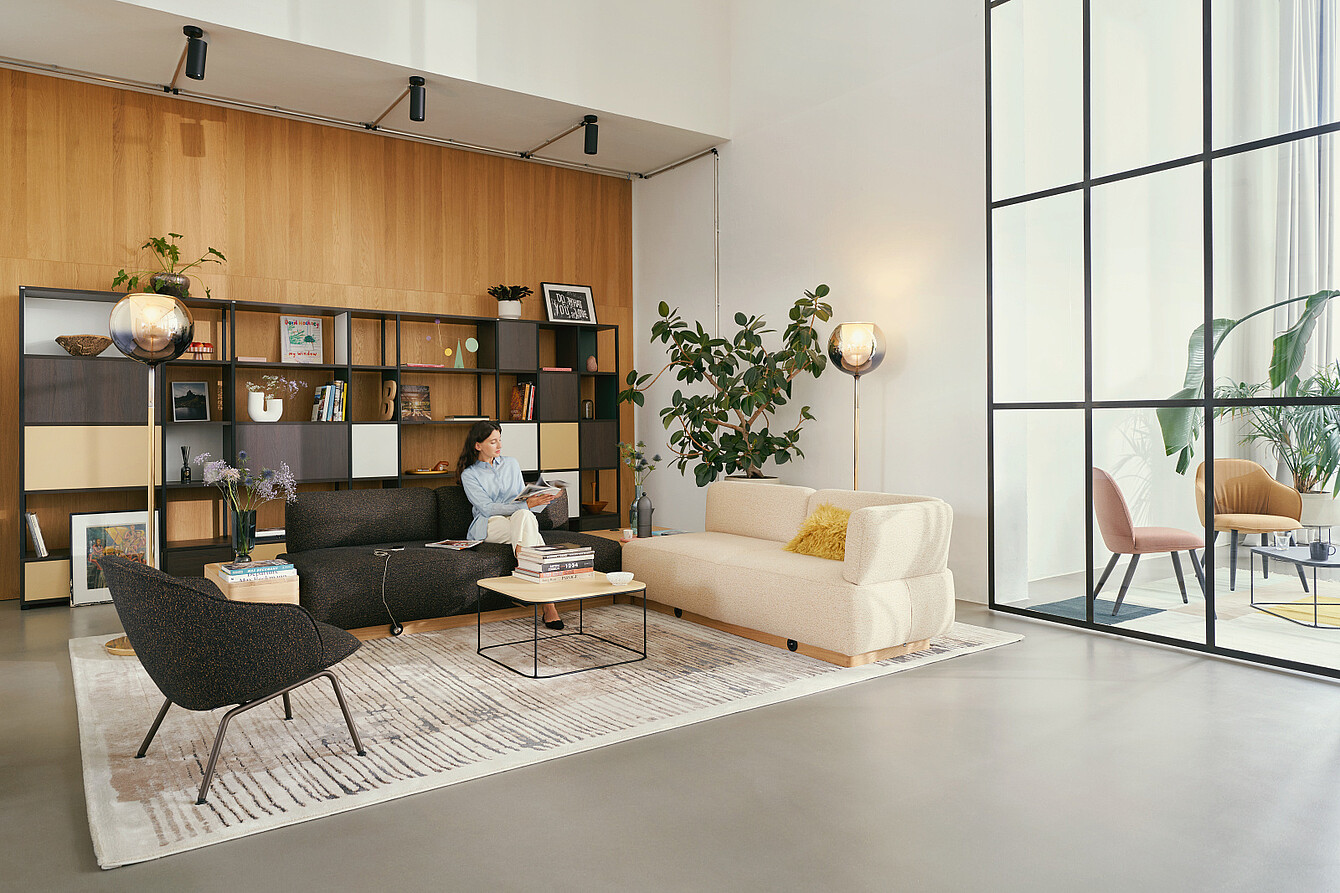
Furniture can guide behaviour
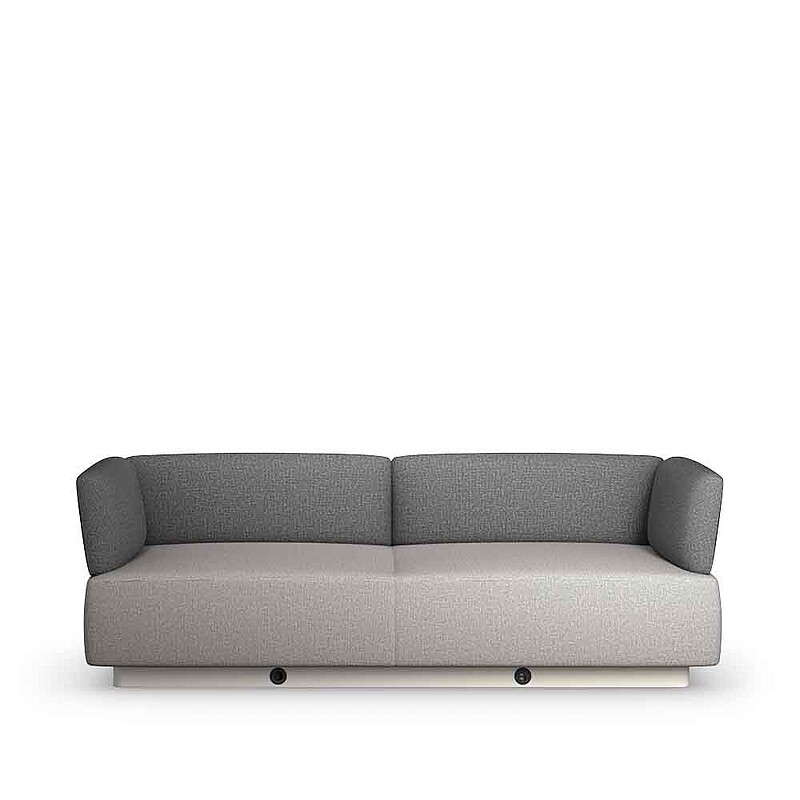
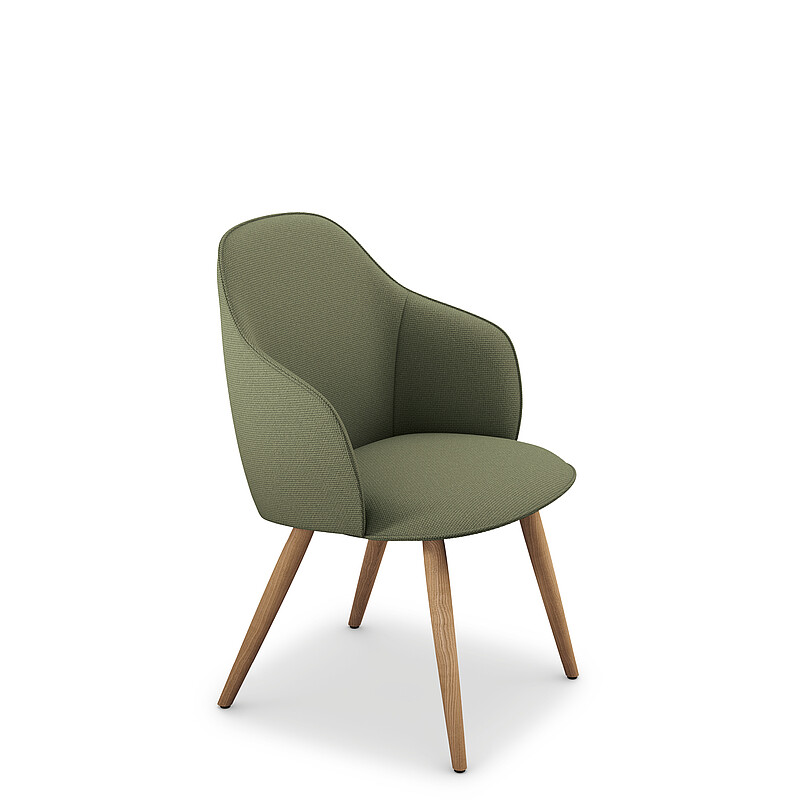
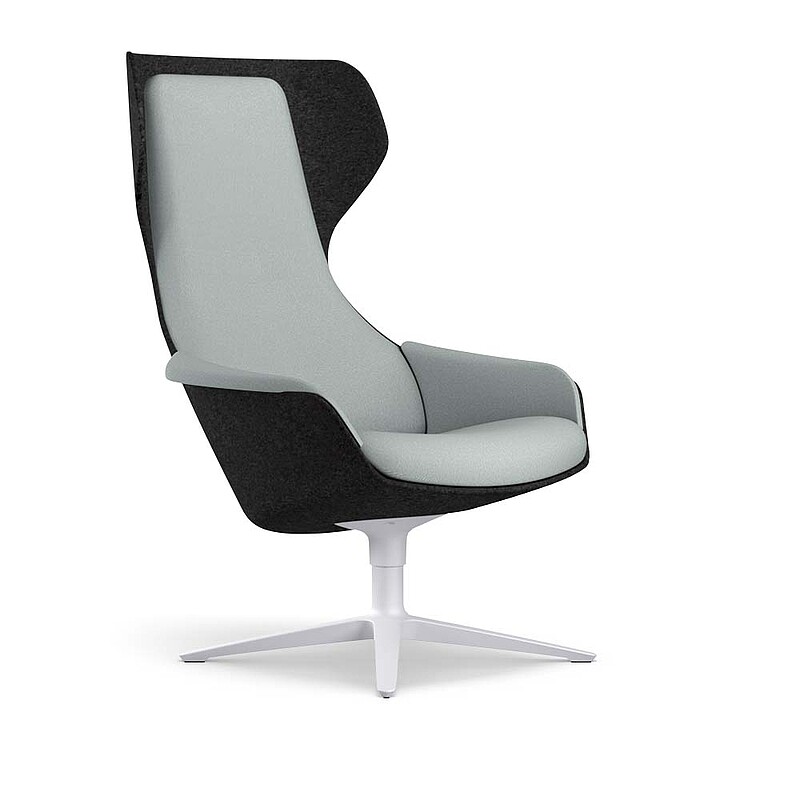
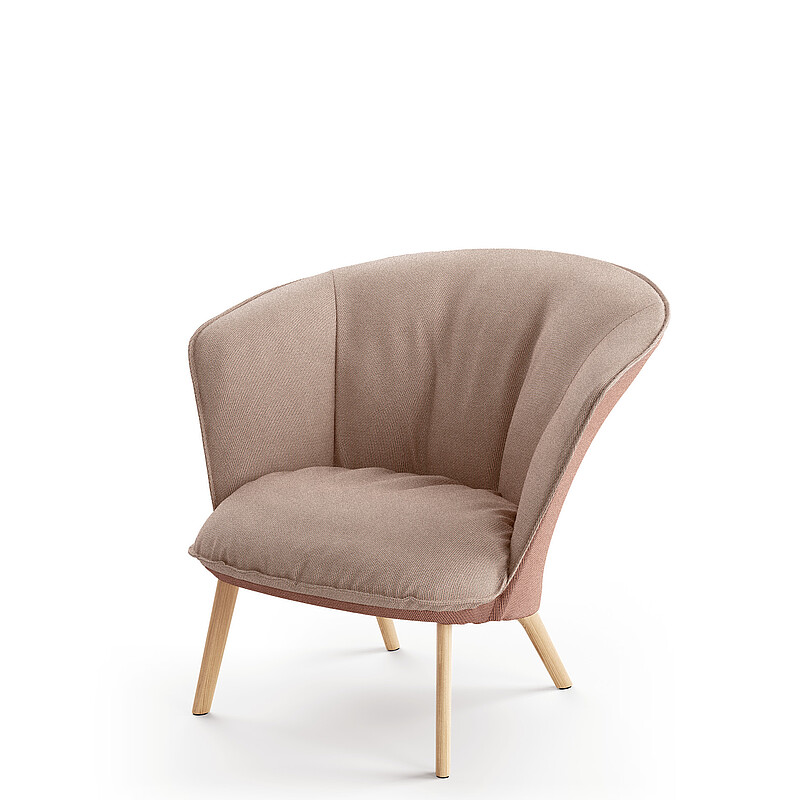
Furniture also influences how a space is used.
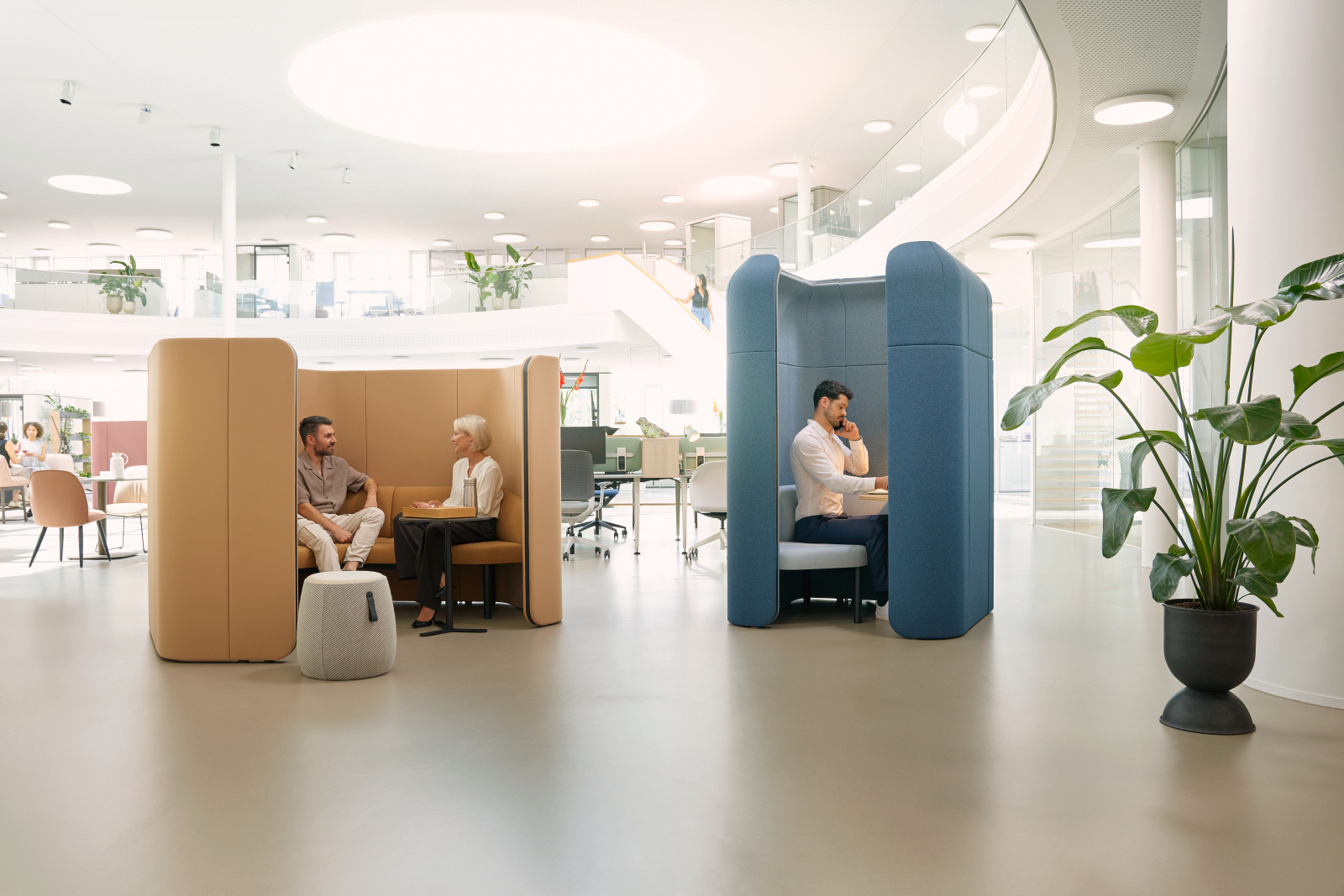
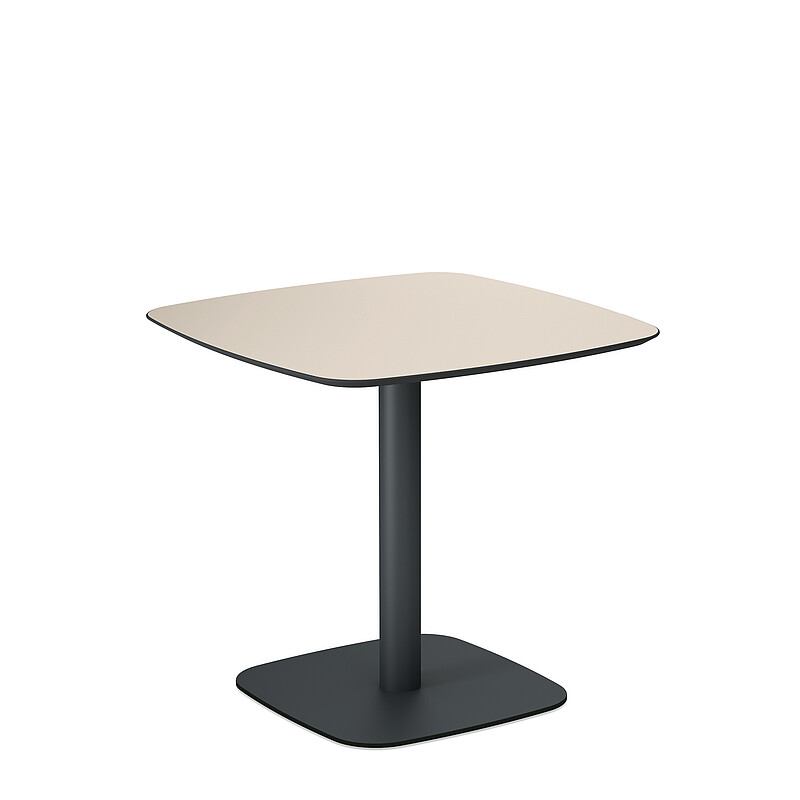
A large table can bring several people together without automatically turning the situation into a meeting.
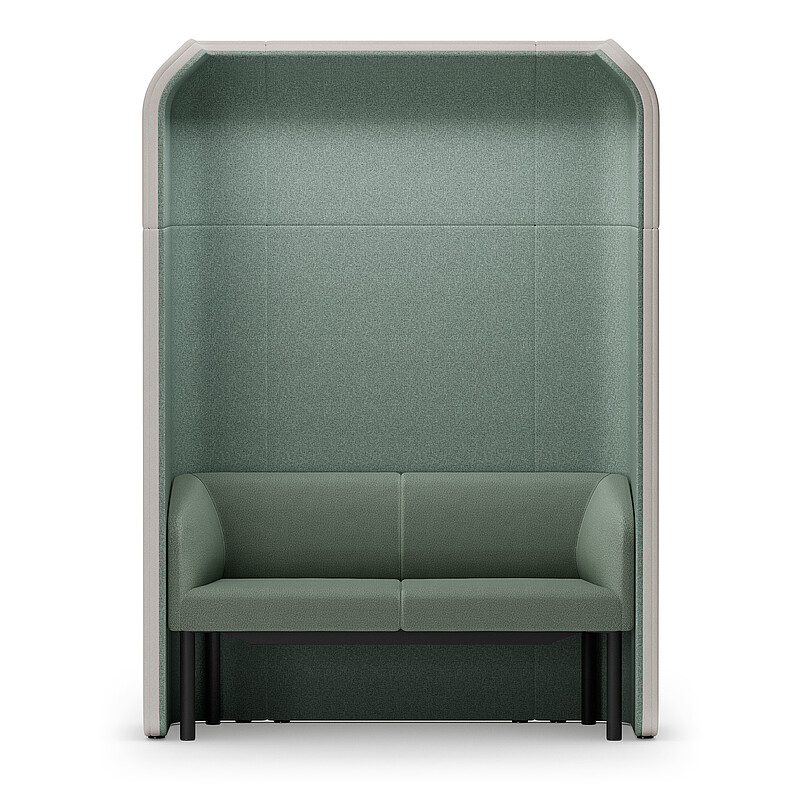
Screened individual workstations enable higher levels of concentration.
Seating niches provide protection for tasks that require more privacy.
Shelving can simultaneously provide storage, act as a room divider and create a visual barrier.
The combination is what matters.
Library 2.0 should not offer only one type of workstation. People differ in how much separation they need for a particular task.
This also creates freedom of choice within the quiet zone.
What rules does Library 2.0 need?
For the space to work in the long term, furniture and acoustics alone are not enough.
Behaviour also has to be part of the concept.
A few clear rules are more helpful than extensive regulations:
1. Conversations remain short and quiet
Longer discussions belong in another area.
2. Video calls take place elsewhere
Even a single call can change the atmosphere of the room.
3. Smartphones remain silent
Ringtones and notification sounds contradict the basic principle of the zone.
4. No spontaneous meetings
Seeing colleagues in the library should not be interpreted as an invitation to start a conversation.
5. Calm is a shared responsibility
The atmosphere is not created by architecture alone. Every user contributes to maintaining it.
Rules are not merely restrictions. They provide the assurance that there is a reliable place available for focused work.
Calm should not become isolation
Library 2.0 should not transform the entire office into a silent working landscape.
Modern offices fulfil several functions.
People come together to meet colleagues, exchange information, develop ideas and experience company culture.
Communication is therefore not a problem that has to be removed from the office.
It simply needs the right space. Just like concentration.
The key question is therefore not:
Should the office be open or quiet?
But rather:
Which activity needs which atmosphere, and where?
The more clearly the individual areas function, the less they have to compete with one another.
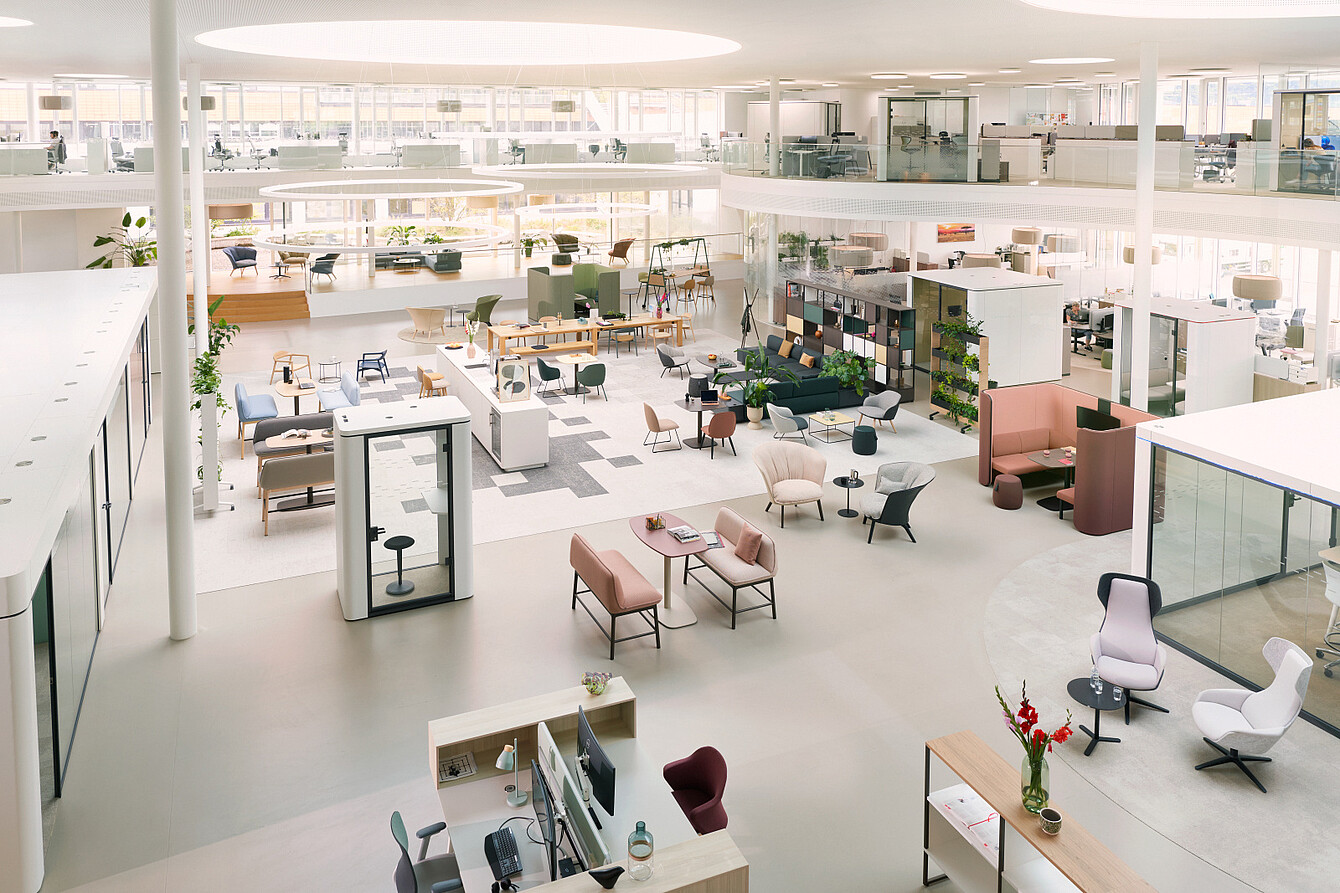
The library as part of the hybrid office
This principle becomes even more important in hybrid working environments.
Employees increasingly make conscious decisions about when they come into the office and which tasks they want to complete there.
The office therefore does not need to reproduce the same standard workstation everywhere.
Instead, it can deliberately provide different spatial qualities.
Communication. Collaboration. Retreat. Regeneration.
And concentration in community.
Library 2.0 adds another quality to this variety — one that has often been missing between the home office, the open-plan workstation and the enclosed focus room.
It enables presence without the obligation to interact.
How can Library 2.0 be tested?
Not every company needs to immediately build new spaces for this purpose.
The principle can also be tested within existing environments.
1. Select a suitable area
An already relatively quiet part of the office is better suited than a zone located along central circulation routes.
2. Clearly define the function
Which tasks should take priority? Are short conversations permitted, or should complete silence apply?
3. Reduce sources of disruption
Phone calls, printers, through-traffic and spontaneous meetings should be removed from the zone as far as possible.
4. Add separation
Screens, shelving, plants or existing furniture can be used to change the spatial structure.
5. Make the rules visible
A short explanation at the entrance helps establish a shared expectation.
6. Offer different types of workspaces
Communal tables, individual workstations and more strongly screened settings enable different levels of concentration.
7. Observe and adjust
Is the zone being used? Do the rules work? Where are disruptions still occurring?
This makes it possible to test whether the library principle suits the company’s own working culture.
Calm is not empty space
Perhaps the most important insight is this:
A calm office is not created simply because less is happening.
Calm has to be designed. Through acoustics. Through zoning. Through clear rules. Through visual order.
Through suitable furniture.
And through a shared understanding of what kind of behaviour is appropriate in a particular place.
This is precisely why the library is such an interesting model.
It demonstrates that people can share a space without having to constantly interact with one another.
The comeback of the library is not a step backwards
Library 2.0 is not a return to the quiet private office.
Nor is it an alternative to the communicative, hybrid workplace.
It complements it.
Because the more opportunities are created for exchange, collaboration and spontaneous communication, the more important spaces become that deliberately enable the opposite.
Not loneliness. Not isolation. But calm.
Concentration in community. Not as many stimuli as possible.
But an environment that provides orientation and protects attention.
Perhaps that is precisely one of the qualities the office of the future will need more of again:
a place where many people can come together without something constantly having to happen.

social media channels: