
Four Modes of Attention as a Planning Framework
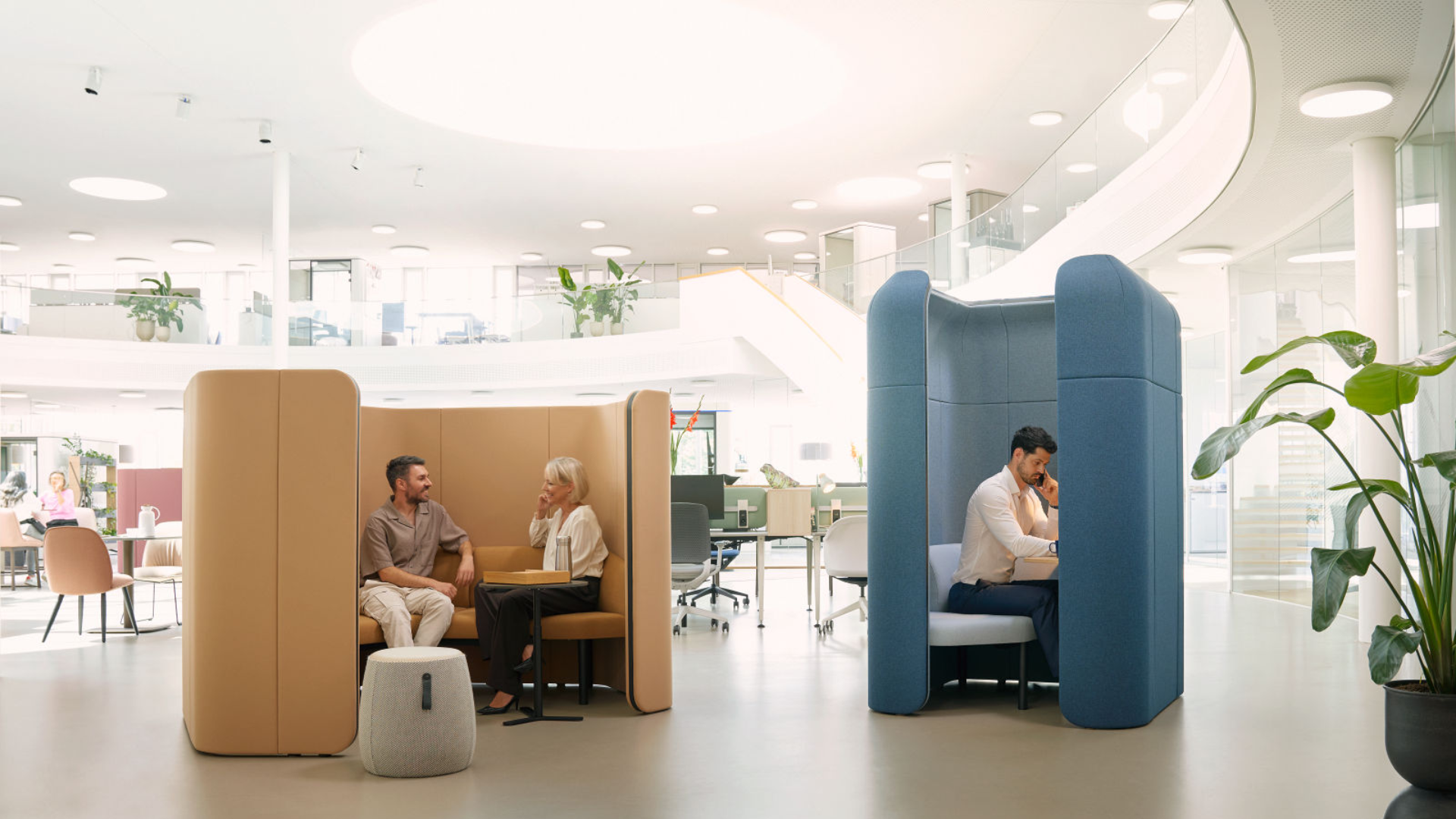
Work activities can be broadly grouped into four modes of attention: focus, collaboration, informal interaction and regeneration. These modes shift constantly throughout the day – often within minutes. Spaces therefore need to be adaptive rather than static.
This is precisely where se:hive comes in: instead of relying on separate solutions for different needs, a single product family can accommodate a wide range of uses.
Focus: Shielding Without Isolation
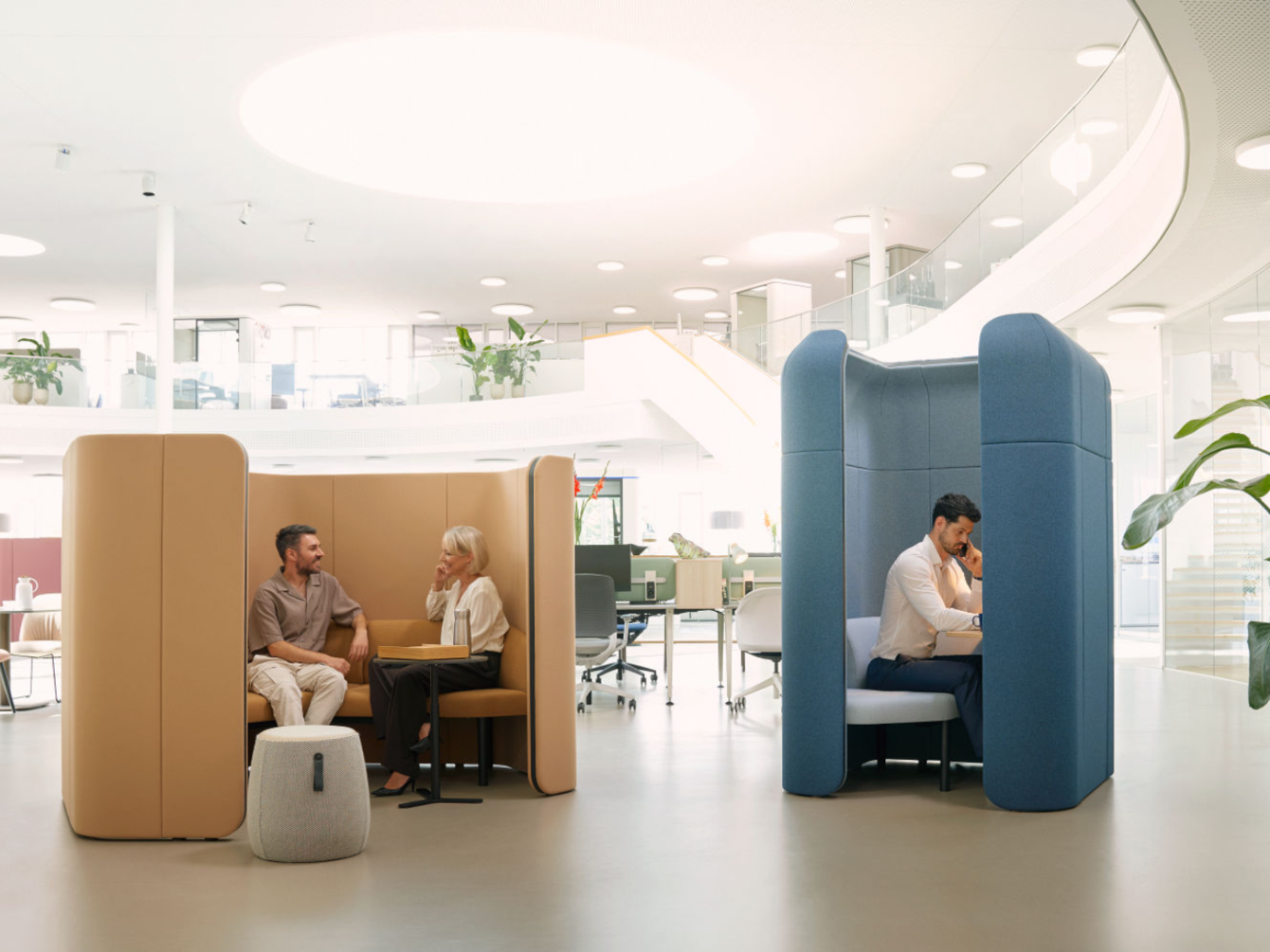
Concentrated work requires both visual and acoustic reduction – without completely disconnecting from the surrounding environment.
As an open structure, se:hive single enables subtle zoning within the workspace. Different geometries create orientation, soften sightlines and reduce distractions without enclosing the space.
For more intensive focus, se:hive private builds on this openness by offering a greater degree of enclosure. With integrated seating and a table, it creates a protected retreat that supports deep work even within an open-plan environment.
Collaboration: Structured Exchange Within the Space
Communication thrives on proximity – but also benefits from structure.
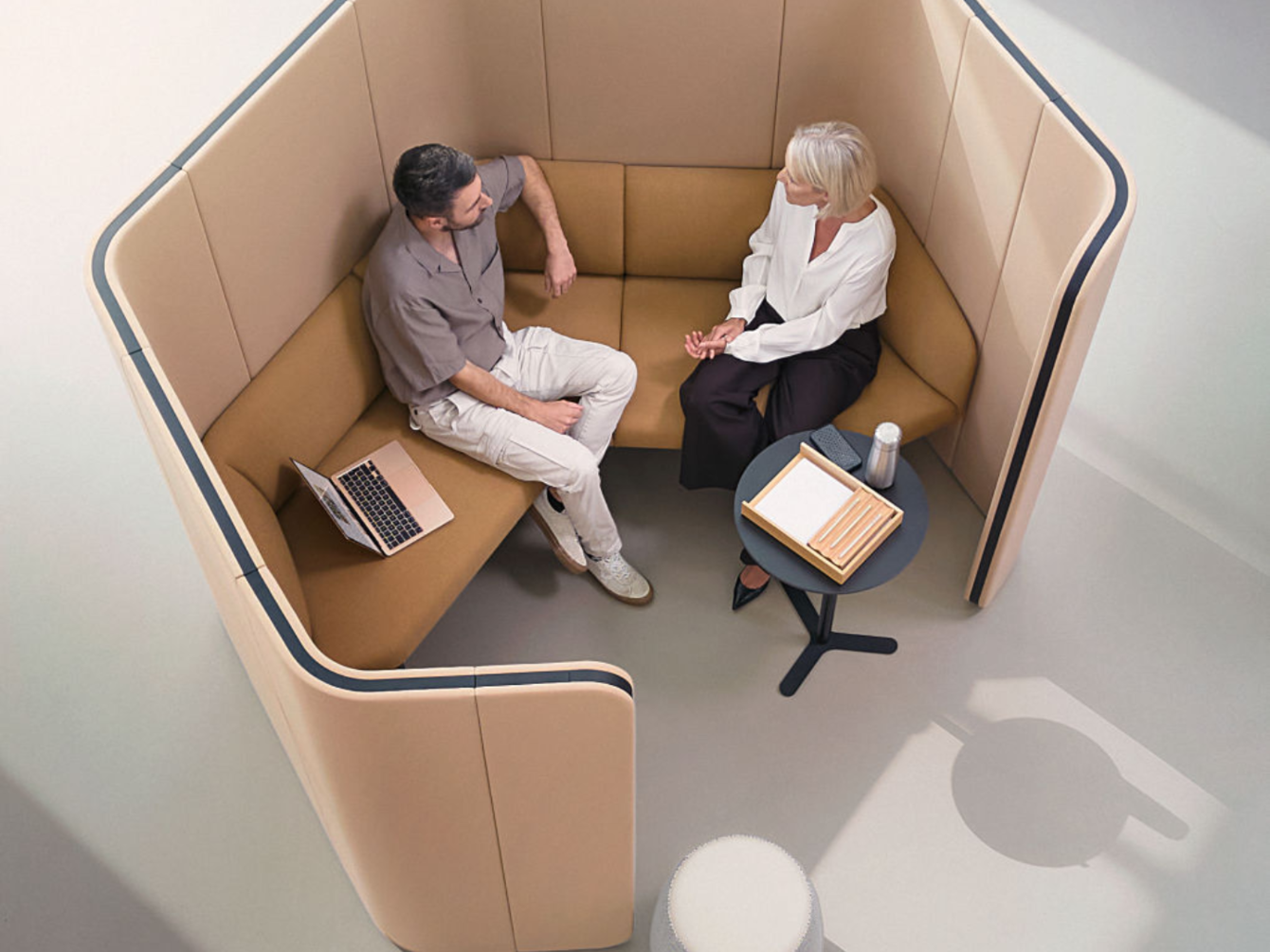
With se:hive bench, semi-open communication zones emerge that support spontaneous exchanges while easing pressure on the surrounding space. Integrated seating creates an informal yet clearly defined setting for conversation.
For more focused discussions, se:hive diner offers a clearly oriented layout with facing seating and an integrated table. This configuration supports structured conversations in small groups and creates a sense of intimacy within the open environment.
Informal Interaction: Spaces for the In-Between
A large part of communication happens spontaneously – in transitional areas, along circulation paths, or simply in passing.
This is where modular structures reveal their full potential. Open se:hive configurations create spaces that are neither traditional workstations nor formal meeting rooms. They structure the environment without fully defining it, enabling low-threshold interaction as a natural part of everyday work.
Regeneration: Retreat as Part of the Workplace
Recovery is not the opposite of work – it is a prerequisite for productive work.
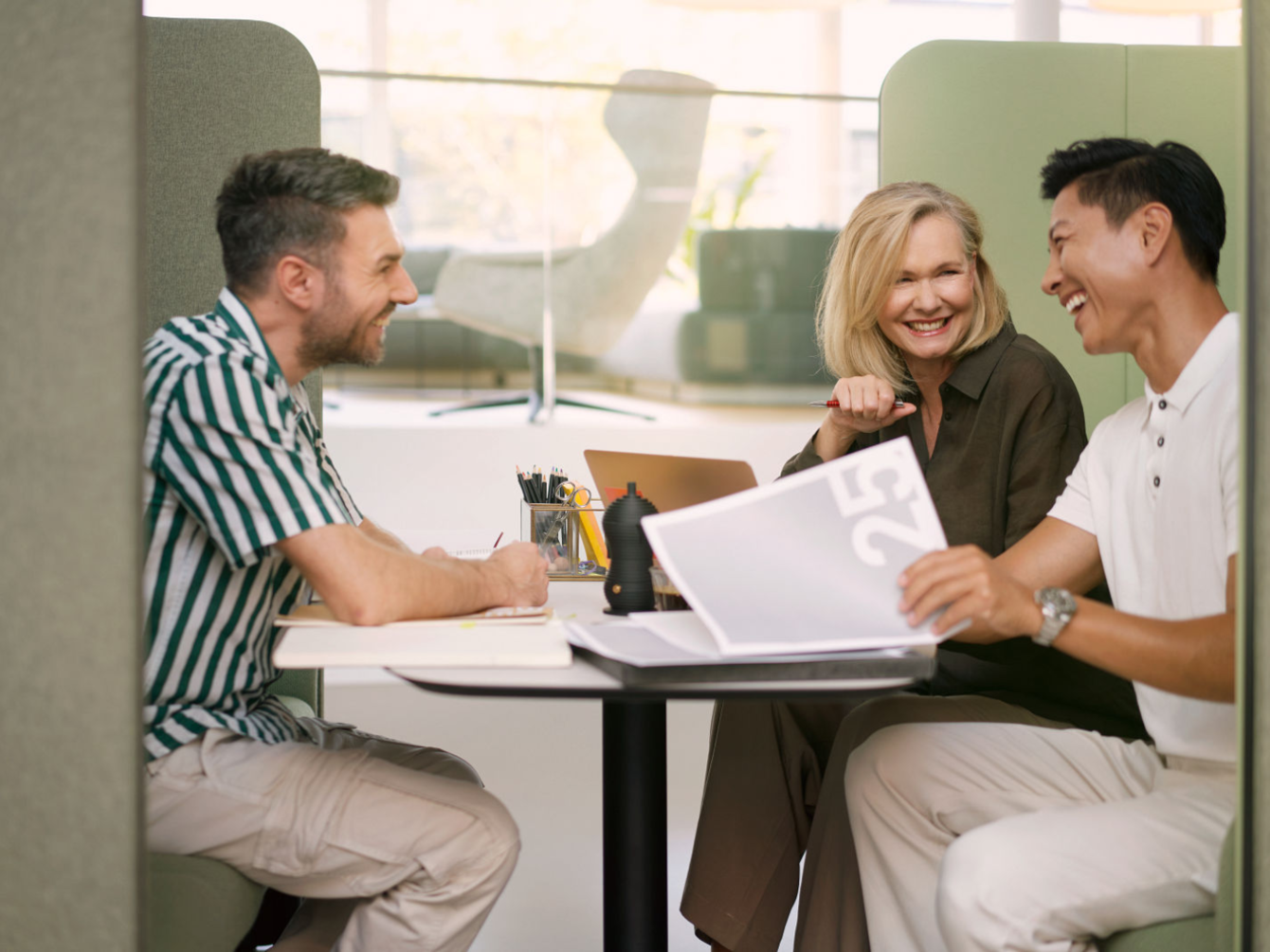
The upholstered elements and enclosing forms of se:hive create spaces that deliberately distance users from the surrounding activity. With acoustic effectiveness and visual shielding, these areas support both short breaks and informal conversations.
From Product to Use: A Simple Planning Logic
The real strength of se:hive becomes apparent in the planning process, where the focus shifts from individual products to actual use.
Depending on the activity, suitable configurations can be developed intuitively. Open structures support short focus phases or act as subtle zoning elements within the space. As the need for privacy increases, integrated elements create more defined retreats for concentrated tasks or confidential conversations.
A similar principle applies to collaboration: the more informal and spontaneous the interaction, the more open the solution. The more structured the conversation and the larger the group, the more clearly defined the spatial setting becomes.
In this way, a limited number of components enables a wide range of scenarios – from individual work to team collaboration, and from spontaneous encounters to dedicated break areas. Planning follows the logic of activities rather than products.
Conclusion: Zoning Instead of Furnishing
se:hive is more than a product family – it is a tool for shaping modern work environments.
Its modular structure creates zones that respond to different activities and can be flexibly adapted. One system enables a wide variety of use cases – transforming open spaces into differentiated, functional workplaces.

social media channels: