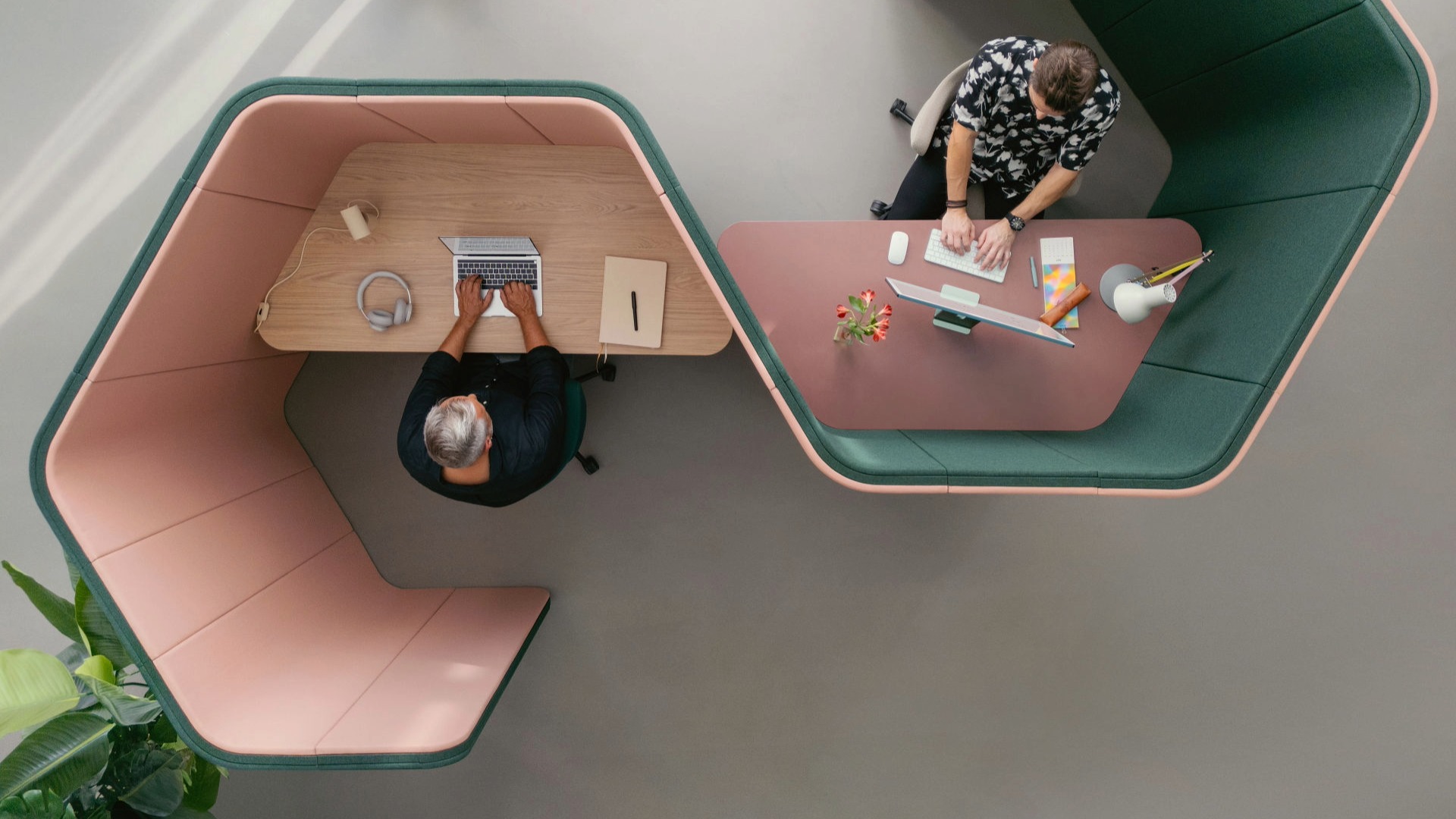

Neuroscientific research in recent years has shown that concentration is not only determined by what we hear or see, but also by how much control we feel we have over our immediate surroundings. Sedus INSIGHTS N° 20 examines the central concept behind this: the peripersonal space (PPS).
What is peripersonal space?
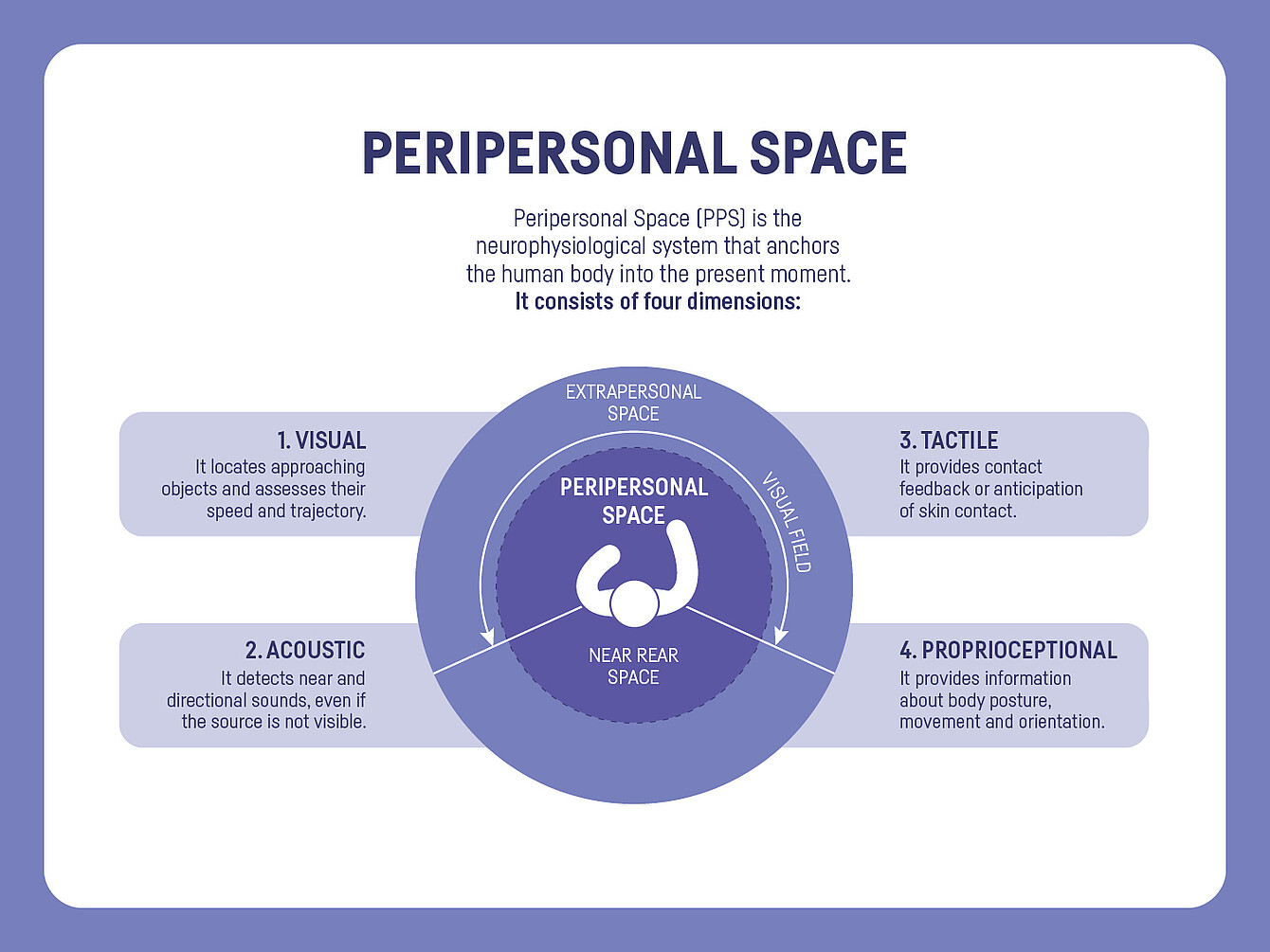
Peripersonal space refers to the immediate area around our body. It is the space in which the brain continuously processes sensory information in order to prepare for actions and ensure safety.
EEG studies confirm that the brain dynamically updates this space based on visual, tactile and acoustic stimuli. If objects approach, the background noise changes or someone moves behind us, the neural network reacts immediately.
The PPS is therefore not a static "distance", but a highly active neurophysiological system that anchors us in the here and now.
It consists of four dimensions:
- Visual: Detects approaching objects, evaluates speed and direction.
- Acoustic: Registers nearby, directional sounds – even if their source is not visible.
- Tactile: Responds to touch and warns of impending skin contact.
- Proprioceptive: Provides information about posture, movement and spatial orientation.
Together, these systems ensure that we feel safe – or similarly, alarmed.
Why PPS affects concentration
Our brain is programmed to recognise potential threats in the immediate vicinity. If there is a lack of feeling of protection or control, the peripersonal space expands.
This means we scan more. We listen more closely. We react faster.
This means that concentration requires more energy.
The less spatial security we feel, the more our brain remains in alert mode. Even if there is no real danger, this permanent "readiness" ties up cognitive resources.
Different peripersonal spaces in the working environment
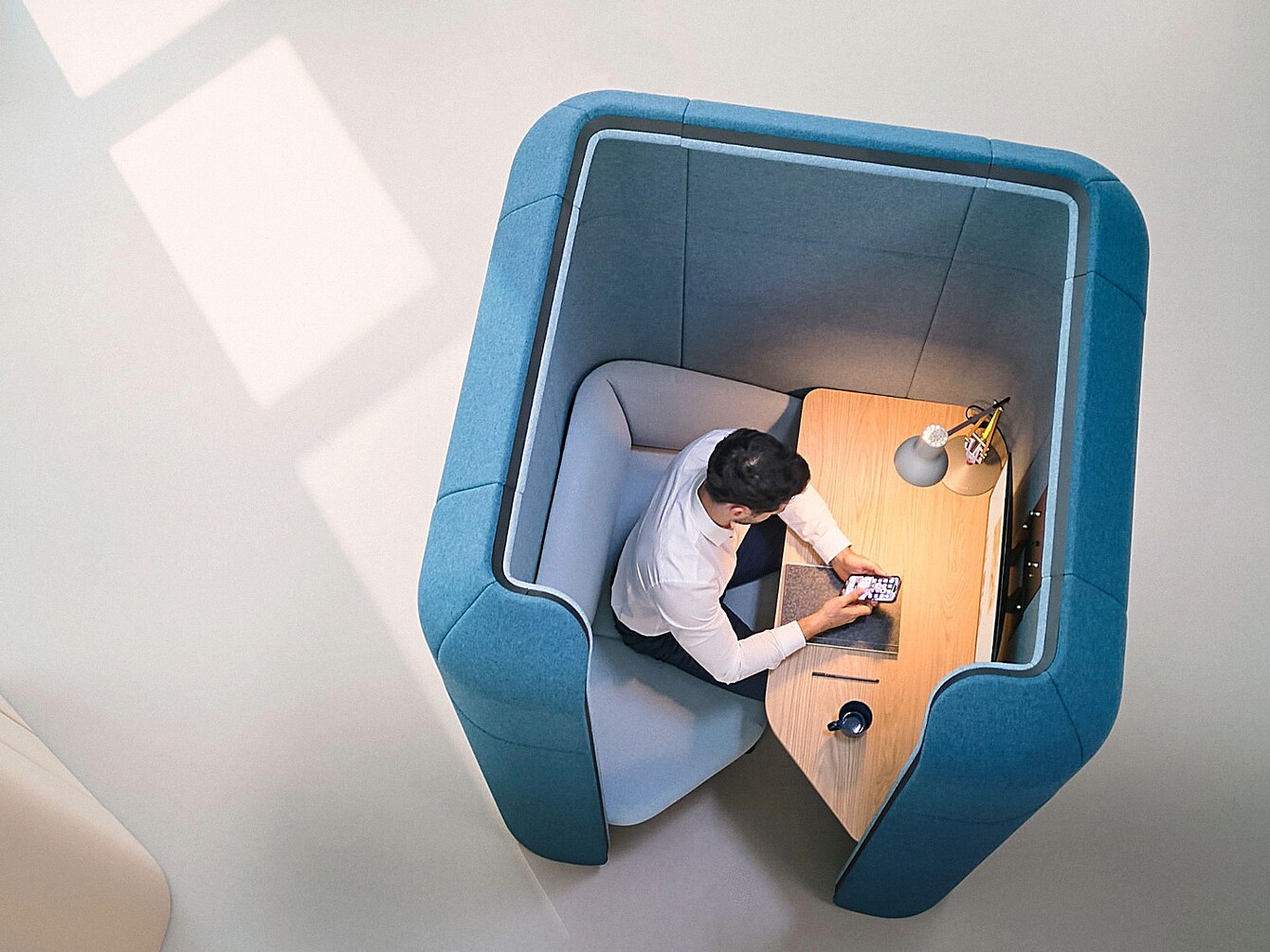
The design of the workplace directly influences how large or stable our peripersonal space is.
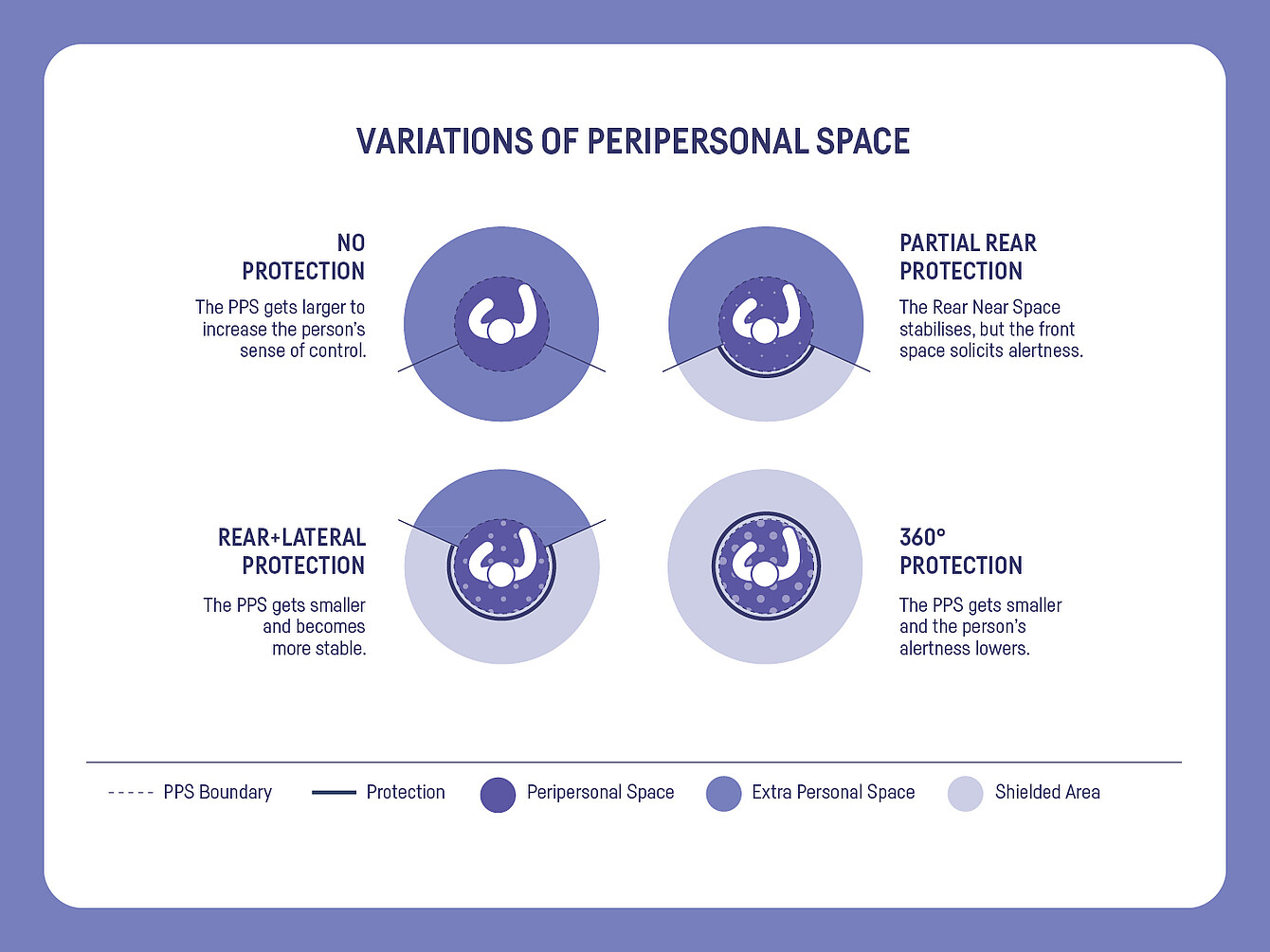
- No protection: If employees sit freely in the room – without back or side protection – the PPS increases. The brain compensates for the lack of spatial security with increased alertness in order to enhance the subjective feeling of control.
- Partial rear protection: A protected back stabilises the rear vicinity. However, the front area remains attention-intensive. Concentration improves – but remains fragile.
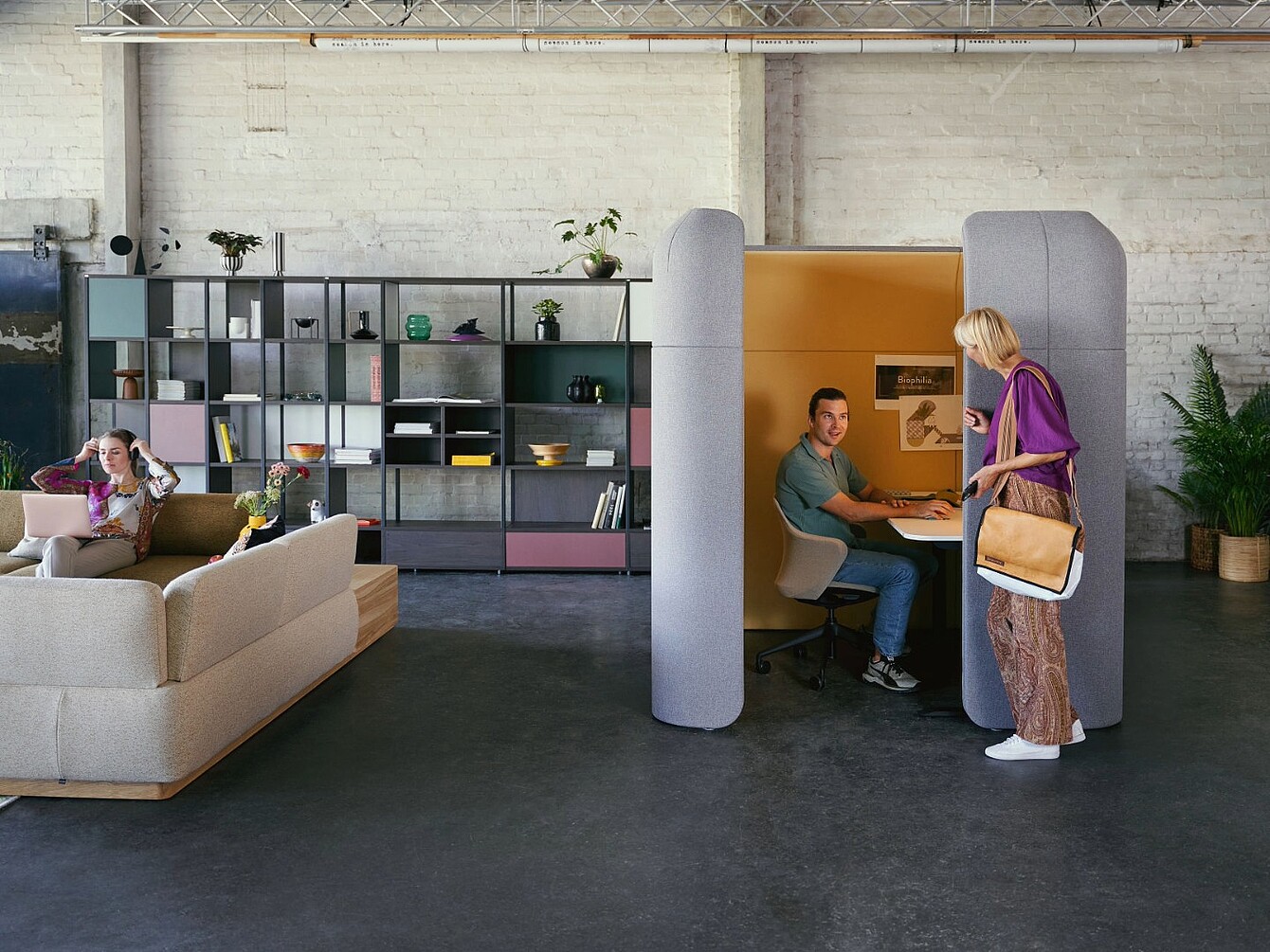
- Rear + lateral protection: With additional side shielding, the PPS becomes smaller and more stable. The brain reduces its alertness. Cognitive resources are more readily available for the task at hand.
- 360° protection: A clearly defined, protected space significantly reduces alertness. The PPS becomes smaller and the feeling of control increases – optimal conditions for focused work.
The social context changes the PPS
The social dimension is also exciting: research shows that the peripersonal space remains clearly defined at the beginning of a cooperative task – each person initially maintains their individual personal space.
However, in the course of successful collaboration, these boundaries partially dissolve. A shared space for action emerges.
For workplace design, this means that spaces must facilitate both individual concentration and cooperative dynamics. Protection and openness are not opposites – they are situational requirements.
Design does not begin in the room, but at the workplace
A crucial change in perspective is that it is not the space as a whole that is the starting point for good design, but the personally experienced workplace.
How does the room appear from this particular seating position? What is happening behind me? Where are the noises coming from? How clear are my visual boundaries?
Design that promotes concentration does not arise in the abstract. It arises where people sit, think and work.
Neuro-logic as a planning principle
When planning working environments, we are always designing neural states. Lines of sight, screens, acoustic quality and furnishings directly influence how large or stable the peripersonal space is – and thus the feeling of control.
Good workplace design reduces unnecessary vigilance. It creates security without isolation. And it enables focus without seclusion.
Because concentration is not a coincidence. It is the result of neuro-logical design.

social media channels: