
Concentration Follows a Rhythm
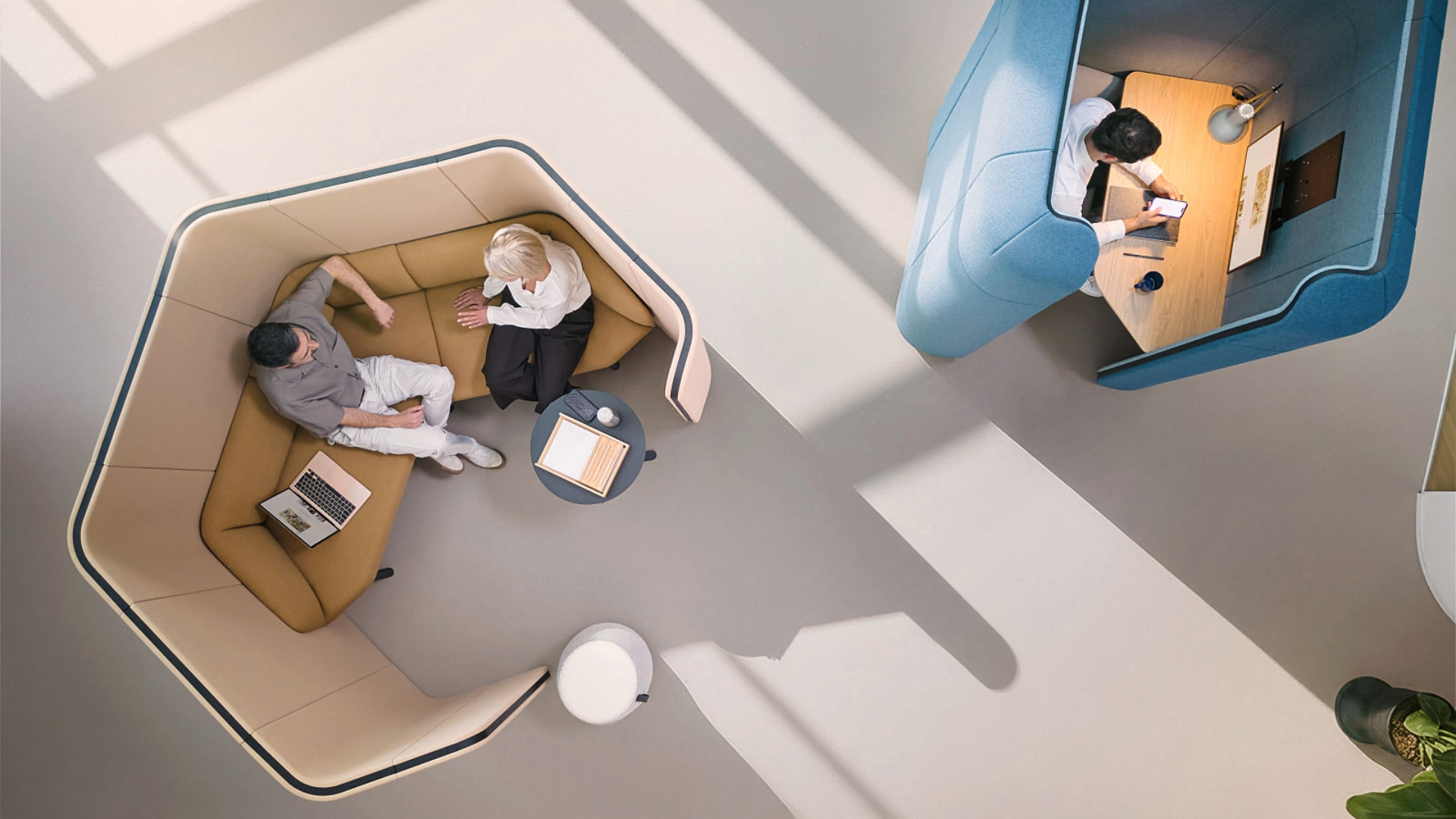
Sedus INSIGHTS Nº 20 makes one thing clear: deep concentration is time-limited and cyclical. Entering a focused state takes time; the phase of sustained attention lasts only for a certain period before inevitably diminishing. For many people, around four hours of deep focus per day is a realistic benchmark - distributed across several cycles.
For the design of work environments, this leads to a clear conclusion:
The goal is not to create spaces for permanent high performance, but to support the alternation between effort and recovery through spatial design.
Flow Requires More Than Silence
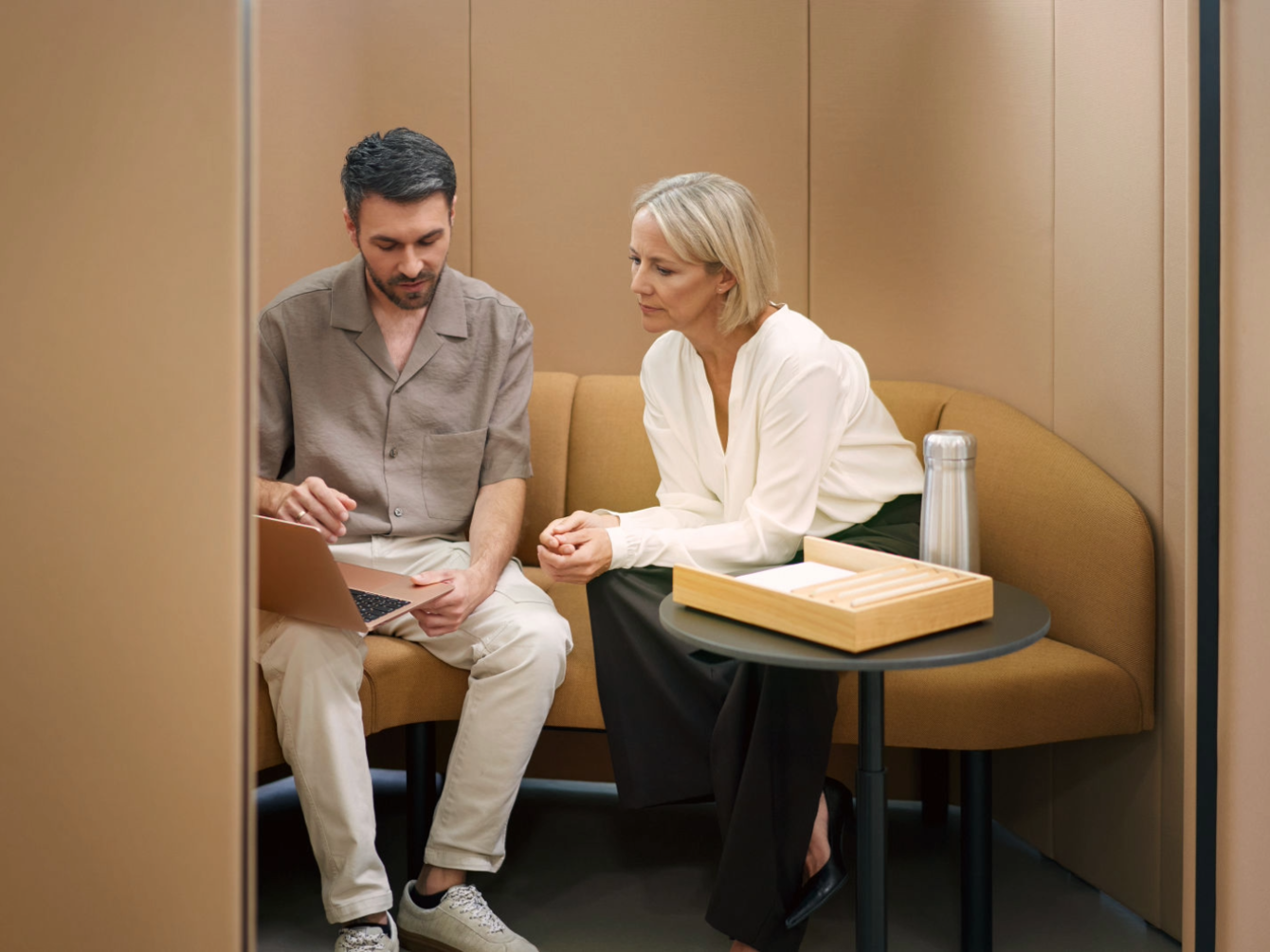
The flow state - that deep immersion in a task - does not arise from quietness or isolation alone. These ‘insights’ reveal that throughout the day, people move between different modes of attention: from light and moderate focus to phases of deep concentration.
What matters is whether spaces enable or hinder these transitions.
Spaces that support flow therefore need to combine two qualities:
- Stability, to reduce distractions and provide orientation
- Continuity, to allow smooth transitions between focus and recovery
An isolated focus room with no connection to its surroundings can be just as counterproductive as an open workspace without opportunities for retreat. Flow emerges where people feel secure, in control - and free to move between different states.
The Peripersonal Space as a Design Factor
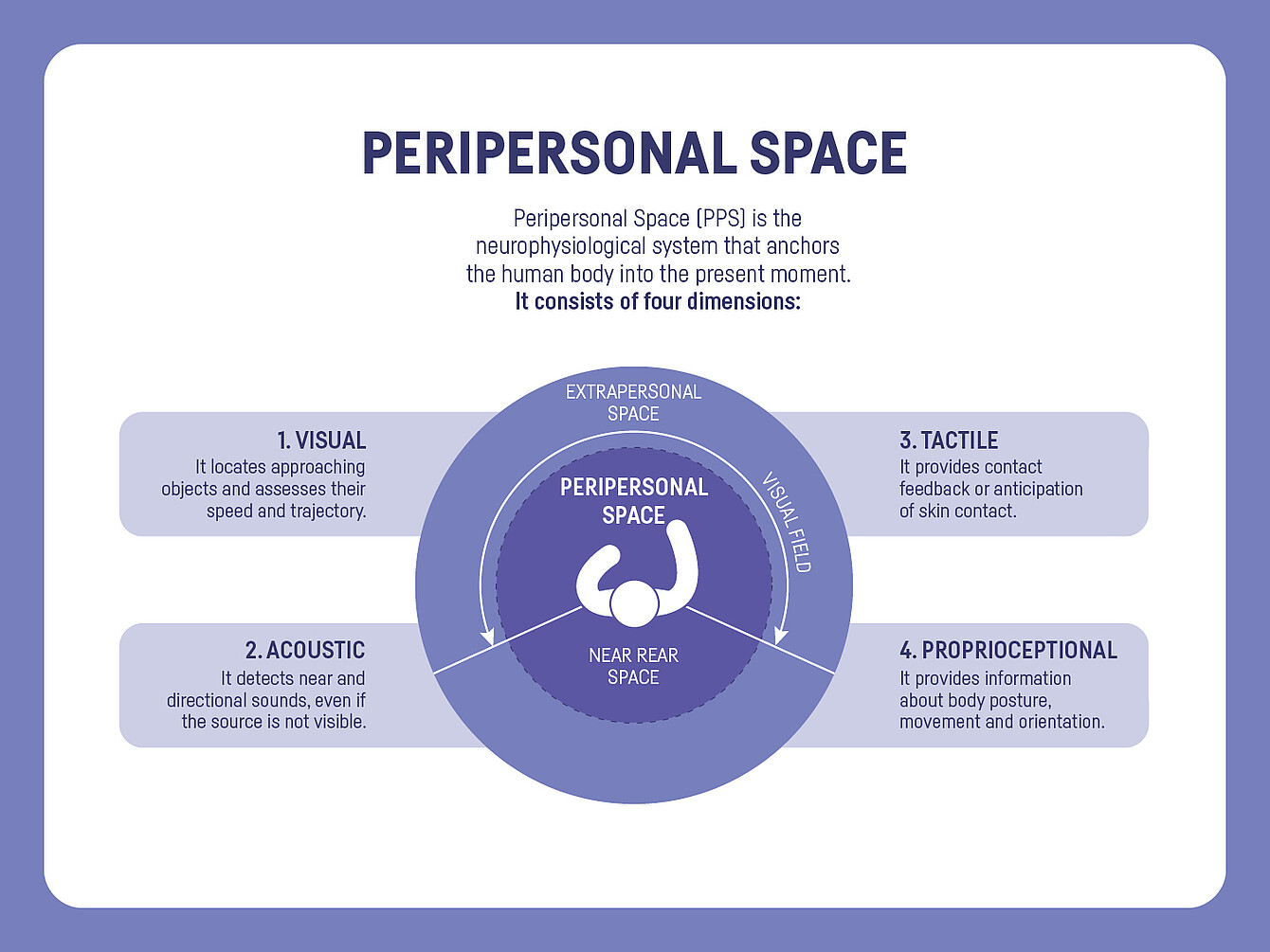
A key concept in Sedus INSIGHTS is the peripersonal space (PPS) - the immediate area surrounding the body where the brain integrates sensory input. It plays a crucial role in whether people feel present, oriented and capable of sustained action.
For spatial planning, this means:
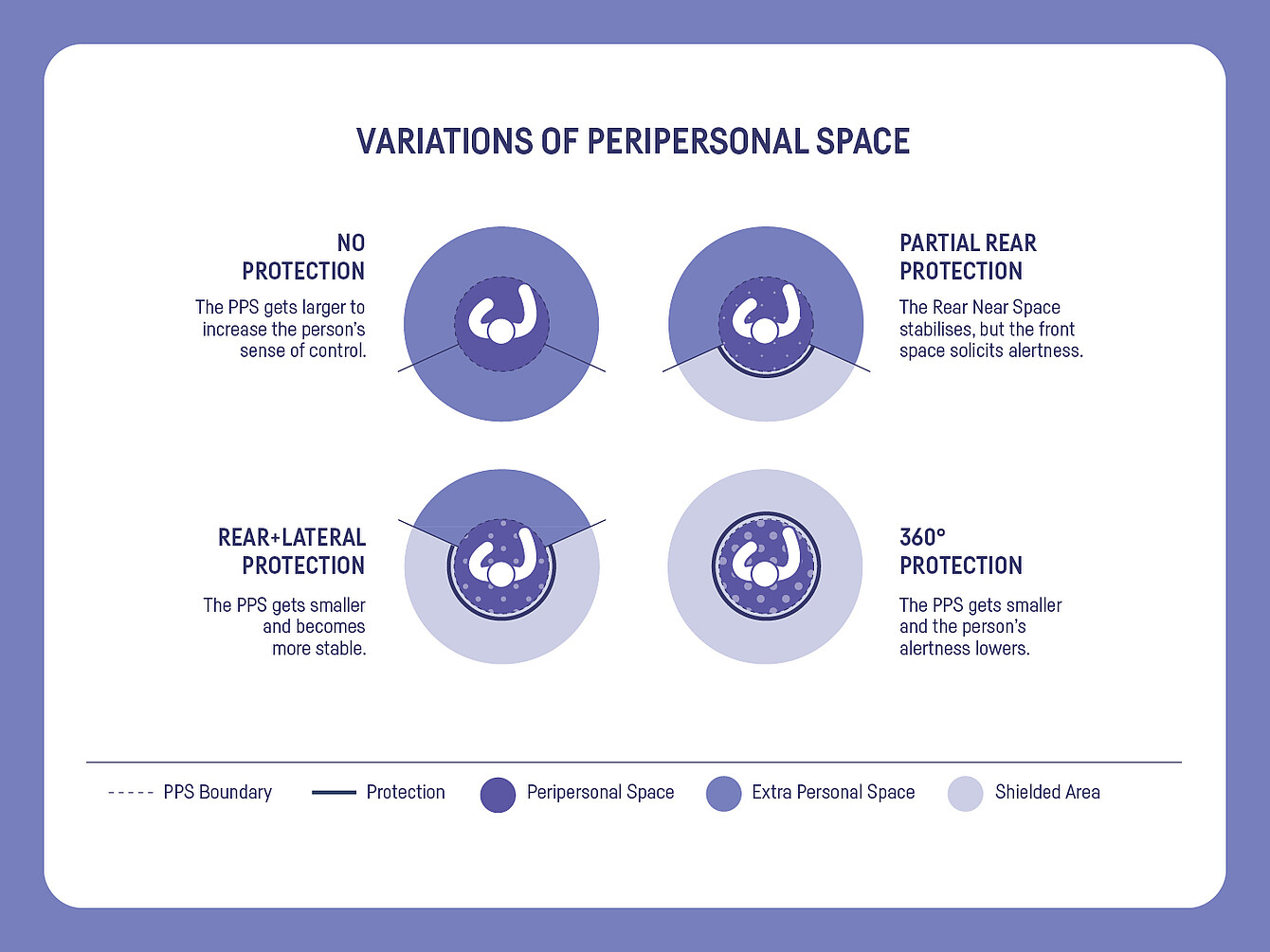
- Concentration emerges where people have control over proximity, distance and sensory stimuli.
- Back and side shielding, textile materials, soft lighting and acoustic protection help stabilise the PPS.
- Environments that are either too sterile or overly stimulating destabilise it - and undermine focus.
Many people recognise the moment when they no longer feel properly “anchored” in a space. That is precisely where concentration breaks down.
Focus and Recovery Require Equal Spatial Value
Sedus INSIGHTS presents work environments as a sequence of spaces aligned with the human concentration cycle: transition zones, quiet work areas, spaces for deep focus - complemented by areas dedicated to deliberate recovery.
This fundamentally changes how space is understood:
- Recovery areas are not residual or secondary spaces, but integral to the concentration system.
- Transition zones are more than circulation areas - they actively support mental switching.
- Work cafés, libraries and soft-seating zones fulfil a regenerative function, not merely a social one.
Not every space needs to signal maximum productivity. Some spaces exist to make productivity possible in the first place.
Planning Along Transitions, Not Functions
Taking the concentration cycle seriously reshapes traditional planning questions:
- Not: How many focus desks are required?
But: How many state changes are supported? - Not: Where is it quietest?
But: Where does retreat feel intuitive? - Not: How are functions separated?
But: How are transitions designed?
Often, the greatest impact lies not in the individual room, but in the choreography of spaces - and in the implicit signals they send.
Flow Is Not a Space, but an Interaction
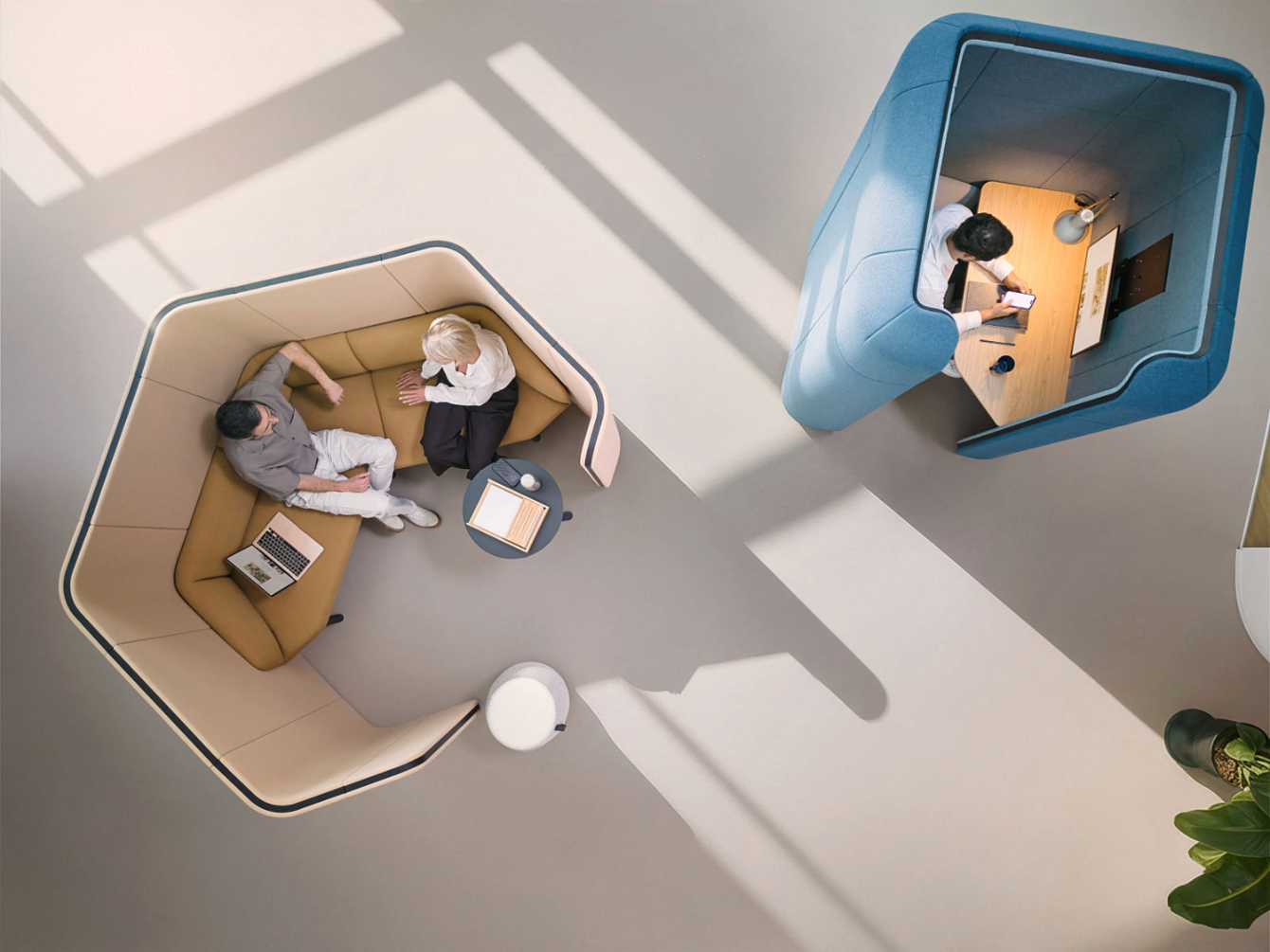
The concentration cycle shows that flow cannot be forced - but it can be enabled through space. Work environments that understand focus, movement and recovery as an interconnected system support not only performance, but also well-being and satisfaction.
Good spatial planning therefore does not create permanent focus zones, but a finely tuned ecosystem of spatial qualities - aligned with the natural rhythms of the people who work within them.

social media channels: