
Concentration Is Becoming a Scarce Resource
In a permanently connected world, attention is fragile. Notifications, digital tools and open spatial structures constantly compete for our focus. Studies show that deep concentration is time-limited, cyclical and highly dependent on the environment. For many people, a maximum of four hours of focused work per day is realistic – provided the conditions are right.
Hybrid work intensifies this effect. While working from home often offers quiet, it lacks the social and cultural context of the organisation. The office therefore has to deliver more than it once did: it must actively enable concentration, rather than leaving it to chance.
Focus and Collaboration Are Not a Contradiction
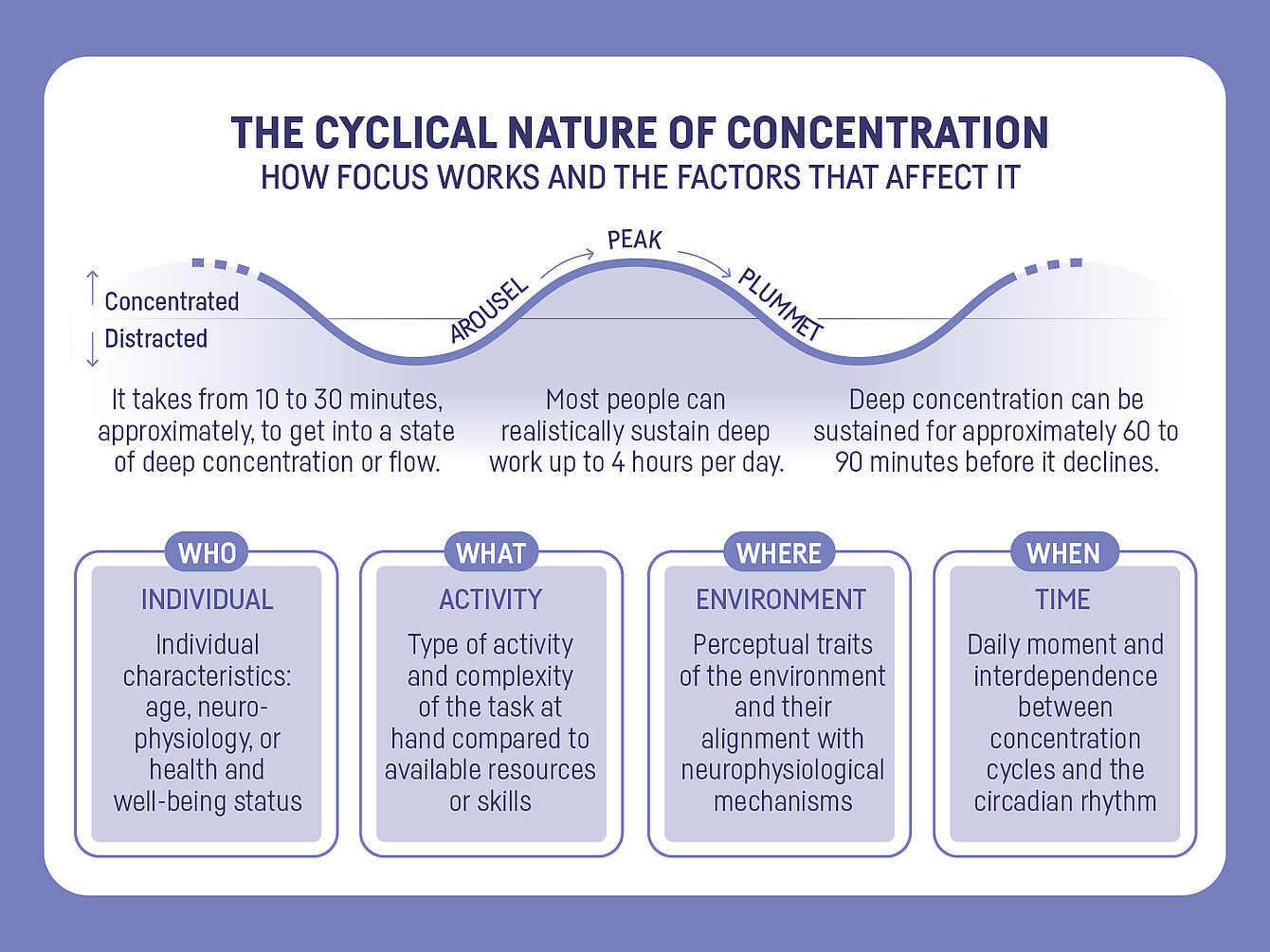
The key insight is this: offices must be able to do both. Collaboration and concentration are not opposites, but different modes of attention, each requiring its own spatial qualities. Creative exchange thrives on openness and dynamism; focused work depends on protection, control and sensory balance.
Sedus INSIGHTS No. 20 makes it clear that productive offices should be conceived as a sequence of differentiated spaces: from lively communication zones and semi-protected work areas to clearly defined focus and quiet zones. What matters most is that employees can choose the environment that suits their task, their energy level and their personal rhythm.
Spatial Design as a Leadership Responsibility
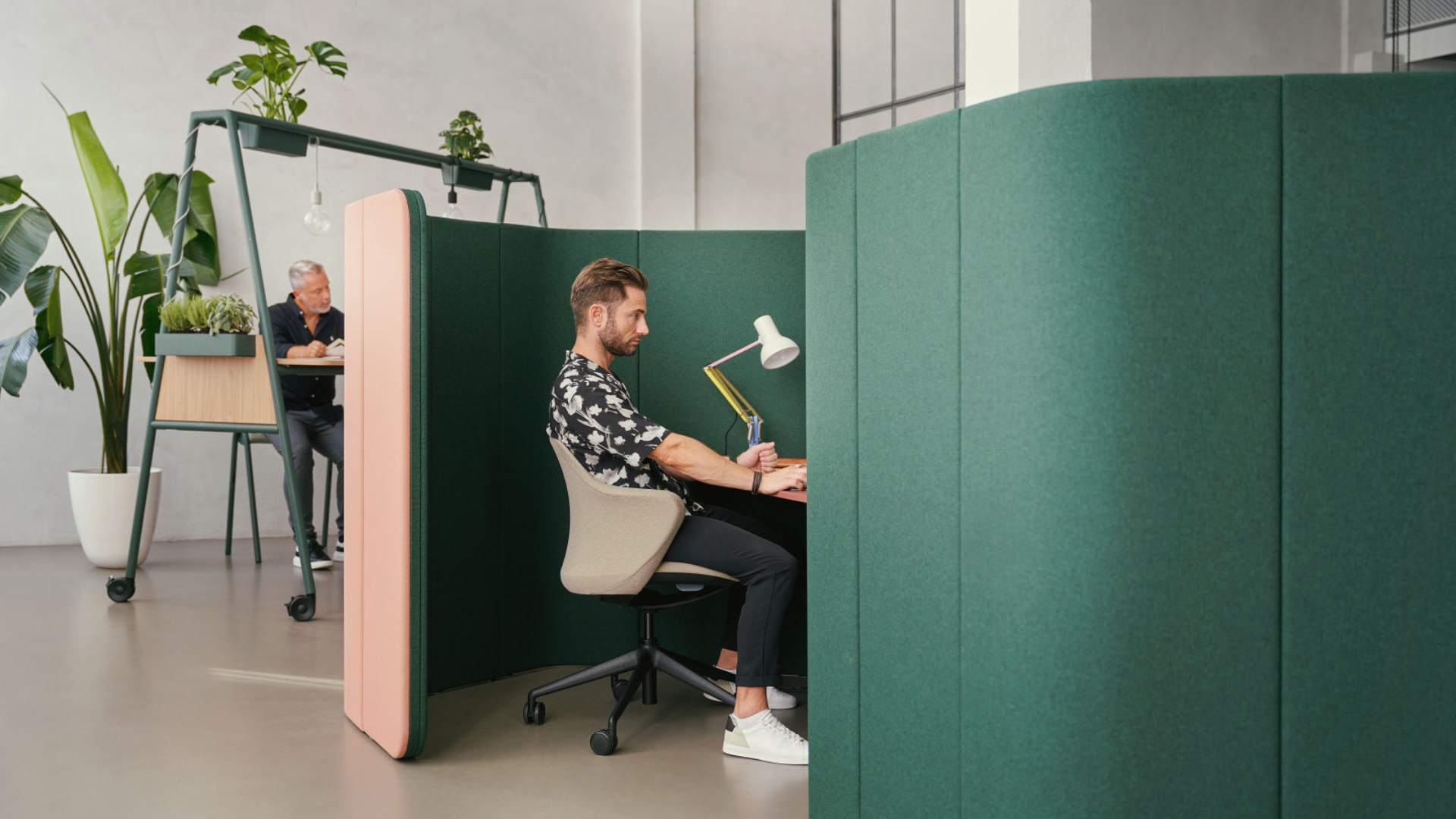
This is what elevates focus into a new guiding function – not only architecturally, but culturally as well. Spaces send signals: Where is conversation welcome? Where is retreat encouraged? Where is concentration understood as a shared value? Library-like work areas with clear rules, or shielded focus spaces, demonstrate that concentrated work is not the exception, but an integral part of everyday office life.
At the same time, control over one’s immediate environment becomes central. Light, acoustics, materials and furniture influence how safe, present and attentive people feel. Multisensory, well-balanced environments help stabilise the so-called peripersonal space – a prerequisite for sustained concentration.
The Office as a Place for What Is Missing at Home
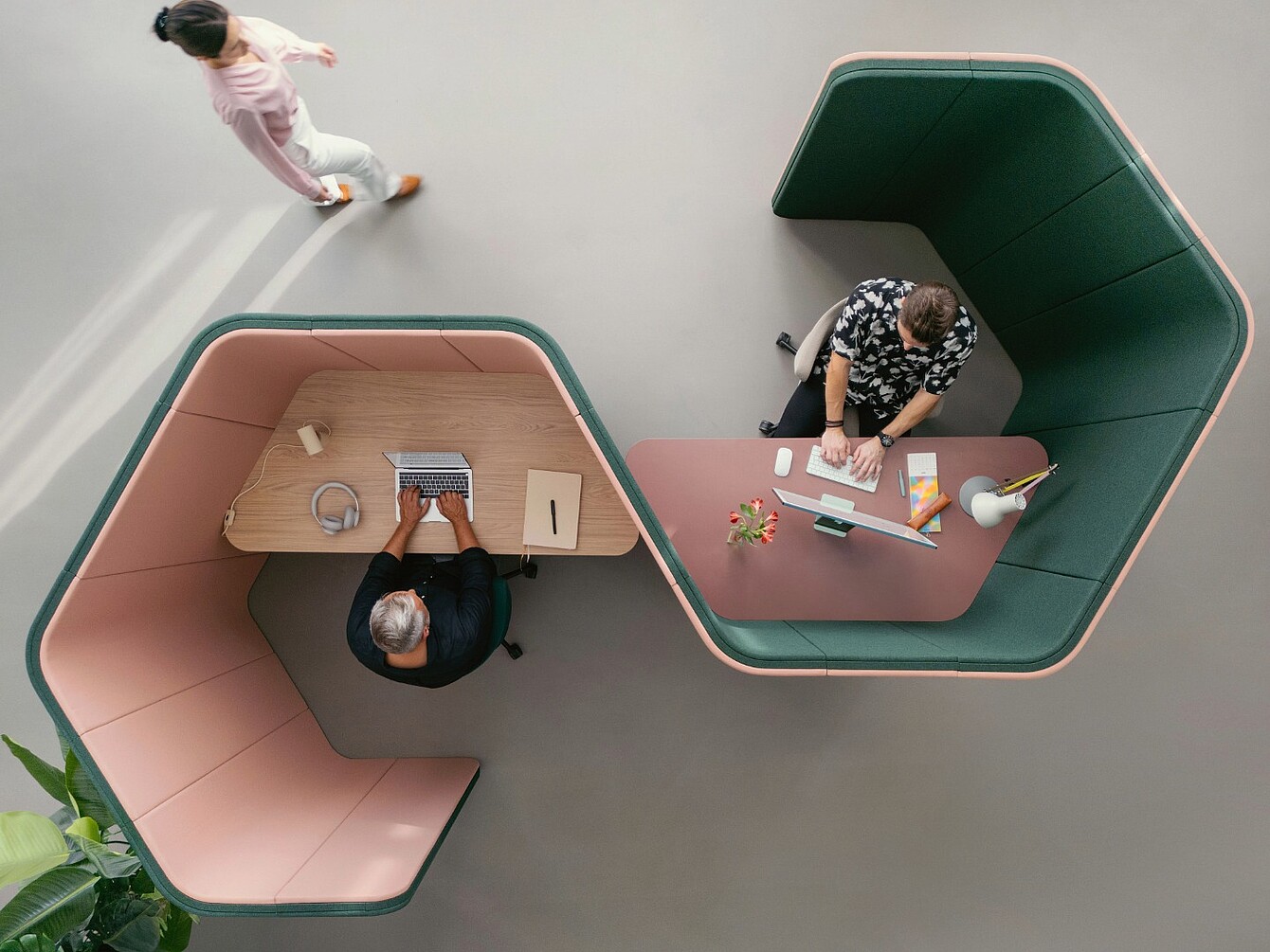
Hybrid work raises a new question: why do we come to the office at all? Increasingly, the answer is: for tasks that require both exchange and depth. For complex thinking, collaborative development – and for focused individual work in an environment that actively supports concentration.
Offices that master this balance do more than increase productivity. They enhance satisfaction, engagement and mental well-being. Focus is no longer a nice-to-have; it is a strategic quality of modern working environments.

social media channels: