
Less Space, Greater Significance
If Stefan Rief were to summarise the future of the office in a single sentence, it would likely be this: we will require less office space – but it will gain in quality.
“We will need noticeably less space,” he says. “But for the time we do spend on site, we will need more generosity, more diversity, more atmosphere – and more technological support.”
The virtual realm is developing at remarkable speed. AI systems, digital collaboration tools, and immersive technologies are taking on an increasing number of tasks. Physical space must not fall behind. It must be more than a backdrop – it must create added value that cannot be replicated digitally.
The office is therefore becoming less a place for the mere completion of tasks and increasingly a place of encounter, identification, and exchange.
The Strongest Reason to Come to the Office: Other People
Hybrid work is here to stay. Yet with newfound flexibility comes a new sense of responsibility.
“The strongest factor drawing people to the office is other people,” Rief emphasises. While close teamwork can function well in virtual settings, what tends to suffer are the chance encounters, informal conversations, and peripheral learning experiences.
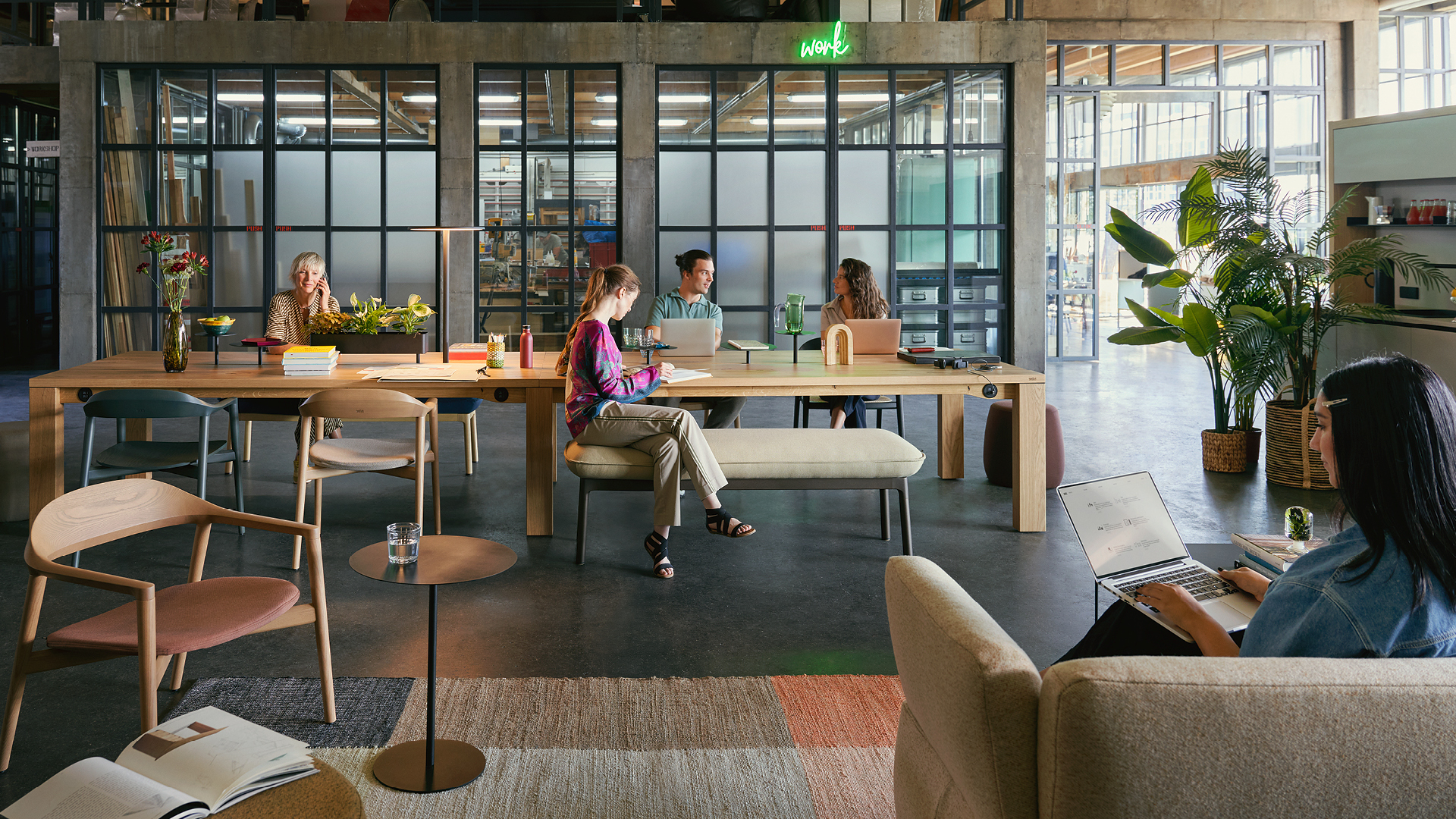
For this very reason, social spaces within organisations are gaining importance. Areas such as the Work Café are not decorative additions, but essential social infrastructure. They foster spontaneous dialogue, fresh perspectives, and trust.
The more deeply AI becomes integrated into our workflows, the greater the need for genuine human connection.
AI makes us more efficient but it also heightens our desire for human resonance.
Quality Over Square Metres
Hybrid models are also transforming expectations of the workplace. Those who consciously choose to come into the office expect conditions that justify the decision.
And those expectations are diverse: quiet retreats for focused work, open zones for exchange, inspiring atmospheres, perhaps even hospitality services or communal meeting points.
Today’s spaces must offer choice. People work differently – and their needs shift throughout the day. At times they require focus; at others, interaction or the energy that comes from being around others.
Well-designed working environments provide precisely this range. They offer both structure and openness.
Between the Metaverse and Reality
Rief also takes virtual spaces seriously. Immersive technologies can generate atmospheres, simulate proximity, and create creative settings that would be difficult to realise physically.
“When you work in them for extended periods, you notice just how immersive they are,” he observes. Younger generations in particular, having grown up in digital worlds, may adopt such formats as entirely natural.
And yet a crucial distinction remains: when the headset comes off, real places are still needed. Authentic encounters. Physical presence.
In an increasingly digital world, the physical may even become a form of proof of authenticity.
From “Office to X” to a New Openness
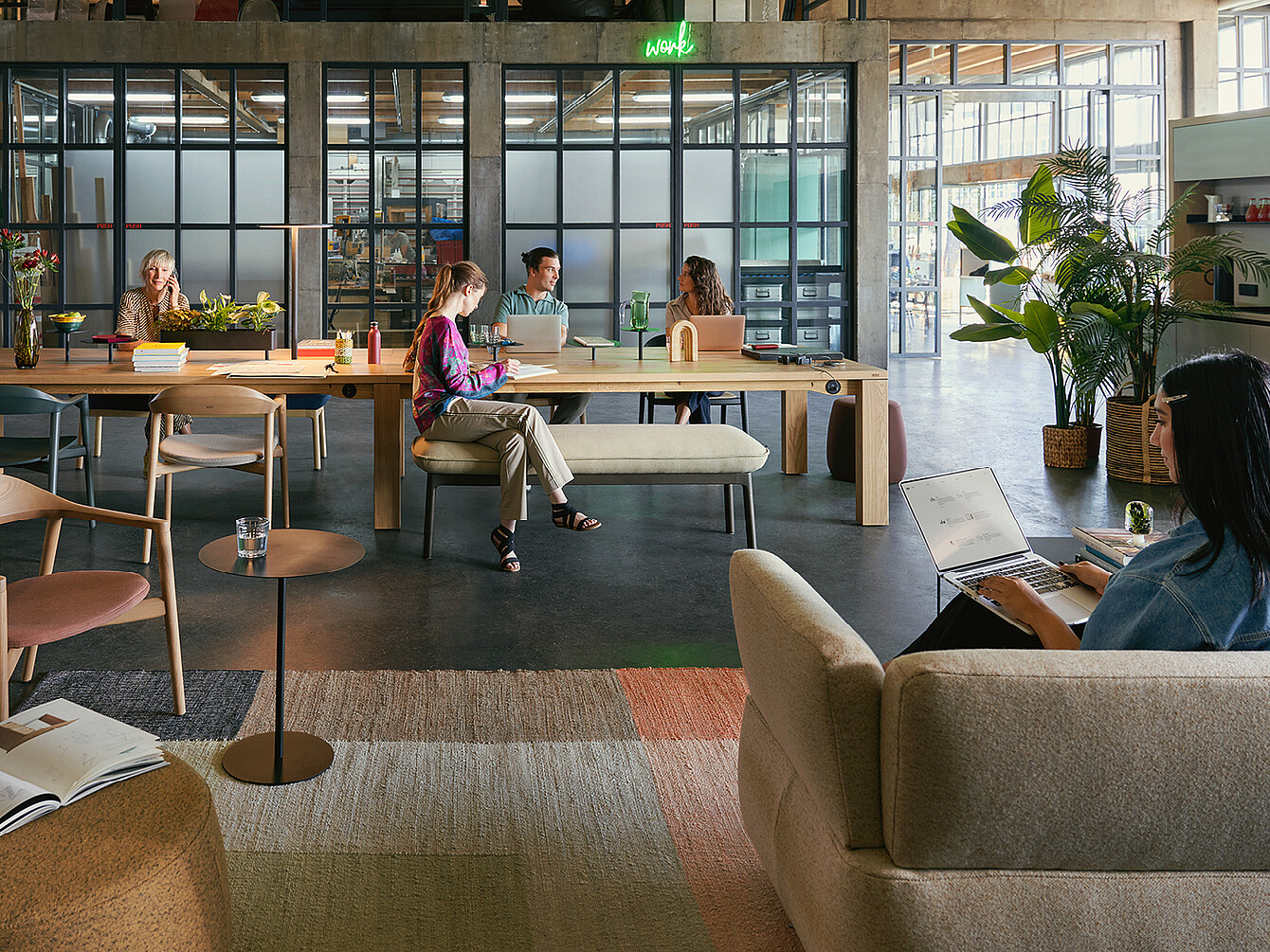
Rief does not regard the office space that will become available in the coming years as a disadvantage, but as a genuine opportunity. And he is explicit: this does not mean creating additional project rooms – well-designed offices already accommodate those needs today.
The real potential lies in urban contexts where larger areas may be freed up and reimagined. Spaces that need not return to office use, but can serve entirely different purposes.
“This opens up possibilities that extend far beyond the corporate context,” Rief explains. New forms of housing, cultural venues, places for community, or decentralised infrastructure could emerge if cities and developers have the courage to further develop these potentials.
He is keen to place this in realistic perspective: the companies reducing office space are generally not those responsible for its subsequent repurposing. That task lies with municipalities, developers, and new forms of partnership.
Thus, “Office to X” does not signify a new office format, but rather an impetus to make cities more diverse, mixed, and livable.
Space Is Culture

For Rief, workspaces are never neutral. They send signals, shape behaviour, and make attitudes visible.
“If you truly want to change culture, you change the spaces – as a visible sign that you are serious.”
Whether an organisation emphasises presence or embraces hybrid models, clarity is crucial. Spaces must support what a company aspires to be – and what people need in order to collaborate effectively.
For this very reason, places like the Work Café are gaining new significance. They symbolise a world of work that enables exchange, softens hierarchies, and makes encounter a natural part of everyday life. An environment conceived not merely in functional terms, but in atmospheric ones.
Perhaps this is precisely where the future of the workplace lies: fewer square metres, but higher quality. Less fixed allocation, more openness. Less obligation, greater attraction.
The workplace of tomorrow requires spaces that bring people together. Spaces that create identity. Spaces people want to remain in.
And this is where thoughtful design begins.

social media channels: