

Two Sides, One Clear Purpose
From the front, se:cove feels open and welcoming. Soft upholstery, generous proportions and a clearly defined communicate a sense of arrival. This is the side that addresses the user directly – inviting them to sit down, lean back, pause or engage in conversation.
The back, by contrast, plays a different role. Closed, stable and clearly contoured. Its sculptural form and pronounced structure give the chair a strong presence within the space. From a planning perspective, se:cove functions as a space-defining element, helping to organise zones and give structure to open layouts.
Steering Spatial Impact with Intention
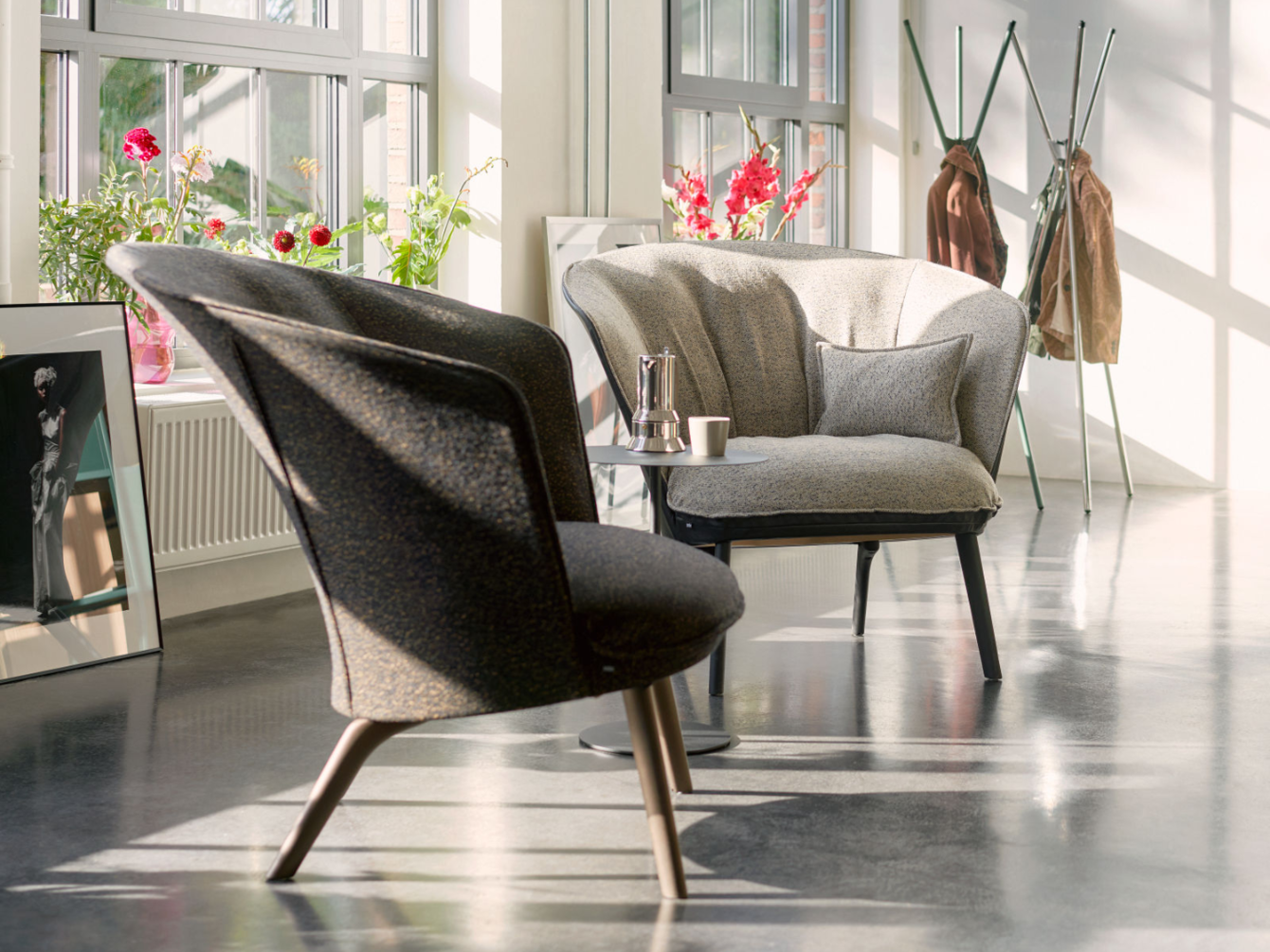
This dual design shows its full strength in open spaces. Positioned with its back facing the room, se:cove takes on a structuring function: it creates visual order, frames zones and gives open areas a sense of stability. At the same time, the seating area behind the strong back remains protected – offering retreat without complete isolation.
From the opposite perspective, the chair reveals a different quality. The open front feels communicative and welcoming. In reception areas, work cafés or breakout zones, se:cove signals openness and comfort. It becomes a first point of contact within the space – present, but never intrusive.
The Back as a Spatial Element
In planning terms, the back of se:cove is particularly relevant. It functions much like a low architectural element: lower than a wall, yet more defining than a conventional seating unit. This makes the chair ideal for marking transitions – for example between circulation paths and lounge areas, or between open workspaces and quieter zones.
The strong rear view supports orientation within the space. It provides structure without creating barriers, aligning perfectly with open concepts that seek clarity rather than separation.
The Front as an Invitation to Use
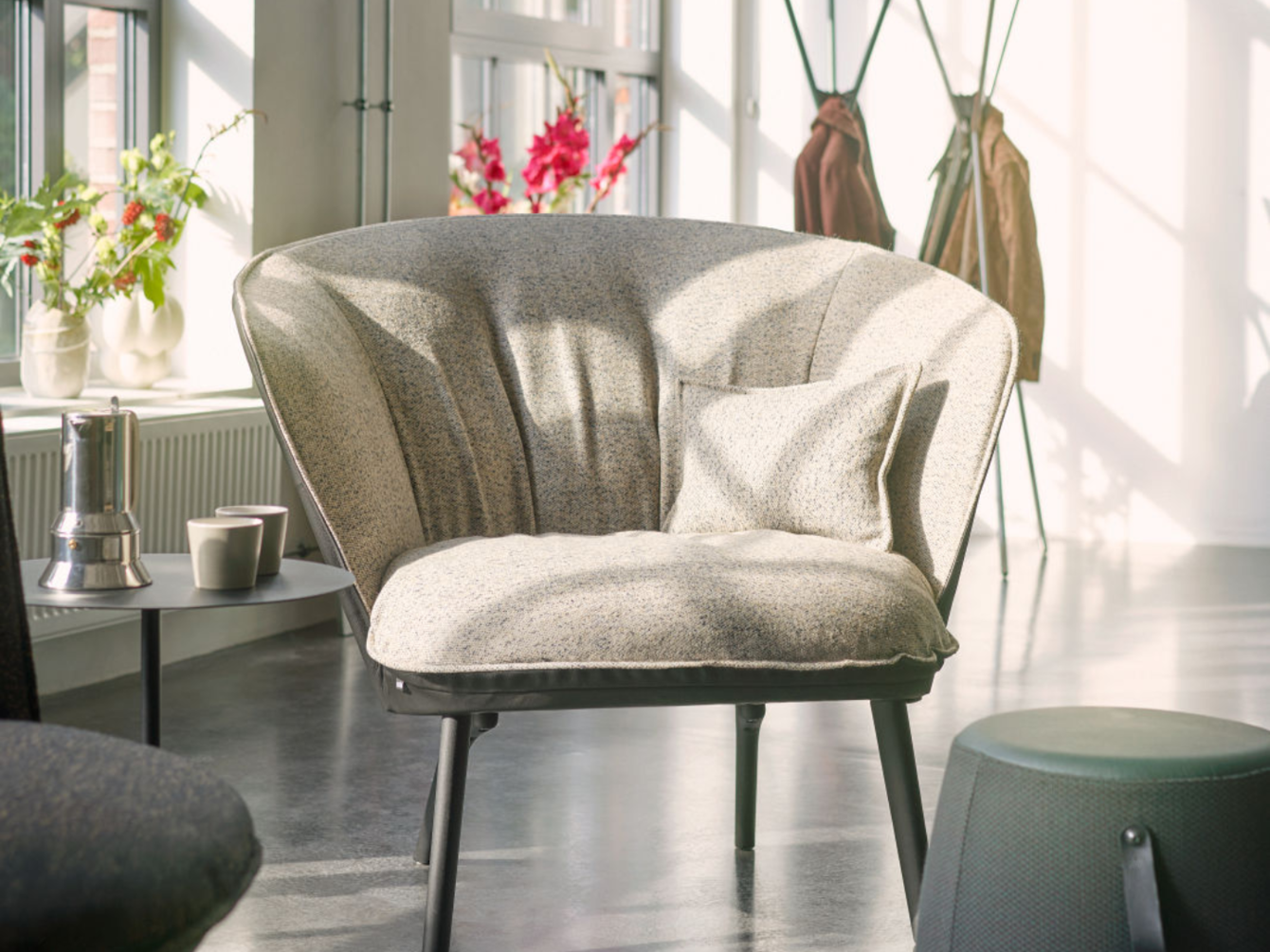
The open front takes on a communicative role. It lowers the threshold for use and makes se:cove a piece of furniture that integrates naturally into everyday work environments. Whether for a short break, an informal conversation or focused individual work, the front side communicates flexibility and comfort.
For planners, this means that the orientation of the chair can actively influence the atmosphere of a zone – making it feel more activating or more calming. One and the same product can take on different functions depending on how it is positioned.
One Chair, Two Spatial Effects
The dual design of se:cove demonstrates how strongly furniture contributes to spatial quality today. Front and back are not merely formal features, but planning tools. They help balance openness and structure, invitation and retreat, movement and calm.
In this way, se:cove becomes more than a seating solution. It becomes a mediator between people and space – and a design element that makes open environments readable, functional and human.

social media channels: