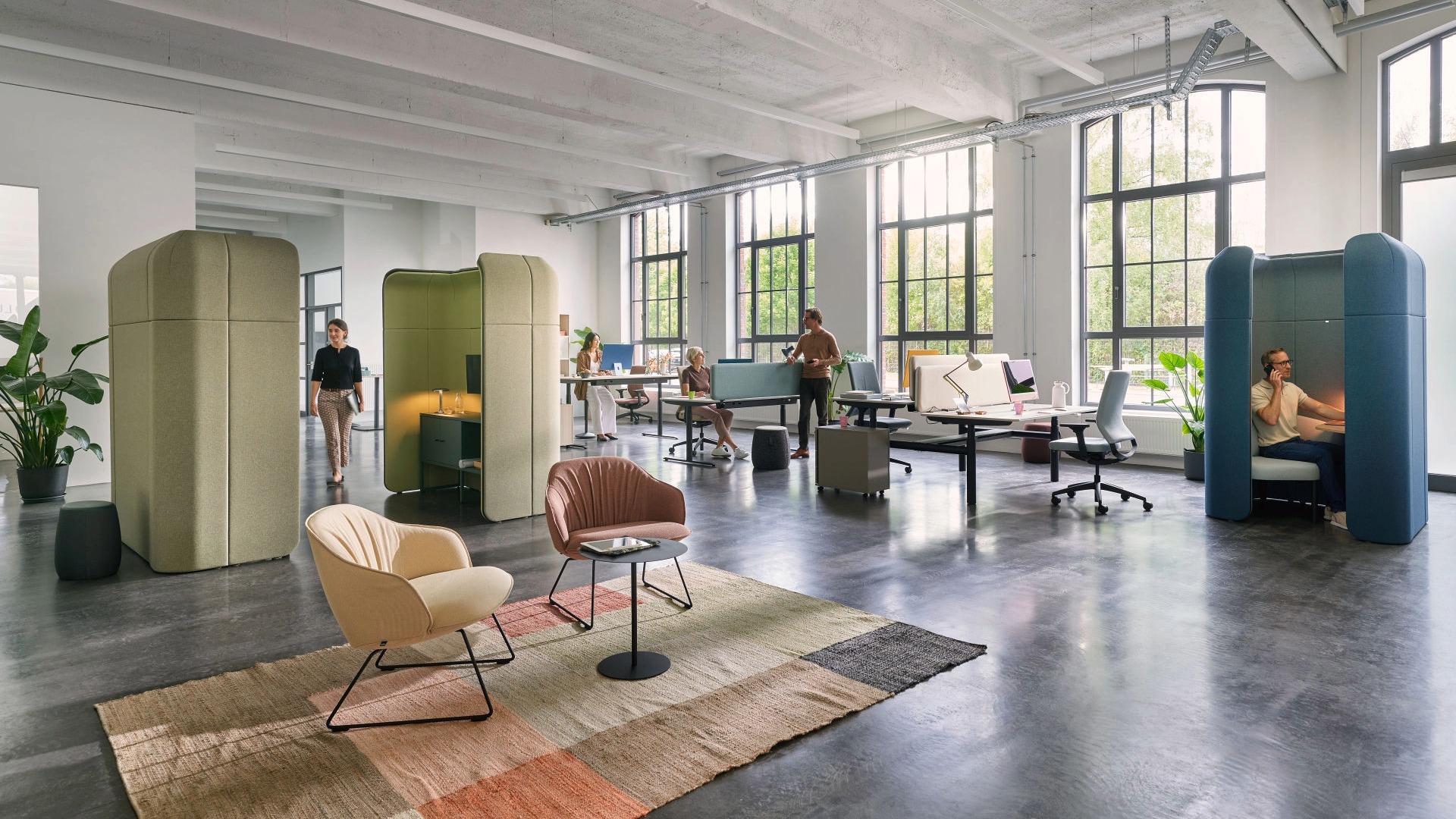

Why noise in the office is a real problem
Open-plan offices encourage communication and collaboration – but they also bring with them a high level of background noise.
Typical sources of noise include:
- Conversations and phone calls
- Keyboard use and printing
- Air conditioning and other technical equipment
- Footsteps and general movement around the room
The result: reduced productivity, more errors and growing dissatisfaction. Furthermore, difficulties concentrating and stress can ultimately affect employees’ wellbeing.
Improving room acoustics – the basis for quiet working
If you want to reduce noise in the office, you should start with room acoustics. This is because it is not just the volume itself that matters, but also how sound propagates within the room.
1. Use sound-absorbing materials
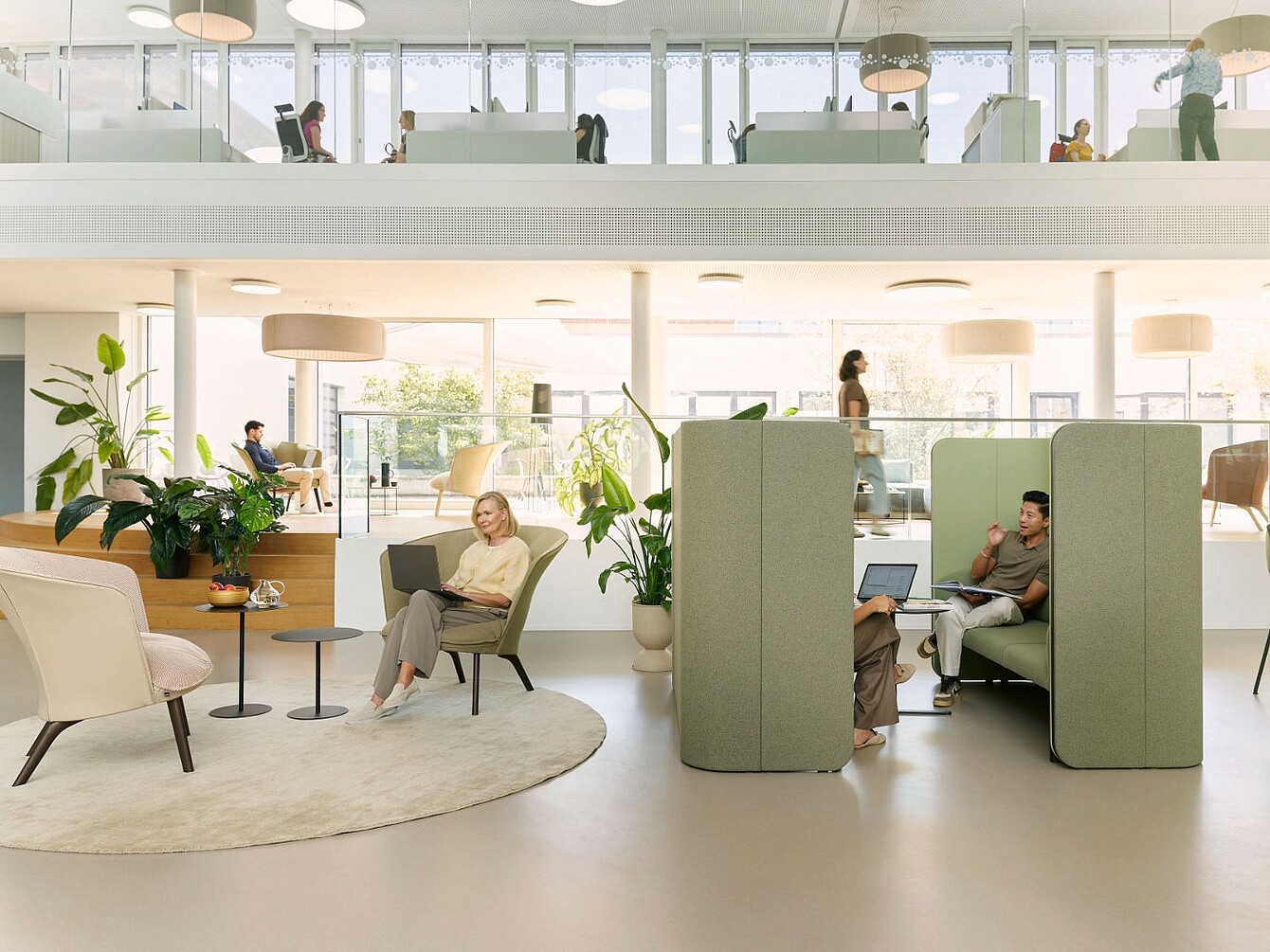
Textiles, carpets or special acoustic panels help to absorb sound and reduce unwanted reverberation. Particularly effective solutions are:
- Acoustic ceilings and wall panels
- Curtains and carpets
- Upholstered furniture
2. Zoning the office
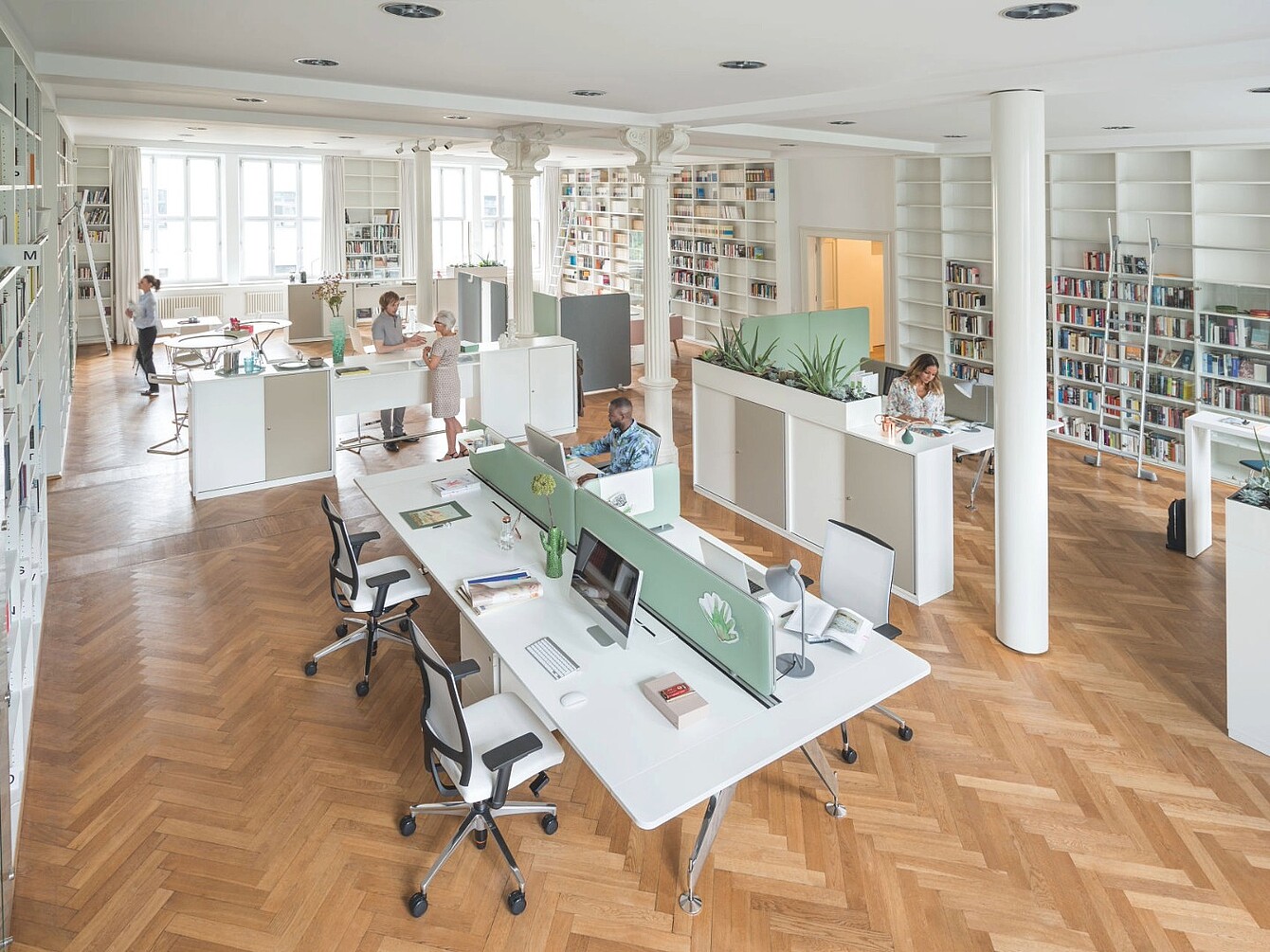
Zoning different work areas allows noise to be managed more effectively:
- Quiet zones for concentrated work
- Communication areas for discussion
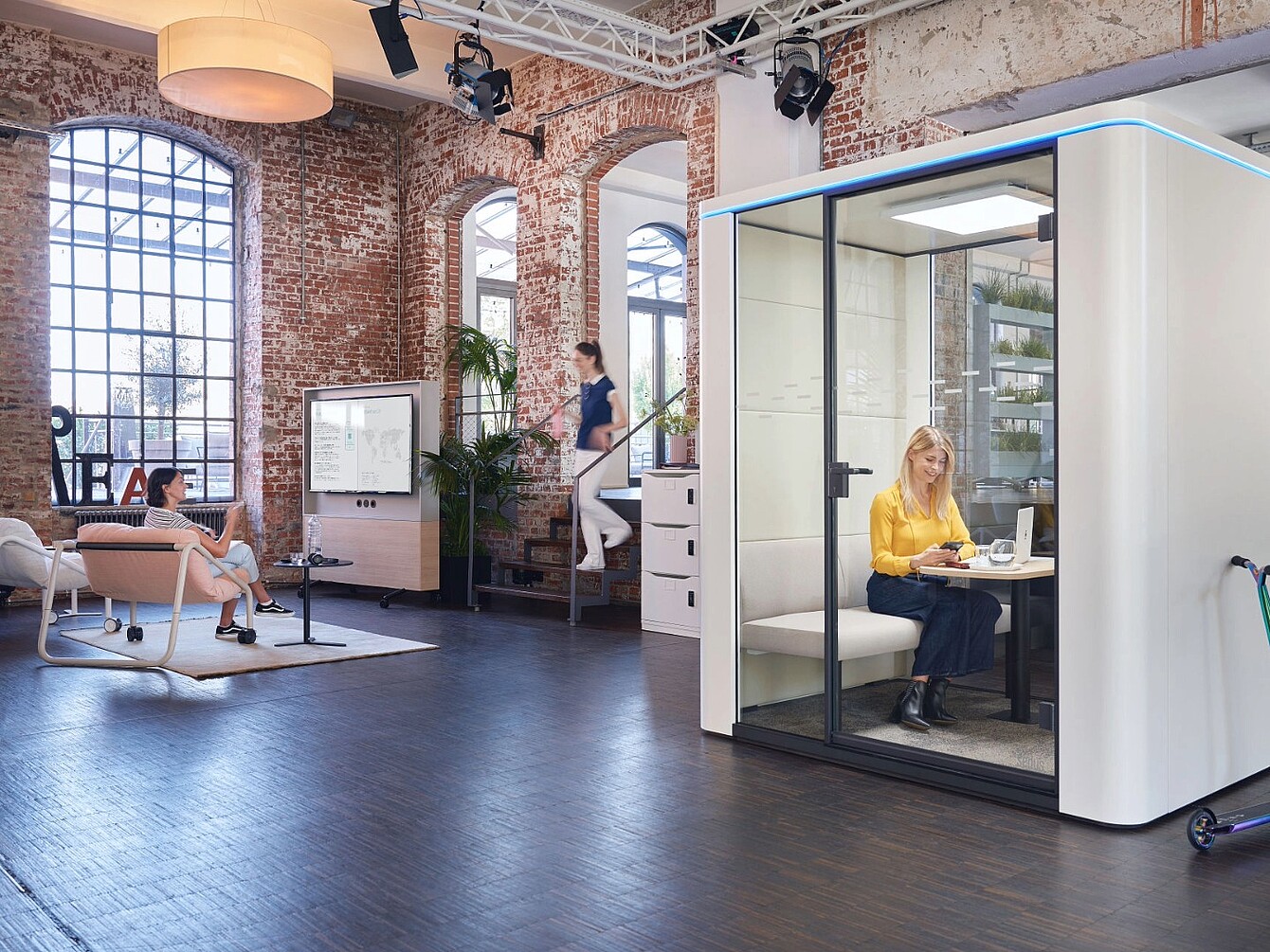
- Quiet spaces for phone calls or meetings
A clear structure is a key factor in improving room acoustics.
Effective noise protection in the office: these solutions help
In addition to structural measures, furniture and design also play a key role in noise protection in the office.
3. Use acoustically effective furniture
Modern office furniture is now much more than just functional – it actively contributes to noise reduction:
- Desk partitions such as easy screen silent
- Acoustic screens and room dividers such as se:wall
- Lounge furniture such as se:cove or se:lounge
These solutions specifically help to minimise noise while maintaining the openness and flexibility of the space.
5. Promote awareness within the team
Rules of conduct can also make a difference:
- Establish a culture of quiet conversation
- Make phone calls in designated areas
- Strengthen sensitivity within the team
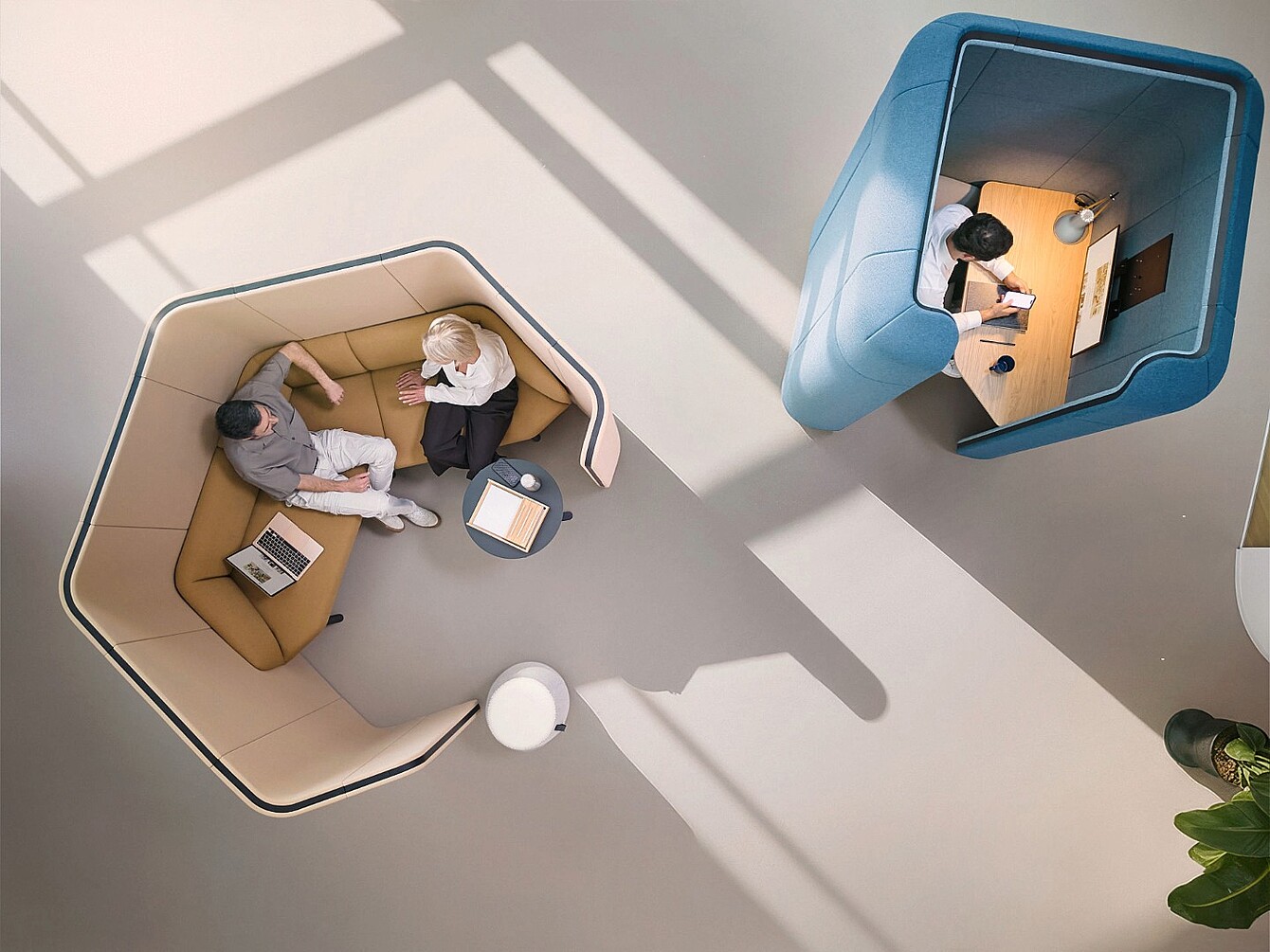
A holistic approach to better acoustics
The most effective approach combines several measures. Anyone wishing to reduce noise in the office should consider interior design, furniture and corporate culture together.
A well-thought-out acoustic concept ensures that:
- Communication remains easy and natural
- Periods of concentration are protected
- Employees feel comfortable and supported
Conclusion: Less noise, more productivity
A good working environment starts with the right acoustics. Through targeted measures, noise in the office can be reduced, room acoustics improved and sustainable noise protection established. The result: more peace and quiet, better collaboration and a significantly higher quality of work.

social media channels: