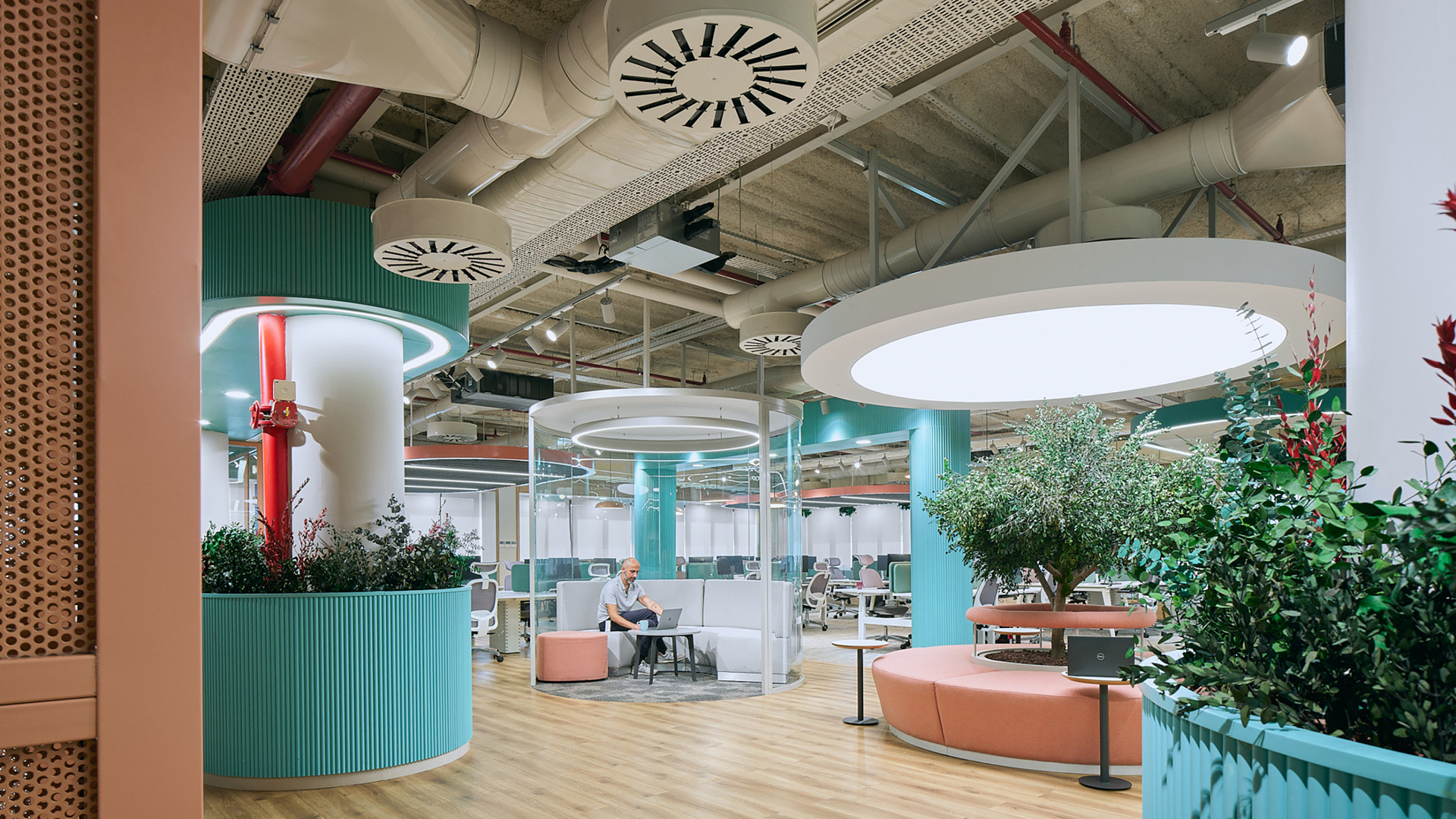

The project, developed by I-AM Studio, impressively demonstrates how focus can be designed not only organisationally, but above all, spatially.
Concentration as a spatial quality
At the heart of the design concept lies a key insight: concentration is not achieved simply by eliminating distractions; it emerges from environments that foster a sense of security, grounding, and control.
The architects at I-AM describe their approach as follows:
"Focus is a state that must be supported by spatial intent. Designing for concentration means going beyond removing distractions — it’s about crafting environments that help people feel anchored, safe, and in control of their attention."
The concept is based on two closely related principles:
- Multisensory experiences
- Targeted control of mental energy
Neuroscientific findings show that tactile and proprioceptive stimuli in particular – i.e. sensory impressions that affect body perception and spatial awareness – make a decisive contribution to stabilising what is known as peripersonal space. This sense of spatial orientation creates the conditions for sustained attention.
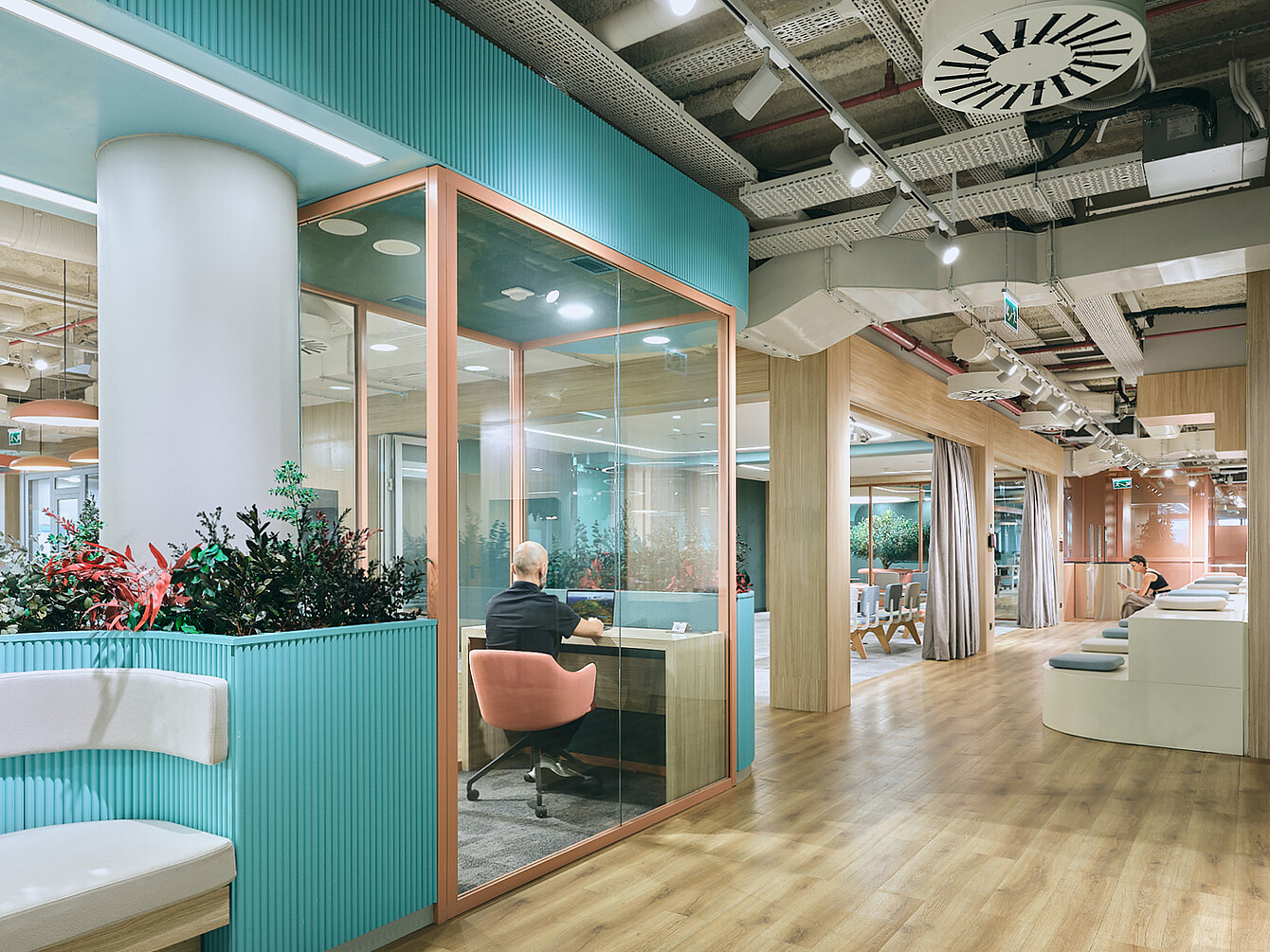
Enclosed room with acoustic protection and visual shielding provided by plants
Multisensory design for stable attention
To promote these conditions, materials, colours, lighting and acoustics have been precisely coordinated.
- Matt surfaces reduce visual distraction
- Soft, indirect lighting supports a calm atmosphere
- Neutral colours promote emotional balance
- Sound-absorbing materials minimise acoustic distractions
The result is a harmonious sensory experience that sends clear, coherent signals – and thus supports the ability to concentrate.
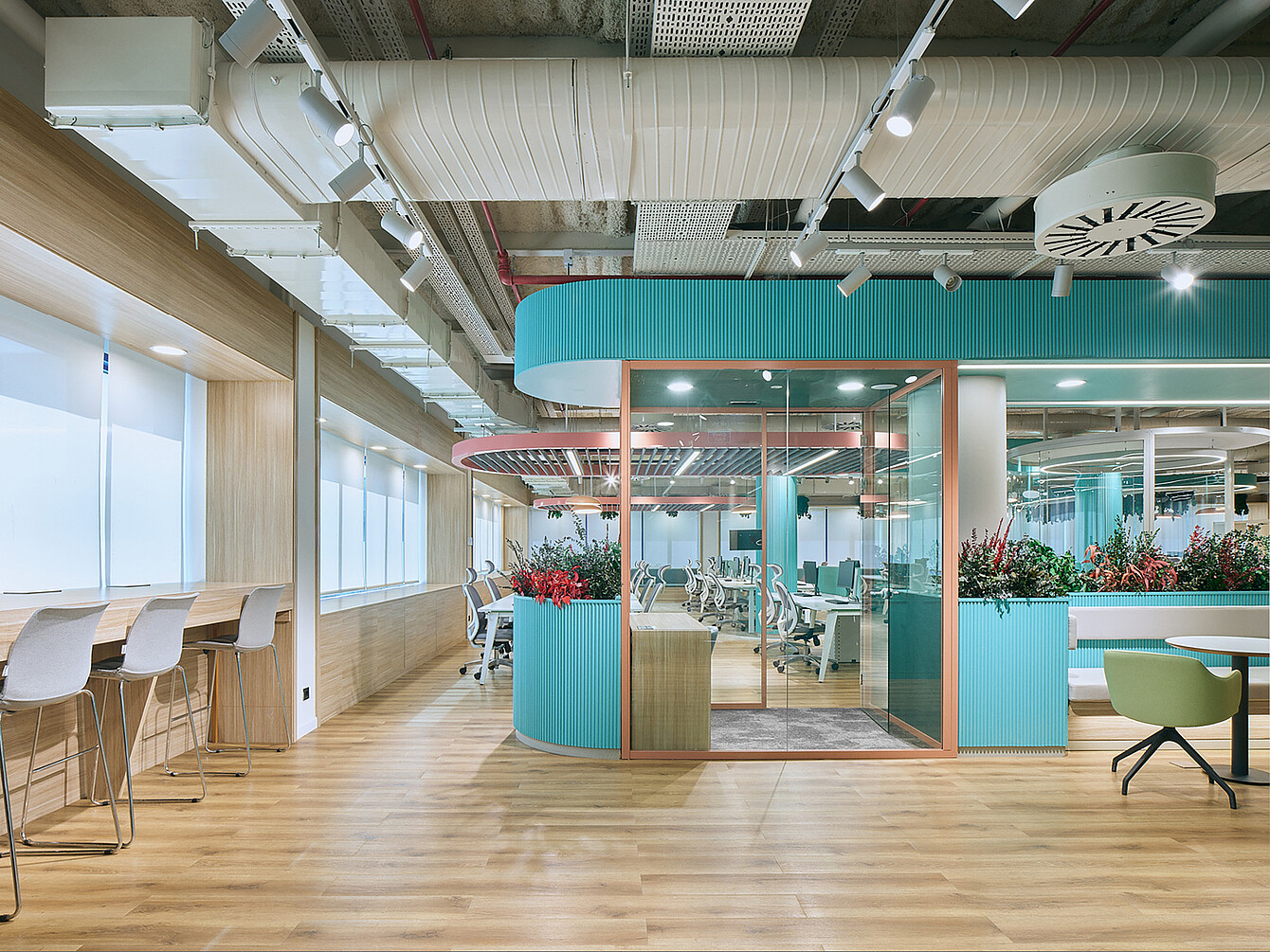
Peripheral individual workstations with exposure to natural light and natural finishes
Smooth transitions instead of rigid separation
Although collaborative working forms play a central role in the new headquarters, focus areas are always easily accessible. The floor plan deliberately avoids hard boundaries and instead relies on transition zones that allow an intuitive switch between communication and concentration areas.
This creates flexible spaces, such as niches adjacent to lounge areas, that support both quick consultations and moments of focused, individual work.
"At I-AM, we believe concentration isn’t just about silence, it’s about agency," explain the architects.
This attitude is reflected throughout the design: employees are free to choose where and how they want to work, depending on the task, their energy level and personal preference.
Differentiated focus rooms for different requirements
Ford Otosan's headquarters offers a generous variety of workspaces covering 1,400 m² that are specifically tailored to different cognitive needs:
- Deep-focus rooms: Enclosed, minimalist rooms for longer periods of focused individual work
- Quiet zones: Shared, quiet desk areas with reduced stimulus density
- Semi-enclosed nooks: Workstations with acoustic shielding and visual protection
- Peripheral soft zones: Quiet areas on the periphery near communal areas – ideal for short, concentrated tasks
Each of these spaces follows the same guiding principle: to help people feel present, secure and focused.
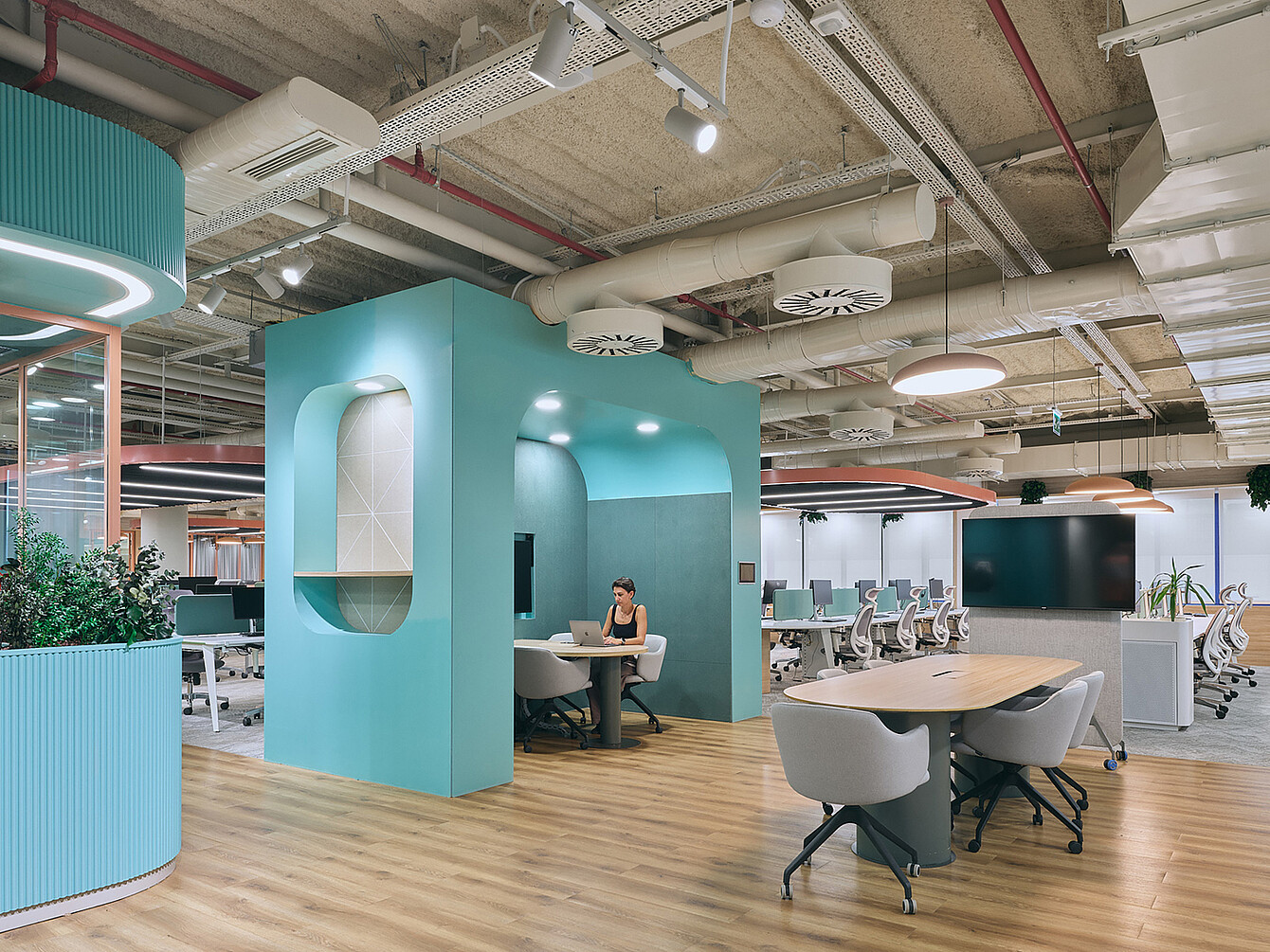
A small nook in open plan that creates an intimate and calm atmosphere suitable for focused work
Conclusion: Focus requires more than just quiet
The Ford Otosan project shows that promoting concentration goes far beyond traditional measures such as noise reduction. The key is an environment that communicates through the senses, provides orientation and directs mental energy in a targeted manner.
An approach based on human sensory perception – creating workspaces that support all dimensions of modern work: collaboration, flexibility and deep concentration.
You can find more examples of focus offices in the latest issue of Sedus INSIGHTS N° 20.

social media channels: