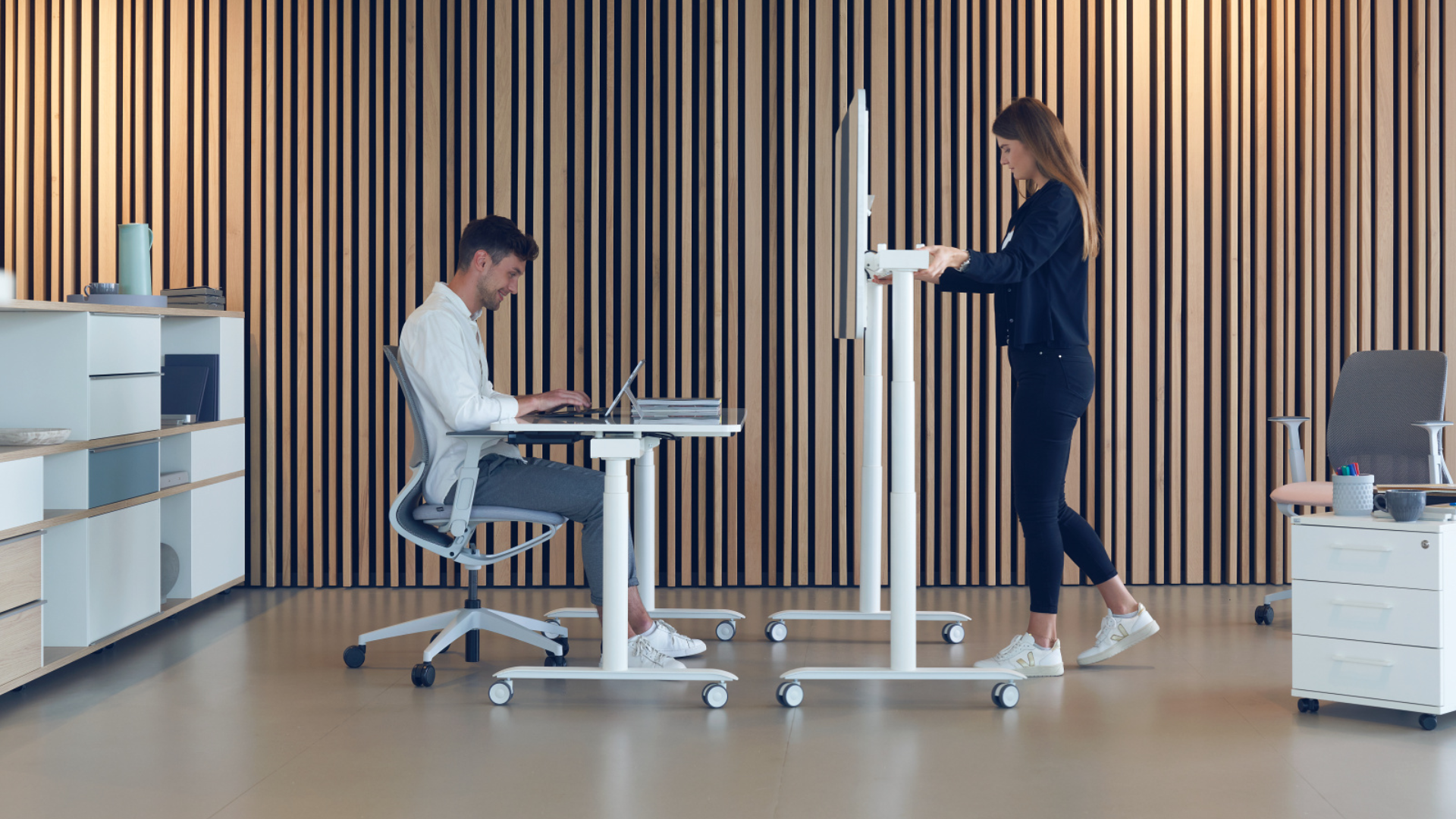

Whether in the office or working from home, many people spend a large part of their day sitting. They often try to maintain an upright posture for extended periods, believing this to be the healthiest approach. However, even an ergonomically sound sitting position can become tiring over time if the body hardly moves at all.
For healthy working, it is therefore not just a question of how we sit, but also about how often we change our posture and keep moving throughout the day.
Why sitting in the same position for long periods is tiring
Our bodies are designed for movement. When we stay in the same position for too long, certain muscles remain under constant strain, whilt others become less active. This can lead to tension in the neck, back pain and a general feeling of stiffness.
That’s why you don’t have to sit perfectly upright all the time. It’s much more important to give your body regular opportunities to move and change position. Sitting a little more upright, leaning back, shifting your weight or standing up briefly – even small adjustments like these bring more variety to your working day.
1. Dynamic sitting: movement rather than a rigid posture
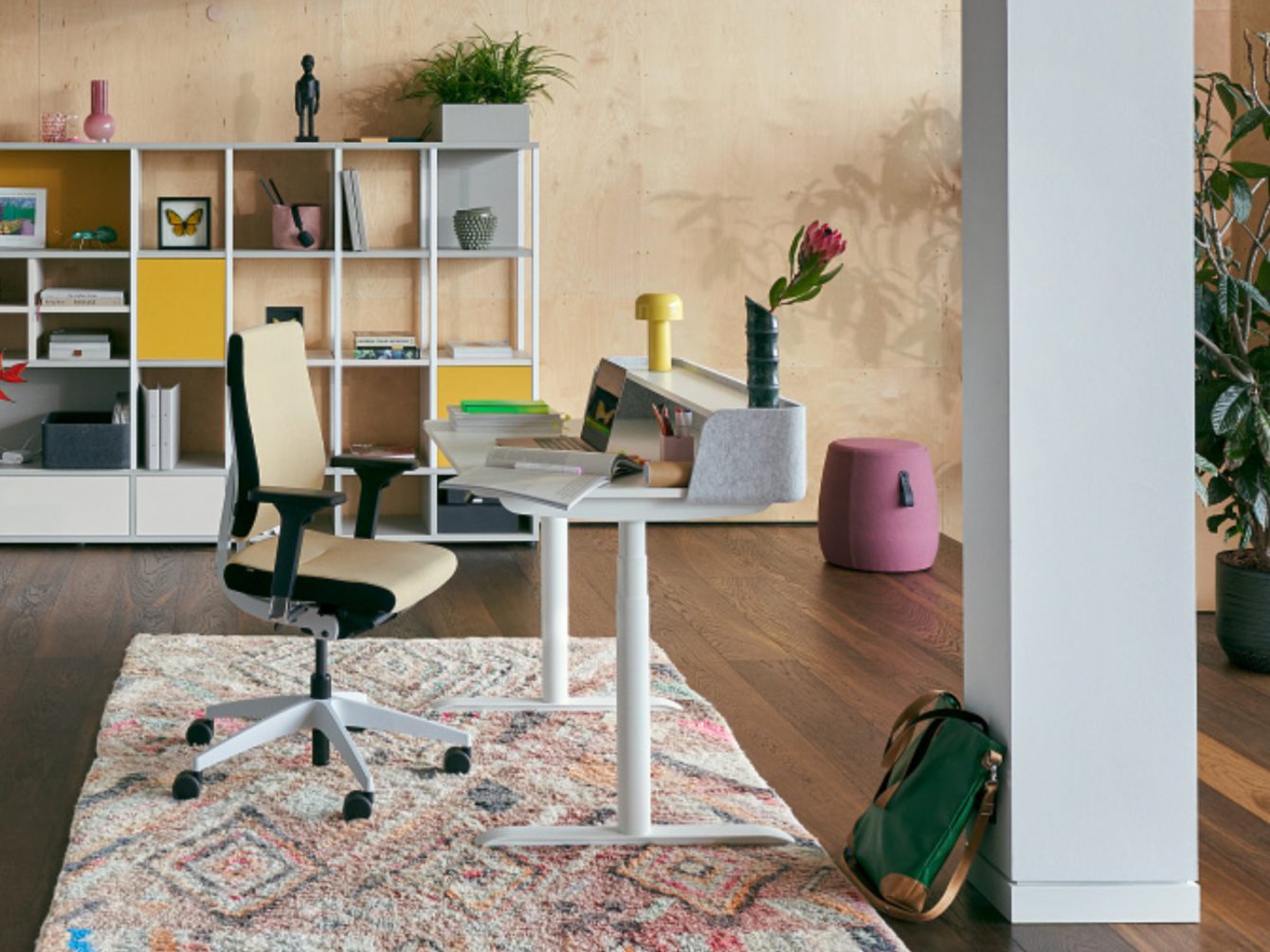
Dynamic sitting means changing your sitting position regularly, rather than staying in the same position for hours on end. You should feel free to move around and make use of the backrest of your office chair.
For example, you could do the following from time to time:
• change your sitting position and shift your weight,
• lean back deliberately to relieve pressure on your back,
• relax your shoulders and stretch your upper body,
• reposition your feet and move your legs.
An ergonomic office chair can help to encourage such changes in posture. black dot from Sedus, for example, promotes active sitting thanks to its adjustable design and adapts to different users. This makes it easier to keep moving while working.
It is important to note that there is no single sitting position that is right for the whole day. Variety is key.
2. You’re allowed to sit back and relax
Many people associate good sitting posture with keeping their back as straight as possible. However, leaning back is also an important part of varied sitting. The backrest can support the body and allow you to relax into a more comfiortable position from time to time.
When working at the computer for long periods, it can be pleasant to change your sitting position and lean back occasionally. Your workstation should be set up so that you can maintain a relaxed posture while keeping the screen, keyboard and mouse within easy reach.
3. Alternate between sitting and standing regularly
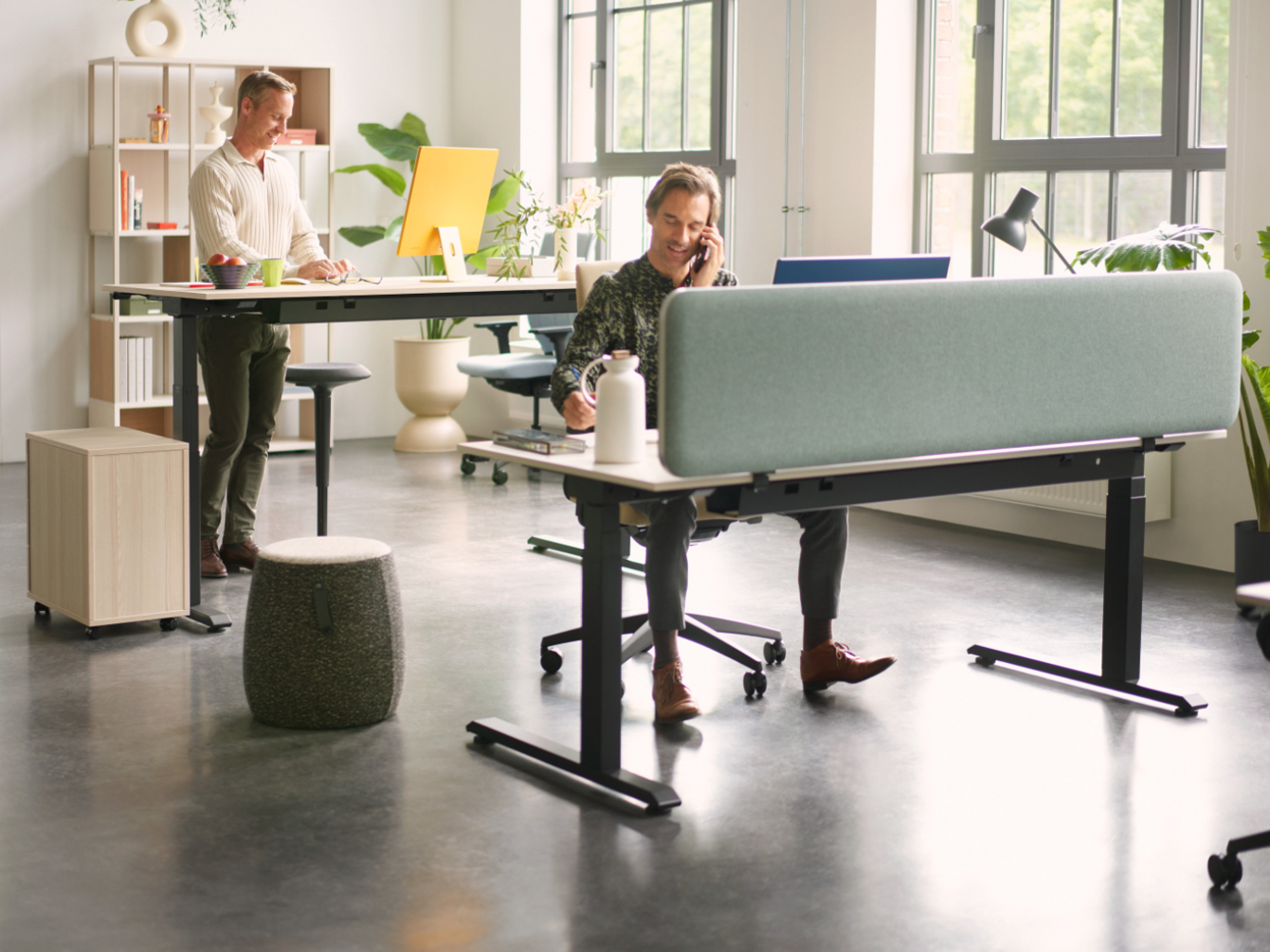
It is not just different sitting positions that encourage more movement. Alternating between sitting and standing also adds variety to the working day.
If you use a height-adjustable desk, you can, for example, complete one task while seated and switch to standing for the next. Short walks, such as a trip to the printer or a brief movement break – help to break up long periods of sitting.
A suitable workstation can be flexibly configured for this purpose. temptation c, for example, is a height-adjustable desk that allows you to work comfortably while sitting or standing.
It is important to bear in mind that standing for long periods is not the goal. The key is to change positions regularly, alternate between sitting and standing, and incorporate movement throughout the day.
4. Adapting your workstation to suit your body
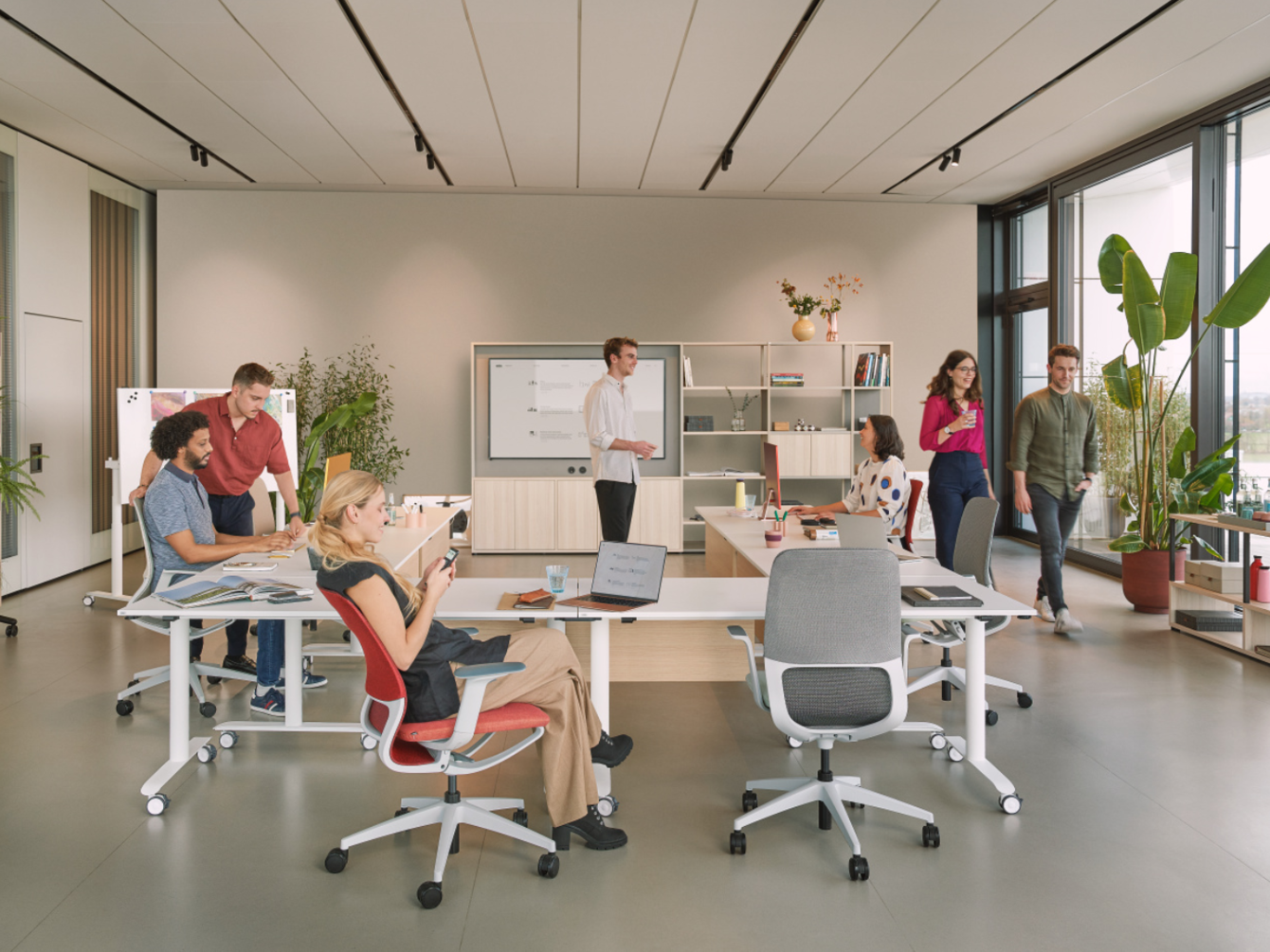
To ensure that changing your posture works well in everyday life, your furnishings should be right too. An ergonomic workspace supports a natural posture and allows you to switch comfortably between different positions.
A few simple basic rules can help with this:
- Adjust the seat height: Your feet should rest firmly on the floor and your legs should have sufficient room to move.
- Use the backrest: It should provide comfortable support for your back while allowing you to move.
- Position the screen correctly: The screen should be positioned so that you can work without having to lean forwards constantly or tilt your head toofar.
- Make sure the keyboard and mouse are within easy reach: Your arms and shoulders should remain as relaxed as possible.
- Make time for movement: Getting up regularly and taking short breaks to move about should be a natural part of your daily work routine.
However, an ergonomic chair on its own is not enough. It is only the combination of suitable furnishings, physical activity and regular changes in posture that makes the workplace more varied.
5. Small changes with a big impact
Getting more movement at work doesn’t have to be complicated. Even small changes in your daily routine can help prevent long periods of sitting in the same position.
For example, you could stand up and take a few steps while on the phone. After working at a screen for a long time, you can roll your shoulders, stretch or walk around the room. Consciously alternating between sitting upright and leaning back is another simple way to add variety to your daily routine.
The key is to move before tension sets in. By changing your position regularly and incorporating small movement breaks throughout the day, you keep giving your body fresh stimulation.
Conclusion: The best posture is the next one
There is no such thing as the perfect sitting posture that works for everyone throughout the entire working day. Even an ergonomically sound position can become uncomfortable if you maintain it for too long without moving.
That is why the most important rule is: don’t try to sit perfectly for as long as possible, but change your posture regularly. Sit upright for a while, lean back when you need to relax and stand up or move around at regular intervals. This varierty helps prevent prolonged periods in one position.
With ergonomic office chairs, height-adjustable desks and short breaks to move around, you can make your working day more active. After all, it’s not about finding that one ‘perfect’ posture, but about being able to adopt a different one every now and then.

social media channels: