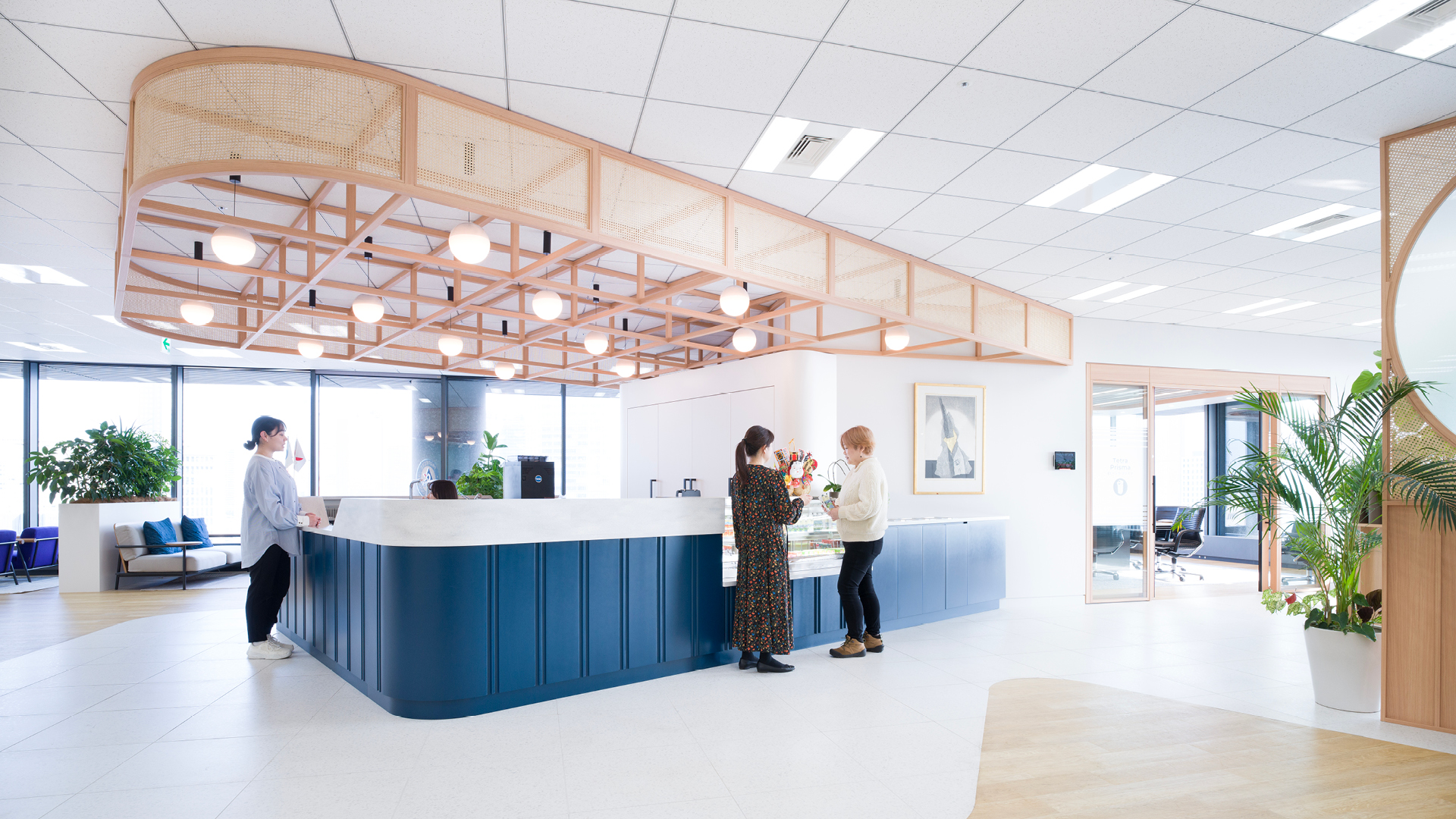

How Tetra Pak Shapes New Work Environments Through Cognitive Zoning
Hybrid work presents offices with a new challenge: they must remain places of connection while also providing environments that support concentrated work. The Tetra Pak case study offers a compelling example of how this tension can be resolved through a deliberate spatial strategy.
As part of the global “Future Work Experience” initiative, Tetra Pak is evolving its office locations worldwide with the aim of strengthening autonomy, well-being and inclusion. A particular focus lies on how work environments can support both collaboration and different modes of concentration.
Cognitive Zoning Instead of a One-Size-Fits-All Approach
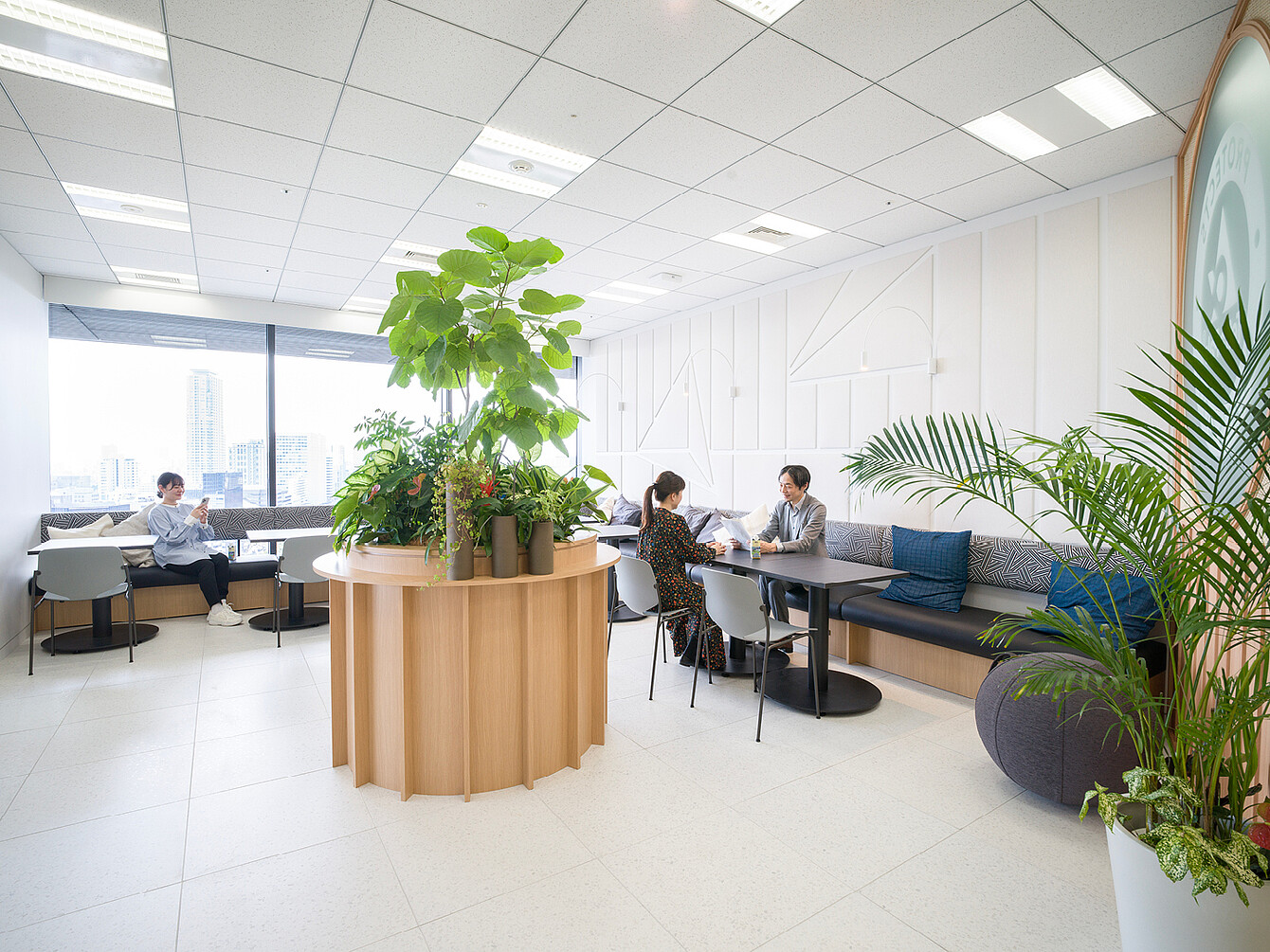
At the heart of the concept is so-called cognitive zoning. Rather than structuring offices according to traditional functional logics, spaces are organised based on the required level of sensory stimulation. Different activities – from lively exchange to deep individual work – call for different spatial conditions, often within the same working day.
This zoning creates a finely graduated spectrum of work environments:
from open, communicative areas with higher stimulation to quiet, shielded zones with reduced sensory load. Employees can choose the environment that best suits their task, personal preference and mental state.
Global Strategy, Locally Interpreted
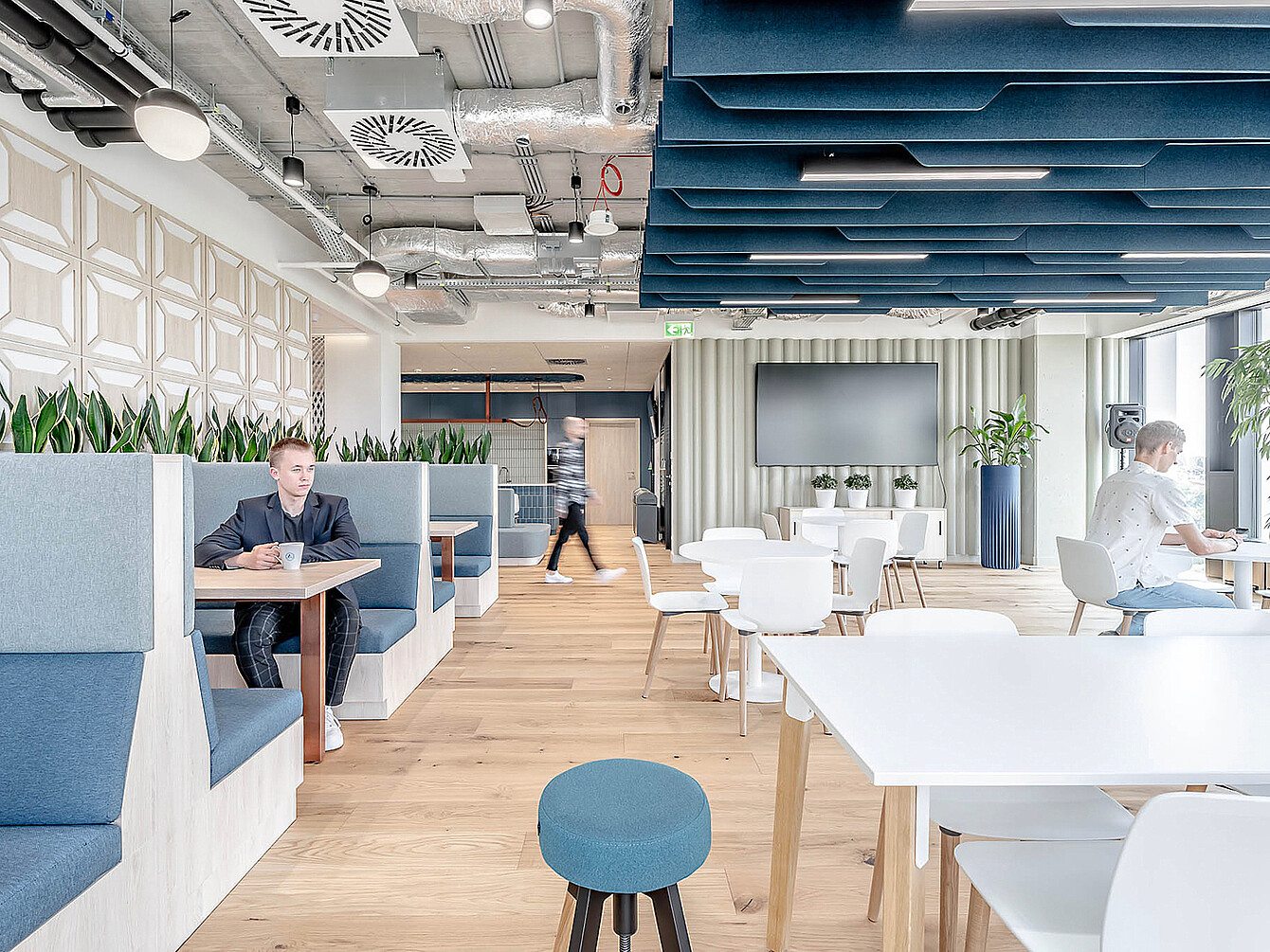
This approach becomes particularly evident at the locations in Tokyo (Japan) and Warsaw (Poland), both realised by tp bennett in line with the global strategy – yet expressed through different spatial configurations.
In Tokyo, the separation between collaborative and focused areas is clear and structured. Quiet workspaces are distributed throughout the office, some positioned along the façades with outward-facing desks. Diffuse, adjustable lighting and targeted acoustic measures ensure comfort for both hypo- and hypersensitive users.
In Warsaw, by contrast, transitions between zones are more fluid. Areas with higher stimulation – such as meeting points and social spaces – are grouped together, while quieter work areas are intentionally located further away. An open quiet zone is integrated into the overall floor plan and protected by clear usage rules. For greater needs for retreat, enclosed focus rooms are also available.
Freedom of Choice as Part of the Spatial Concept
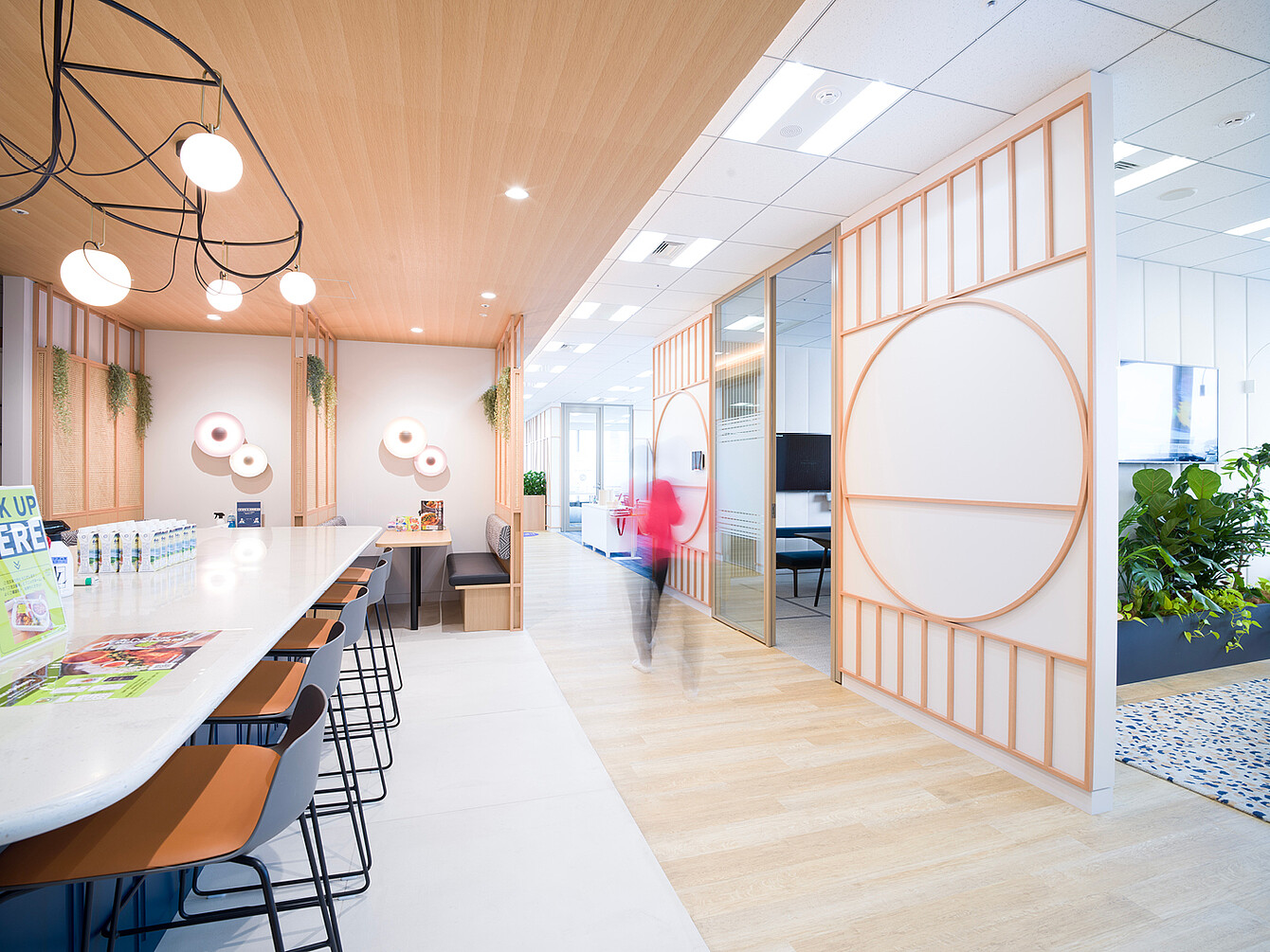
A distinctive feature of the projects is the design of the access routes. Multiple entrances lead through zones with different levels of stimulation. This allows employees to choose their path upon entering the office, depending on their mental state or planned activities.
This spatial freedom of choice strengthens the sense of control and autonomy. The workplace is no longer understood as a fixed assigned location, but as a dynamic system that adapts to changing needs.
Neurodiversity and Well-Being at the Centre
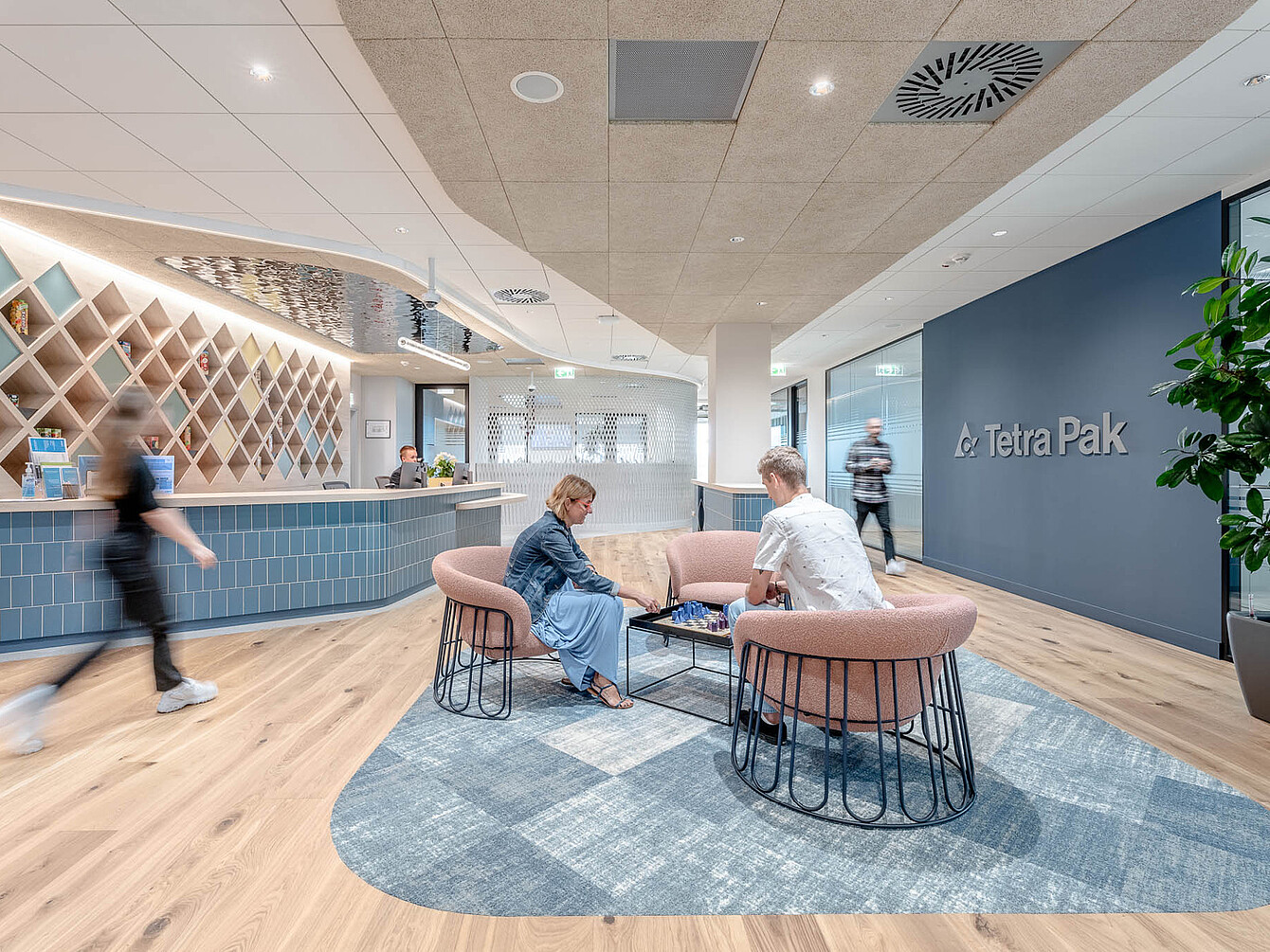
The Tetra Pak case study demonstrates that focus-supporting work environments are not created solely by eliminating distractions. What matters more is sensory balance – one that takes different perceptions into account.
Materials, lighting, acoustics and spatial hierarchies are designed to provide orientation and to stabilise the so-called peripersonal space – an important prerequisite for attention, a sense of safety and cognitive performance. This approach deliberately supports neurodiverse employees and a wide range of working styles.
A Model for the Workplace of Tomorrow
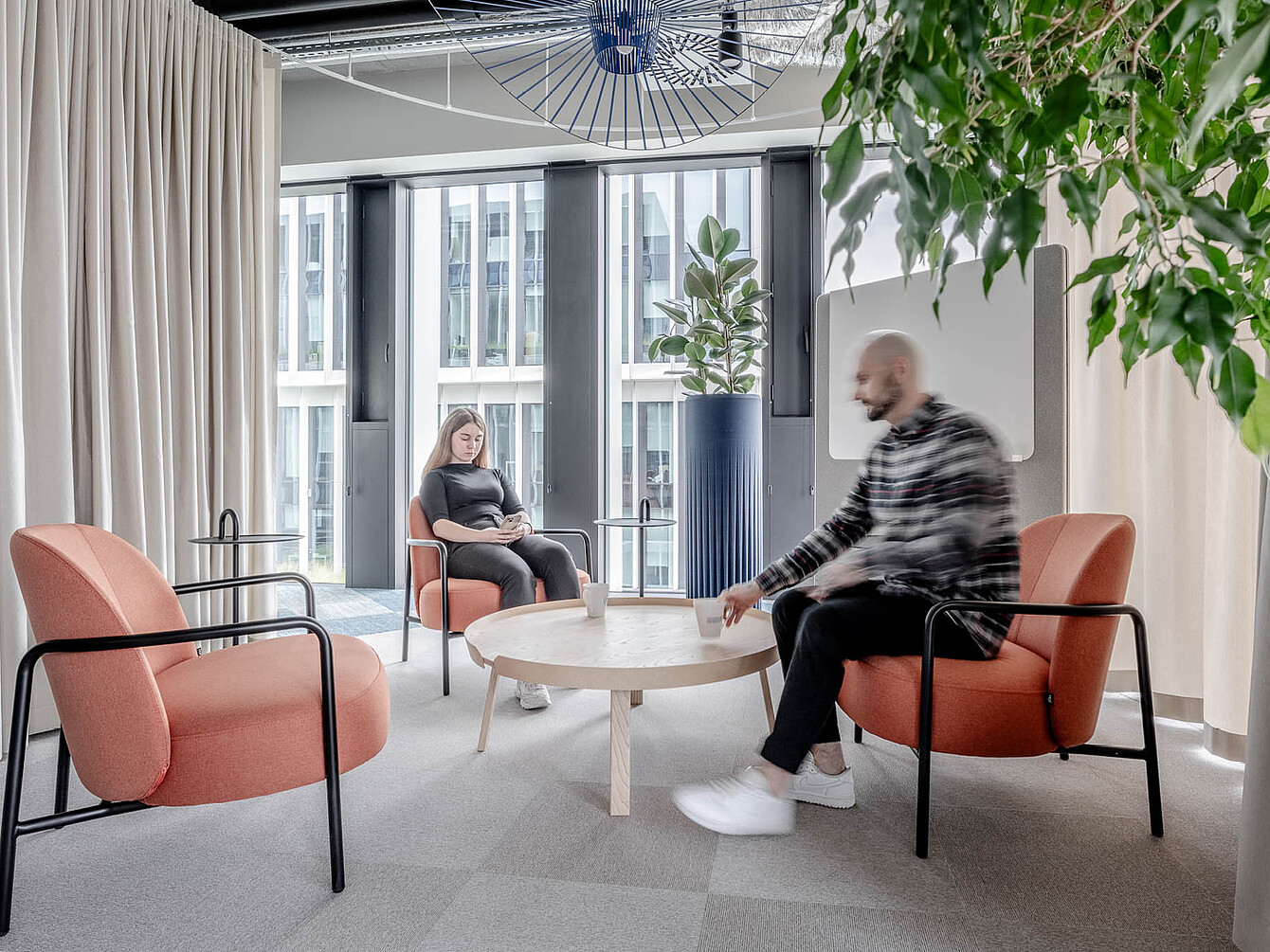
The Tetra Pak locations in Tokyo and Warsaw show how a global workplace strategy can be successfully combined with local cultural contexts. Through cognitive zoning, clear transitions and a diversity of work environments, the result is an office that enables both collaboration and concentration – without compromise.
The case study makes one thing clear: future-ready offices are not uniform spaces. They are diverse, adaptable landscapes that support people in performing at their best – depending on task, energy level and personal rhythm.
More case studies on focus-oriented offices can be found in Sedus INSIGHTS Nº 20.

social media channels: