
One interior design expert who is making a lasting change through her work is Kay Sargent. With a career spanning almost 40 years, the Senior Principal at HOK’s Interiors group, advocates for vibrant, inclusive workspaces, emphasising the importance of mentorship and innovation. We talked with Kay about creating neuroinclusive workspaces and designing work settings that prioritise flexibility, belonging, and inclusivity.
Everyday office life can be demanding or stressful for anyone. For neurodivergent people, however, environments often created by and for neurotypical people can present constant challenges. Why is that?
It is not just offices designed by neurotypical people; it is any space designed by someone who is only thinking of their own circumstances, cognitive and communication styles, experiences, social expectations and environmental needs. It is the double empathy problem, a theory by Damian Milton that explains the difficulties people have understanding someone else’s condition. It is a mutual breakdown in understanding, rather than a one-sized deficit.
Professional inclusion means ensuring that people with disabilities can participate equally in working life. This applies not only to physical impairments but also to neurological ones.
Why do you think neurological differences are still given so little consideration in workplace design?
70% of disabilities are invisible, so it is easier to overlook neurological differences. And only 4% of neurodivergent individuals disclose their neurodistinction at work. But we are striving for equity, not necessarily equality. Equality provides individuals with the same resources and opportunities afforded to others. Equity, by contrast, recognises that each person has different circumstances and needs. Instead of giving everyone the same thing, it provides the appropriate resources and opportunities needed to reach equal outcomes.
Neuroinclusive design aims to remove barriers for neurodivergent individuals. What are the key factors that deserve particular attention?
When we asked neurodivergent individuals what design strategies they find helpful, the following 15 elements repeatedly emerged from a list of over 30 options:
- Having the option to select where you will work
- Spaces that allow you to move and fidget
- Having a dedicated assigned space
- Access to daylight
- Work points in low-traffic areas
- Dedicated quiet rooms
- Spaces that have areas to retreat
- Spaces with adjustable lighting levels
- Spaces that incorporate natural elements
- Adjustable, ergonomic furniture
- Reduced visual clutter
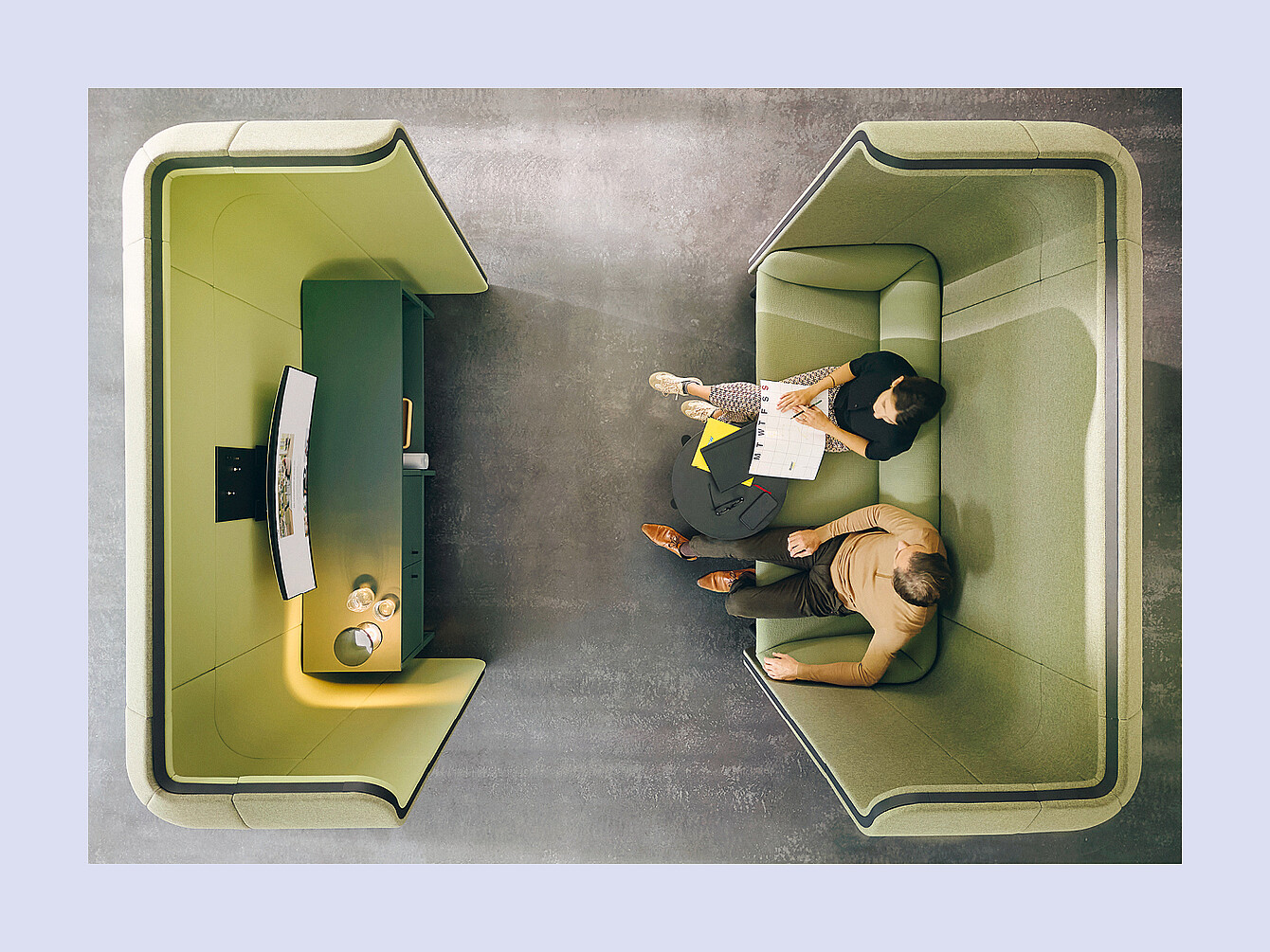
- Screens to block and reduce noise and visual distractions
- Spaces that enable visual connections and clear lines of sight
- Display walls for information sharing
- Accessible storage
We have found that using these strategies will aid in creating more neuroinclusive spaces that benefit both neurodivergent and neuro- typical individuals.
Open-plan offices or frequent movement nearby can be highly distracting for individuals with heightened attention to their surroundings. How can we reduce this burden in the workplace?
Our research found that more people are bothered by being in confined spaces than being in open environments. When designed to be agile, purpose-driven, and empower people with what they want most – choice, options and control – these spaces can be very successful.
Though open environments can have acoustic challenges, the solution is not silence. While many assume employees want quiet, a complete lack of sound can be more distracting than consistent background noise. The real problem in modern workspaces is often insufficient ambient sound, which makes individual conversations stand out and break concentration.
The goal is to create environments where neurodivergent people can use their strengths without facing discrimination. How can zoning support this?
Spatial zoning creates distinct areas within an environment that address the modalities of work and reflect varying activity and energy levels. Spatial zones should have clear delineation to communicate the intent of each space.
Effective neighbourhood design can aid in the creation of various zones that support different work modes and allow employees to manage distractions.
Beyond spatial planning, lighting and acoustics are also critical. How can different sensory needs be best addressed?
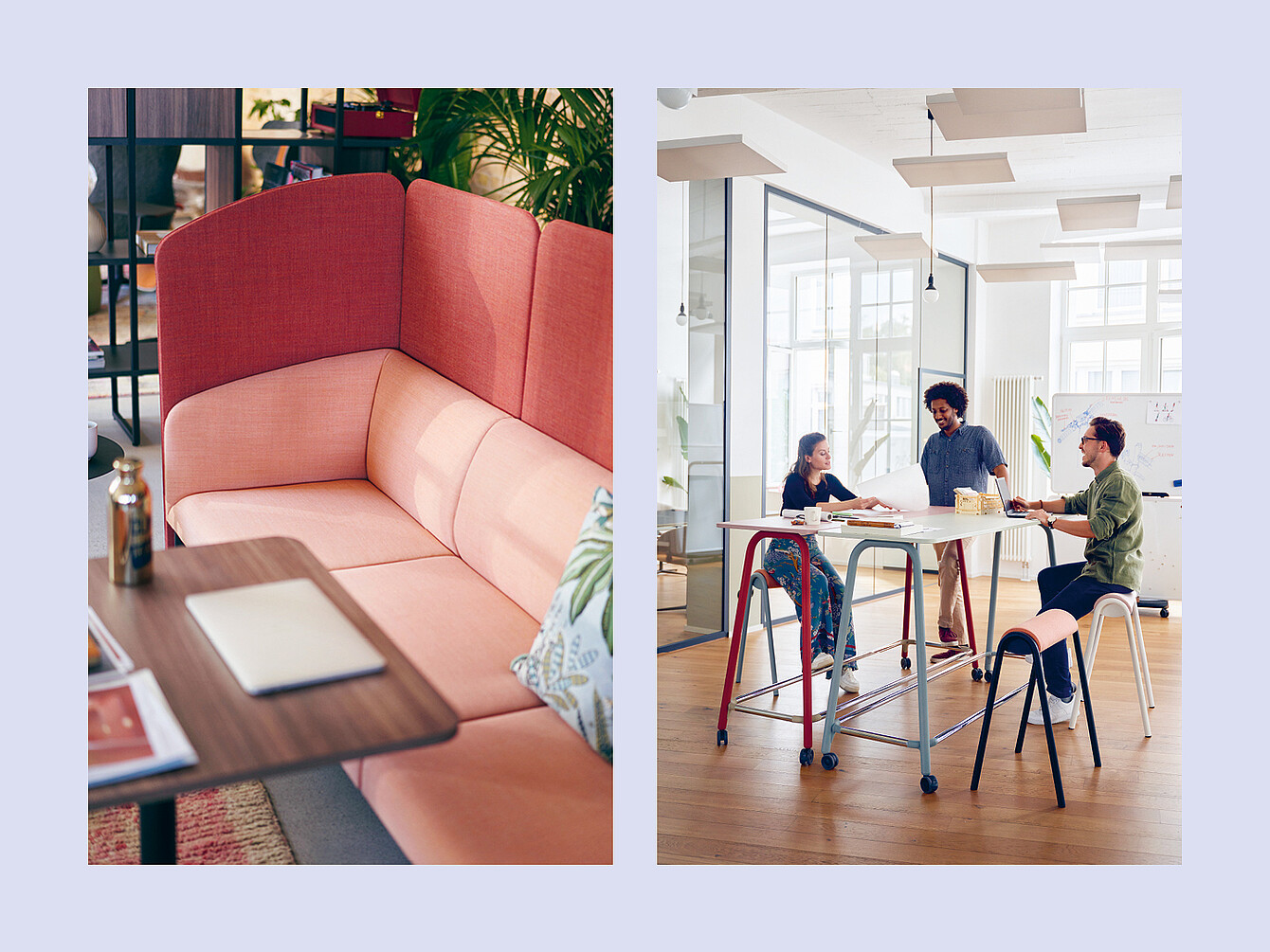
Architectural elements such as lighting, acoustics, and materiality should be designed to reflect the functionality of each activity zone. Ceiling planes and flooring should be varied to provide visual distinction between functional areas in open floor spaces – such as passageways, work areas, and communal areas.
What role do textures and colours play in supporting neurodiverse needs?
Colour is a powerful design element that can communicate intent, influence mood, and impact behaviour and performance. It can also assist in navigating spaces. Bold colours or complex colour palettes that neurotypical individuals may overlook can adversely impact neurodivergents with heightened visual sensitivity. Colour saturation and intensity can also have negative effects. High saturation of colour is more stimulating, while lower saturations or muted colours tend to have a calming effect. Colours that are abundant in nature, like browns, greens, and blues, are generally better perceived.
Texture can be used to define, energise, enrich, and punctuate elements. It can help tone down or increase the intensity of stimuli. In addition to adding depth to a two-dimensional surface, texture can add a tactile experience. Upholstered furniture, padded surfaces, plush flooring, and the contrast between smooth and textured surfaces all enhance a space.
When designing a new space, you rely on data. What specific data points do you consider?
To truly understand an organisation, you need to assess its unique organisational DNA. After years of engagements, assessments, and interactions with a variety of companies, we have identified six key strands that make up an organisation’s DNA:
- Industry
- Regional influences
- Demographics
- Corporate culture
- Organisational structure
- Individual work styles and patterns
Understanding where an organisation stands in each of those categories helps us define the best solutions. If any of these factors vary, however, the space solution will need to reflect the differences.
You describe this as the “Science of Design.” Why is leveraging data so essential when addressing neuroinclusion?
To create successful spaces, we need to have a deeper understanding of how sensory elements are impacting us. We have been focused on gathering data on how the built environment is impacting individuals based on their age, gender and neurotype. And focusing on how a variety of elements – lighting, sound, thermal comfort, densification, colour, and textures all have an impact on us.
As leaders in the field of neuroinclusive workplace design, what progress have you observed in recent years?
Nine years ago, when we started our re- search, most people in our industry did not know what the term neurodiversity meant. Today, it is increasingly rare that someone does not. Many corporations are now looking to neuroinclusion in their spaces. But we need more research on how the built environment is impacting us.
What challenges remain in your day-to-day work?
Not only do we need to have a deeper understanding around sensory processing and how individuals function in spaces, but we need to address the terminology as well. Words matter, and language is always evolving. Although various groups may prefer different terms, we have aimed to use the most widely accepted, non-ableist, and neuroinclusive language. And we need to expand our research into all spaces and places that we interact with – stadiums, airports, healthcare, labs, manufacturing, retail and our cityscapes. But perhaps the biggest challenge is spreading the word, debunking the misunderstandings and help everyone understand that this is not just for a small percentage of the population – it is about sensory processing, cognitive wellbeing and creating a world where all can thrive.
The interview with Kay Sargent was first published in the Sedus LOOKBOOK N° 03. You can receive the full issue of the magazine, by email, here.

social media channels: