
Concentration Follows Energy, Not the Clock
Neuroscientific research shows that attention and cognitive performance fluctuate throughout the day. Focus is cyclical, limited and dependent on periods of recovery. Attempts to sustain concentration over long stretches without allowing the body and mind to recover often lead to fatigue, overstimulation and a decline in performance.
Hybrid work intensifies this effect. While digital tools offer flexibility, they also increase cognitive load: constant connectivity, frequent context switching and a high density of stimuli quietly drain our mental energy - often without us even realising it.
This leads to a necessary shift in perspective:
Energy management, not time management, becomes the key task of contemporary work environments.
Micro-Breaks as Part of the Work System

Sedus INSIGHTS emphasises that recovery should not be postponed until after work. What truly makes a difference are micro-breaks integrated into the working day – short interruptions that allow mental and physical energy to be replenished.
These breaks are most effective when they are not purely passive. Research shows that light movement, changes of location or sensory variation support recovery far better than remaining seated in front of a screen.
For workplace design, this means:
Breaks should not be treated as interuptions to productivity. They need to be spatially embedded and intuitively accessible.
Movement as a Cognitive Catalyst
Movement is not an optional add-on, but a central component of energy management. Even brief walks, changes in posture or moments of working while standing can help shift mental states and restore attention.
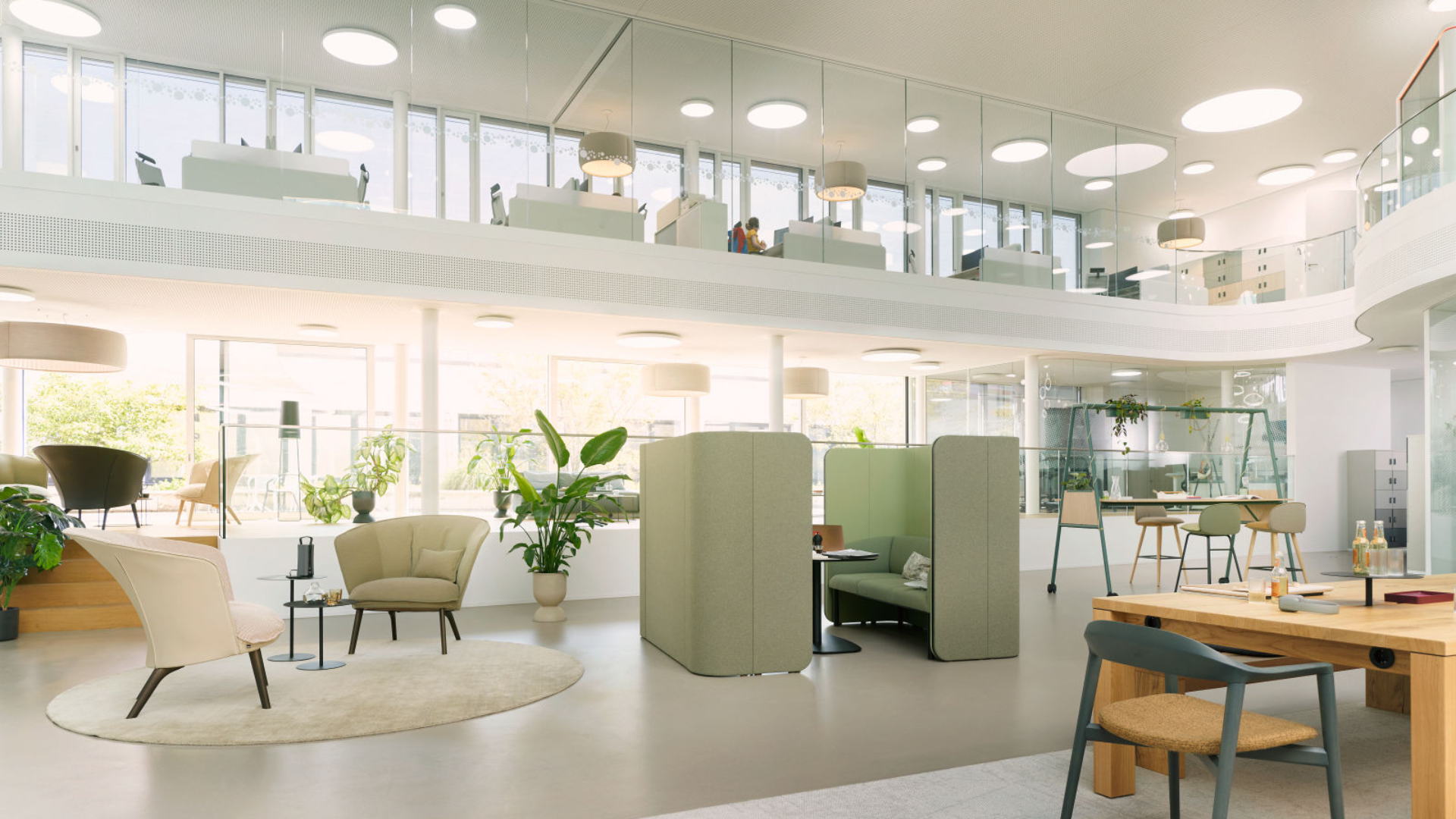
Spaces that encourage movement therefore support not only physical well-being, but also focus. Transition zones, work cafés, informal seating areas or peripheral workspaces invite people to change location – and with it, their inner state.
Movement thus becomes a cognitive catalyst in everyday working life.
Spaces That Allow Recovery

Another key insight from Sedus INSIGHTS: recovery depends on the right sensory conditions. Light, acoustics, materials and colours influence how quickly people regain energy.
Gentle stimuli – such as natural light, balanced acoustics or biophilic elements – support attentional restoration. They allow the brain to recover without conscious effort.
Spaces designed for micro-breaks do not need to be spectacular. What matters is that they are deliberately distinct from focus or collaboration areas – clearly signalling a mental shift.
Energy Management as a Design Task
If focus depends on energy levels, the logic of spatial planning changes:
- Not every space needs to enable maximum performance.
- Some spaces exist to restore energy.
- Others support transitions between effort and recovery.
Work environments become systems that consciously balance activation and regeneration, rather than collections of purely functional rooms.
Conclusion: Productivity Emerges Through Rhythm
Sedus INSIGHTS Nº 20 makes one thing clear: sustainable concentration does not result from longer working hours or denser schedules, but from a thoughtful interplay of focus, movement and recovery.
Work environments that support energy management enable not only better performance, but also greater satisfaction and mental well-being. By respecting human rhythms, they create the foundation for productive work in the hybrid age.

social media channels: