

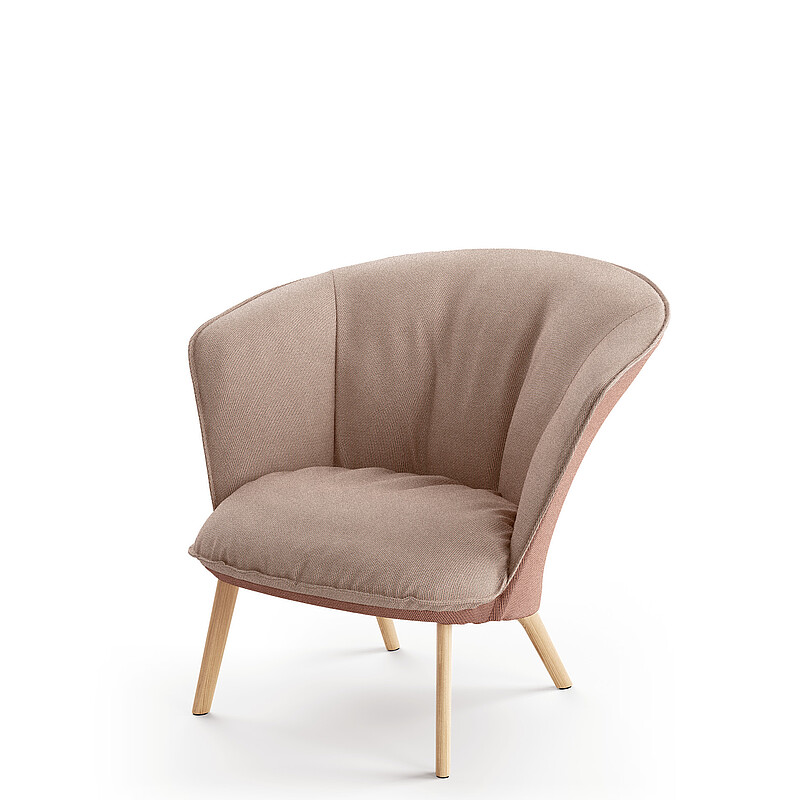
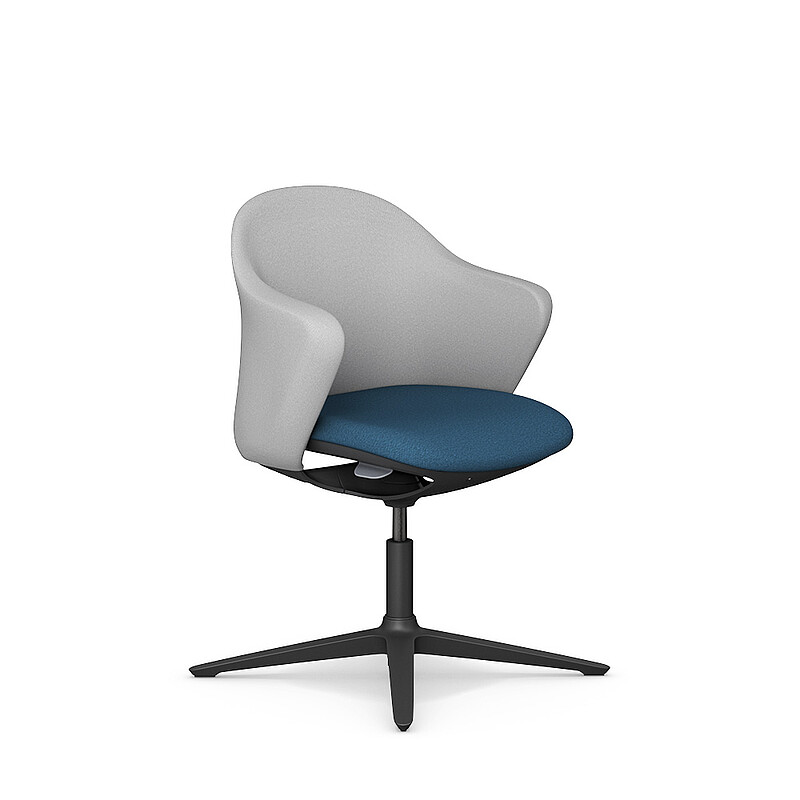
But the peripersonal space is not defined by walls alone. Materials, colours, shapes and seating comfort also influence how stable and protected we perceive our immediate surroundings to be. This is precisely where the se:cove lounge chair comes in.
When the space conveys a sense of security
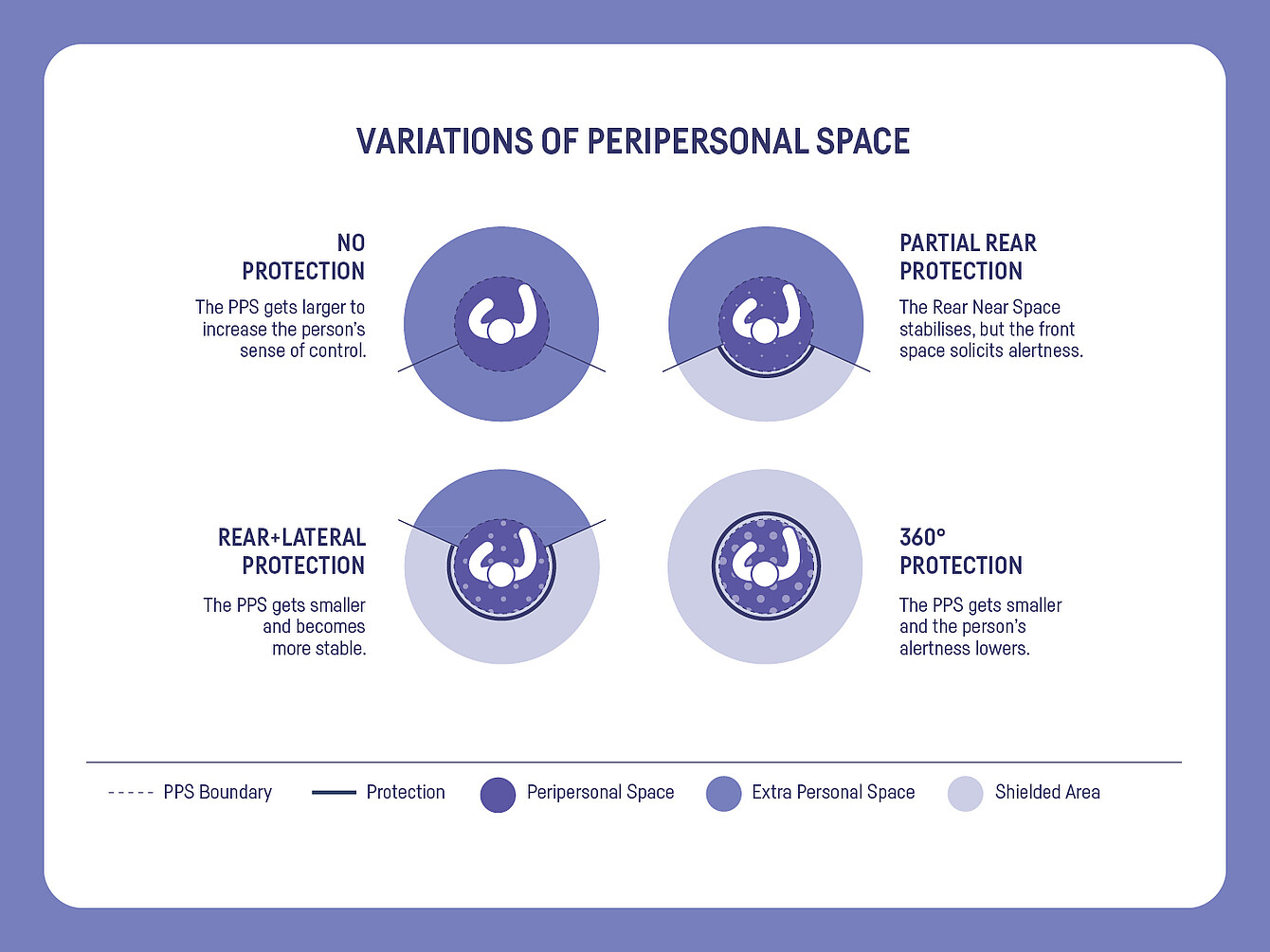
Our brain continuously processes visual, acoustic, tactile and proprioceptive stimuli to monitor the peripersonal space. If the sense of control or protection is lacking, alertness increases. Concentration becomes more taxing because part of our attention remains constantly focused on potential disturbances. Spatial barriers can reduce this state and stabilise the PPS.
However, protection does not arise solely from physical boundaries. The quality of the environment also plays a decisive role. People are particularly sensitive to signals that convey familiarity, comfort and control. Warm materials, soft surfaces and harmonious colour schemes convey precisely this message: you are safe here.
The power of materiality
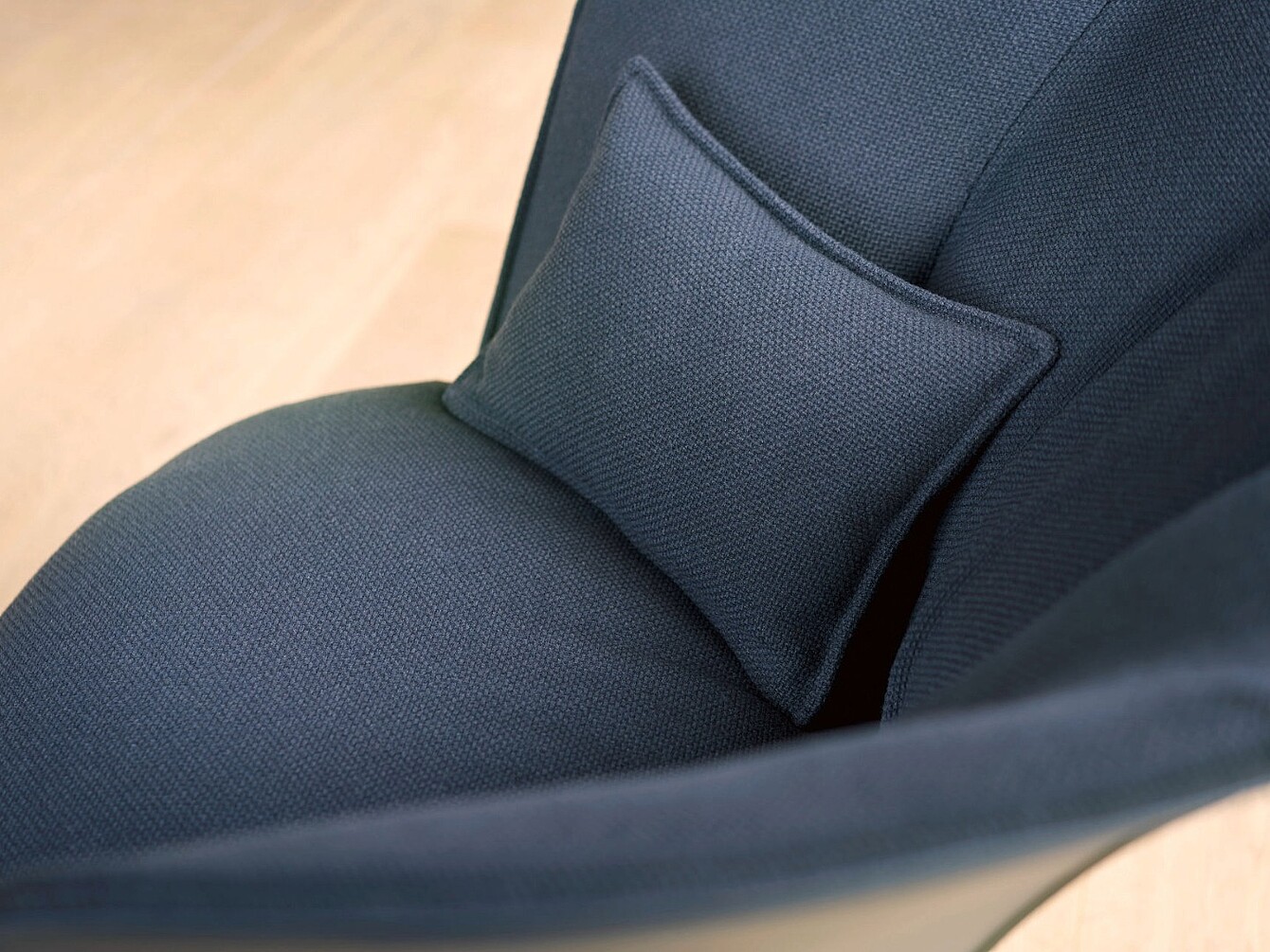
Materials speak directly to our senses. Even before we touch an armchair, we unconsciously assess it based on its surface, texture and appearance.
Textile covers, soft upholstery and carefully crafted details create a tactile quality that conveys a sense of security. The brain interprets such sensory signals as an indication of comfort and safety. The environment appears less technical and functional, and more human and familiar.
This effect is particularly relevant in open-plan workspaces. Whilst hard surfaces and visual clutter divert attention outwards, soft materials help anchor us more firmly in the here and now. The focus shifts from the surroundings to the task at hand.
Colours as a subtle guide
Colours also influence our perception of the immediate environment more than we realise. Soft natural tones, warm shades and understated colour combinations have a calming effect on the sensory system. They reduce the intensity of visual stimuli and foster an atmosphere that promotes concentration.
This is not about decoration, but about orientation. Colours help the brain to categorise spaces more quickly: is this place stimulating or calming? Open or sheltered? Public or rather private?
A harmonious colour scheme therefore helps to stabilise the personal space, as it conveys the feeling of being in a controllable environment.
Screening creates mental relief
This effect is particularly effective when materials and design combine with spatial screening.
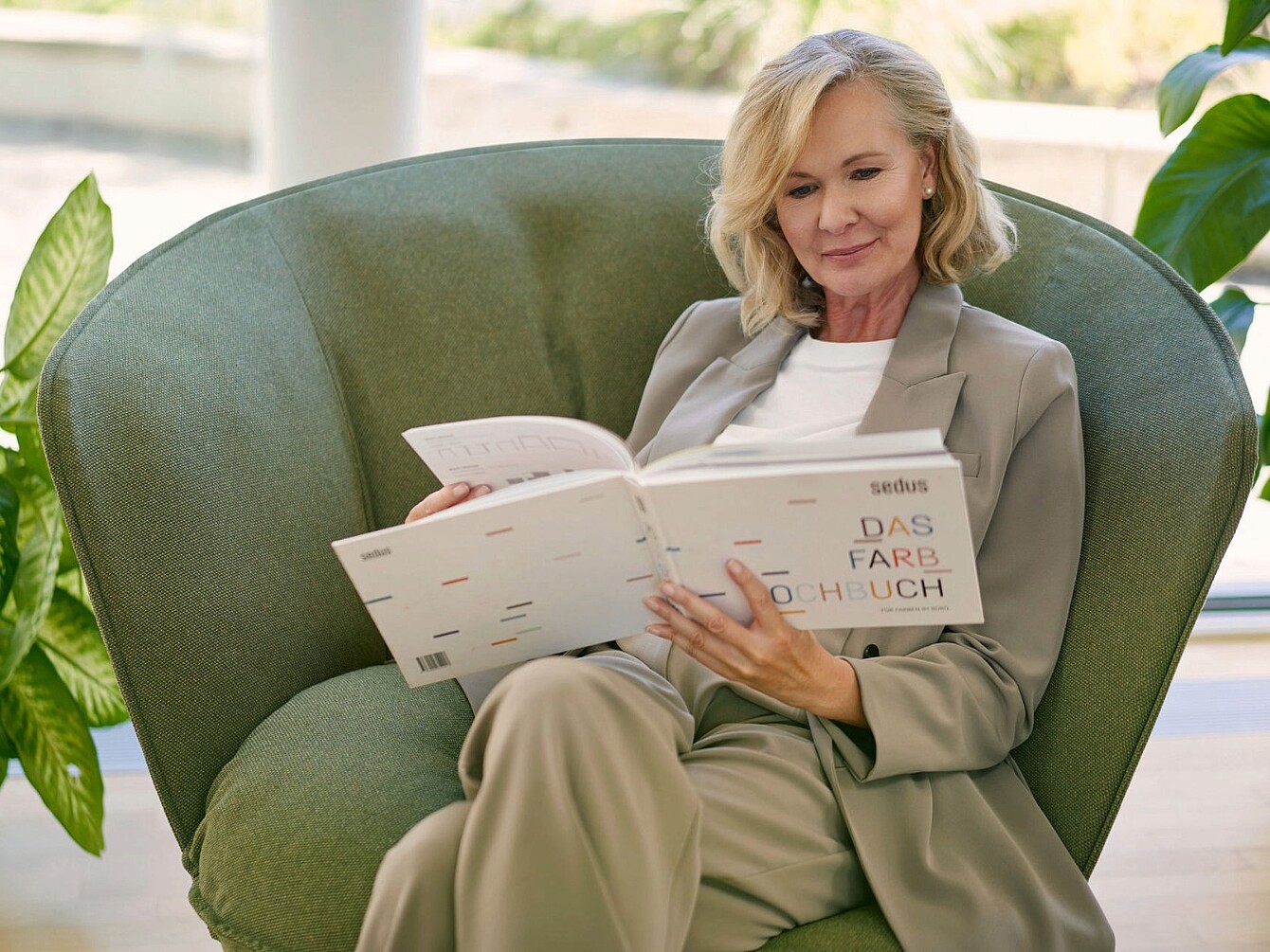
The high backrest and side wings of se:cove define a clear personal space. This creates a protective shell that reduces visual movement in the surroundings whilst simultaneously strengthening the sense of support. From a neuroscientific perspective, this reduces the area that the brain must constantly monitor. The result: less vigilance, more available cognitive resources for concentrated work.
At the same time, the connection to the surroundings is maintained. The user does not disappear into a closed space, but finds themselves in a deliberately designed transitional area between openness and retreat.
Sensory grounding in everyday working life
In a working world characterised by information overload, interruptions and constant availability, sensory grounding is becoming increasingly important.
It describes the ability to re-anchor oneself in the moment through one’s own senses. Soft materials, pleasant surfaces, ergonomic comfort and a protected environment support precisely this process. The body signals safety, allowing the brain to focus its attention.
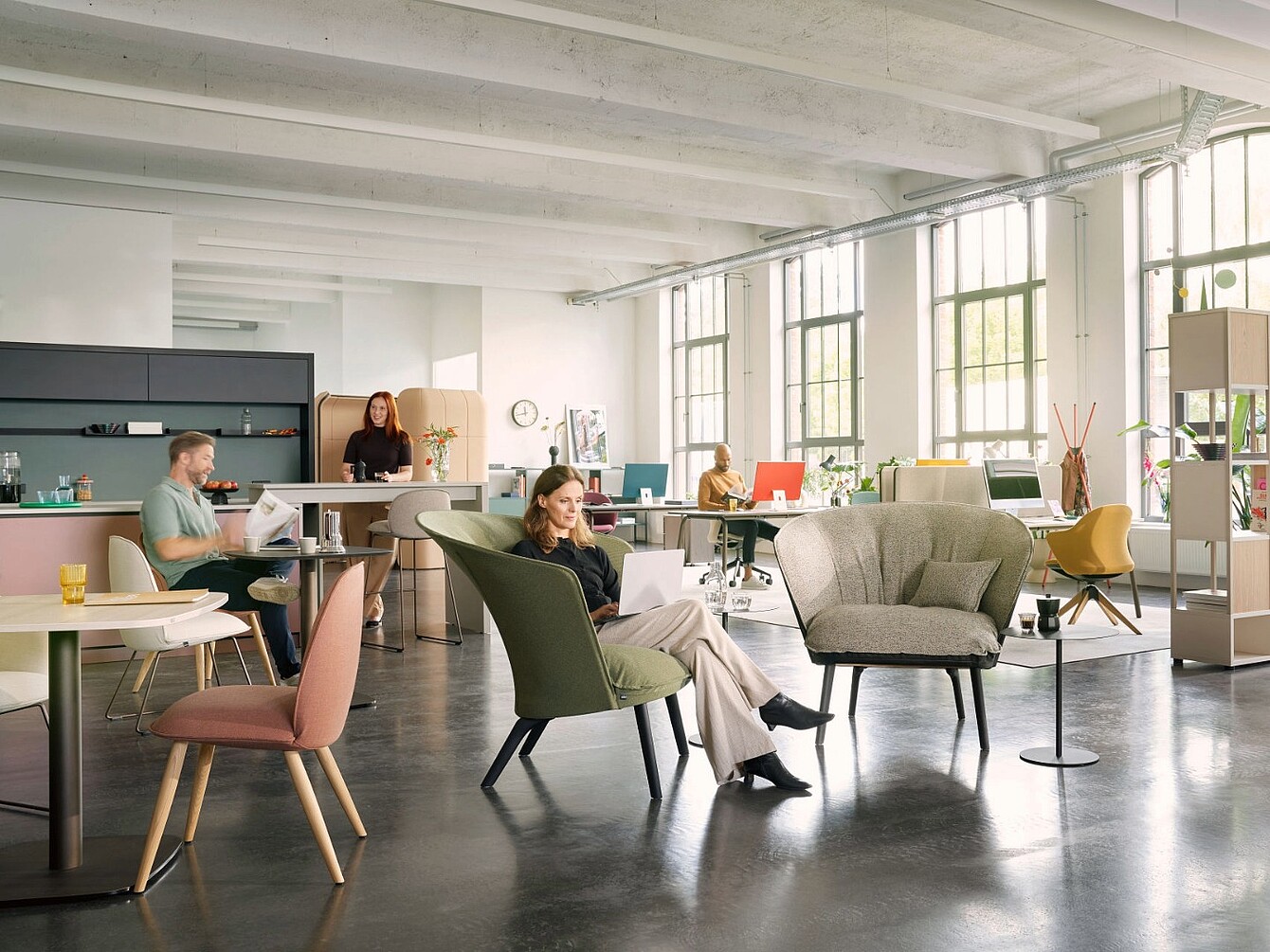
se:cove creates the right conditions for this: not as a sealed-off room, but as a sensorially balanced retreat within open-plan work environments. Here, comfort, materiality and a sense of spatial security combine to create an atmosphere that stabilises the personal space – thereby promoting concentration, well-being and mental presence.
Good design starts in the immediate environment
Workplaces are often defined by square metres, functions or technologies. Yet ultimately, something far more fundamental often determines how we feel and are able to work: the quality of our immediate surroundings.
When materials feel pleasant, colours radiate calm and spatial structures offer protection, a place is created where people can not only sit, but truly settle in. And that is exactly where focus begins. Not in the mind, but in the space directly around us.
Related posts
Spaces for Deep Focus: How Much Shielding Is Right?
How responsible materials shape the atmosphere, well-being and concentration in a room
Office space design and the changing needs of employees

social media channels: