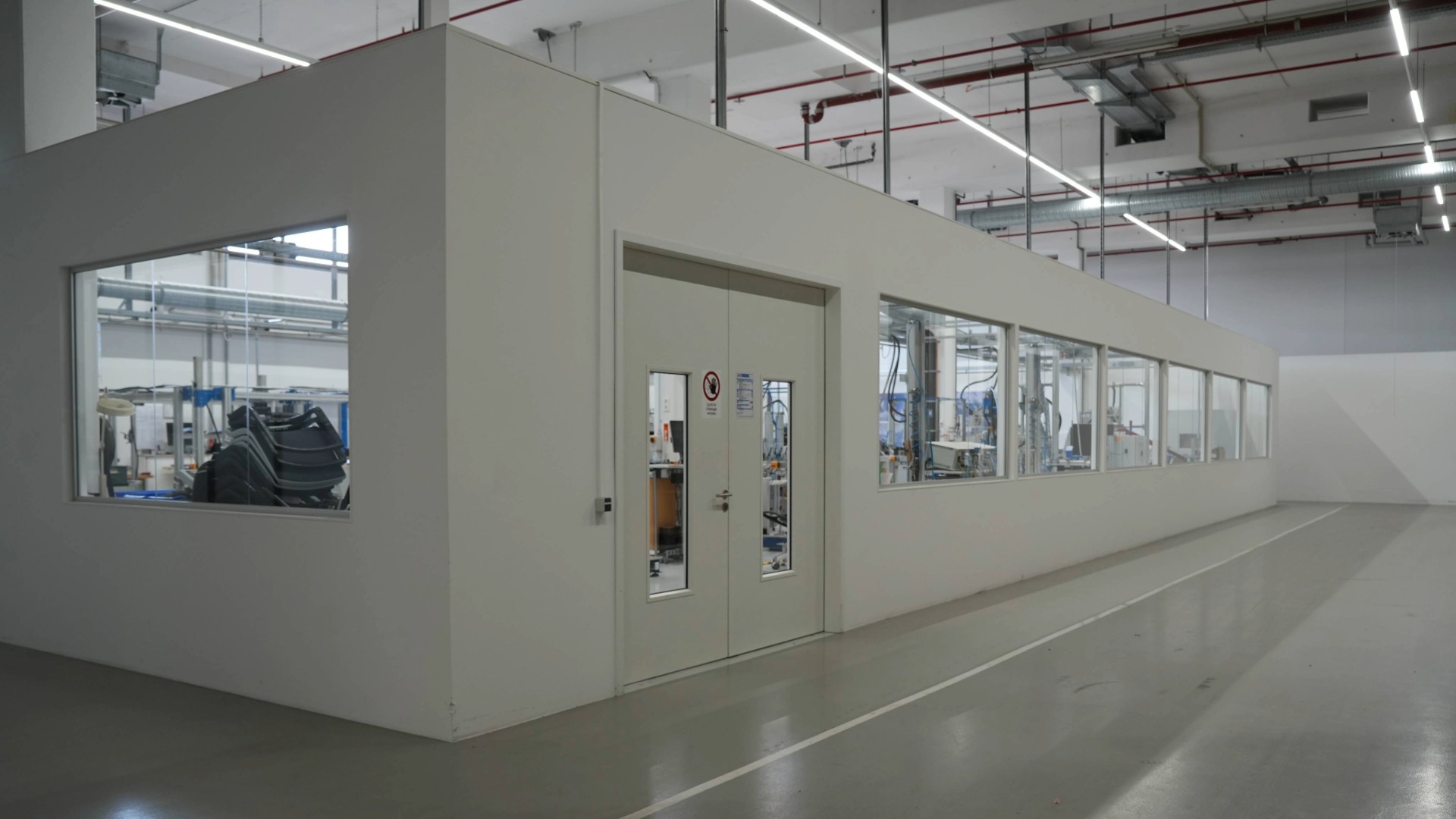

Thomas Vogelbacher, mechanical engineer and Project Manager in Prototyping, has been working at Sedus for over thirty years. He describes what still motivates him today as follows: “After more than three decades in the laboratory, everyday life is still anything but routine.”
Where quality becomes visible
The test laboratory is an integral part of product development. Here, furniture and components are tested under realistic, often even extreme conditions before they go into production. More than thirty test benches enable investigations into climatic stress, material behaviour and mechanical stress.
For Sedus, this is not just about meeting standards, but about long-term reliability. Vogelbacher sums up this commitment: “Standards define minimum requirements. Our aim is to develop products that function reliably for many years.”
The in-house test laboratory makes exactly that possible. Decades of experience are incorporated directly into the development process; materials are evaluated and designs are reviewed. This allows problems to be identified for the customer, long before they arise.
Supporting development from the very start
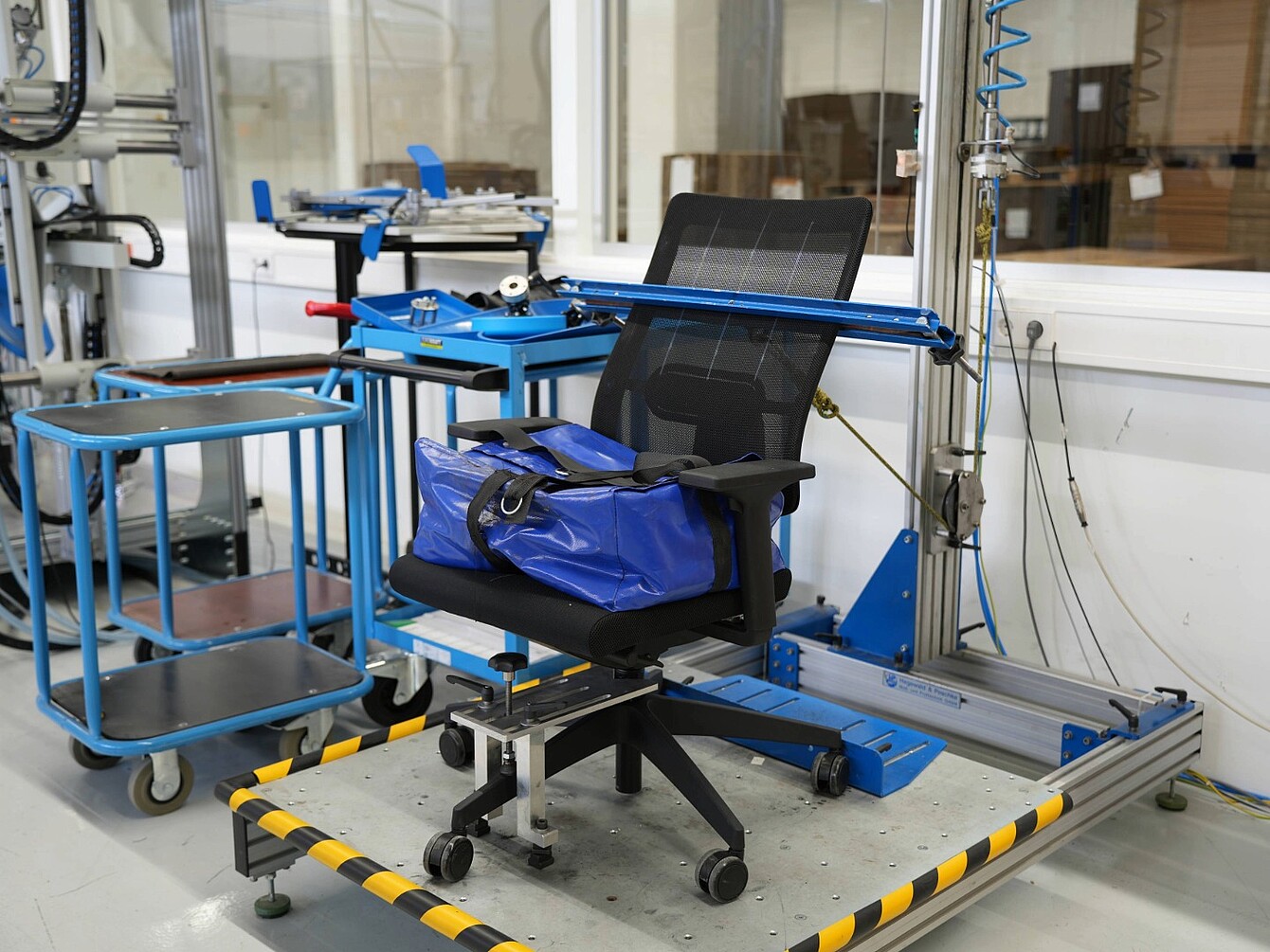
Work in the test laboratory often begins in the early stages of development. Prototypes are tested, design calculations are verified and ergonomic requirements are assessed. At the same time, the tests provide the basis for certifications and the legal documentation of product safety.
This is not just about technology, but also about responsibility. Vogelbacher describes his team’s role as follows: “Our job is to identify risks early on and ensure that only safe products reach the market.”
Tests that push the limits
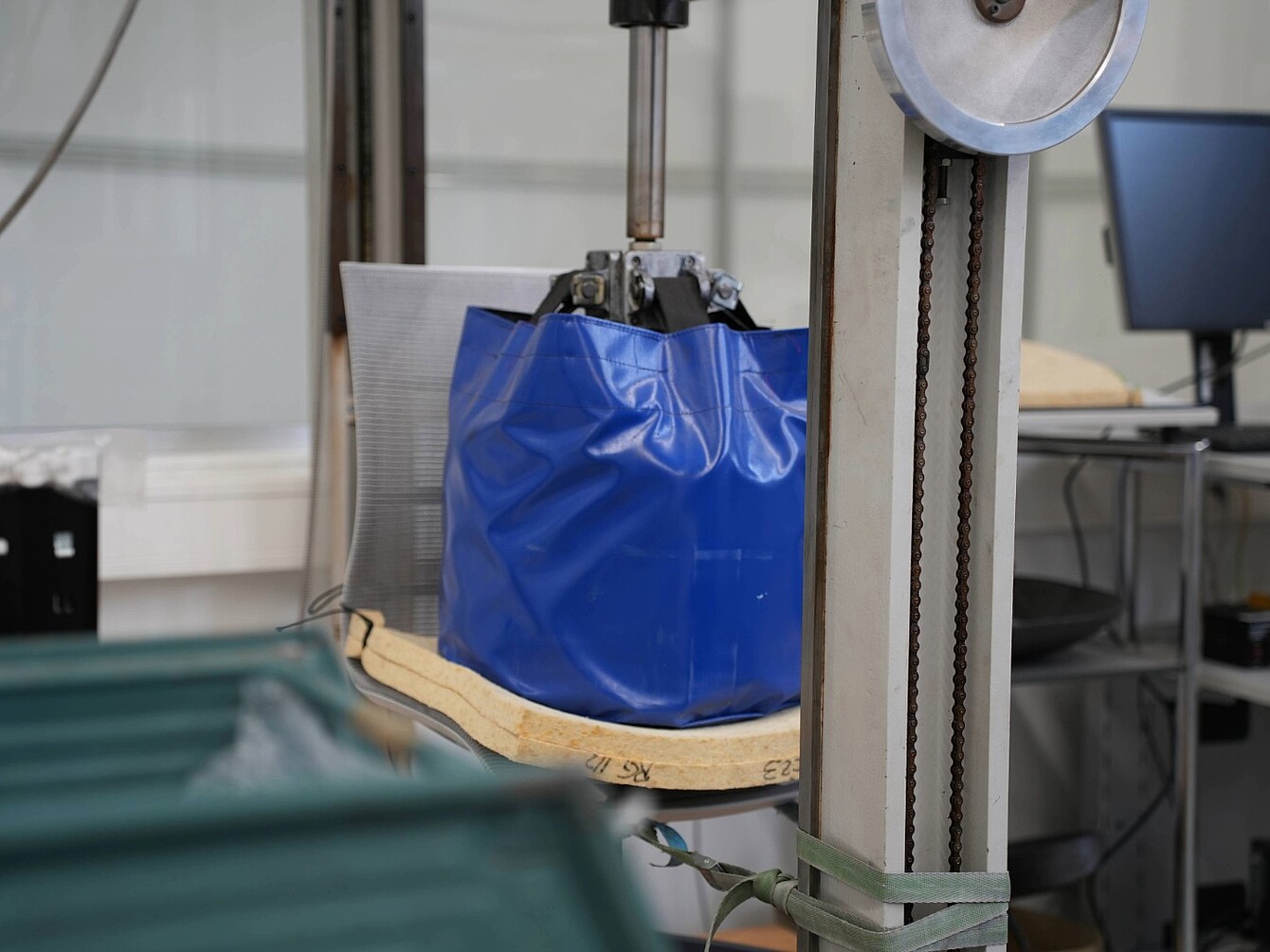
Many tests go well beyond normal use. Some chairs undergo continuous stress testing for months on end, components are subjected to extremely high forces, and materials are tested for wear and tear. The aim is to cover even extreme scenarios.
“We deliberately test more rigorously than would be expected in everyday use,” explains Vogelbacher. “This is the only way we can ensure that products function in the long term.”
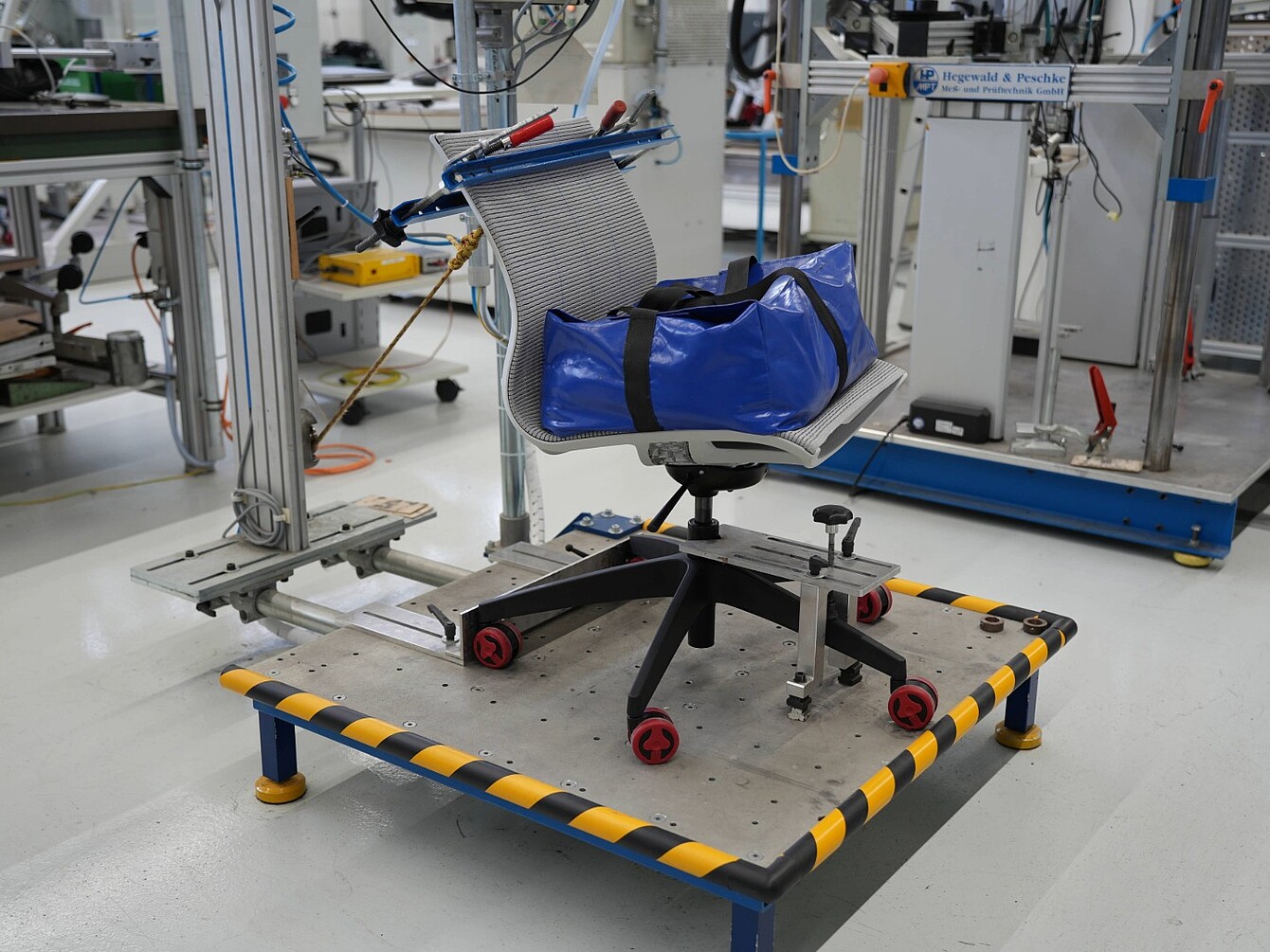
The test procedures are based on international standards but are supplemented by internal requirements. Experience gained from complaints, practical use or new designs is continuously incorporated. When new functional principles emerge, the test laboratory even develops its own test methods.
Daily life between precision and meticulous work
The working day in the test laboratory is structured, but rarely monotonous. Many test benches run over long periods and must be checked regularly. Test orders are documented, results evaluated and new tests prepared. At the same time, maintenance and calibration of the equipment are part of the job, as reliable measurement results form the basis of every decision.
Creativity is also called for time and again. Individual test set-ups are developed for specific problems. It is precisely this mix that makes the work so appealing to Vogelbacher: “Every new product brings new challenges. That is exactly what makes our work exciting.”
Impact on quality and sustainability
The results from the test laboratory have a direct influence on product design. Designs can be adjusted at an early stage to avoid issues or to create safety margins. The importance of this work is particularly evident with new materials, for example when recycled plastics exhibit greater variations than virgin material.
Sustainability is also closely linked to laboratory work. Durable products need to be replaced less often and can frequently be remanufactured. The testing laboratory provides the data that enables such decisions.
Looking to the future
Work in the testing laboratory is constantly evolving. Digitalisation and simulation are already helping to identify weaknesses earlier and make development processes more efficient. Nevertheless, real-world testing on the physical product remains indispensable.
Vogelbacher puts it plainly: “Simulation can support many things, but final confirmation must always be carried out on the real product.”
Why the test laboratory is indispensable for Sedus
Ultimately, the test laboratory fulfils a key role: it builds trust. Trust in a product’s safety, in its durability and in its quality.
Or, as Vogelbacher himself sums it up: “Our test laboratory ensures quality, reduces risks, accelerates time-to-market and builds trust with our customers.”

social media channels: