
Sustainability at the heart of product development
Sustainability is no longer a marginal issue, but plays a decisive role in product development. Particularly with new products, the focus is on how environmental impacts can be systematically reduced. Two key levers are crucial here:
- the increased use of recycled materials
- and the consistent reduction of the carbon footprint across the entire product life cycle.
With clearly defined processes, standardised life cycle assessments and long-term climate targets, we not only implement sustainability but also continuously develop it further. Niklas Flum, Sustainability Specialist at Sedus, explains how we go about this.
What sustainability goals do we pursue in product development?
We focus on two key areas: Firstly, we are increasing the proportion of recycled materials in our products. Where technically possible, we replace primary materials with secondary materials. Secondly, we are systematically reducing our carbon footprint. Every year, we analyse the current footprint of our portfolio and use this to derive specific targets for new developments. In this way, we reduce both the overall footprint and that of individual product groups. Our commitment to Science Based Targets sets out the long-term reduction path: by 2050, we aim to reduce our emissions by 90% – including those of our products.
How do we calculate the carbon footprint of new products?
We follow a standardised process. In collaboration with product management, we determine which configurations will undergo a Product Carbon Footprint assessment. Due to the wide variety of options, we focus on the best-selling models and those relevant from a sustainability perspective.
An example: The choice of base material – plastic, aluminium or wood – has a greater impact on the environmental footprint than differences in armrests. Whilst armrests are usually made from the same materials, the bases vary considerably in terms of material and weight.
The calculation is based on the product’s bill of materials. This contains all parts and components along with details such as material type, weight and recycled content. This data is complemented by information on transport routes and energy consumption during production. On this basis, we determine the Product Carbon Footprint.
How often do we calculate the carbon footprint – and how do we ensure comparability?
For each new product, we assess selected configurations and document the results in our Environmental Product Information (EPI). Any product modifications result in updated values to ensure the data remains accurate and up to date. At the end of the year, we produce a comprehensive report based on the actual number of units sold. In this way, we calculate the carbon footprint of the entire product portfolio and analyse the development of the average recycled content as well as the carbon footprint per product group.
Our life cycle assessments comply with DIN EN 15804, which sets out uniform European standards for the calculation and presentation of environmental impacts. This ensures comparability across products and assessments.
What do the latest analyses show?
Our latest analysis confirms: we are well on the way to reducing our carbon footprint.
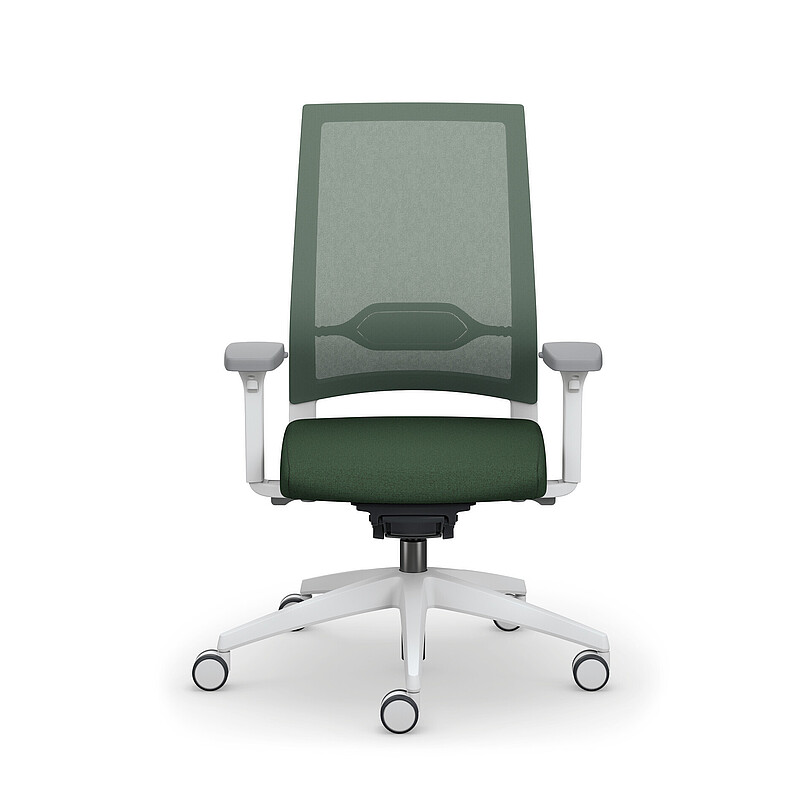
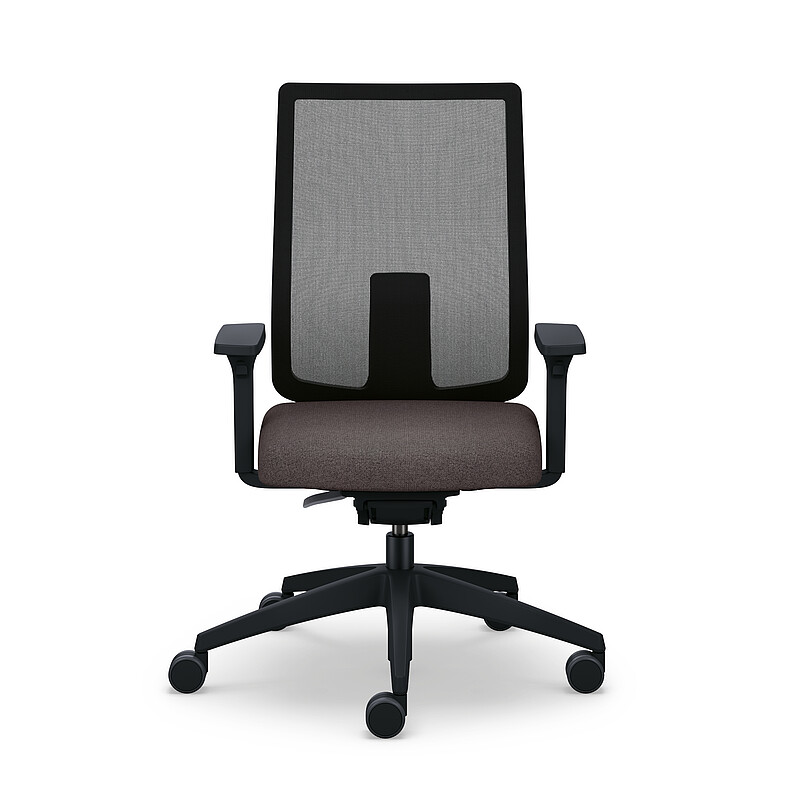
New developments such as the quarterback 2 and the se:do pro 2 have contributed significantly to this. Total emissions and the figures for individual product groups have been significantly reduced. The quarterback 2 achieves a carbon footprint of 67.9 kg CO₂e, whilst the se:do pro 2 stands at 68.9 kg CO₂e. By way of comparison: in 2020, the average carbon footprint of our swivel chairs was still 105 kg CO₂e. We aim to reduce this figure to 94 kg CO₂e by 2025.
A key factor in this progress is the increasing proportion of recycled materials. The quarterback 2 consists of just under 50% recycled materials – its predecessor stood at 27%.
Which factors have the greatest influence on the carbon footprint?
The largest emissions arise from raw material procurement (Phase A1). This is where we focus our efforts by using recycled materials, reducing the total weight and thus minimising material usage.
Transport and production play a secondary role, but also benefit from targeted measures. Around 90% of our procurement volume comes from Europe, 66% from Germany; this minimises transport distances. Furthermore, we manufacture using 100% green electricity, which significantly reduces emissions during production.
How do we implement these optimisations in practice?
The quarterback 2 and the se:do pro 2 demonstrate how we are putting our sustainability strategy into practice. Both models contain significantly more recycled materials than their predecessors.
A comparison:
- quarterback: 27% recycled materials, 93.8 kg CO₂e
- quarterback 2: just under 50% recycled materials, 67.9 kg CO₂e
This progress is particularly evident when compared to the average carbon footprint of our swivel chair portfolio (94 kg CO₂e).
What are our next steps?
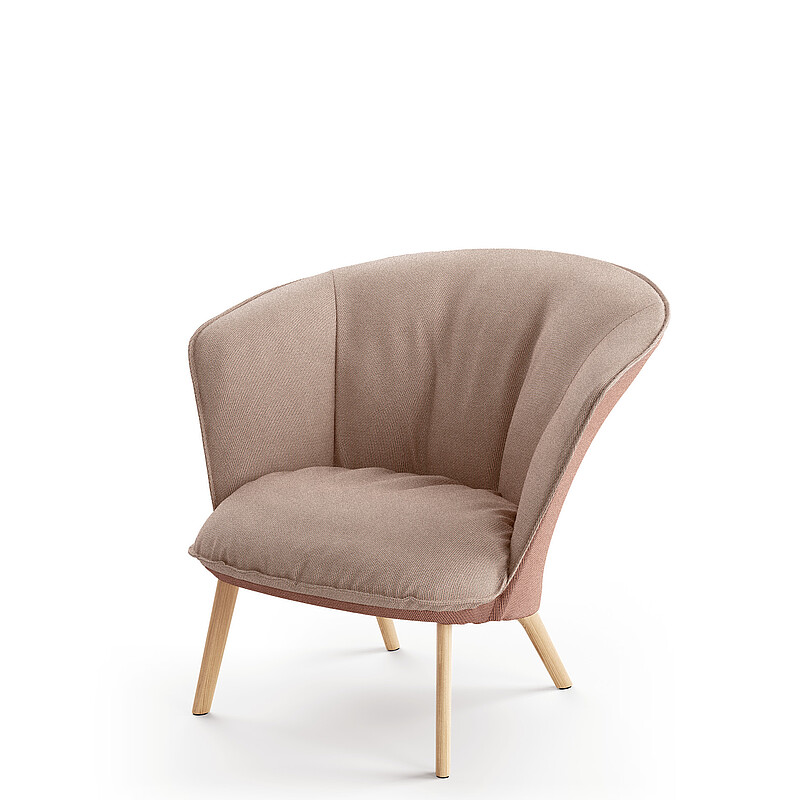
We aim to further expand the use of recycled materials and make greater use of bio-based materials. One example is the se:cove lounge chair, in which we have used foam containing 30% bio-based content for the first time. We intend to implement such approaches more frequently in future.
In addition, we are placing greater emphasis on the circularity of our products. We are currently working on a business model that places greater focus on refurbishment and the ‘second life’ concept. The aim is to design products so that they remain in the cycle for as long as possible.
Related posts
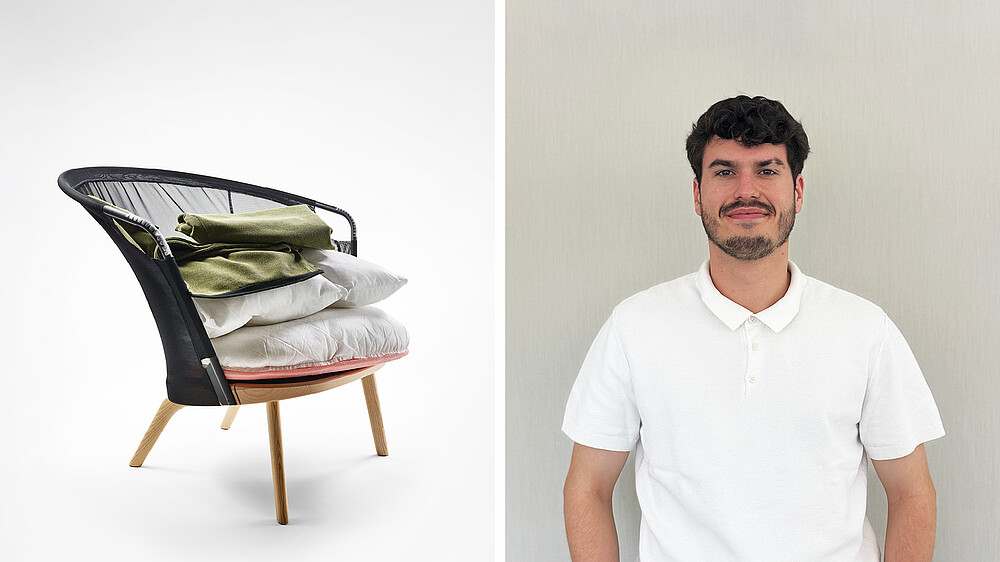
se:cove: How Much Sustainability Is Embedded in a Lounge Chair?
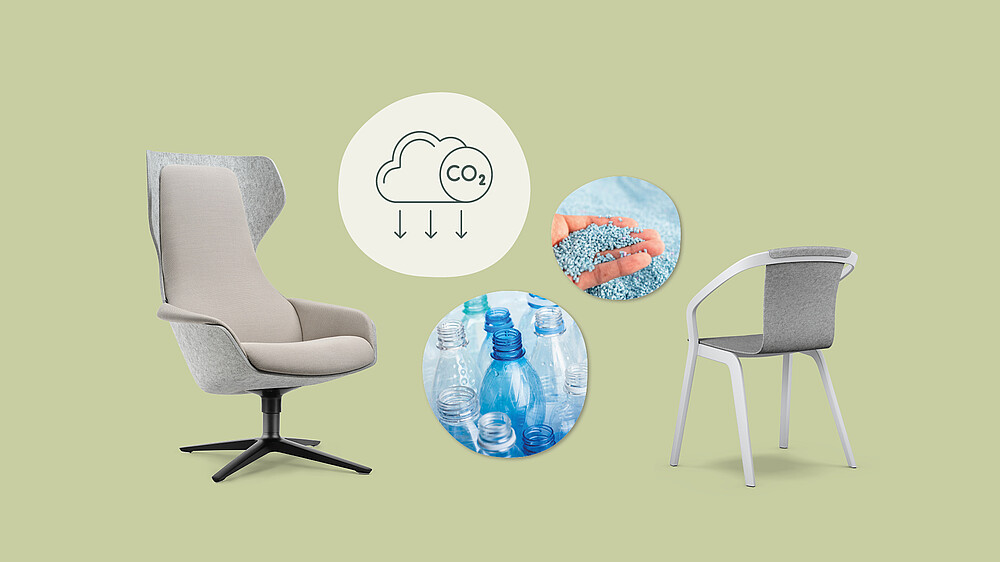
Recyclates: key materials for a functioning circular economy
Interview with Niklas Flum - explaining the circular economy at Sedus
Talk Green To Me: How Sedus Views Sustainability Across the Entire Product Lifecycle
EcoVadis Gold for Living Sustainability: Sedus Among the Top Companies Worldwide

social media channels: