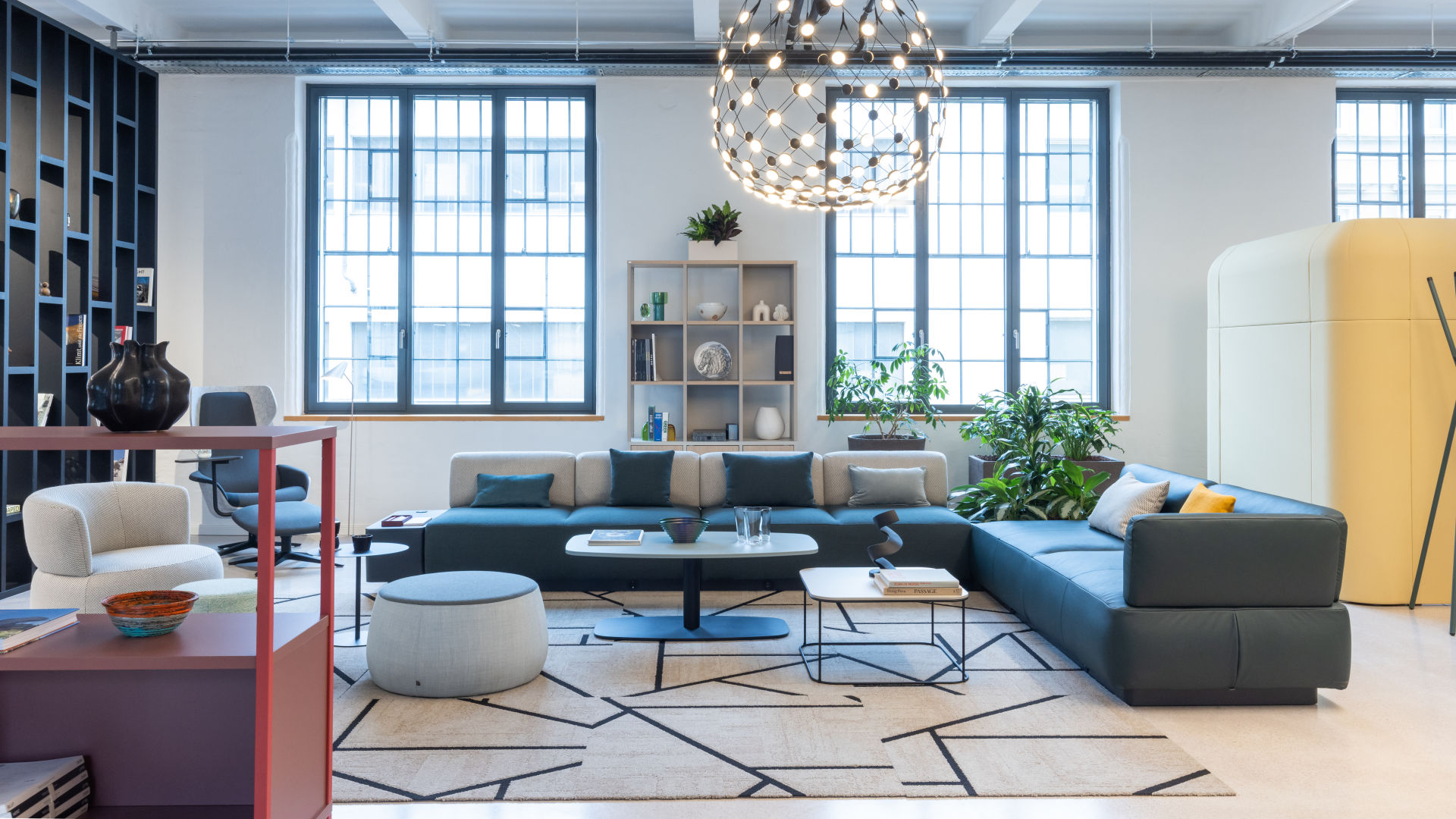

Interstitial spaces: The invisible infrastructure for productive work
The world of work has long been hybrid, yet many offices are not yet consistently designed to reflect this reality. Whilst there are zones for focused work and areas for collaboration, studies suggest that it is precisely this diversity that is crucial for satisfaction and performance. Yet the link between these two worlds is often missing: the in-between spaces.
These transitional areas still receive little attention in many office concepts.
„For a long time, office planning was conceived in terms of clearly defined functions: workstations, meeting rooms, break areas. Everything in between was regarded as leftover space and was consequently not taken into account either strategically or in terms of design,”
explains Mojdeh Barkhordar, Head of the Workspace Design Team at Sedus.

Interstitial spaces are spatial and functional zones between clearly defined areas, offering a wide range of possibilities for use and experience.
The decisive factor is the transition
Productive work today means one thing above all else: the fluid transition between different activities. Successful working environments make it possible to switch quickly between individual and group work. That is why transitional spaces are so important.
They are not simply ‘leftover spaces’, but connect rooms and also ways of working. Within them, transitions emerge between concentration, interaction and movement. It is precisely this dynamic that defines modern work – and requires spaces that make all of this possible.
Yet this transition is not merely a question of organisation, but also of spatial design. Without suitable transitions, disruptions arise: concentration breaks down, meetings start without a mental warm-up phase, and the flow is lost. The most common mistakes are:
- missing or inadequate furniture
- neglected acoustics
- a lack of invitation to use the space
- poor quality of stay, e.g. due to poor lighting
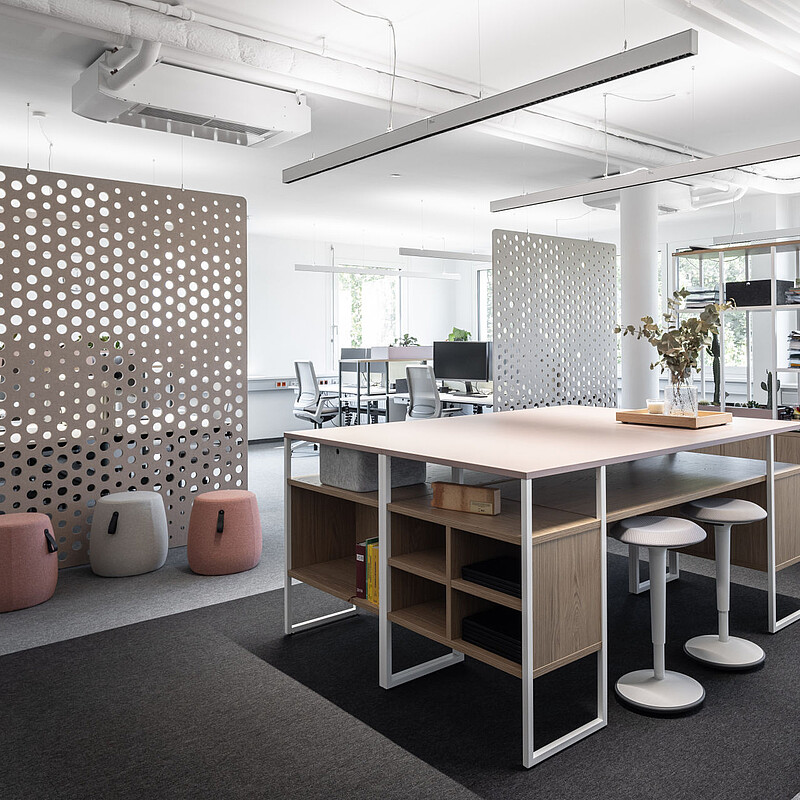
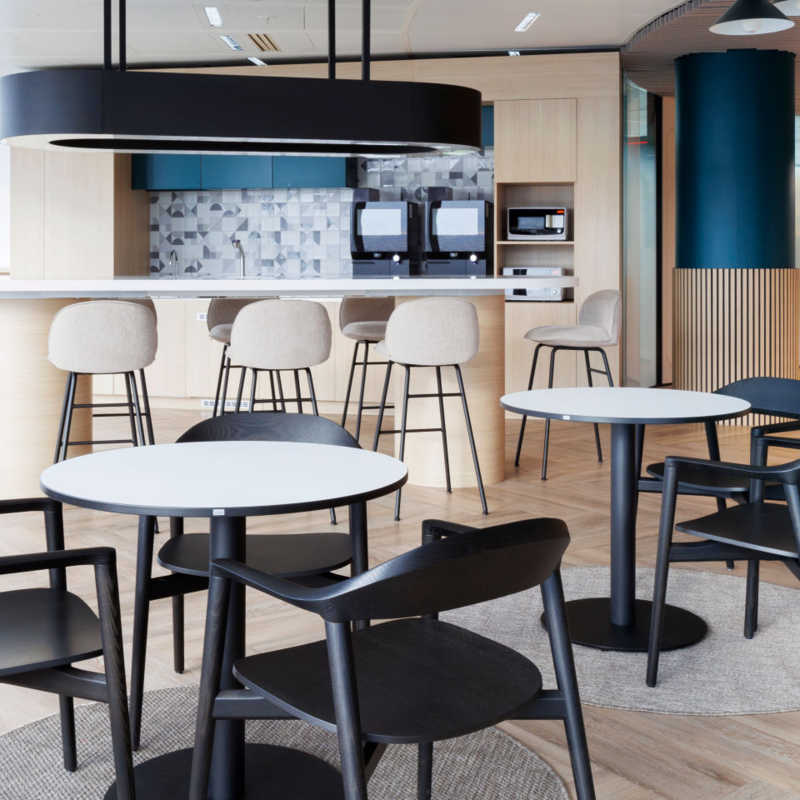
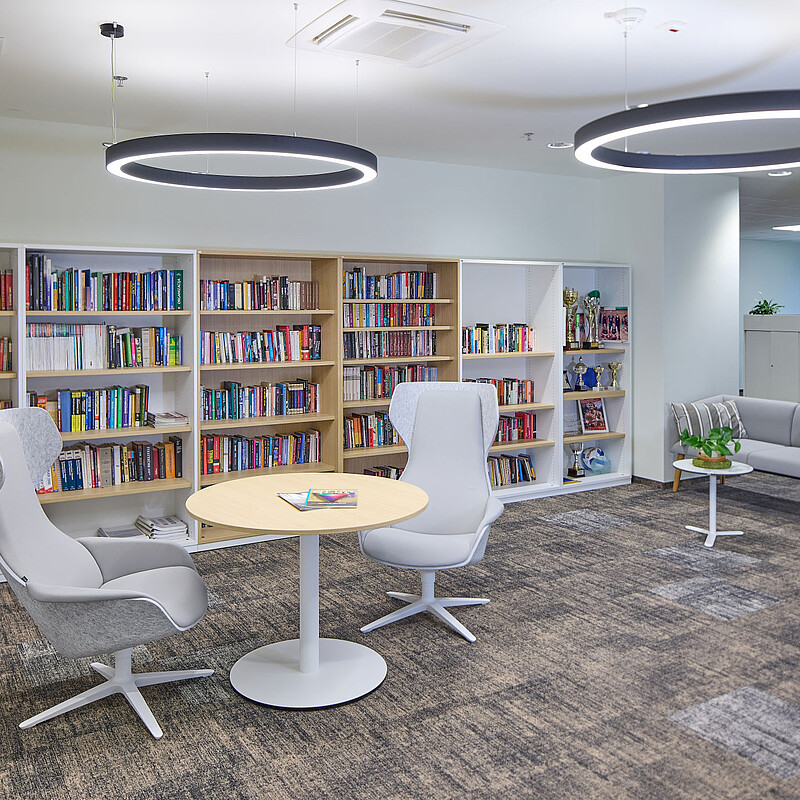
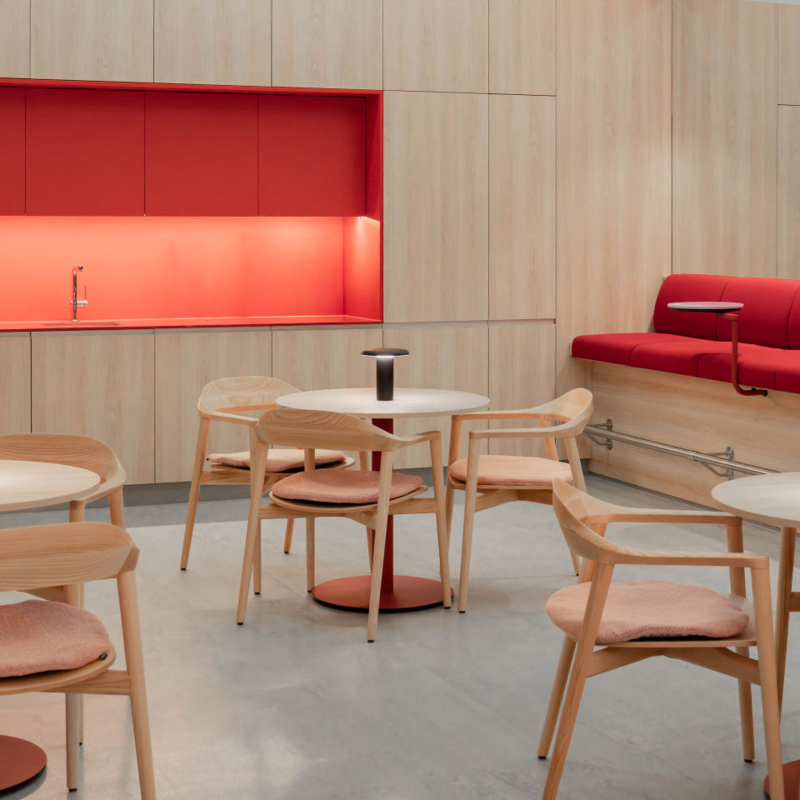
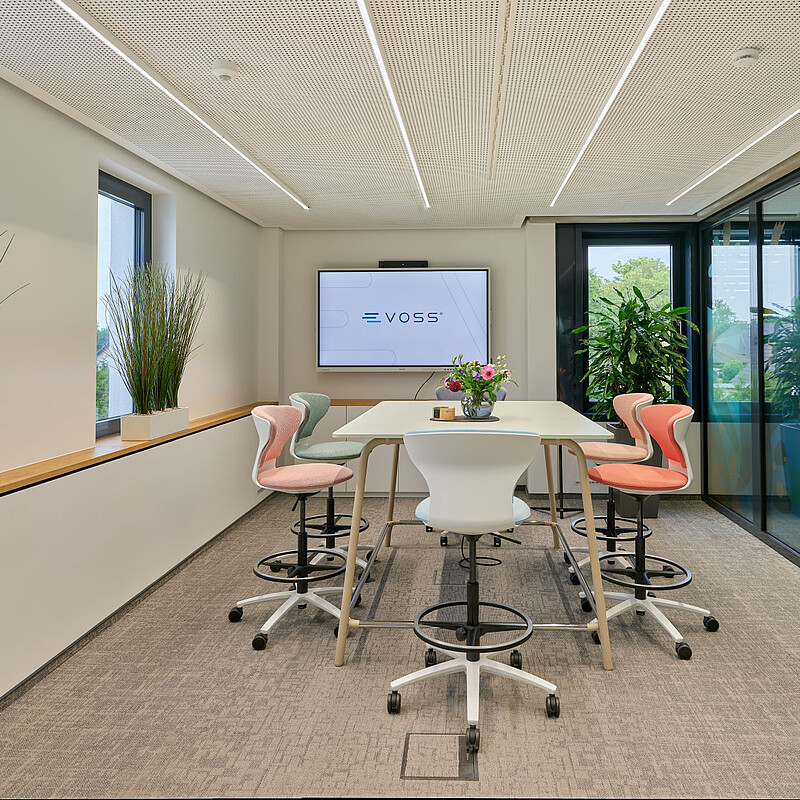
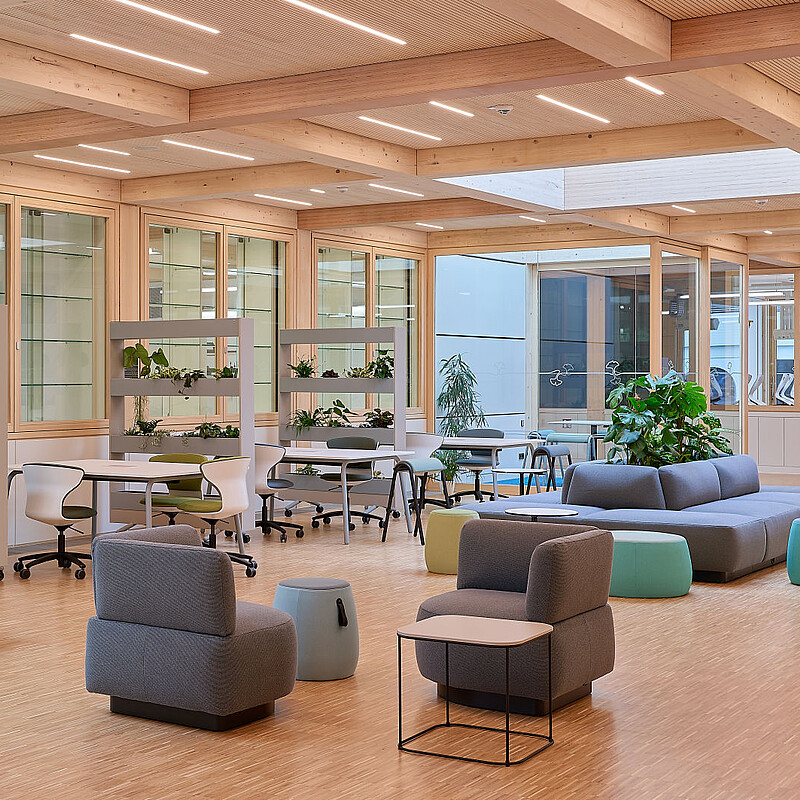
Spaces that create transitions
A corridor is, at first glance, merely a thoroughfare. It is only through thoughtful design, the right atmosphere and specific opportunities for use that it becomes a genuine, usable transitional zone.
Whether open alcoves, semi-public lounges or communication zones along pathways, they create a spatial narrative that supports the transition. Instead of sharp breaks, smooth transitions emerge.
At the same time, they fulfil a second, often underestimated function: they are places for informal interaction. After all, spontaneous encounters in particular have been shown to have a positive effect on teamwork and performance.
In this way, connecting spaces become active workspaces.
The three most important design principles for ensuring that transitional spaces work are:
- Identifying and implementing usage needs
- Clear, yet soft zoning
- Atmosphere through lighting, acoustics, materials and furnishings
Good transitional zones invite people to linger and are flexible in use. Poor ones feel like mere passageways; they are noisy, anonymous and offer no real added value.
Planning transitional spaces in existing buildings
Transitional spaces can also be integrated into existing offices. Using simple measures, such as thoughtful zoning, well-thought-out furniture, targeted lighting or the use of carpets, is often enough to unlock this potential. Whether transitional spaces are used intuitively or require a learning phase depends on the initial situation. If such spaces are new, accompanying measures are often needed, such as through change management. Well-designed transitional zones, however, usually speak for themselves – even if a certain amount of getting used to them is necessary.

Movement as part of the work process
Modern office concepts no longer view work as static. Instead, employees move through different zones throughout the day, and that is precisely the key advantage. After all, those who change their workspace are more likely to develop new ideas and perspectives. Movement thus becomes an integral part of working. Transitional spaces structure this movement: they slow things down, speed things up, invite people to linger, and thus create the basis for mental reorientation.
Hybrid working is changing the significance of these spaces. For it is precisely when physical presence is chosen more consciously that spontaneous encounters and social interaction gain importance. This is exactly where transitional spaces are crucial.
Design that makes an impact
For planning, this means: transitional spaces should be deliberately designed – not as leftover space, but as a distinct spatial typology.
Key aspects include:
- a spectrum of openness and privacy
- cosy, stimulating furnishings
- opportunities for spontaneous lingering
- visual and acoustic relief
This creates spaces that facilitate both retreat and interaction – and thus ease the transition between the two.
“Peripheral zones” often work better for short periods of focused work than traditional workstations.
They are less visible and thus automatically create a sense of retreat. They are situated away from the main hub of activity, which reduces distractions – making them ideal for short, concentrated periods of work
Conclusion: Interstitial spaces are more than just connections
The quality of modern working environments is not determined solely by focus or collaboration zones. It arises from the interplay between them – and particularly in the transitions.
Transitional spaces are therefore far more than just circulation areas: they are cognitive buffers, social hubs and strategic elements of effective office design.
The office of the future is not a juxtaposition of rooms, but a continuous spatial experience. According to Mojdeh Barkhordar, transitional spaces are, “above all becoming more diverse and nuanced. In the past, you might simply have placed a sofa somewhere. Today, transitional zones are deliberately designed – with different functions such as focus areas, quiet zones, social spaces or workshop zones.”
In future, companies should no longer think in terms of traditional room categories – workstations, meeting rooms, break areas – but rather in terms of experiences and the quality of movement within the space. It is not just about efficiency, but about specifically creating spaces for interaction, transition and informal use.
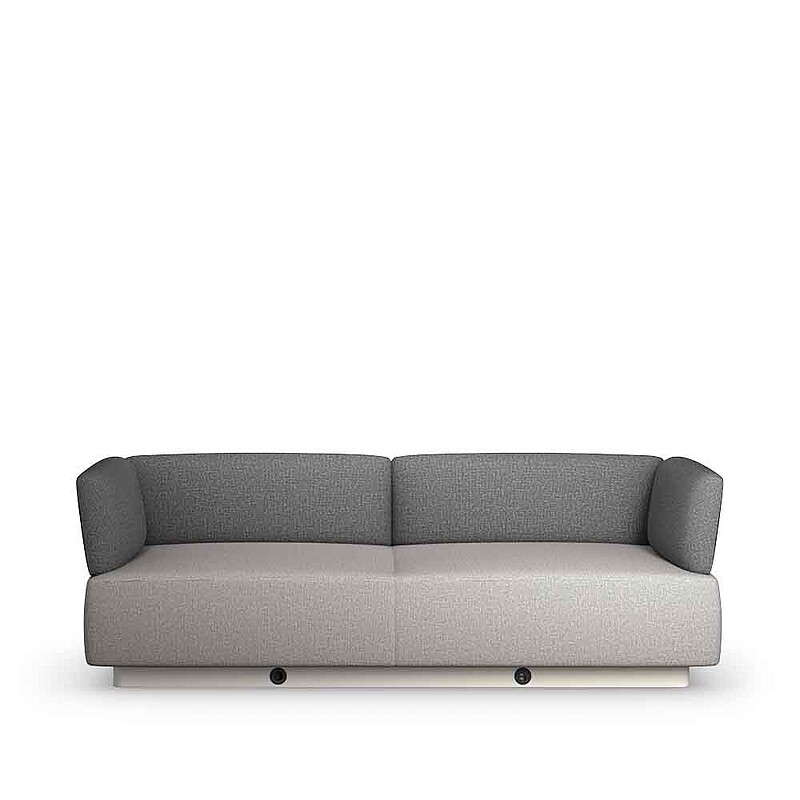
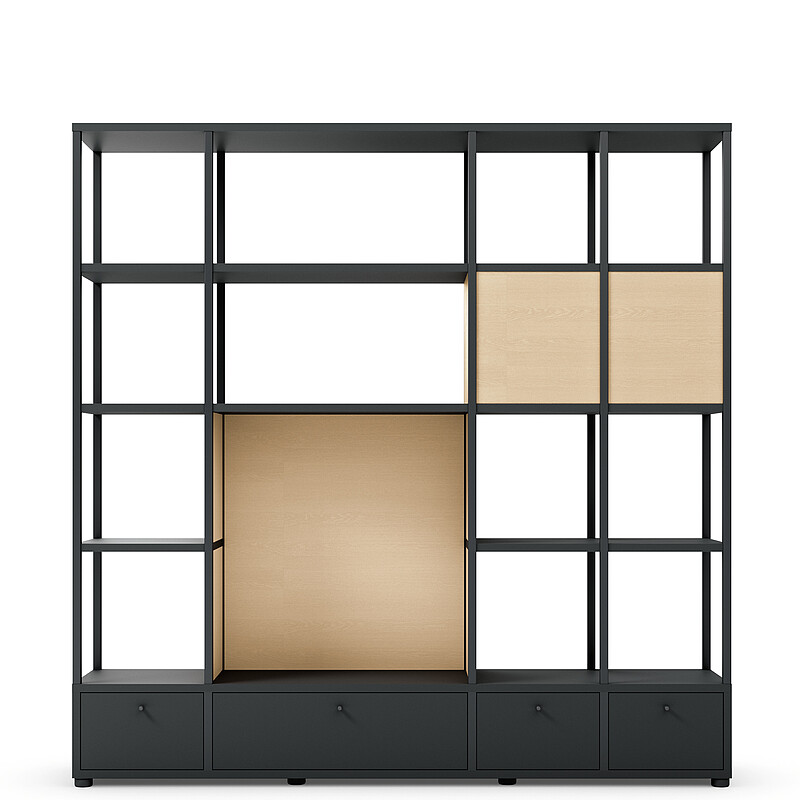
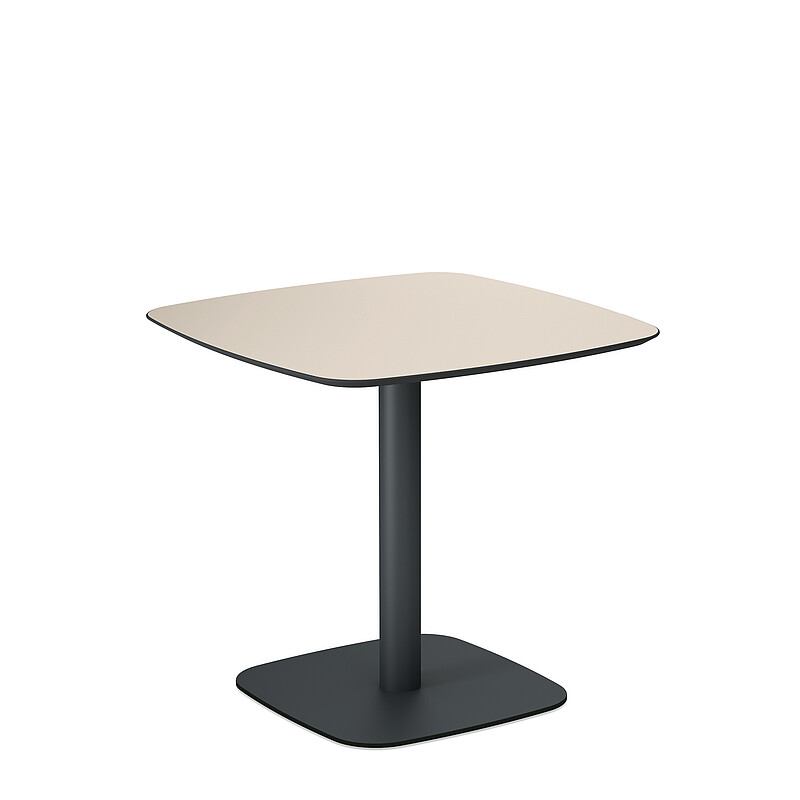
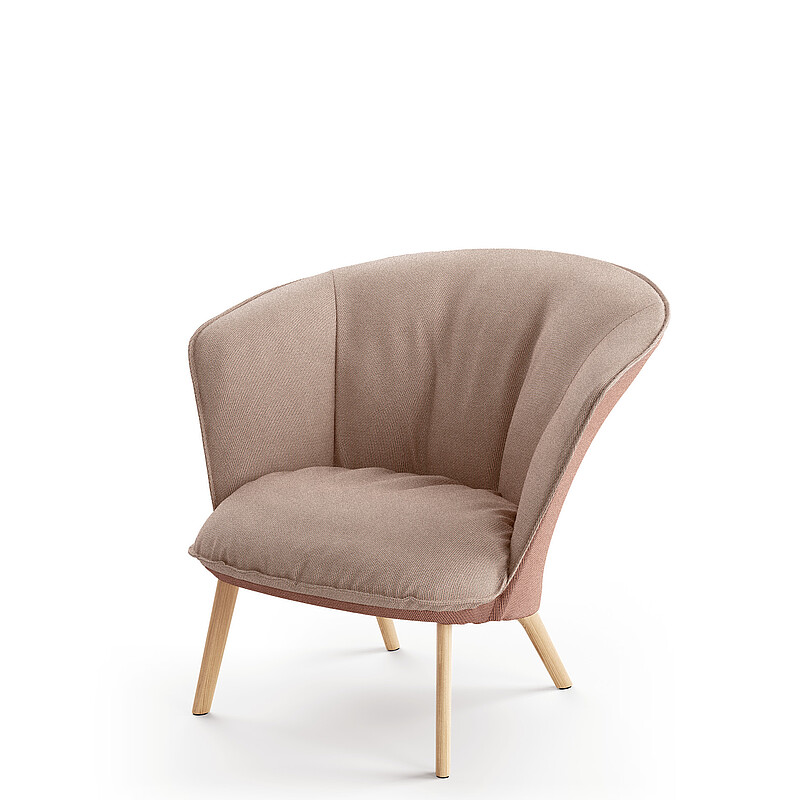
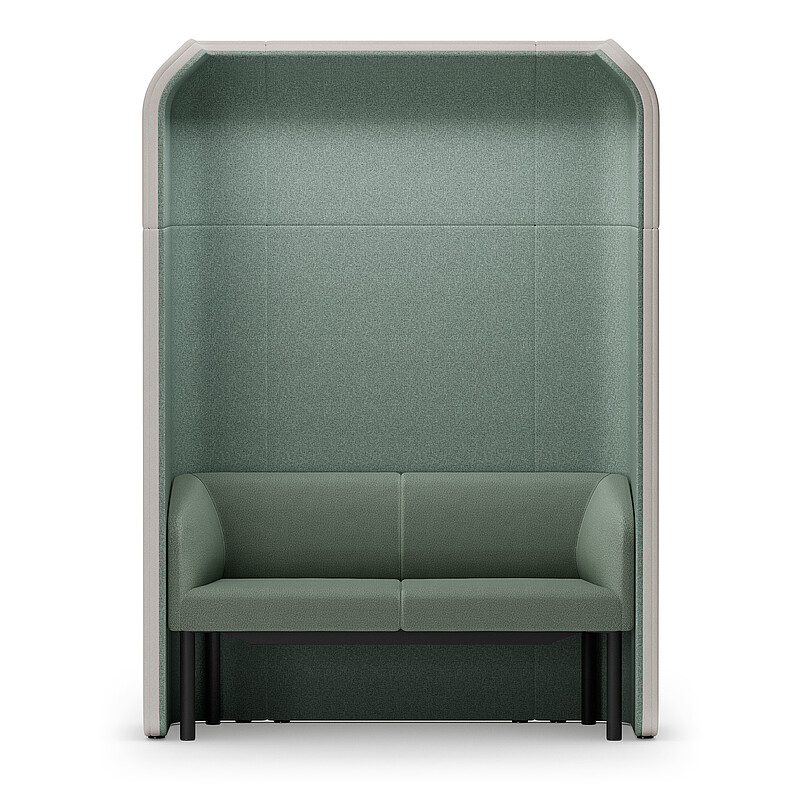
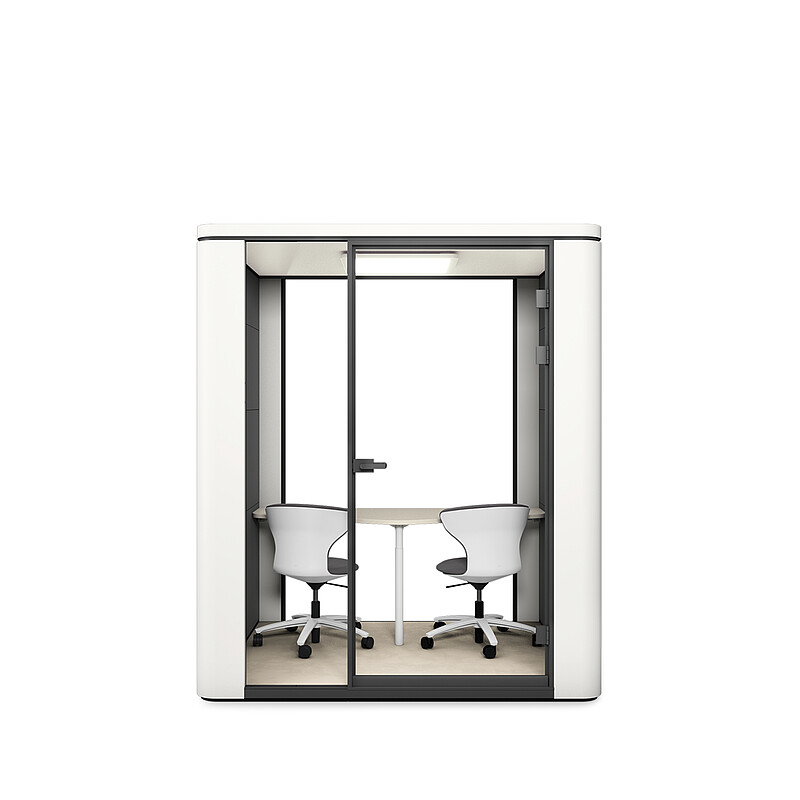
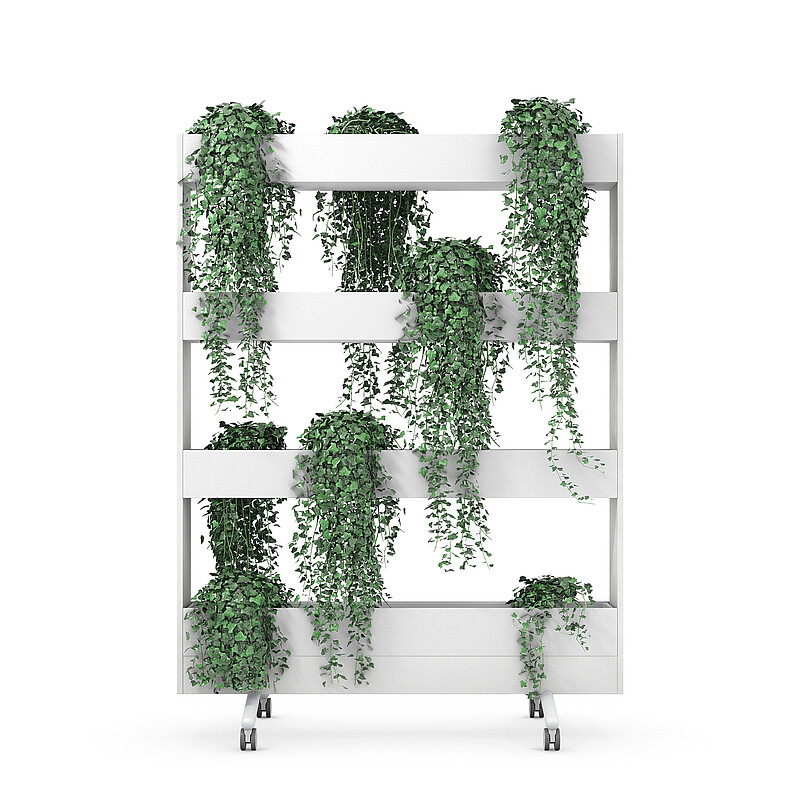
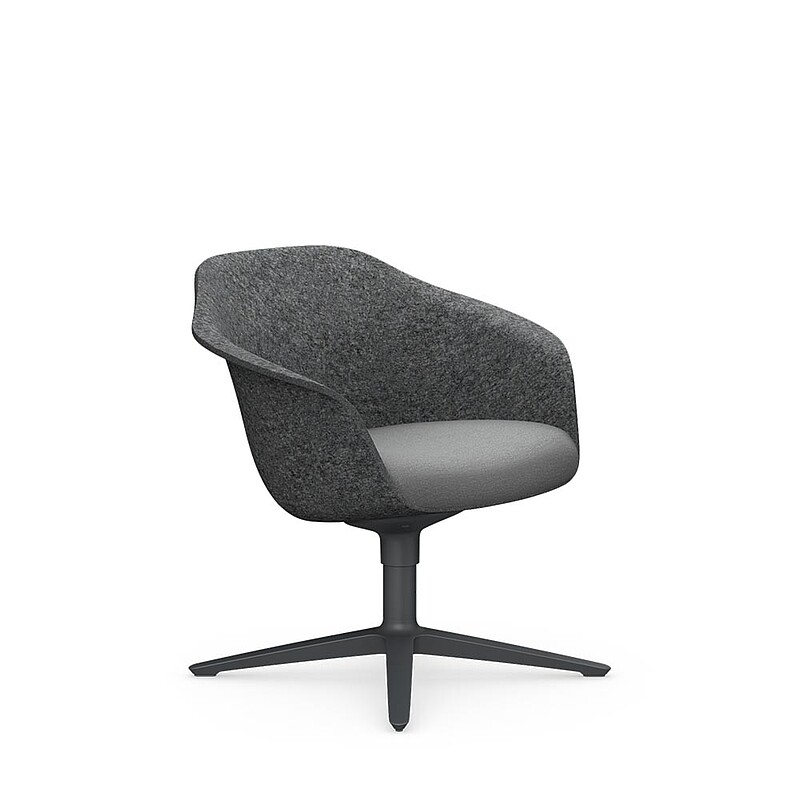
Featured products

social media channels: