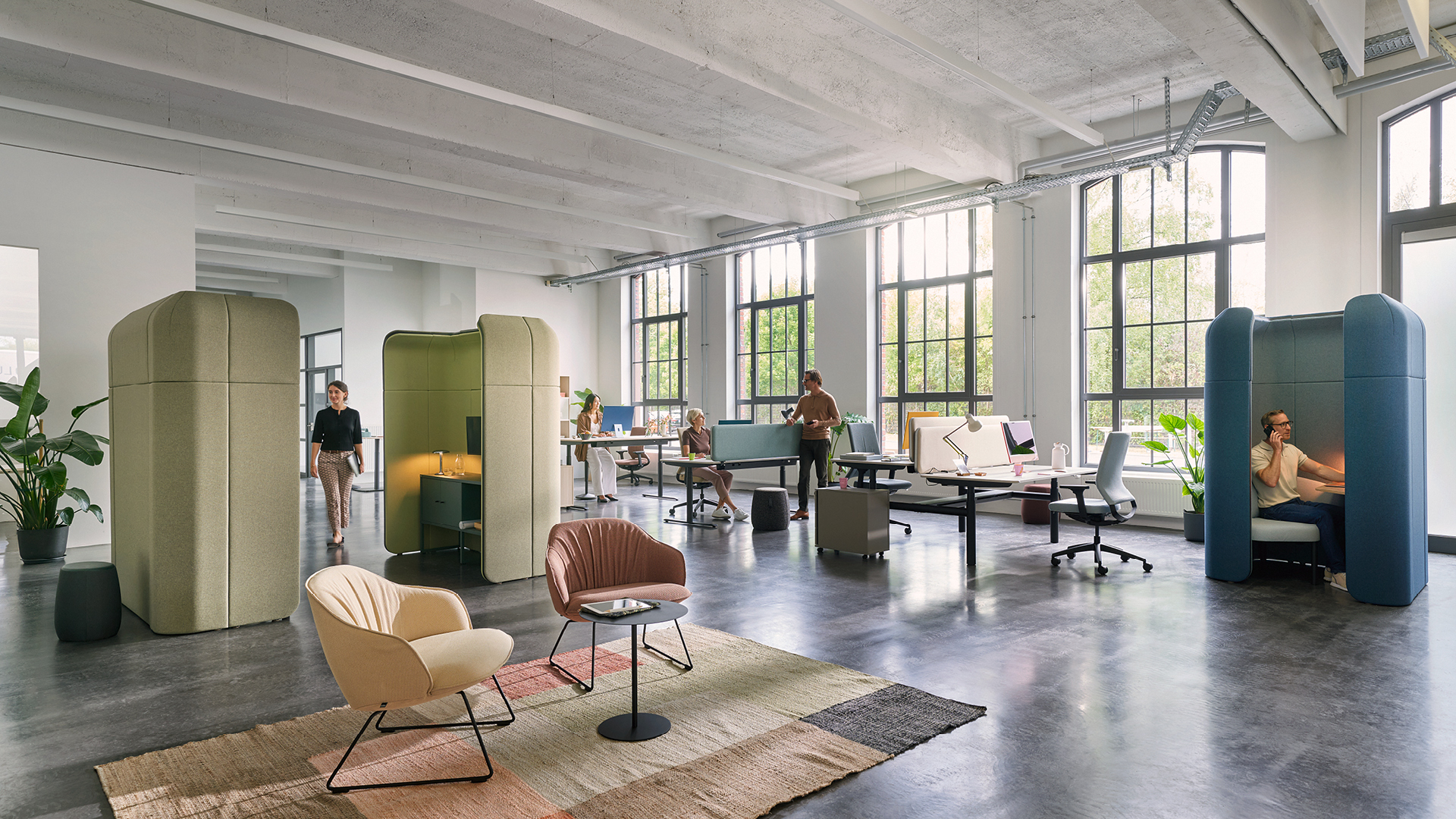

The good news is that improving focus at work does not necessarily require a complete redesign. In many cases, targeted adjustments within existing office layouts are enough: small retreat areas, better acoustics, clearer zoning or simple behavioural guidelines. The latest Sedus INSIGHTS, “Focus in the Office,” explores how workplaces can better support concentration in hybrid work environments and why attention has become one of the most valuable resources in today’s office culture.
1. Create small retreat spaces
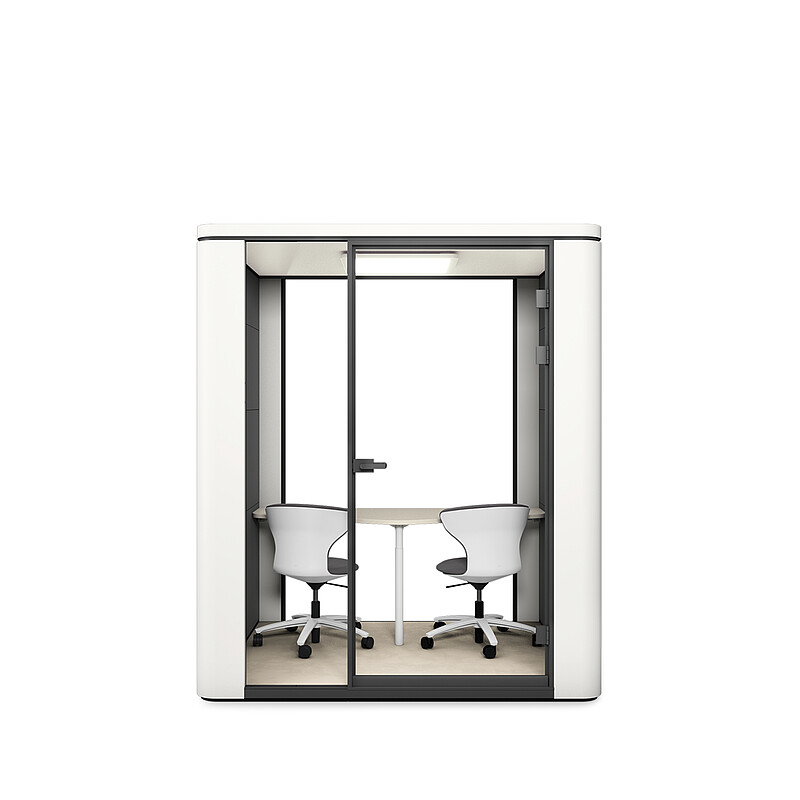
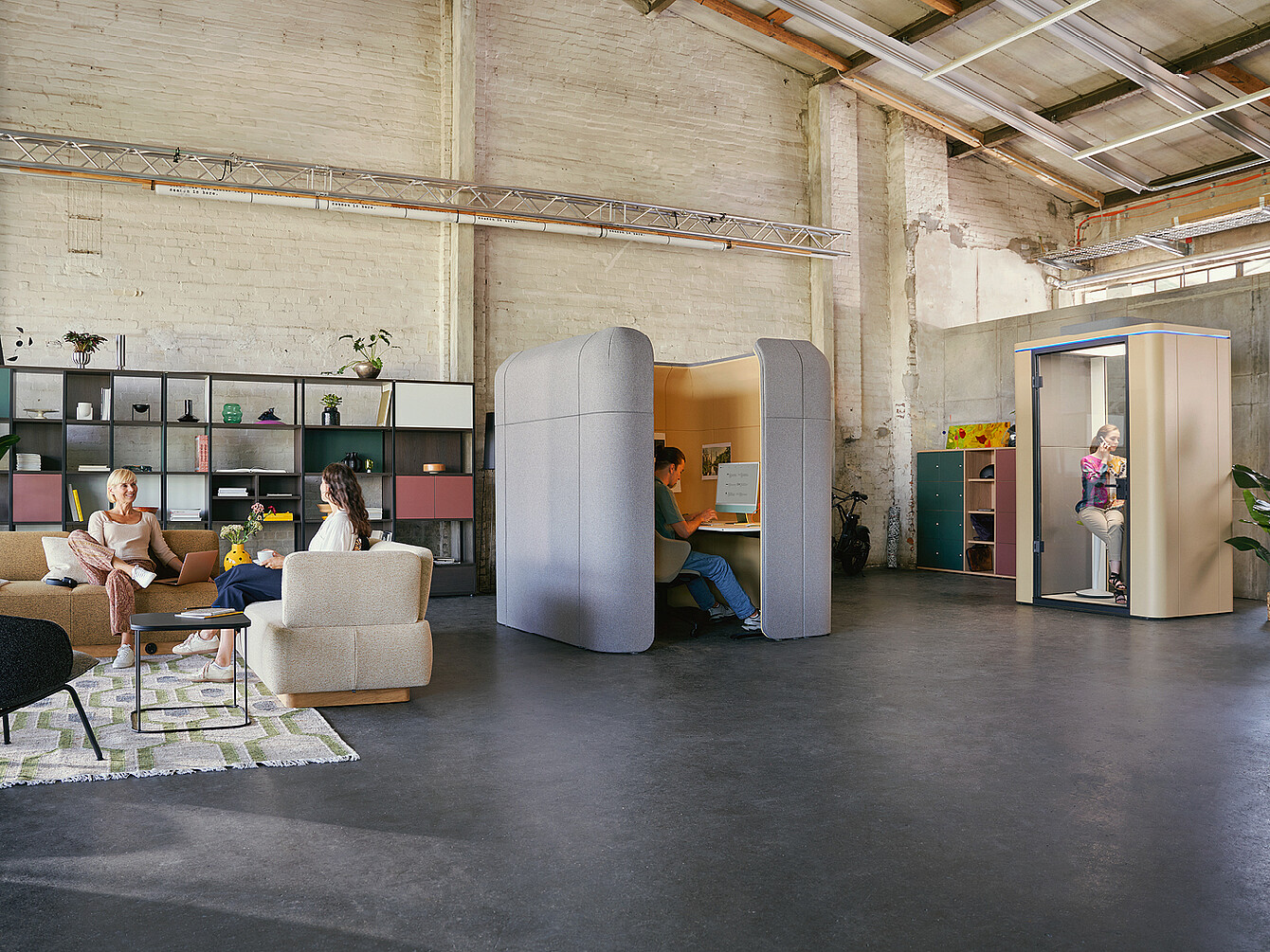
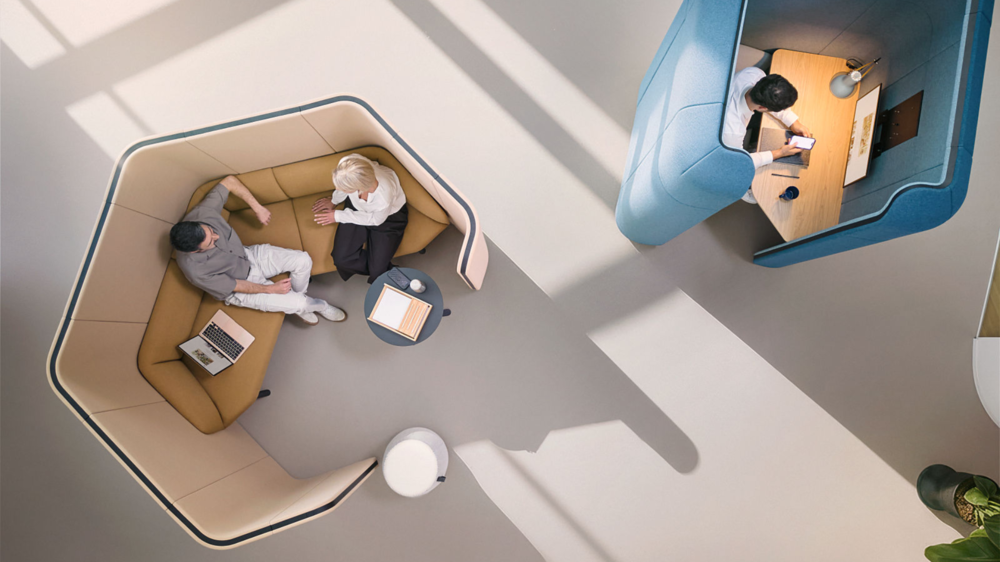
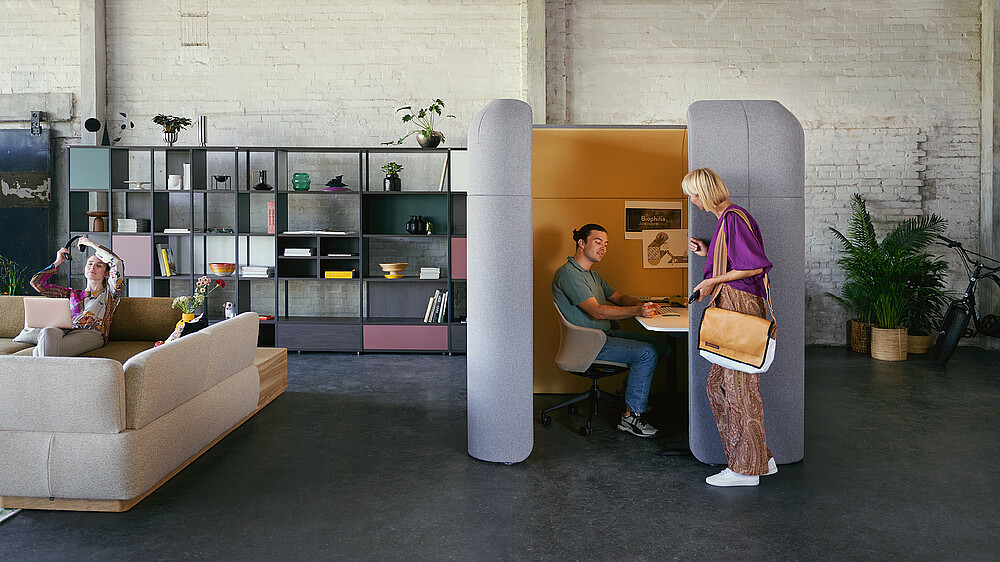
Not every focused task requires a fully enclosed room. Often, employees simply need a place that feels slightly more protected than a standard workstation in the middle of the open plan.
Semi-enclosed seating, small niches or quieter areas along the perimeter of the office can already make a noticeable difference. Research on the so-called “peripersonal space” shows that concentration improves when people feel more in control of their immediate surroundings.
Effective solutions include:
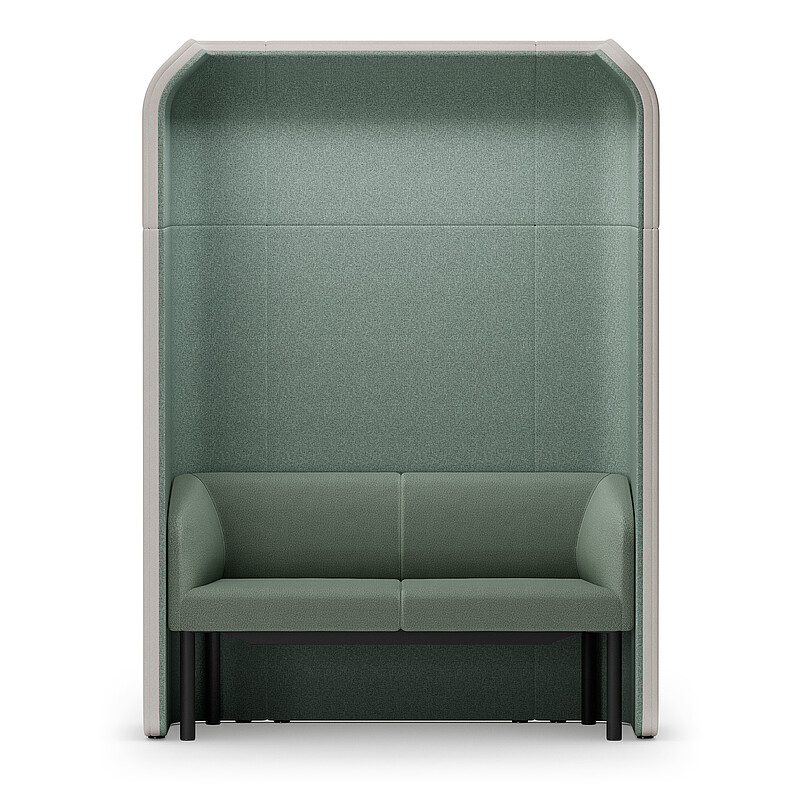
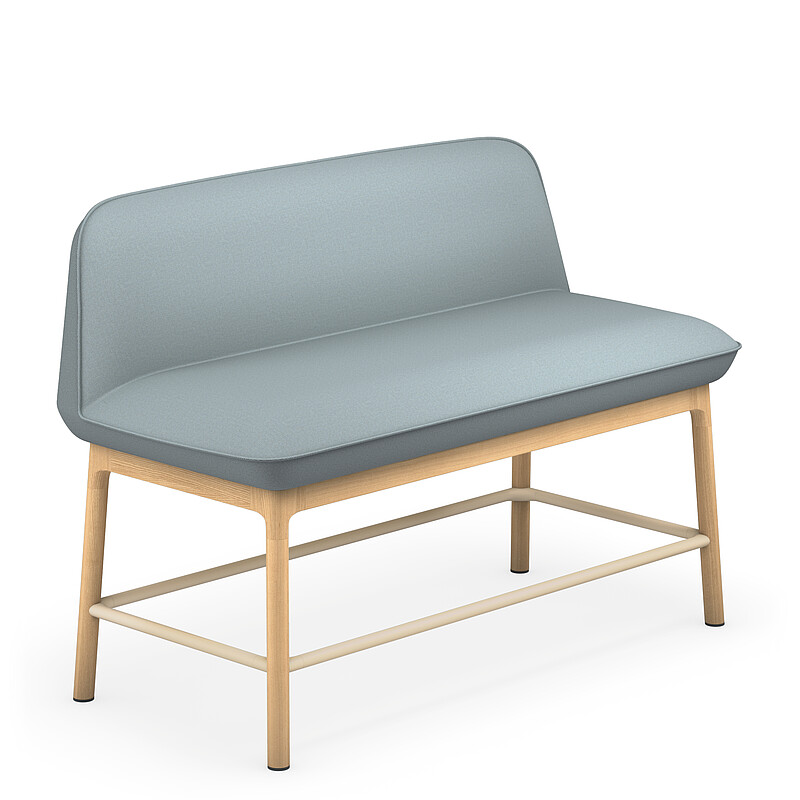
- semi-enclosed seating
- high-back furniture
- small focus niches
- desks away from circulation routes
- furniture with integrated visual and acoustic shielding.
The goal is not complete isolation, but a stronger sense of calm within the open environment.
2. Reduce visual distractions
Distraction in the office is not only caused by noise. Constant movement in the peripheral field of vision or permanently exposed workstations also keep the brain in a state of alertness.
This is why focused work areas do not necessarily need to be fully enclosed. In many cases, subtle visual boundaries are enough to create a calmer atmosphere. Spatial concepts that balance openness and protection tend to support concentration far more effectively than completely exposed layouts.
Simple interventions include:
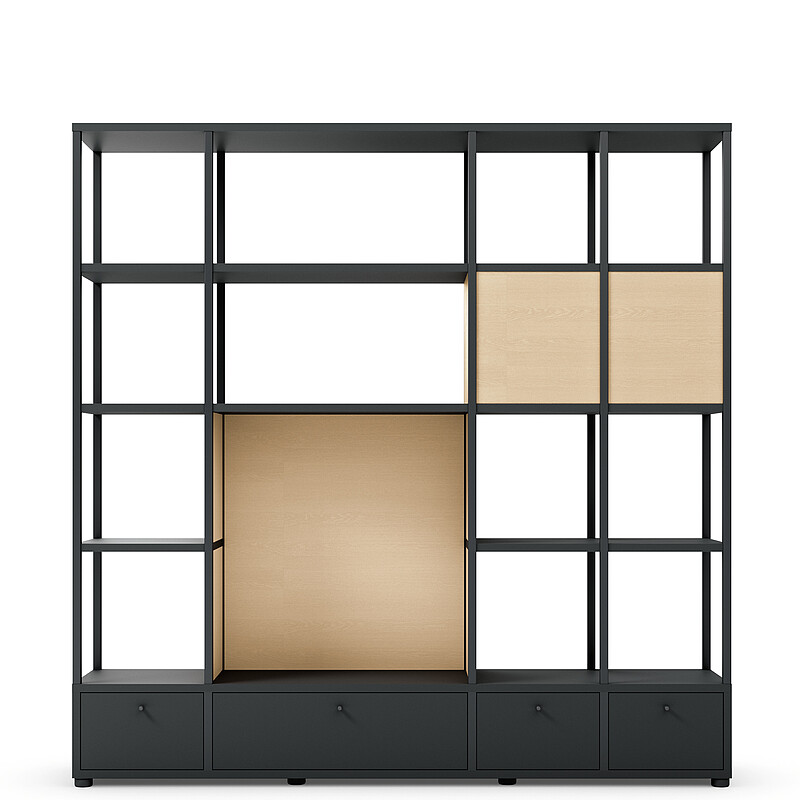
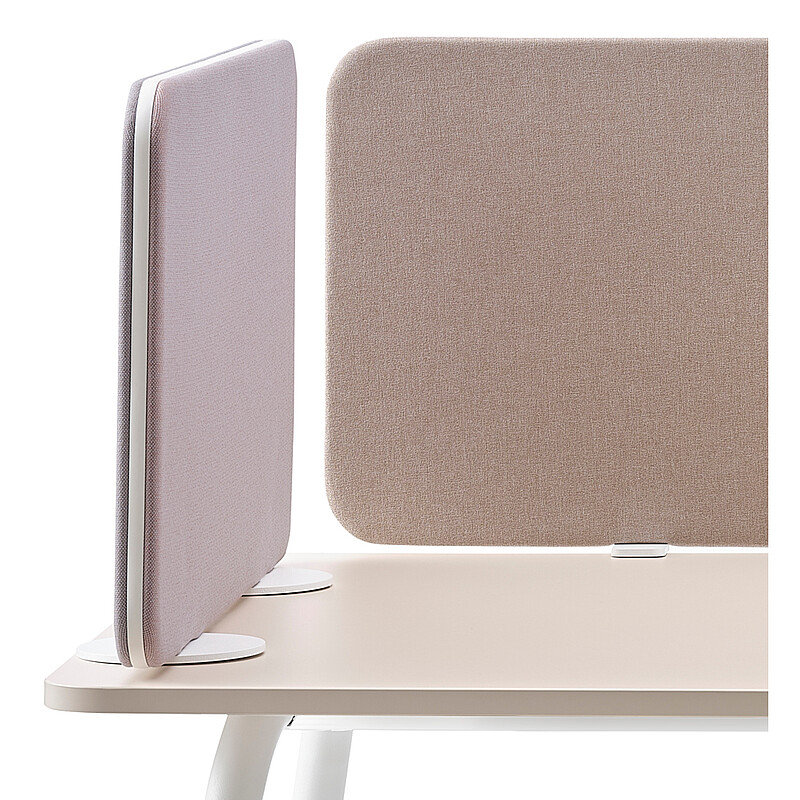
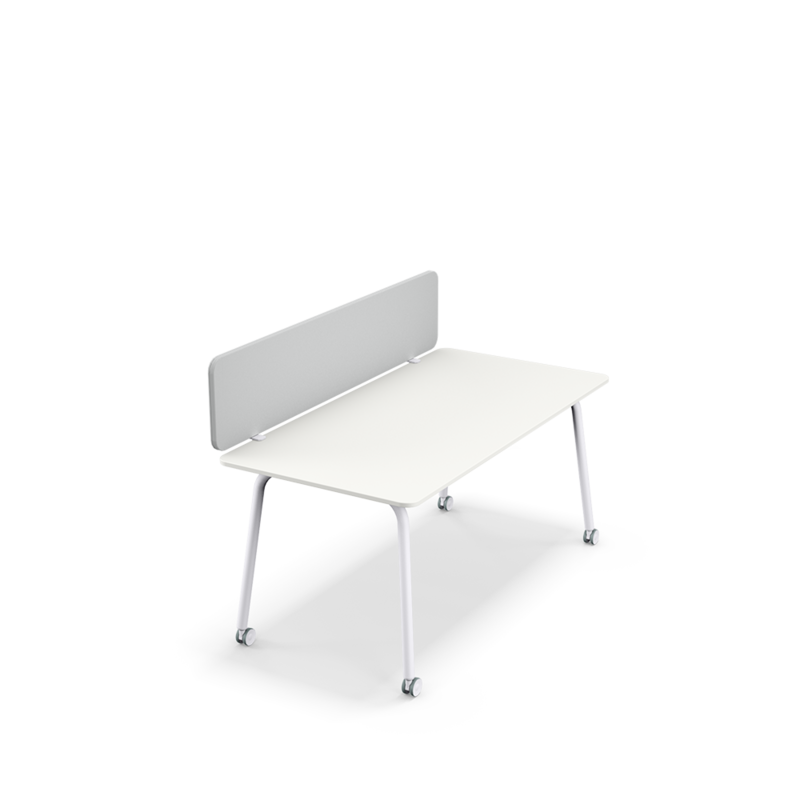
- mobile screens
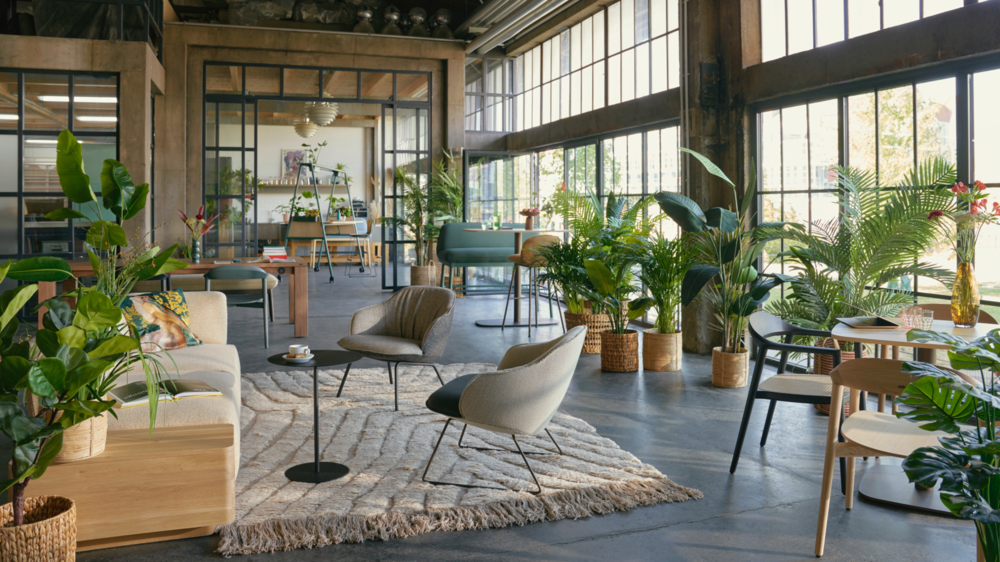
- plants as spatial dividers
- shelving for zoning
- curtains
- varied furniture heights
- acoustically effective panels.
Especially in existing office spaces, these flexible elements can improve focus without major structural changes.

3. Treat acoustics as a key focus factor
Noise remains one of the biggest challenges in open office environments. According to the studies referenced in the publication, 58% of employees regularly feel disturbed by conversations or calls in the workplace.
Importantly, the issue is not just volume — speech itself automatically captures attention, even when we try to ignore it.
Smaller acoustic improvements can already have a strong impact:
- carpets and curtains
- sound-absorbing materials
- acoustic furniture
- dedicated quiet zones,
- clear separation between collaborative and focus areas.
There is also growing interest in biophilic soundscapes and adaptive acoustic environments that support both concentration and wellbeing.
4. Zone spaces more clearly
Many open offices are expected to support everything at once: focused work, collaboration, meetings and social interaction. This often makes them cognitively demanding.
A more effective approach is to organise workplaces around different modes of attention. That does not necessarily require more space — but it does require clearer spatial logic.
Helpful strategies include:
- quieter areas along the façade
- collaborative zones at the centre of the space
- focus desks away from main circulation routes
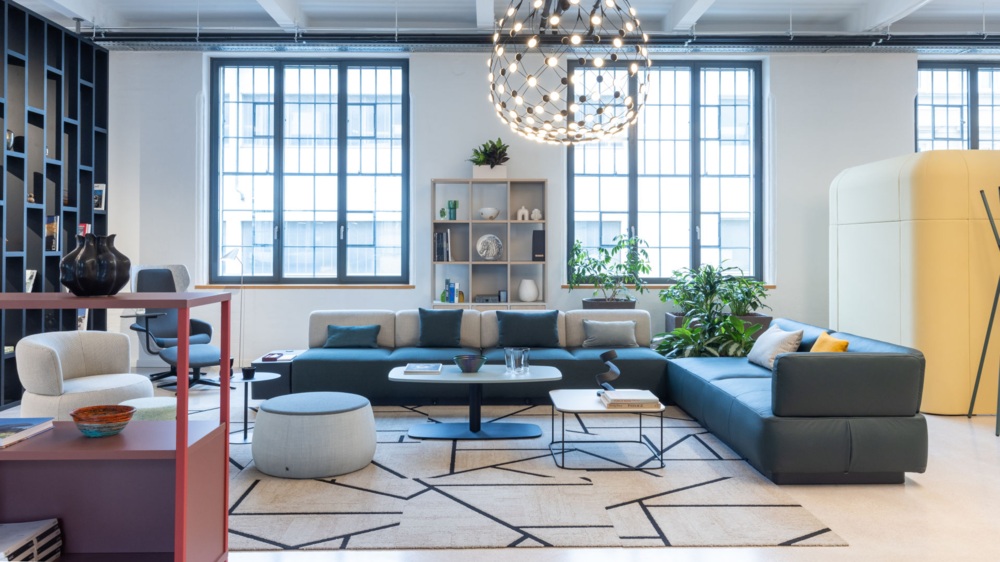
- gradual transitions between active and quiet areas
- shared focus zones or library-style environments.
The underlying principle is simple: people should be able to choose the environment that best supports the task at hand.

5. Anchor focus within workplace culture
Perhaps the most effective measure is also the simplest: establishing clear behavioural guidelines.
Even the best-designed focus area will fail if people continue taking calls or holding spontaneous conversations there. Concentration is not only influenced by space itself, but also by organisational habits and workplace culture.
Practical examples include:
- clearly defined silent areas
- phone-call etiquette
- meeting-free periods
- shared focus times within teams
- video calls limited to designated spaces.
A particularly interesting example is the library area at Start it @KBC, where simple but clear rules apply: no calls, no distractions, no interruptions.
Conclusion: Better focus often starts with small changes
Creating spaces that support concentration does not necessarily require a new building or a complete office redesign. In many cases, carefully considered adjustments within existing layouts can already transform the experience of working in an open space.
What matters most is recognising that different tasks require different environments — and designing workplaces that allow people to choose where and how they work best. That is increasingly becoming the true quality of contemporary office design. You can find out more about this fascinating topic in Sedus INSIGHTS No. 20.
Related posts
se:cove as a Micro Focus Space
Spaces for Deep Focus: How Much Shielding Is Right?
The Four Archetypes as a Design Guide: Which Furniture Suits Which Space?
se:hive: The perfect retreat for the office
Transitional Spaces: The Underrated Boosters Between Teamwork and Focus

social media channels: