WHAT'S UP Blog

On our WHAT'S UP blog you will find exciting articles on new products, our trend research, new work concepts and helpful tips on all aspects of work and office furniture. You can also discover exclusive news and updates about Sedus.

Filter
Modern office lounge with multiple plants, wooden and upholstered chairs, low tables, and a sofa against a backdrop of large windows and dark curtains
Workplace Design 01/05/2026

Biophilic Design – How to improve the working environment with office plants

Working in green surroundings: The ‘biophilic design’ principle uses plants to create a pleasant office environment that protects against noise and poor air quality and helps improve concentration.
Open-plan office with people working at desks and standing, featuring ergonomic chairs, stools, and plants
Wellbeing 20/04/2026

More movement in the workplace: Why active breaks and dynamic sitting are so important in the office

For many people, sitting for long periods is part of their daily working routine – yet this is precisely what can lead to health problems and reduced performance in the long run. More movement in the workplace is therefore not a trend, but a necessity. Dynamic sitting and targeted active breaks in the office can not only reduce discomfort, but also boost concentration and productivity.
Open-plan office space with high tables and stools, whiteboards, plants, and natural light from large windows
News 15/04/2026

Office Trends 2026: This is what the future of work looks like in the New Work era

Office trends for 2026 clearly show that the office has long been more than just a place to work. It is becoming a strategic tool for businesses – a space that combines culture, innovation and well-being. At the heart of this are New Work trends that combine flexibility, sustainability and new spatial concepts, thereby redefining the future of work.
Open-plan office with large windows, multiple desks, and sound-absorbing booths where people are working or sitting
Wellbeing 06/04/2026

Reducing noise in the office: How to improve room acoustics with effective noise control

It’s hard to concentrate when phone calls, conversations and the constant tapping of keyboards dominate the working day. Reducing noise in the office not only creates a quieter environment, but also boosts productivity, well-being and overall employee satisfaction. But how can you achieve effective acoustic control in the workplace – and which measures genuinely make a difference to improve room acoustics?
Open-plan office space with circular seating areas, large round ceiling lights, plants, and a man working on a laptop inside a transparent cylindrical booth
Workplace Design 03/04/2026

Shaping focus: Multisensory design for concentrated work

As part of a comprehensive cultural and organisational transformation, Ford Otosan commissioned the design of its new headquarters in Izmit, Turkey, as a forward-looking working environment. The aim was to meet the requirements of hybrid working models while creating spaces that optimally support both collaboration and individual concentration.
Open-plan office with multiple people working and interacting at desks and standing in a bright space with large windows and plants
Workplace Design 01/04/2026

Collaboration in the office: collaborative spaces as the key to modern teams

Collaboration in the office has undergone a fundamental transformation in recent years. Rigid workplace structures are increasingly giving way to flexible concepts that promote communication, creativity and productivity. At the heart of this development are collaborative spaces, which are specifically designed to foster teamwork and facilitate interaction between employees.
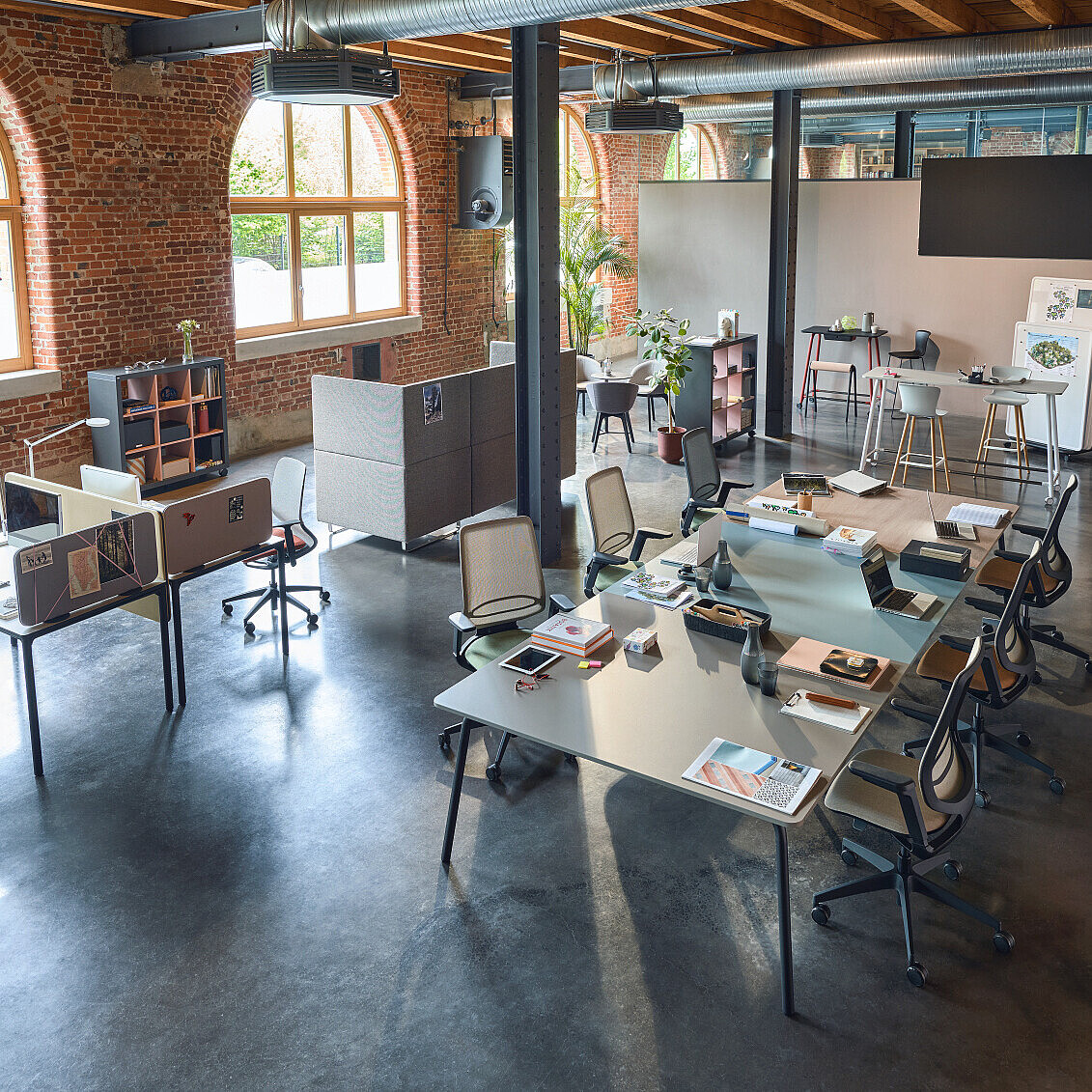
Person sitting at a desk in a modern office with exposed brick walls, large window, plants, and lounge seating area
News 30/03/2026

Hybrid working: the advantages of working from home vs. working in the office

Hybrid working has long since evolved from a trend to an integral part of modern working environments. The combination of home office and office brings together the best of both worlds – greater flexibility, higher productivity and stronger employee loyalty. But how exactly does a home office and an office differ? And what advantages does hybrid working offer companies and employees?
Open-plan office space with white and yellow sofas, large potted plants, circular ceiling lights, and a digital information display
Workplace Design 20/03/2026

A working ecosystem for focus, exchange and autonomy

What does an office that truly meets the requirements of hybrid working look like? The new headquarters of Gruppo CAP in Milan provides a convincing answer across an area of 3,020 m². The project, by Alterstudio Partners, shows how working environments are evolving from classic offices with fixed desks to flexible, user-centred ecosystems.
Close-up of green fern leaves with the white logos of Sedus and Wilderness International overlaid
Sustainability 17/03/2026

Climate targets at Sedus: a new milestone on the road to climate responsibility

For Sedus, sustainability is not a short-term goal, but a long-term commitment. With clearly defined climate targets and a consistent implementation strategy, the company is continuously pursuing this path – and has achieved another significant milestone with climate compensation.
Modern office space with groups of people working and conversing near large windows and minimalist furniture
News 16/03/2026

New Work Trends 2026: How new working models are changing the office world

New Work has long been more than just a buzzword – it has become the strategic model for modern companies. In 2026, the New Work trends are clearer than ever: flexible working models, a stronger focus on well-being, new forms of collaboration, innovative space concepts and sustainable solutions are having a lasting impact on the office world.
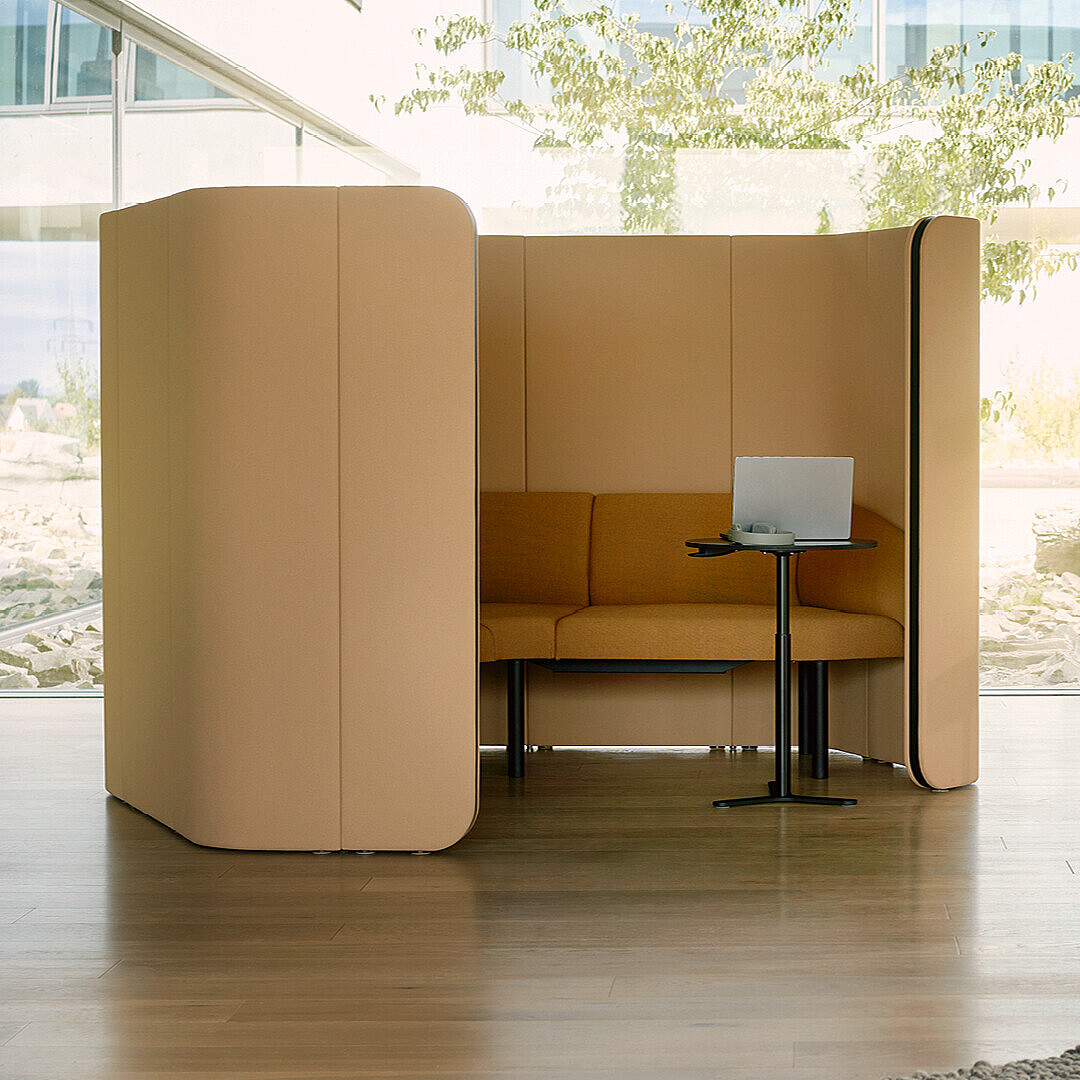
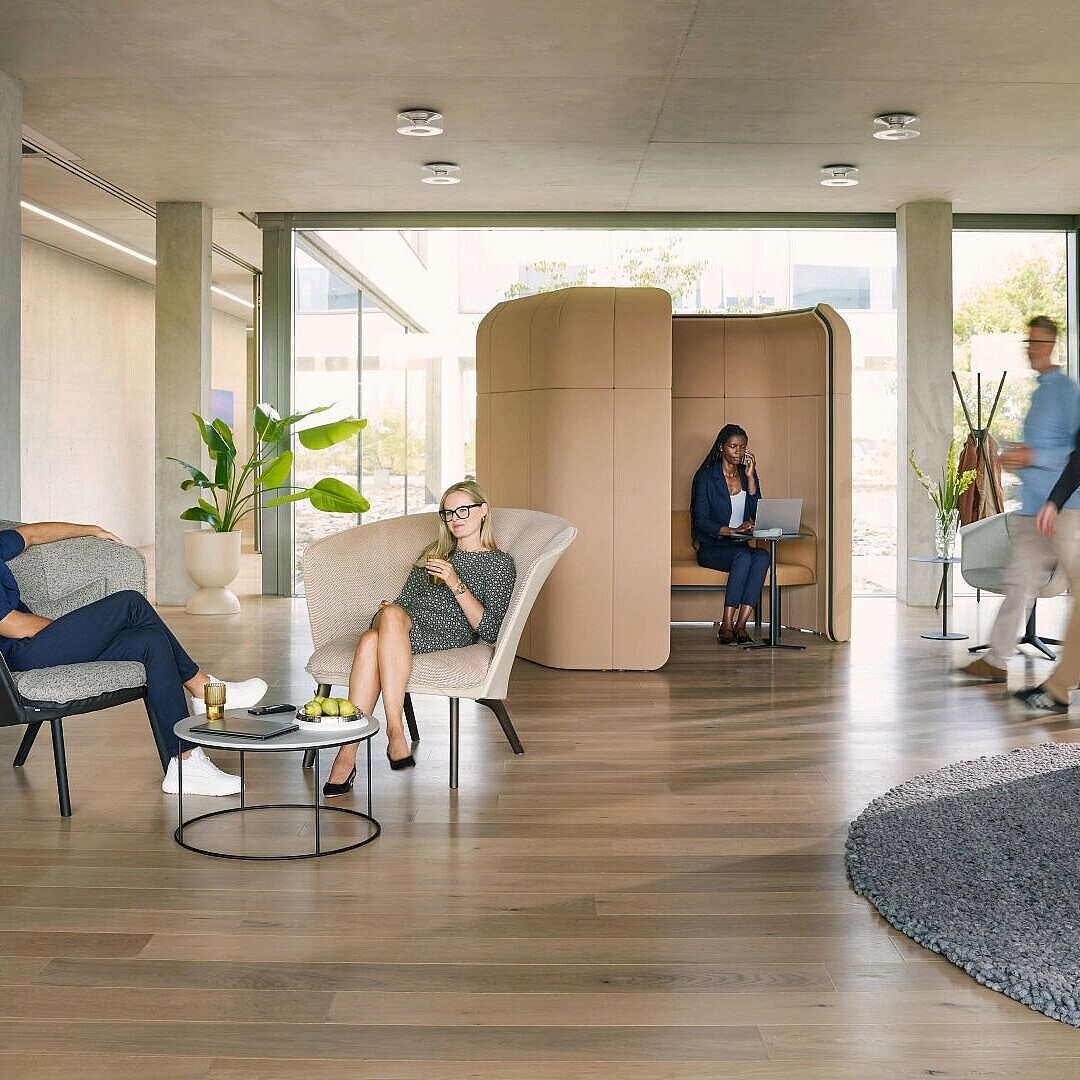
Modern office space with a high-backed brown booth containing a laptop on a small black table, a coat rack with hanging items, and light-colored armchairs around a low table with two cups
Workplace Design 13/03/2026

Designing for Concentration: What supports our ability to focus – and what stands in its way

Concentration has become a defining capability of contemporary working life. In hybrid environments shaped by digital communication channels and open spatial concepts, it is increasingly under pressure. The latest edition of Sedus INISGHTS N° 20 “Focus in the Office” therefore addresses a fundamental question: how can workplaces be designed to reliably support focused work?
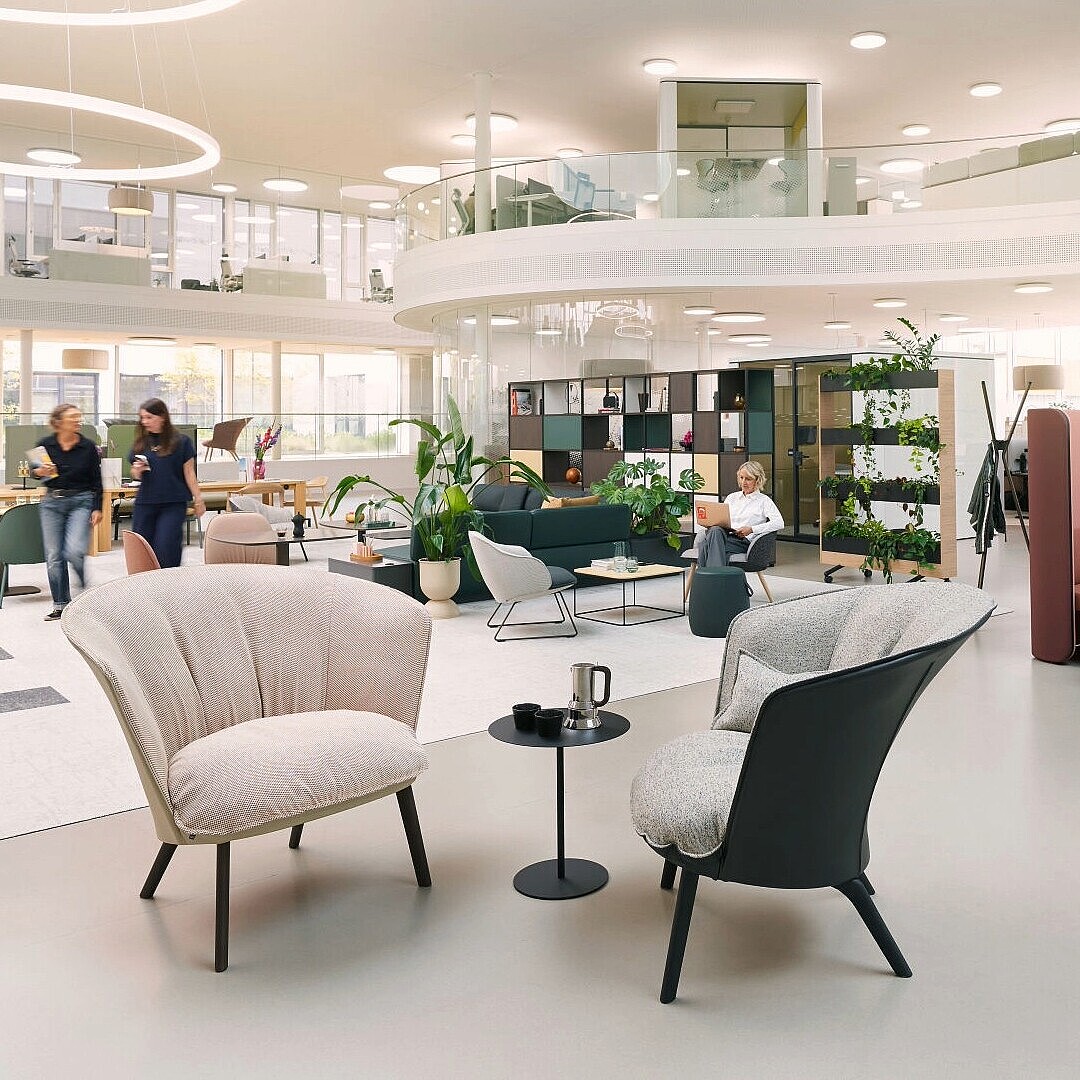
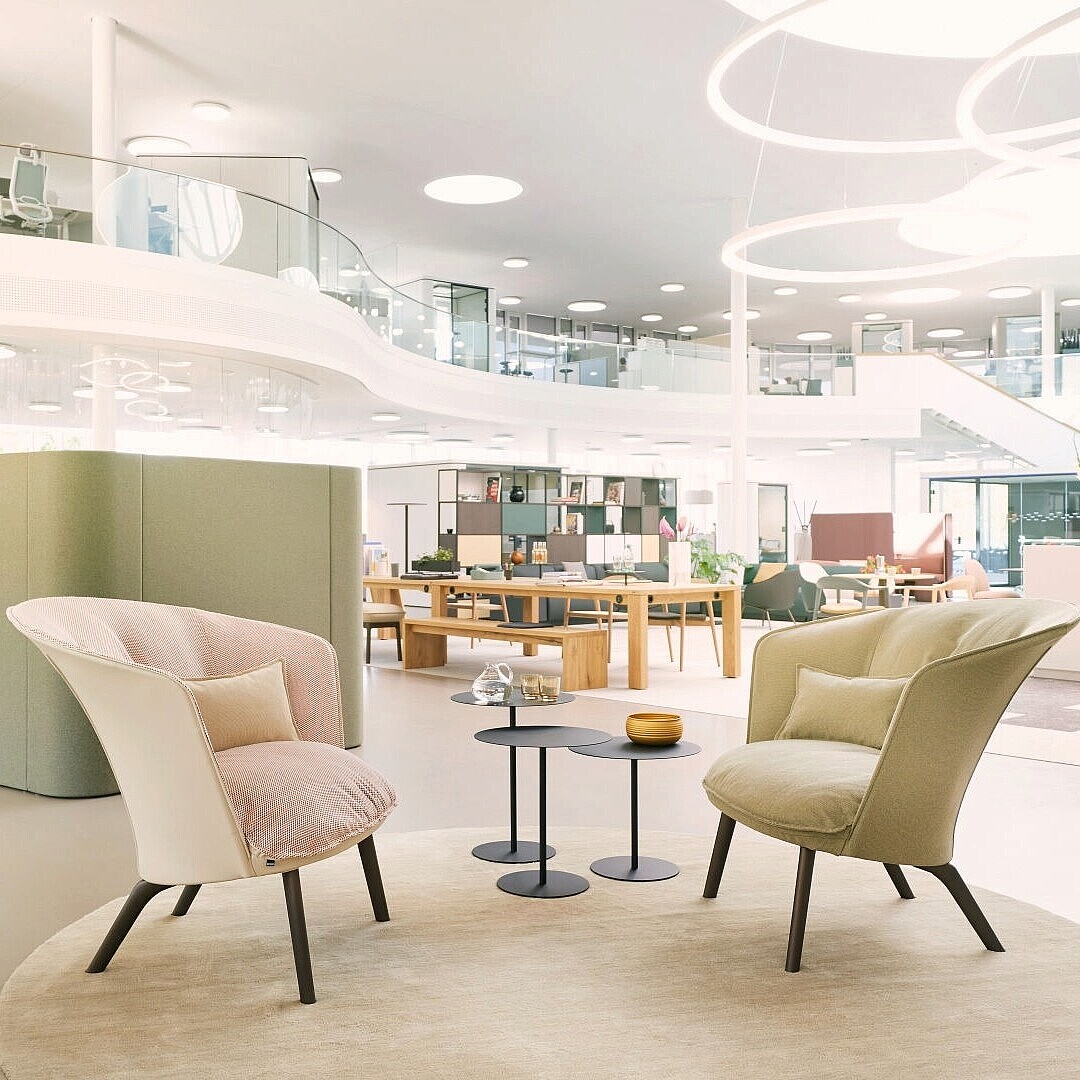
Modern lounge area with a white sofa, two black armchairs, a low coffee table on a patterned rug, a wooden shelving unit with books and plants, and large windows separating an adjacent seating area with pink chairs
Workplace Design 11/03/2026

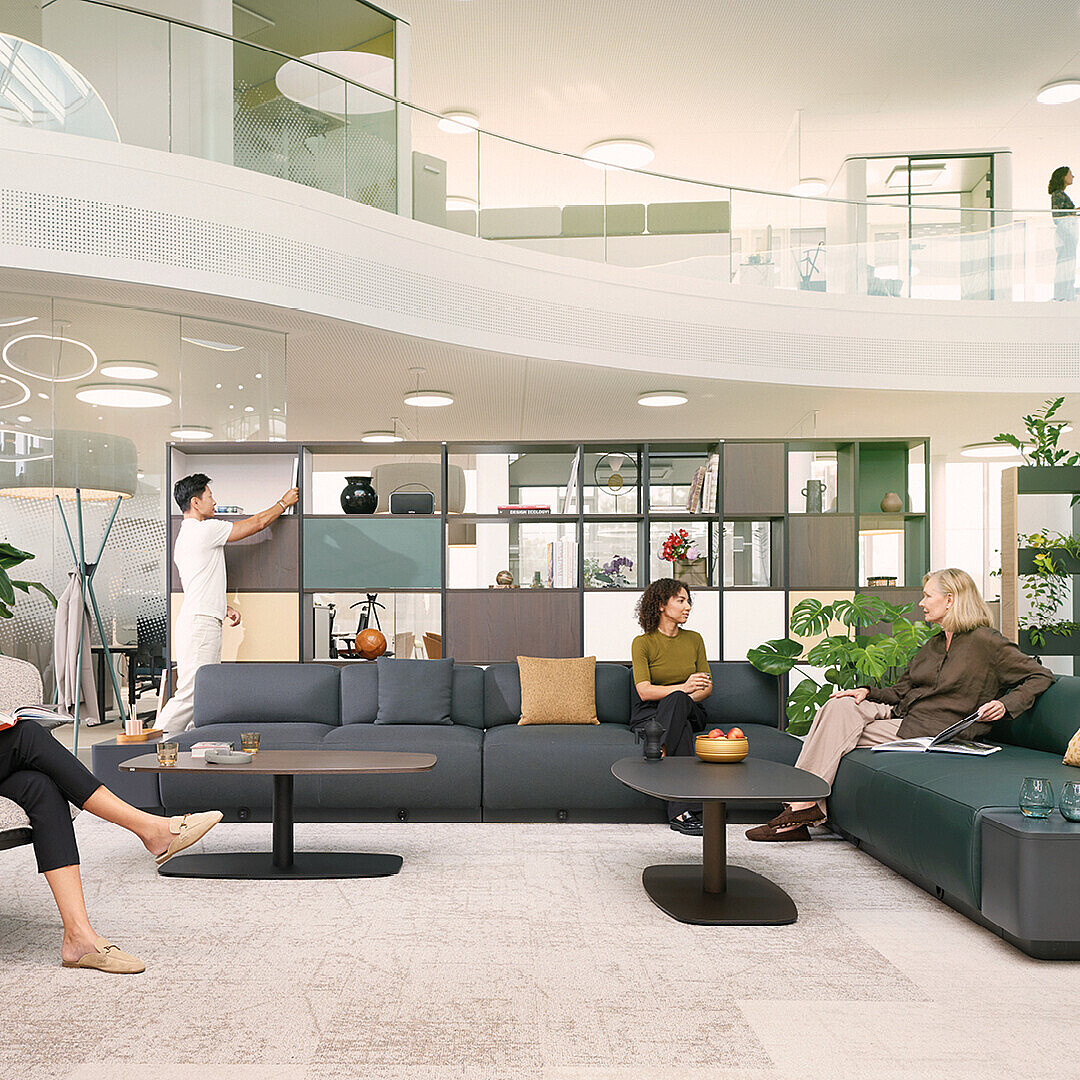
Lounge furniture in the office: How New Work Lounges are changing modern working environments

The world of work is changing. Hybrid working, agile teams and project-based collaboration are shaping everyday office life. Traditional rows of desks are increasingly being replaced by flexible room concepts. Lounge furniture plays a central role in this, not only offering comfort but also enabling new forms of communication, creativity and relaxation.
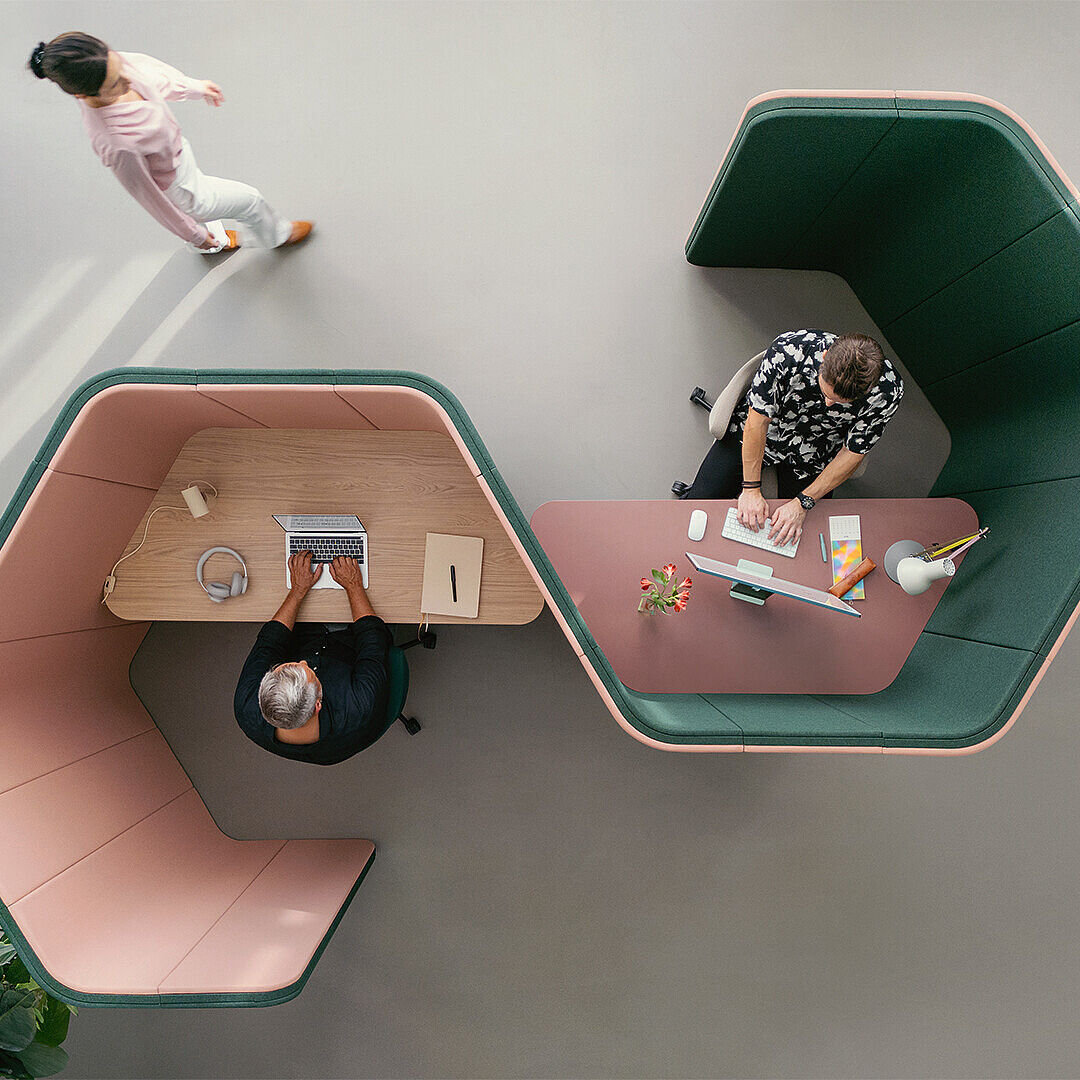
Two people working separately in adjacent hexagonal booth desks with laptops and office supplies
Wellbeing 27/02/2026

Peripersonal space (PPS): The neuro-logic behind good workplace design

Why do we feel immediately focused in some workplaces and constantly distracted in others? Why does an open-plan office sometimes exhaust us more than the actual task at hand? The answer lies not only in noise levels or interruptions. It runs deeper: into the way the brain processes space, stimuli, and safety.
Open office space with se:hive room solution featuring a curved high-backed booth with table and stools, surrounded by various seating areas and circular ceiling lights
Workplace Design 25/02/2026

Cognitive zoning made easy: se:hive as a flexible tool for planners

In hybrid working environments, digital and physical forms of work merge into a dynamic whole – with constantly changing requirements for spaces, users and tasks. "Focused work as a scarce resource" has become a central issue: according to Sedus INSIGHTS N° 20, modern working environments must not only promote interaction and exchange, but above all enable targeted concentration. Open-plan spaces need differentiated zones that help employees choose the right place for their respective tasks. This means less rigid departments and more sensory and functionally coordinated zoning of the space.
Collage of five photos showing various hospitality spaces including a social hub entrance, a lounge with yellow chairs and a staircase, a seating area with a green tiled wall and 'LOST SOCKS' sign, a bar with a bartender, and a rooftop pool with 'ROME AROUND THE WORLD' text on the pool floor.
News 20/02/2026

Hybrid hospitality: What offices can learn from hotels and third places

In a working world increasingly characterised by mobility, flexibility and hybrid working models, office spaces face a major challenge: they must be places where people not only work, but also enjoy spending time – places that facilitate focus, exchange, inspiration and community. This is precisely where a concept that originated in the hotel industry but has long since crossed the boundaries into new work comes in: hybrid hospitality.
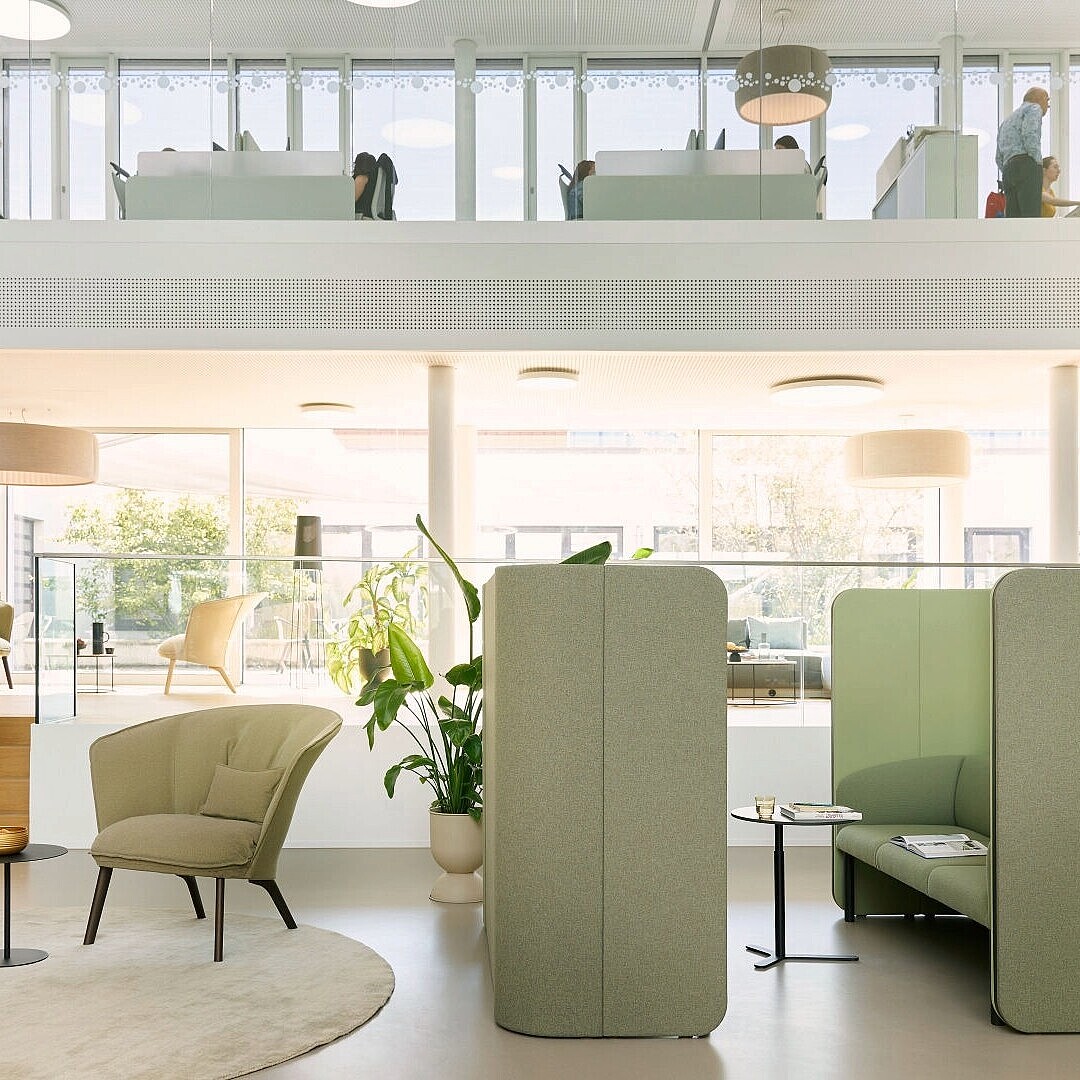
Open-plan office with large windows, featuring textile privacy pods in green and blue, and seating areas with modern chairs and small tables on a rug.
Workplace Design 09/02/2026

How textile retreats become a productivity lever

Open working environments stand for exchange, transparency and dynamism. At the same time, studies and everyday experience show that noise, visual stimuli and a lack of places for retreat are among the biggest productivity killers in the office. The solution lies not in choosing between openness and isolation, but in intelligent intermediate zones. Textile retreats such as se:hive demonstrate how acoustics and privacy can be used as levers to enhance wellbeing and focus.
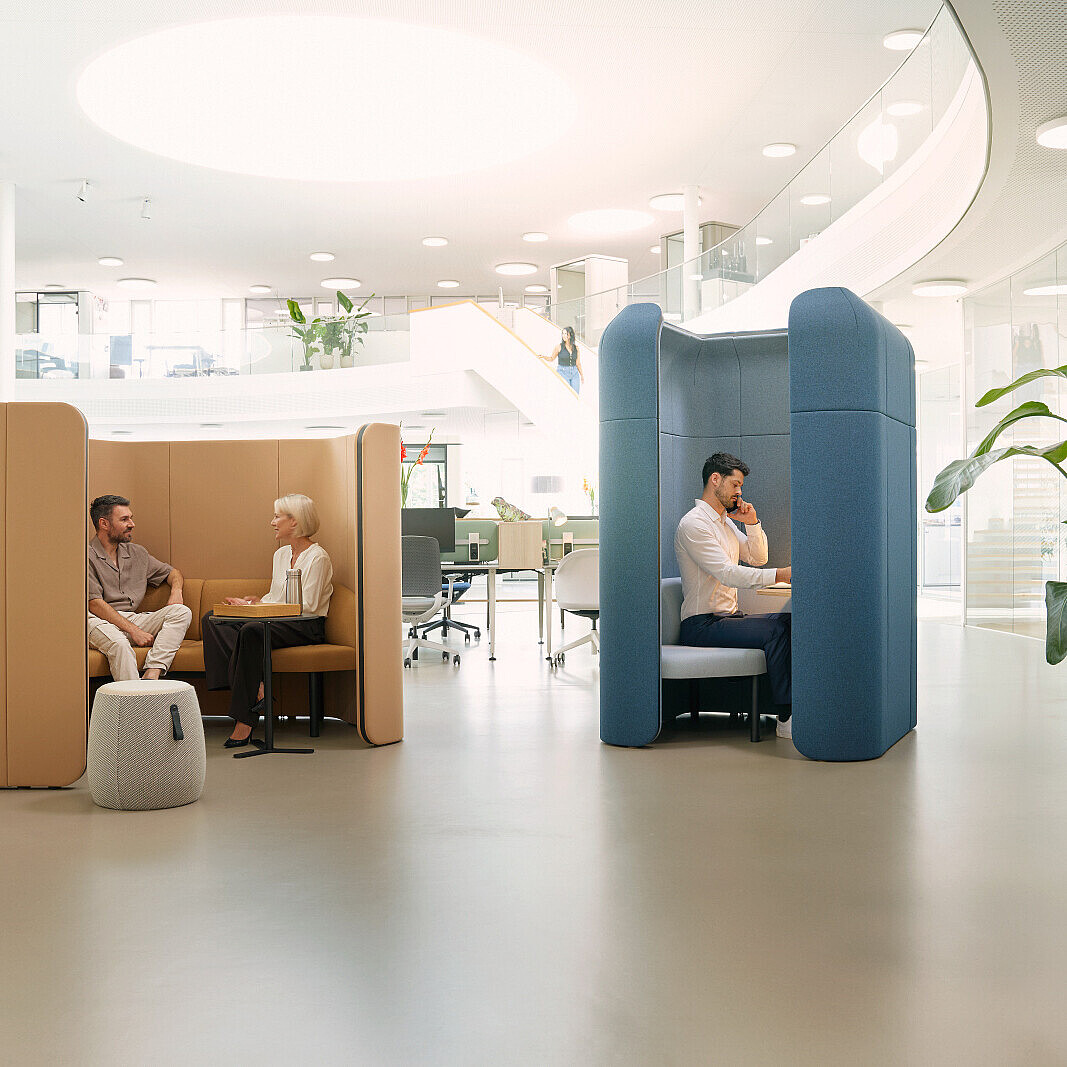
Two modular se:hive seating units in an open office space, one beige with two people seated inside and one blue with a single person seated, both designed as semi-enclosed retreats.
Workplace Design 06/02/2026

How se:hive enables retreat and focus in open spaces

For years, open working environments have been synonymous with exchange, transparency and collaboration. They promote interaction, accelerate communication and strengthen corporate culture. At the same time, however, it is becoming increasingly clear that openness alone is not enough. Concentrated work – the basis for quality, clarity and productivity – requires protection, quiet and control over the immediate environment.
Sustainability 30/01/2026

Recyclates: key materials for a functioning circular economy

Recyclates: How waste is turned into valuable secondary raw materials and transforming industry in a sustainable way. Find out how Sedus is reducing the ecological footprint of its products by using PET felt made from recycled PET bottles.
Modern office space with a glass-walled meeting room containing an orange swivel chair and round ottoman, adjacent to a lounge area with a green sofa, small round stool, and wooden slat wall with plants and coat rack.
Workplace Design 23/01/2026

A touch more wellbeing: how the new display takes se:cube to the next level

Touch displays are now an integral part of our everyday lives – we swipe, tap and navigate intuitively through digital interfaces. It was precisely this user behaviour that prompted the development of the new touch display for se:cube and se:cube max. In this interview, Sedus product manager Nike Alberts provides insights into the development process, the idea behind them and the added value for modern working environments.
Collage of natural and manufactured materials including a dried seaweed branch, close-up of a seaweed texture, stacked smooth black stones, a black segmented object, and a white perforated sheet with folded corners
Sustainability 16/01/2026

How responsible materials shape the atmosphere, well-being and concentration in a room

Materiality is much more than just feel and appearance. It is a design element that can make responsibility and innovation visible and tangible. The journey from natural raw materials through research and craftsmanship to the finished product shows how closely sustainability, design and user experience are intertwined. It also highlights the contribution that new, responsible materials make to a functional and atmospheric working environment.
1 2 3 4 5 6 7 8 9 10 »
Contact
Contact Us!
Showroom
See our visions!